How to Store Emergency Water Safely in a Hot Apartment
Knowing how to store emergency water safely in a hot apartment matters because heat, sunlight, and warm closets can quietly ruin a supply that looked fine the day you filled it. A few placement choices make the difference between water that lasts and water that goes stale.
Why heat is hard on stored water
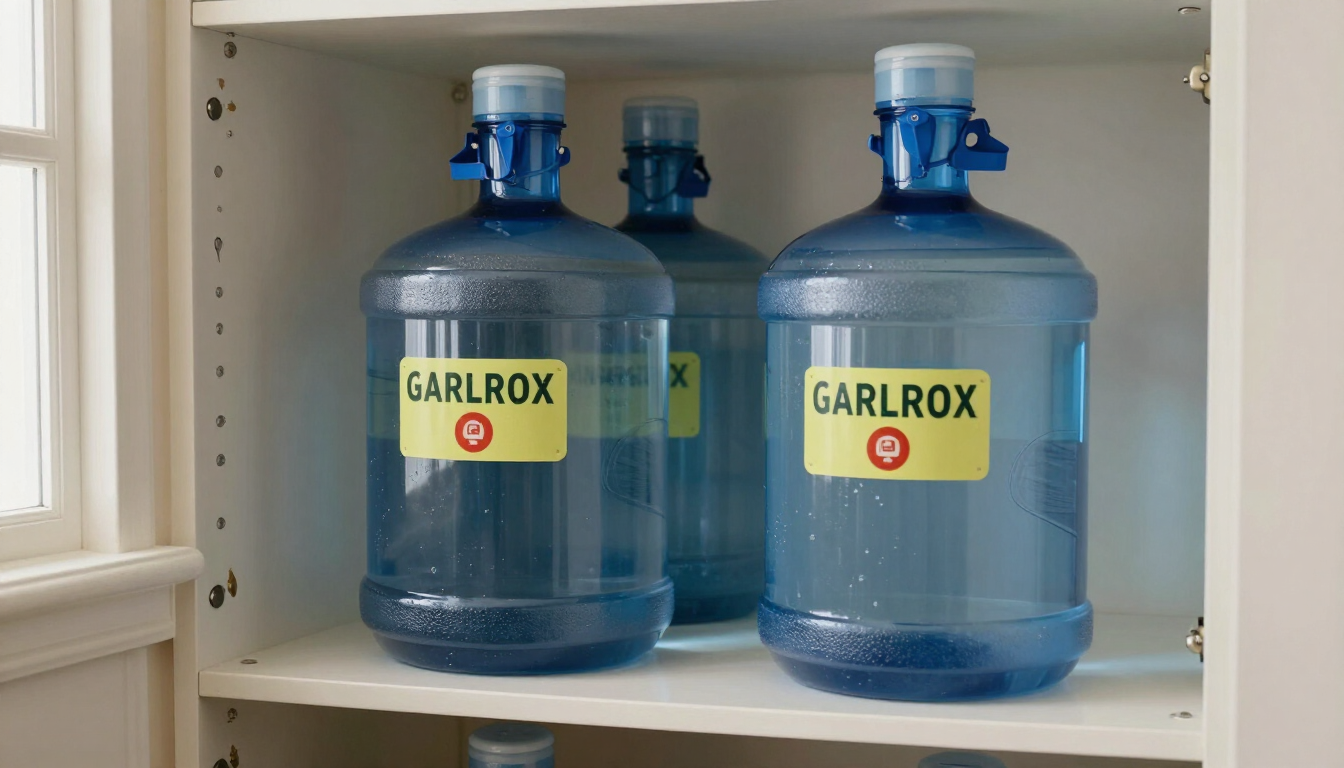
Heat speeds up two problems. It makes plastic leach taste into the water faster, and it encourages algae and bacteria to grow if any light or contamination gets in. A jug on a sunny windowsill can taste stale in weeks, while the same jug in a dark closet lasts months.
Hot apartments, top-floor units, and homes in warm climates face this all year. The fix is not buying different water. It is storing the same water in a smarter spot.
Pick the coolest spot, not the most convenient one
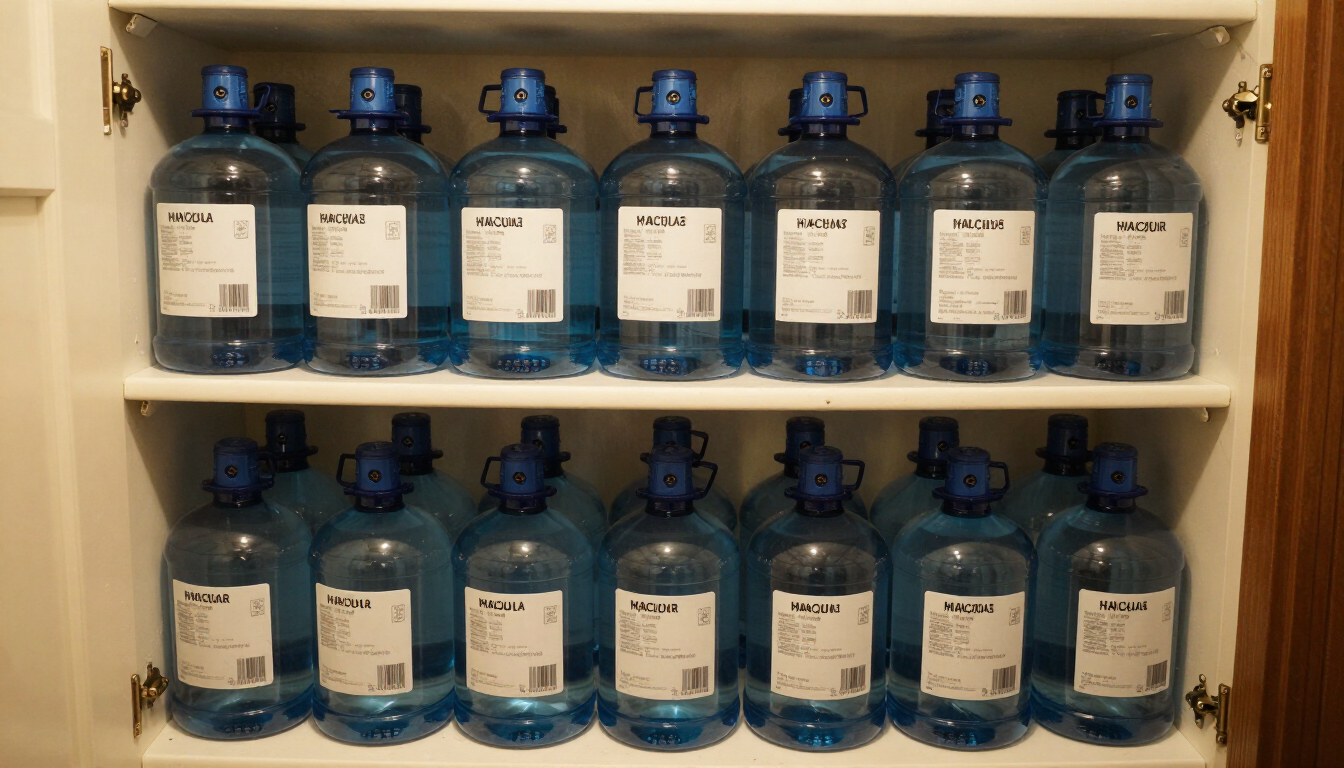
The coolest spot in an apartment is usually a low shelf in an interior closet, away from exterior walls and windows. Heat rises, so floor-level storage beats top shelves. A hall closet near the center of the unit often beats a kitchen cabinet next to a sun-baked wall.
- Low shelves or the floor of a closet, not the top
- Interior closets with no exterior wall
- Away from radiators, water heaters, and appliances that warm up
- Never in a car or a balcony storage box, where heat spikes hard
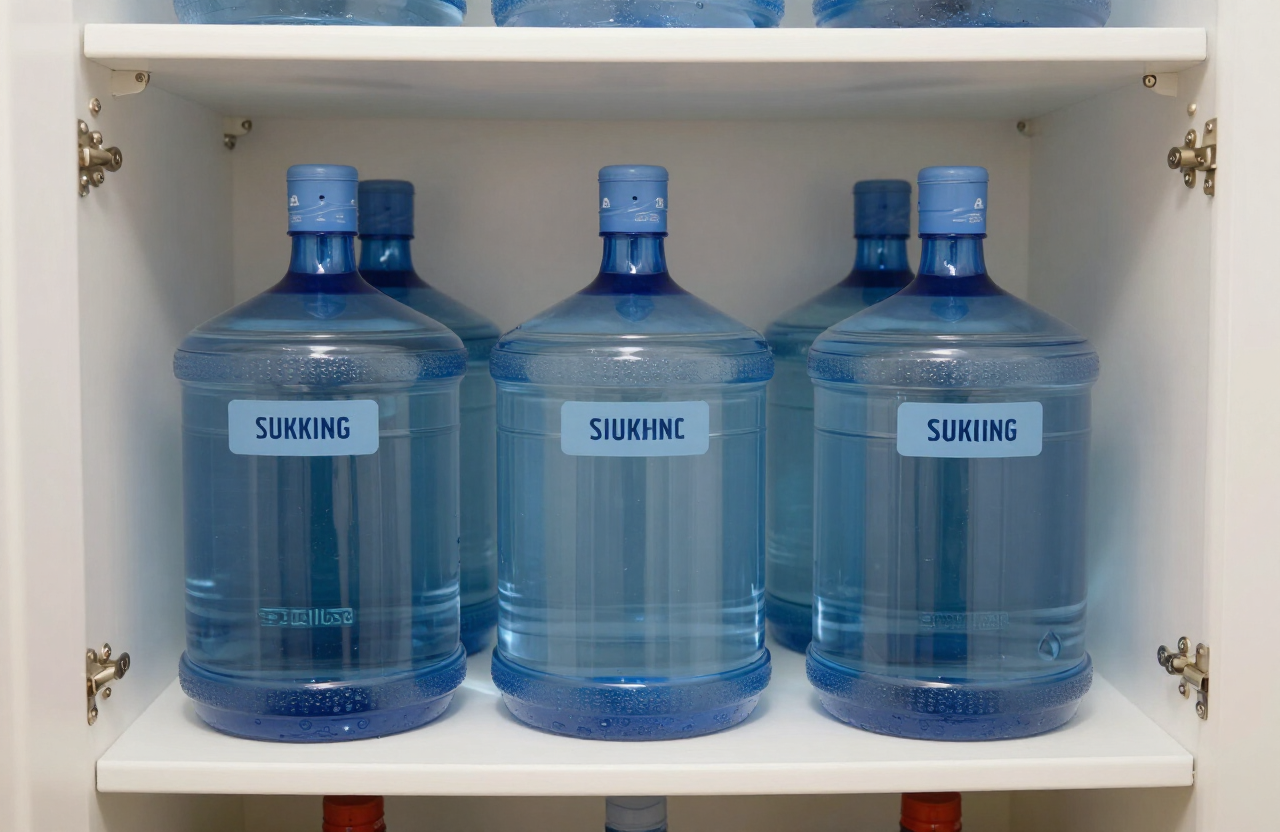
Containers that handle heat best
Not all containers hold up in a warm apartment. Clear bottles in light are the worst. Opaque, food-grade jugs are the best because they block light and resist warping.
| Container | Heat performance | Notes |
|---|---|---|
| Opaque food-grade jug | Best | Blocks light, resists leaching, stacks well |
| Dark or tinted bottle | Good | Some light protection, still keep out of sun |
| Clear plastic bottle | Poor in light | Algae grows fast; only use in dark storage |
| Original milk-style jug | Not recommended | Thin walls, not for long-term water storage |
Keep water out of direct sun
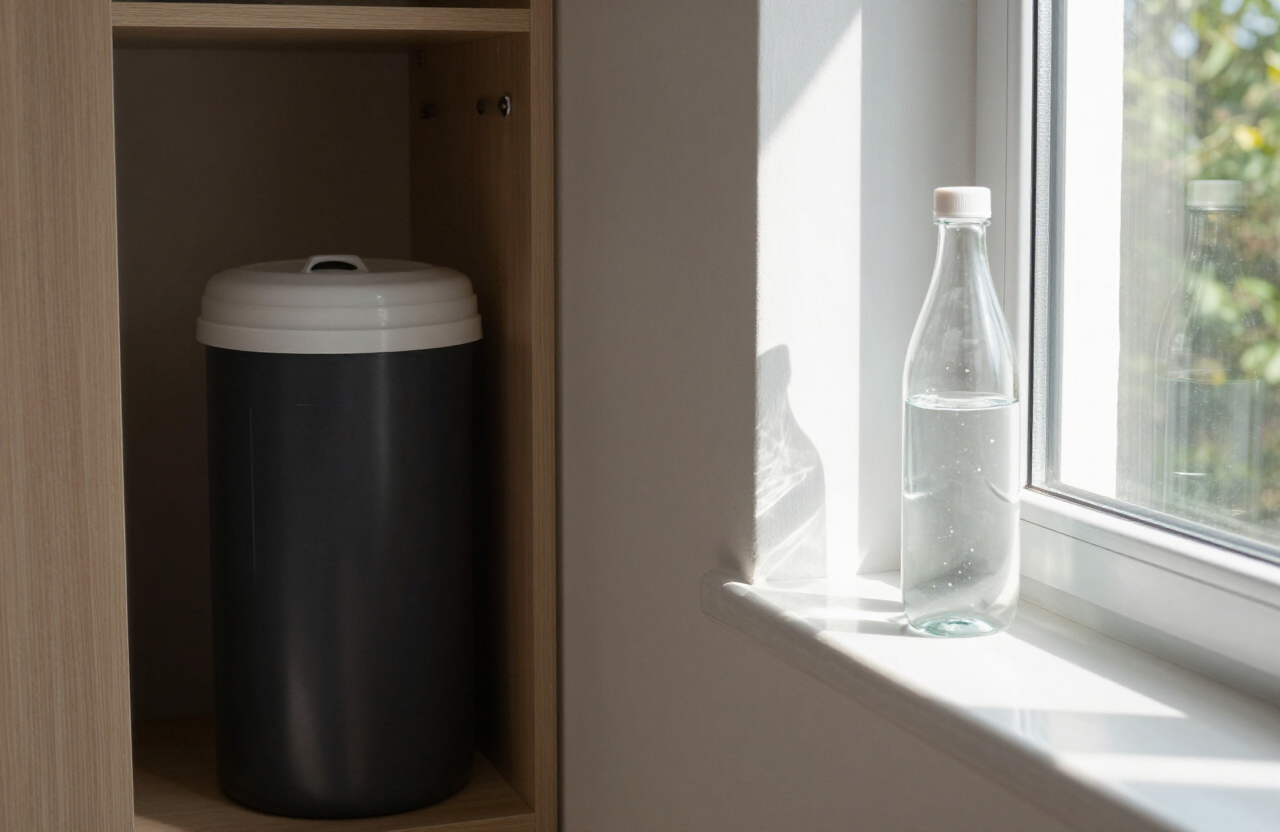
Sunlight does double damage: it heats the water and it feeds algae. A windowsill that gets afternoon sun is about the worst spot in any apartment, even in a mild climate.
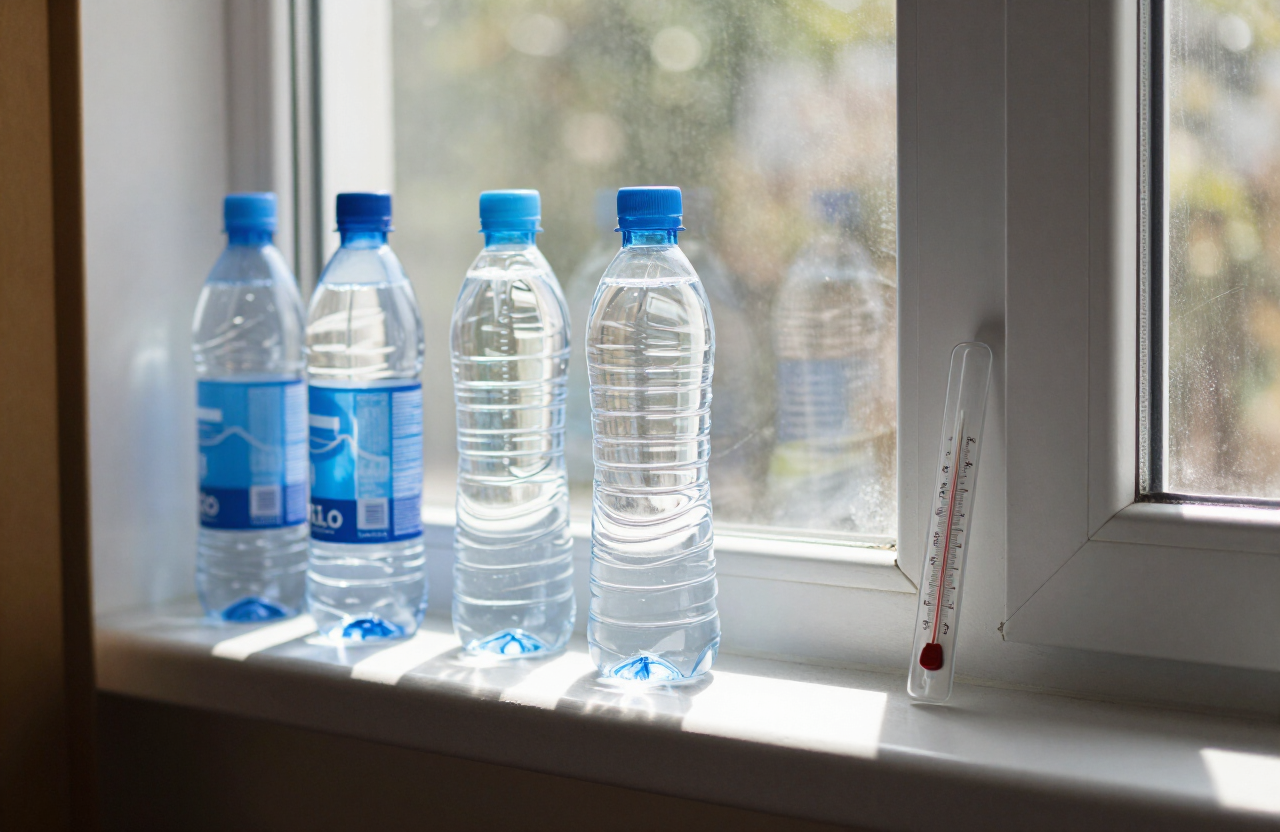
If your only option is near a window, block the light with a closed blind, a cardboard panel, or a dark cloth over the containers. Even diffuse room light is far better than direct sun.
Insulate containers in warm rooms
If the whole apartment runs warm, give the water an extra buffer. An insulated bin, a cooler with the lid cracked, or even a cardboard box lined with a towel keeps the temperature steadier than open air.
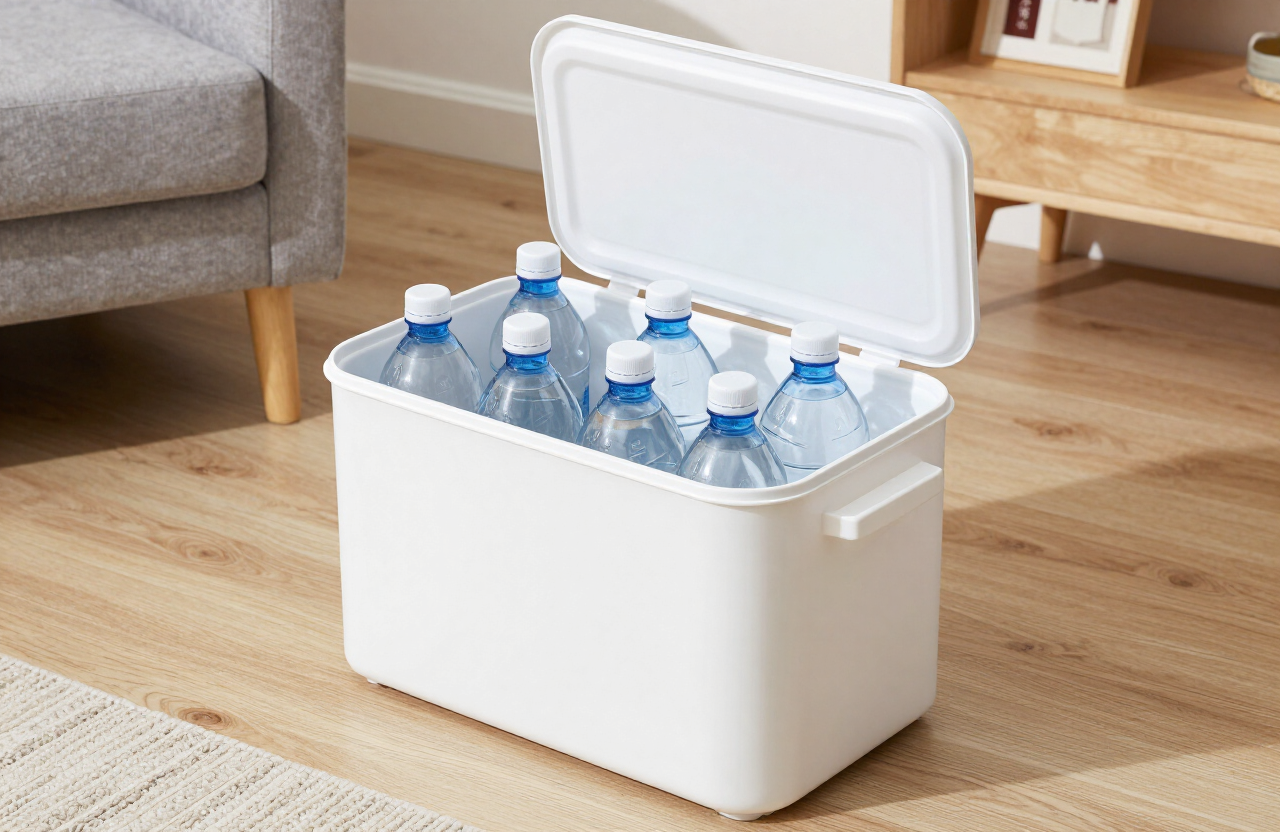
The goal is not refrigeration. It is slowing the daily swing between a cool night and a hot afternoon, which is what ages stored water the fastest.
Check containers for heat damage
Each time you rotate, look at the container itself. Heat warps thin plastic, bulges sides, and makes caps seal poorly. A jug that has changed shape is a jug that may leak when you need it.
- Bulging or rounded sides that used to be flat
- A cloudy or milky look inside that does not rinse out
- A cap that spins freely or will not tighten
- A strong plastic smell that does not fade after cleaning
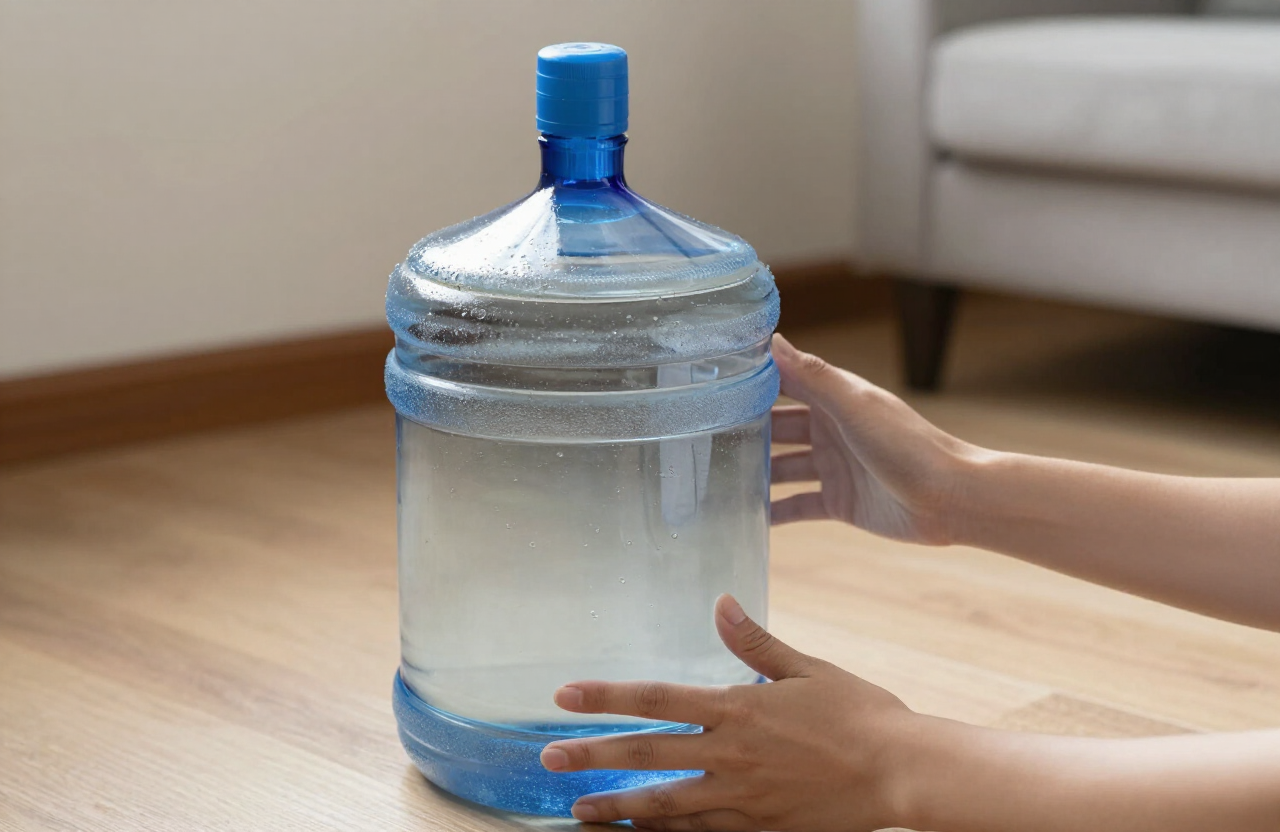
Rotate faster in a hot apartment
In a cool basement, water can sit for a year. In a hot apartment, plan to rotate every 3 to 6 months. The warmer the storage spot, the shorter the cycle. Treated water buys you a little more time, but heat still wins eventually.
See the full rotation system in our water rotation guide.
A quick hot-apartment water audit
Run this five-minute audit once to set up your storage, then again each season.
- 1Find the coolest, darkest closet and move the water there
- 2Switch any clear bottles in light to opaque jugs or a dark spot
- 3Add an insulated bin or towel buffer if the room runs warm
- 4Label each container with the date and set a 3 to 6 month rotation reminder
- 5Inspect every jug for warping, cloudiness, or cap issues
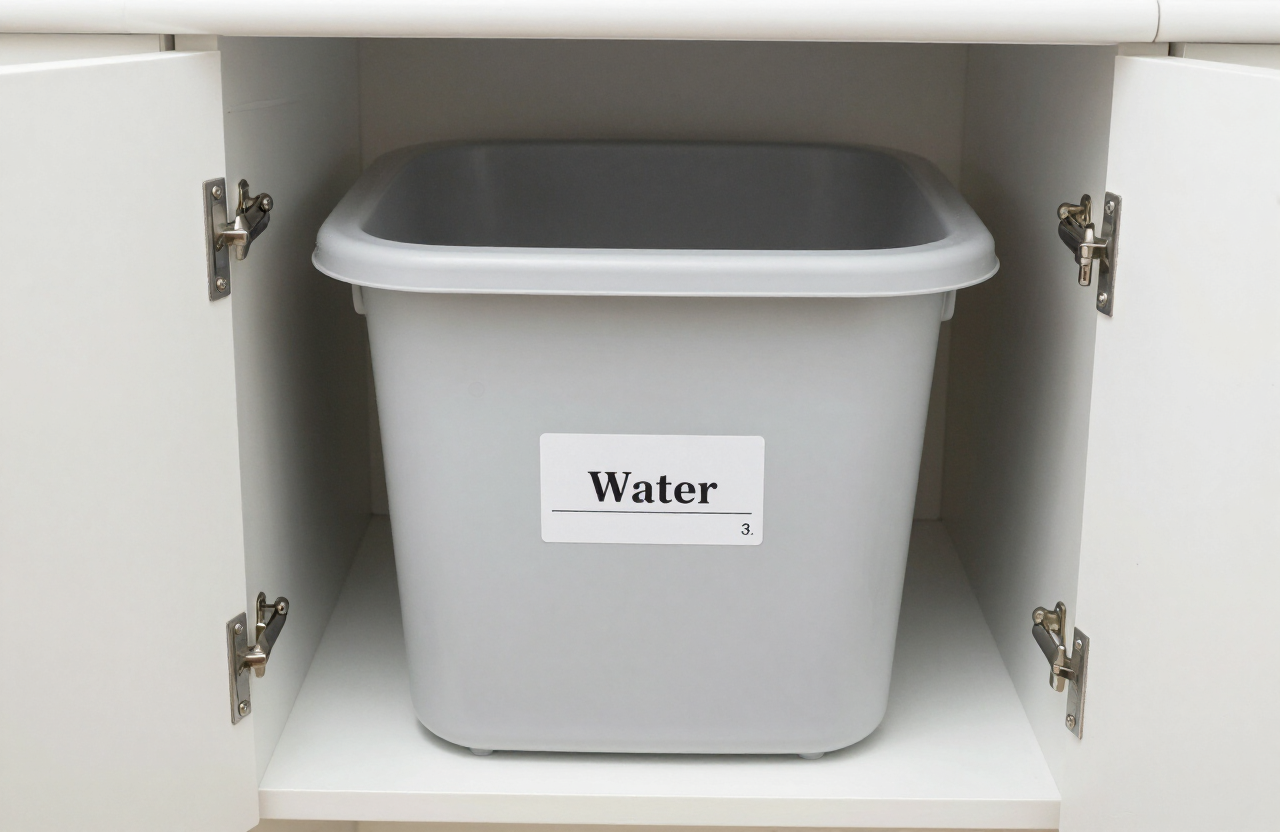
In a hot apartment, where you put the water matters more than what water you bought.
Small Space Emergency editorial team
Build the full supply with our studio water storage guide.
Frequently asked questions
Editorial note: this guide provides general preparedness information, not emergency, medical, legal, or engineering advice. Recommendations are cross-checked against public emergency-management guidance and adapted for small-space living. During an active emergency, follow your local authorities and emergency services. See our editorial standards and affiliate disclosure.