How Much Emergency Water Should an Apartment Store?
Official guidance says one gallon per person per day. For a couple aiming at two weeks, that is 28 gallons — roughly 240 pounds of water. Almost no apartment can store that. Here is the realistic version of the math.
The baseline numbers
| Household | 72 hours | 1 week | 2 weeks |
|---|---|---|---|
| 1 person | 3 gal | 7 gal | 14 gal |
| 2 people | 6 gal | 14 gal | 28 gal |
| 2 + 2 kids | 12 gal | 28 gal | 56 gal |
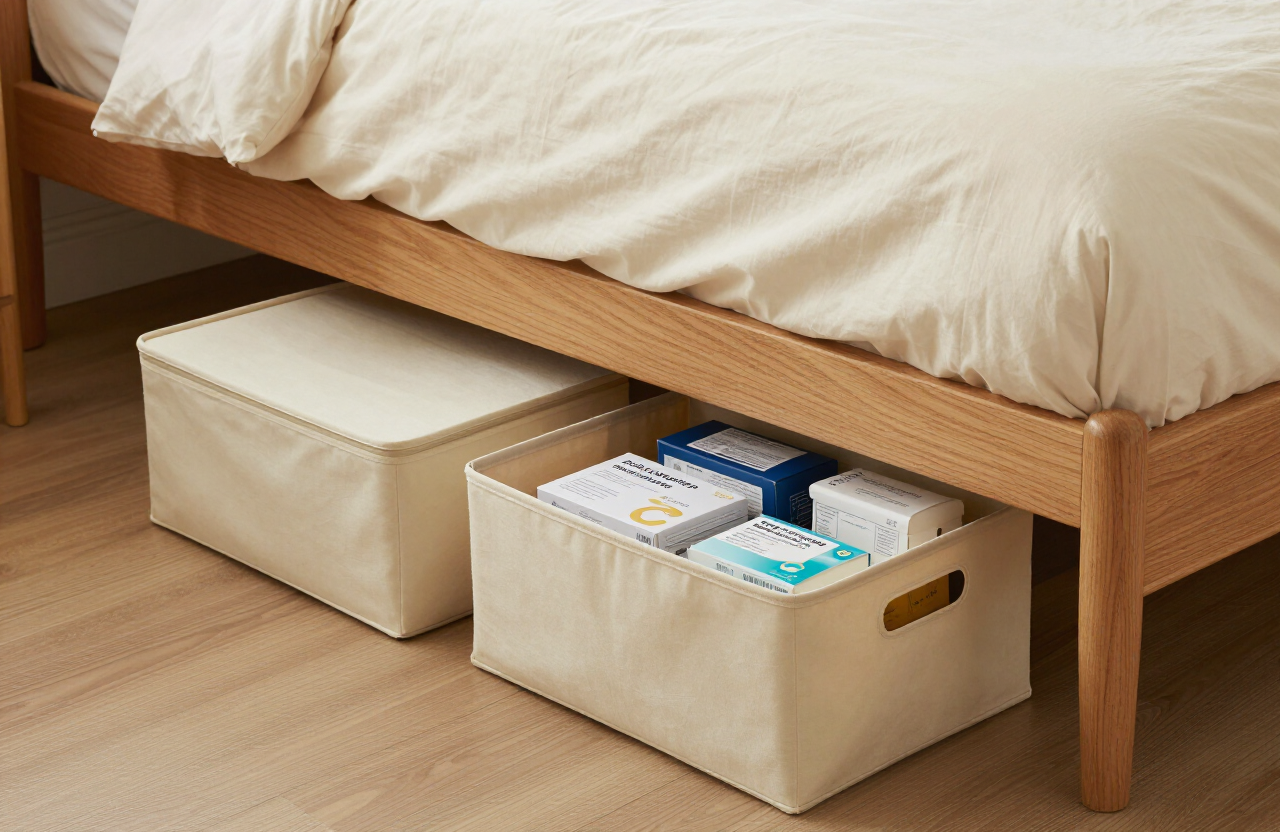
A gallon of water weighs about 8.3 pounds and takes up roughly 0.13 cubic feet. Twelve gallons — a 72-hour supply for a family of four — fits in a single under-bed bin footprint.
The apartment-realistic target
For most small homes, the honest target is a stored 72-hour to one-week supply, plus the ability to make more water safe. That combination beats an impossible two-week stockpile that never gets built.
- Store: 3–7 gallons per person in sealed commercial containers
- Extend: purification tablets or a gravity/straw filter for questionable sources
- Capture: fill the tub and every pot when a storm or outage is forecast
Where the gallons actually go
- Under the bed: six 1-gallon jugs fit in one low bin — the single best spot in most apartments
- Closet floor: water is the ideal closet-floor item — heavy, dark-tolerant, leak-contained in a tray
- Behind the couch: 1-liter bottles slide into a 6-inch gap almost invisibly
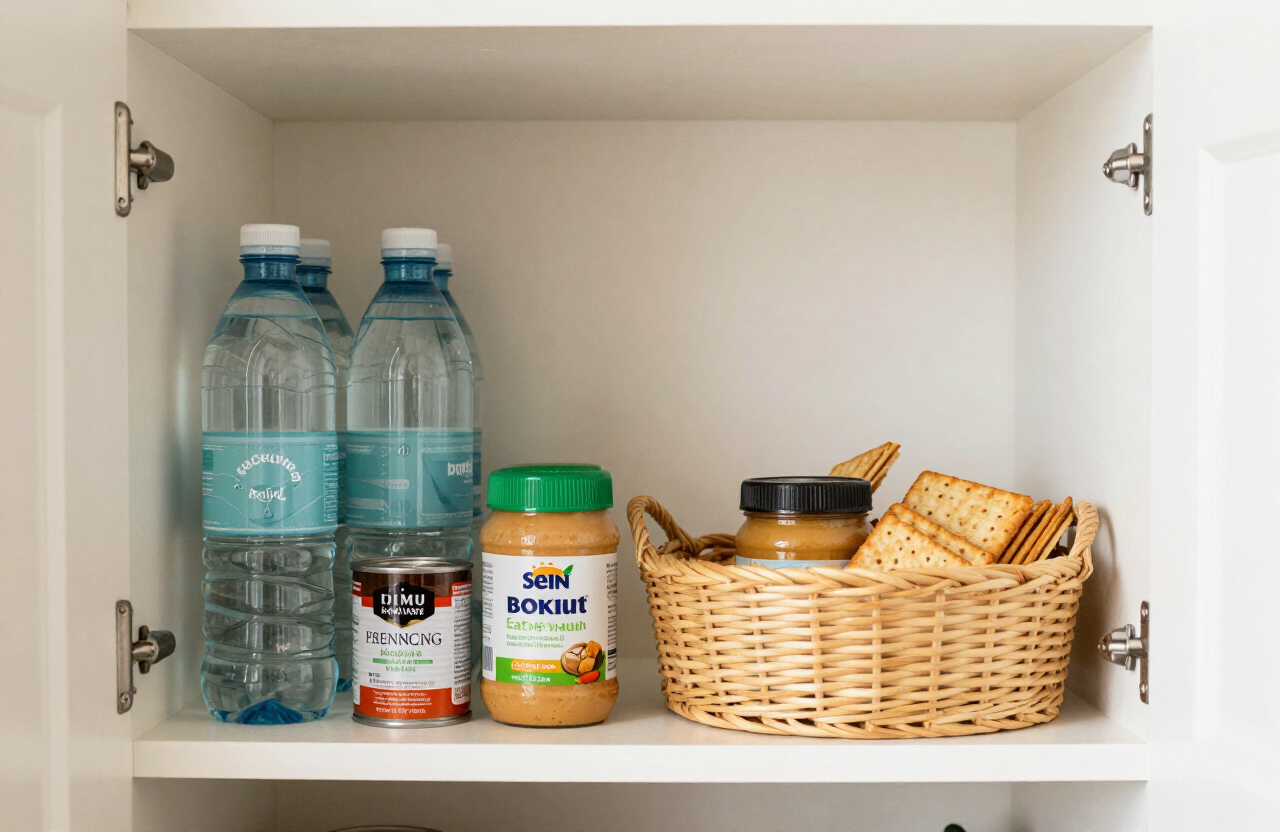
- Kitchen cabinet bottom shelf: daily-use bottles that rotate through normal life
Rotation without waste
Sealed commercial water lasts well past its printed date if stored cool and dark, but rotation keeps you honest: every six months, drink the oldest bottles through a normal week and replace them on your next grocery run. Zero waste, zero forgotten stock.
Frequently asked questions
Editorial note: this guide provides general preparedness information, not emergency, medical, legal, or engineering advice. Recommendations are cross-checked against public emergency-management guidance and adapted for small-space living. During an active emergency, follow your local authorities and emergency services. See our editorial standards and affiliate disclosure.