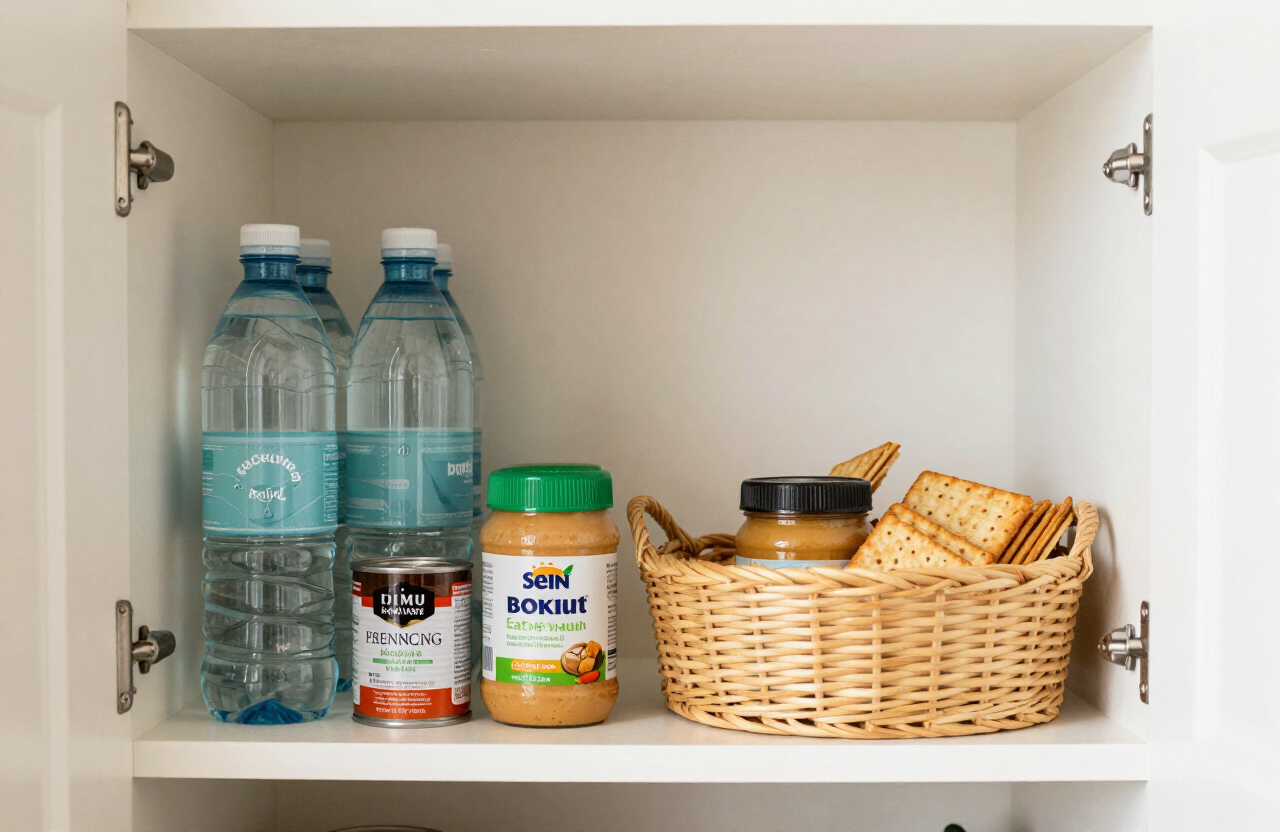
Emergency Water Storage for a Studio Apartment
Water is the first thing you need in any emergency, and it is the hardest thing to store in a studio. One gallon per person per day is the rule, and in a single room every gallon has to earn its floor space. Here is how to fit a real supply into a studio without living around it.
How much water a studio can realistically hold
The official baseline is one gallon per person per day for drinking and basic hygiene. For a 72-hour kit, that is three gallons per person. For one person in a studio, three gallons is easy. For two people aiming at a week, fourteen gallons takes planning.
| Household | 72 hours | 1 week |
|---|---|---|
| 1 person | 3 gal | 7 gal |
| 2 people | 6 gal | 14 gal |
A gallon weighs about 8.3 pounds and takes up roughly 0.13 cubic feet. Six gallons under a bed is comparable to a couple of stacked book boxes, and the floor handles it easily.
For the full math across home sizes, see our guide to how much water an apartment should store.
Where the gallons go in a studio
A studio has few hidden zones, so you use the ones that exist: under the bed, behind the couch, on the closet floor, and on the bottom kitchen shelf.
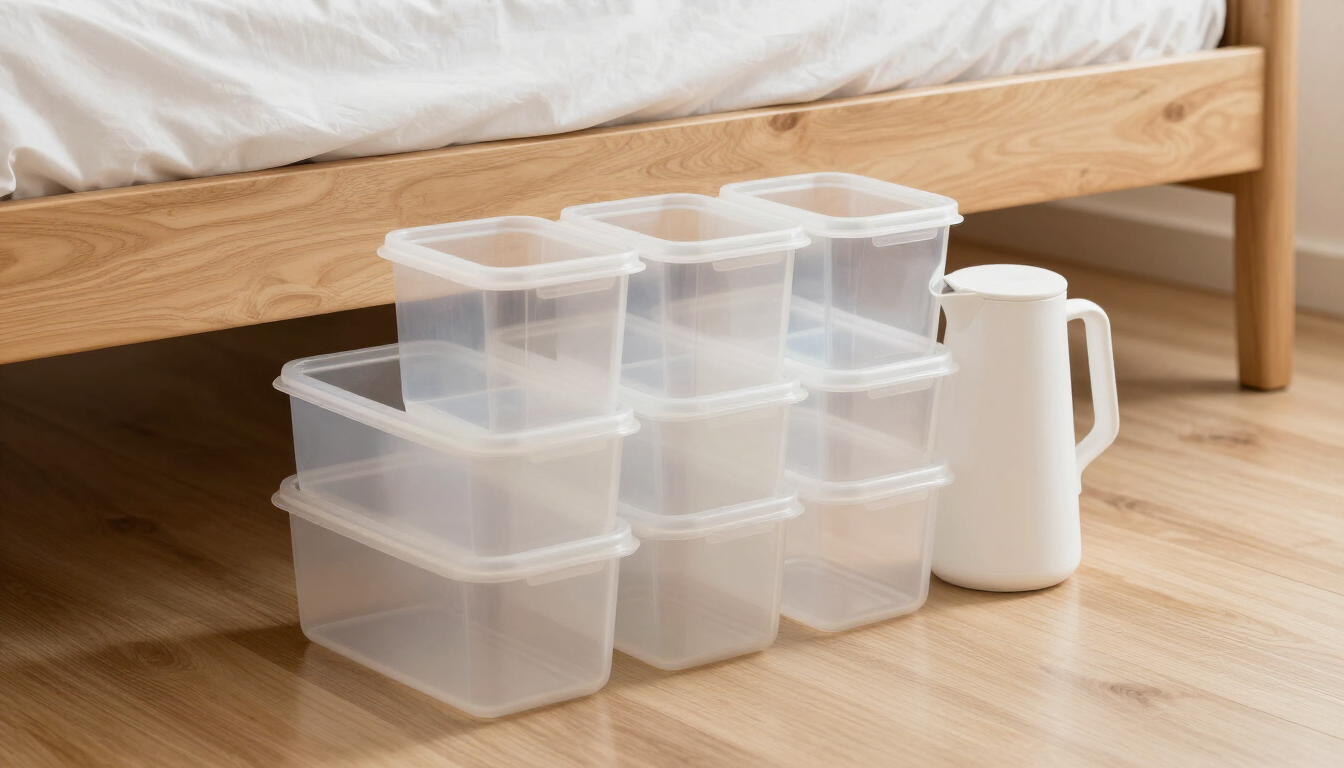
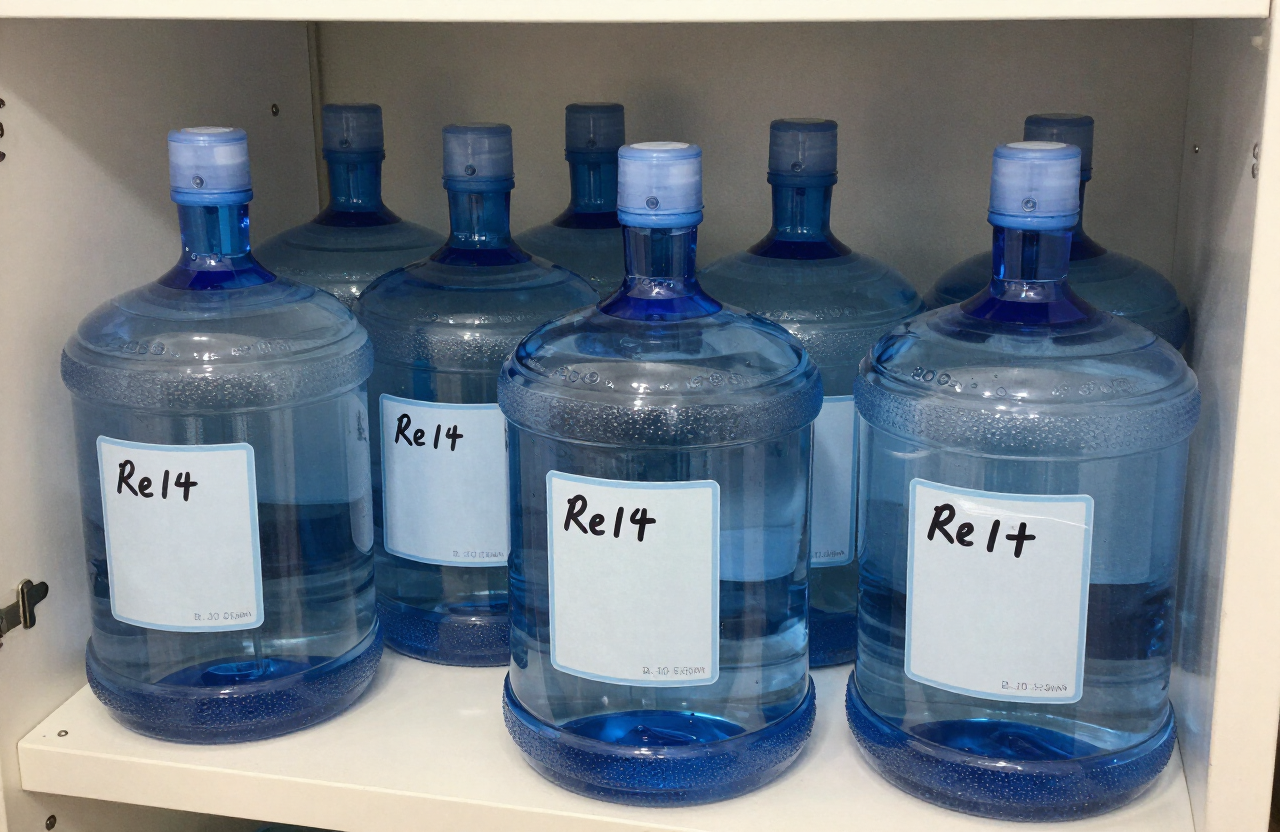
- Under the bed: six one-gallon jugs fit in one low bin, the single best spot
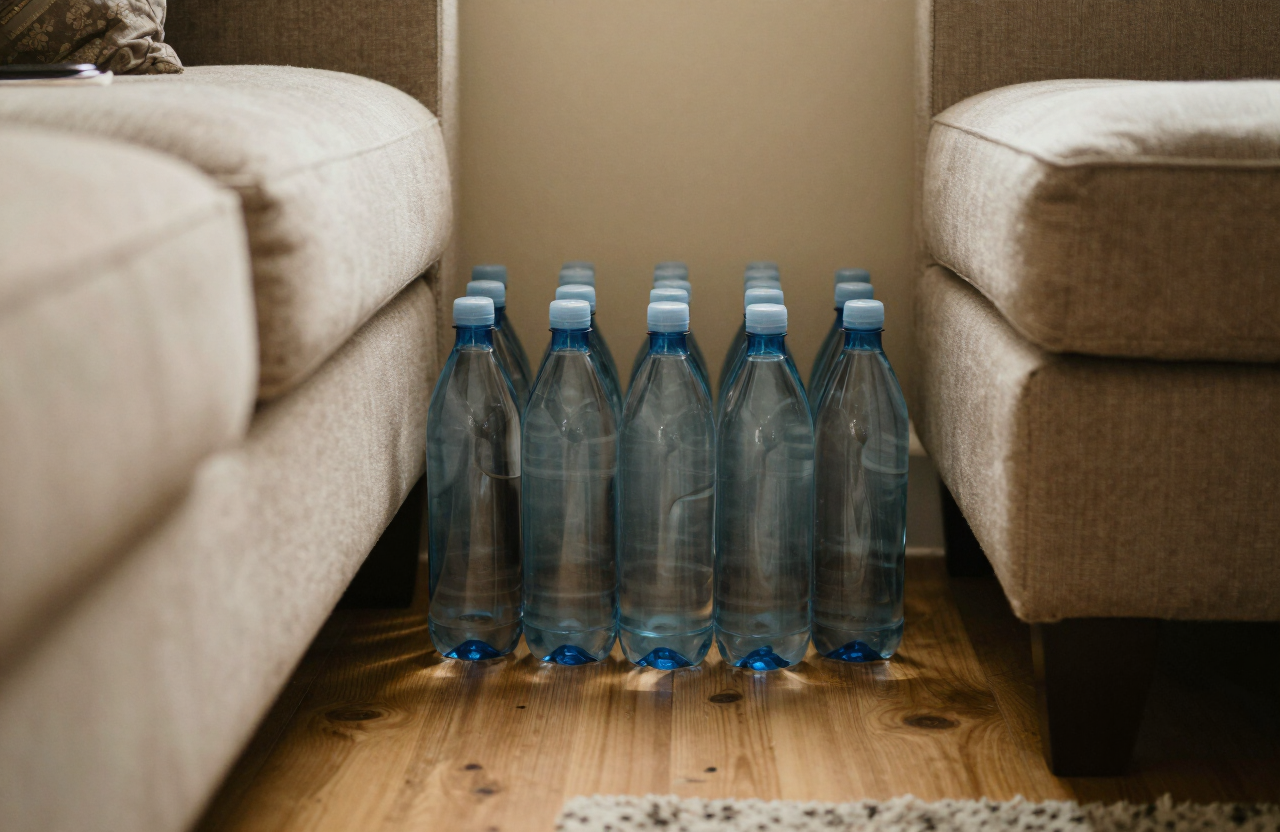
- Behind the couch: slim one-liter bottles slide into a six-inch gap
- Closet floor: water is the ideal floor item, heavy and dark-tolerant
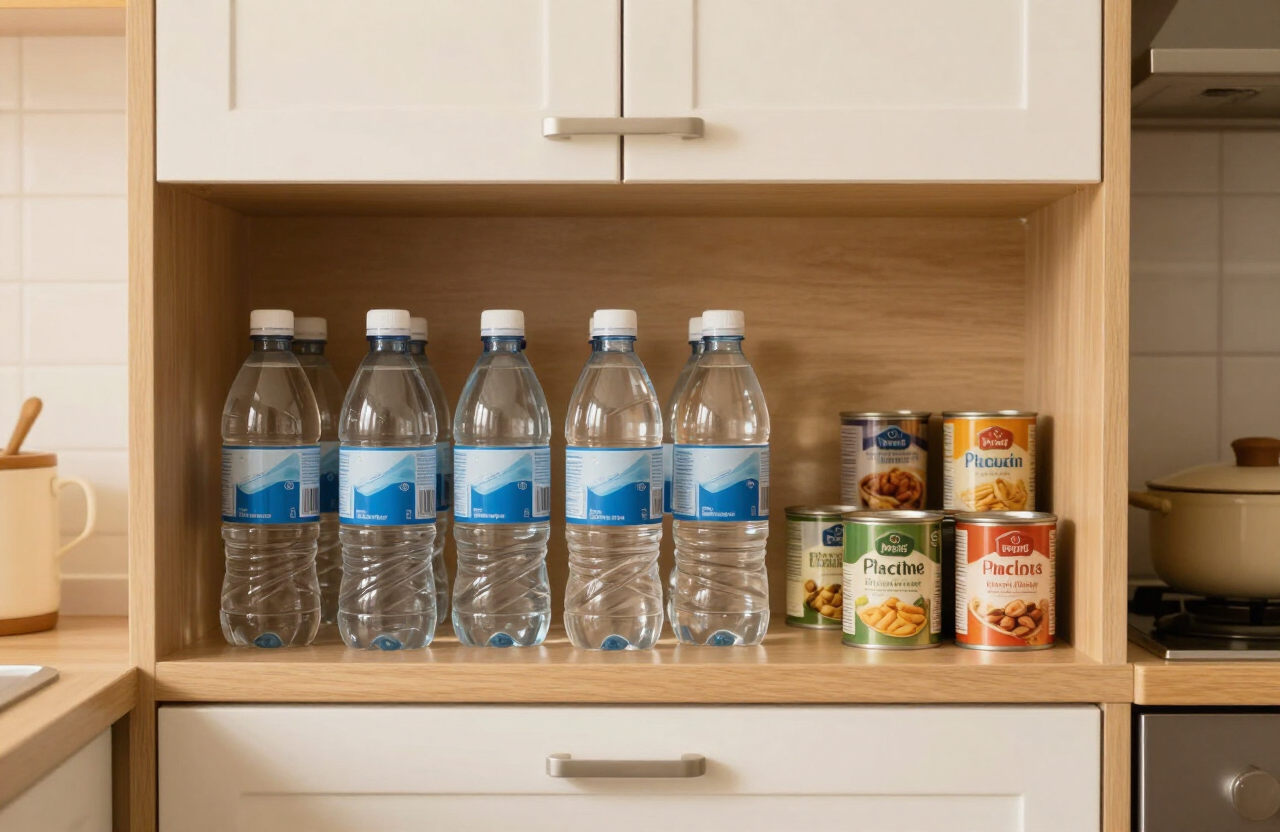
- Bottom kitchen shelf: daily-use bottles that rotate through normal life
Compact containers that fit a studio
The container matters as much as the count. In a studio, you want containers that stack, slide, and do not waste vertical space.
| Container | Best for | Studio note |
|---|---|---|
| Sealed one-gallon jugs | Everyday rotation | Slide under beds and behind furniture |
| Stackable water bricks | A fixed reserve | Lock together and do not tip |
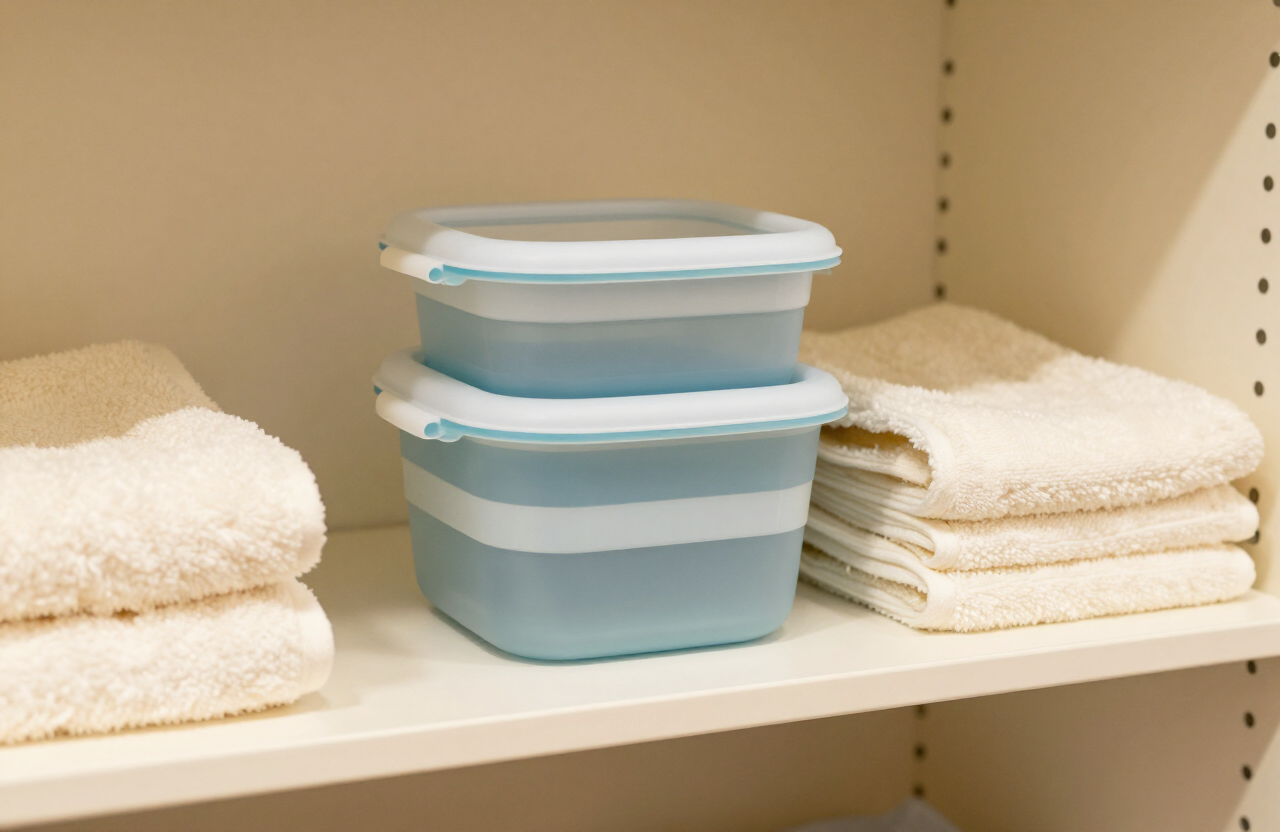
| Collapsible containers | On-demand filling | Store flat, fill when a storm is forecast |
| Slim one-liter bottles | Tight gaps | Fit behind couches and in closets |
Avoid milk jugs. The residue is nearly impossible to remove and the plastic degrades. Purpose-made or commercial water bottles are easier to trust.
Rotation without waste
Sealed commercial water lasts well past its printed date if it stays cool and dark, but rotation keeps you honest. Every six months, drink the oldest bottles through a normal week and replace them on your next grocery run.
Write the date on a card taped to the bin, not on each bottle. One card, one glance, and you know what to rotate.
Closing the gap with purification
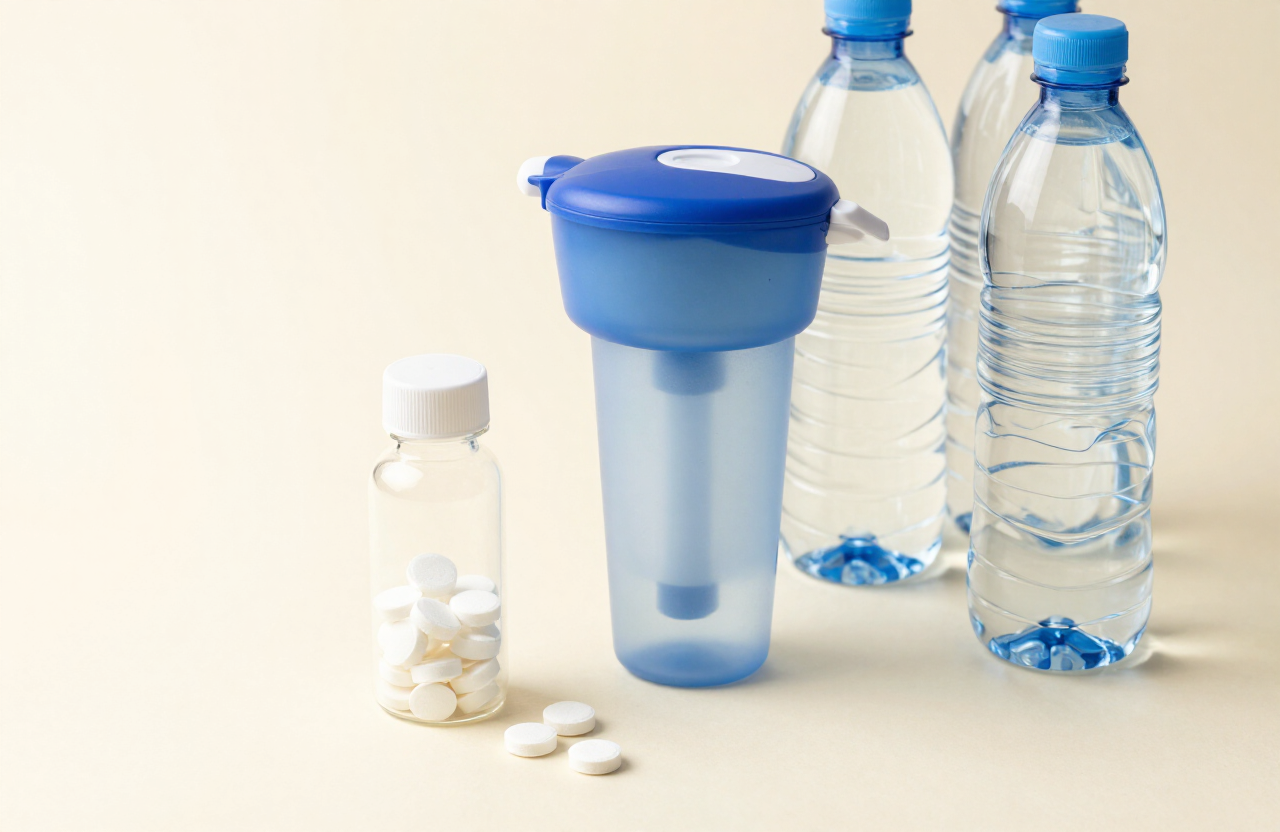
No studio can hold a two-week stockpile, and that is fine. The realistic plan is a stored 72-hour to one-week supply plus the ability to make more water safe.
- Water purification tablets: tiny, cheap, and they live in a pocket of the food bin
- A small straw or pump filter: turns questionable water into drinkable water
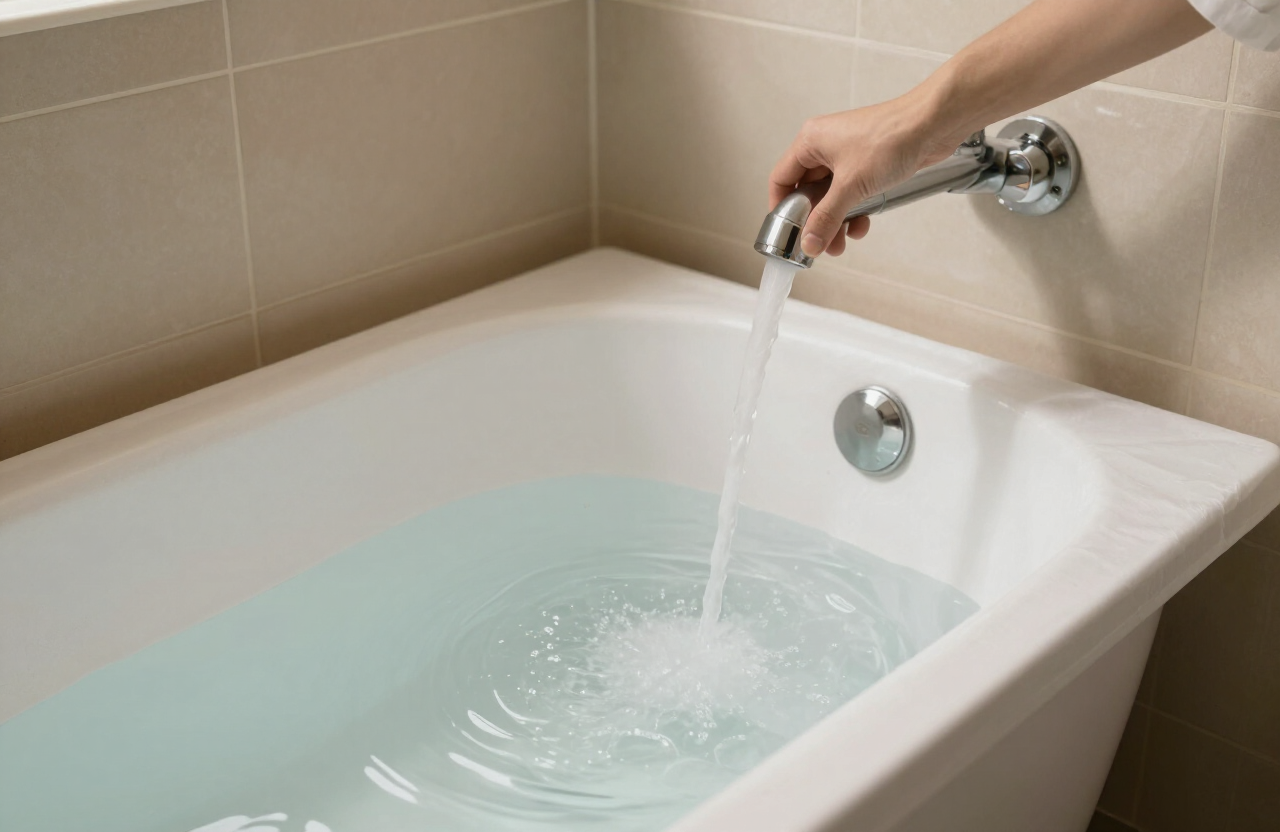
- The bathtub: fill it with a liner when you have advance warning
- Your water heater: a standard tank holds 30 to 50 gallons if drained correctly
Pair your water with food using our no-cook meal plan.
Storing water safely in a warm studio
Heat is the enemy of stored water quality. Keep bottles away from radiators, sunny exterior walls, and the cabinet above the stove. Under the bed and the closet floor are usually the coolest spots in a studio.
If your studio runs warm, prefer opaque or solid containers over clear ones, and check the rotation date more often. Cool and dark is the goal.
The realistic studio plan is not a two-week stockpile. It is a week of stored water plus the ability to make more safe.
Small Space Emergency editorial team
Frequently asked questions
Editorial note: this guide provides general preparedness information, not emergency, medical, legal, or engineering advice. Recommendations are cross-checked against public emergency-management guidance and adapted for small-space living. During an active emergency, follow your local authorities and emergency services. See our editorial standards and affiliate disclosure.