Small-Kitchen Emergency Pantry: Foods That Store Easily
The best emergency pantry is one that hides inside your everyday cooking. If your backup food is also your Tuesday food, nothing expires forgotten and the “emergency” part costs almost nothing extra.
The five categories that earn cabinet space
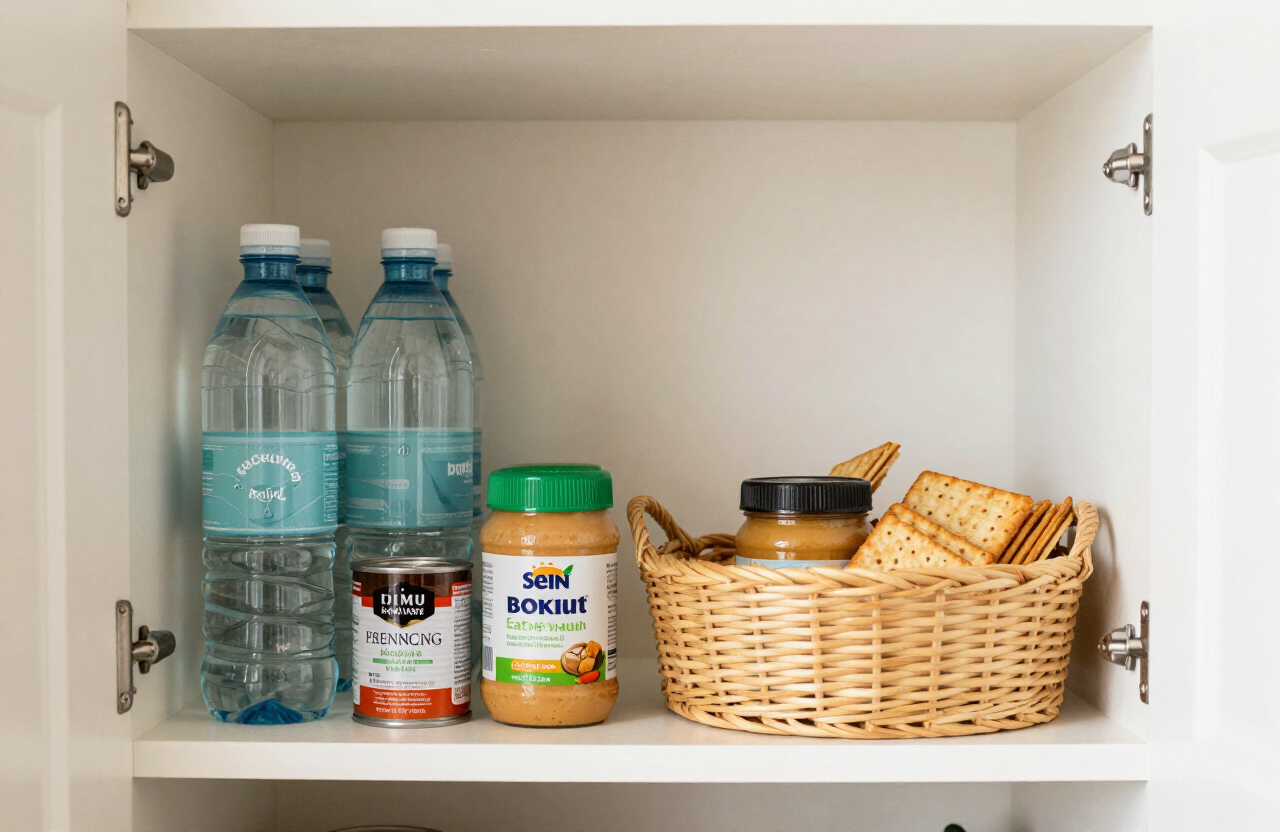
- 1Proteins: tuna and chicken pouches, canned beans, peanut butter, nuts
- 2Carbs: rice, pasta, crackers, tortillas, oats, granola
- 3Fruits and vegetables: canned tomatoes, jarred salsa, applesauce, dried fruit
- 4Fats and flavor: olive oil, shelf-stable sauces, spices, honey
- 5Comfort and caffeine: coffee, tea, chocolate — morale is a real supply category
Note what is missing: freeze-dried buckets and specialty survival food. For most apartments, supermarket staples store just as well per cubic foot and actually get eaten.
Map your cabinets like a system
- One “deep reserve” shelf: the highest or lowest cabinet holds the 3-day no-cook stock, grouped in one bin
- Everyday shelves: normal groceries, restocked from the reserve first (first in, first out)
- Under-sink or floor-level: water bottles and the manual can opener, taped to the bin lid so it never wanders
- One index card inside the cabinet door listing reserve contents and dates
Shelf life reality check
| Food | Realistic pantry life | Storage note |
|---|---|---|
| Canned beans, fish, tomatoes | 2–5 years | Cool, dry; discard bulging or deeply dented cans |
| Peanut butter | 6–12 months | Natural versions separate — stir before storing |
| White rice, pasta, oats | 1–2 years | Airtight containers block pantry moths |
| Crackers, granola | 6–9 months | Go stale before they go unsafe — rotate often |
| Nuts | 3–6 months | Oils turn rancid in warm kitchens; buy smaller bags |
The no-waste rotation habit
Shop from your reserve shelf first, then replace. If crackers go in on grocery day and come out for weekday lunches, your emergency stock is always fresh and the system costs nothing but a little order.
Frequently asked questions
Editorial note: this guide provides general preparedness information, not emergency, medical, legal, or engineering advice. Recommendations are cross-checked against public emergency-management guidance and adapted for small-space living. During an active emergency, follow your local authorities and emergency services. See our editorial standards and affiliate disclosure.