The 72-Hour Apartment Emergency Checklist
Seventy-two hours is the window emergency agencies ask households to be self-sufficient for — the time it can take for help to reach everyone after a major disruption. This checklist covers all of it with gear that fits in a single apartment closet or two under-bed bins.
Water: the first non-negotiable
Plan on one gallon per person per day for drinking and basic hygiene — three gallons per person for 72 hours. In a small apartment, that is usually six to twelve standard one-gallon jugs or a stack of 1-liter bottles under the bed.
- Store-bought sealed water (easiest; rotate every 6–12 months)
- A filled bathtub only counts if you have advance warning — a tub liner keeps it clean
- Water purification tablets or a small filter as backup for extending supply
- One bottle kept in each room you sleep or work in, so water is reachable in the dark
For the full storage math — including where 12 gallons actually fit in a studio — see our guide on how much emergency water an apartment should store.
Food: three days, no cooking required
Assume your stove and microwave may be unusable. Choose food you would eat anyway, that needs no heat, no water, and no refrigeration.
- Protein: canned tuna or chicken, peanut butter, protein bars, nuts
- Carbs: crackers, tortillas, granola, dried fruit
- Comfort: instant coffee or tea bags (if you can heat water), chocolate, shelf-stable juice boxes
- A manual can opener — the most commonly forgotten item on any list
Light and power
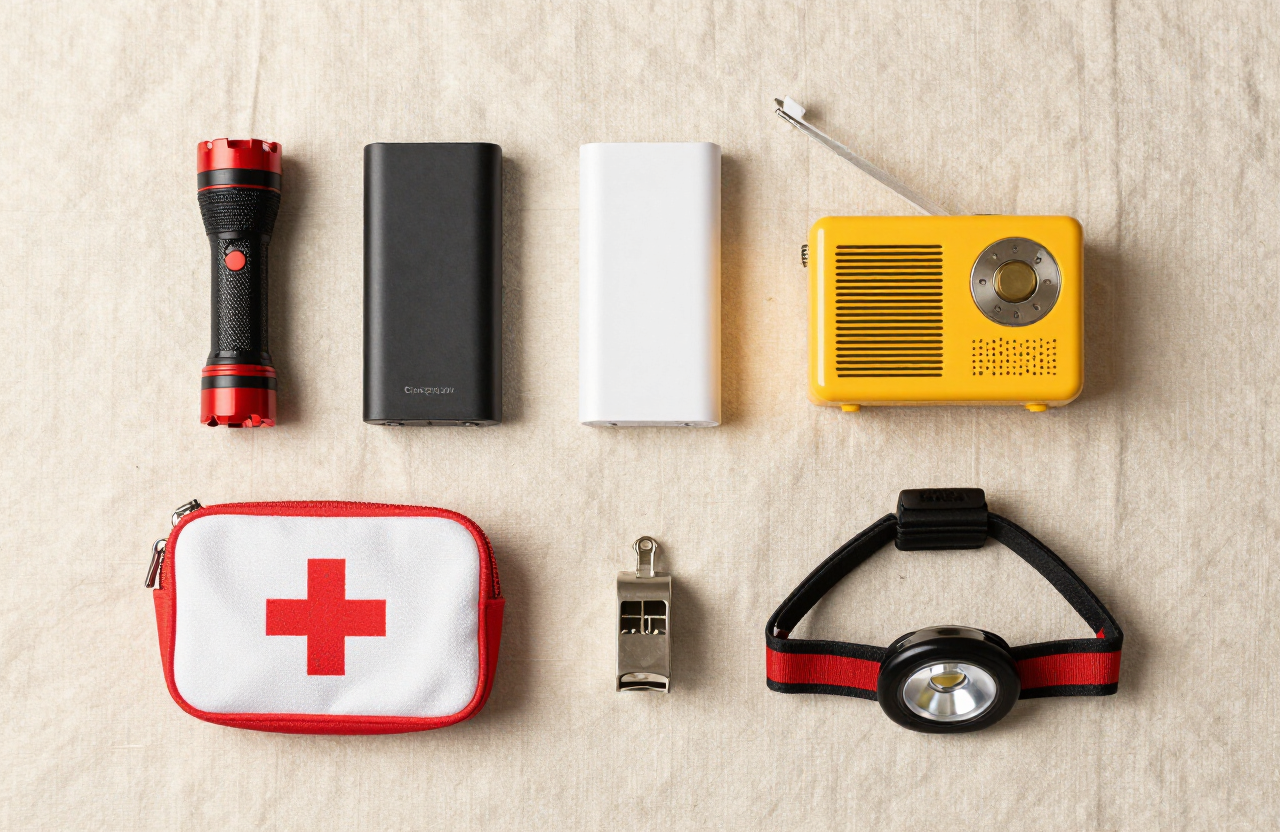
- One flashlight per person, plus one lantern for the main room
- Spare batteries in the size your lights actually use (check before storing)
- A 10,000–20,000 mAh power bank, kept charged above 80%
- Headlamp for hands-free tasks like reading meters or helping kids
First aid, medications, and sanitation
- A basic first-aid kit: bandages, gauze, antiseptic, medical tape, tweezers, pain relievers
- A 3–7 day buffer of any prescription medications, rotated so nothing expires
- Hand sanitizer, moist wipes, and heavy-duty trash bags (a toilet may not flush in a long outage)
- Copies of prescriptions and a list of allergies for each household member
Documents, cash, and communication
- Copies of ID, lease or insurance documents, and emergency contacts in a waterproof pouch
- Small bills — card readers and ATMs go down with the power
- A battery or hand-crank radio for local emergency broadcasts
- One out-of-area contact everyone in the household agrees to check in with
The go-bag, staged by the door
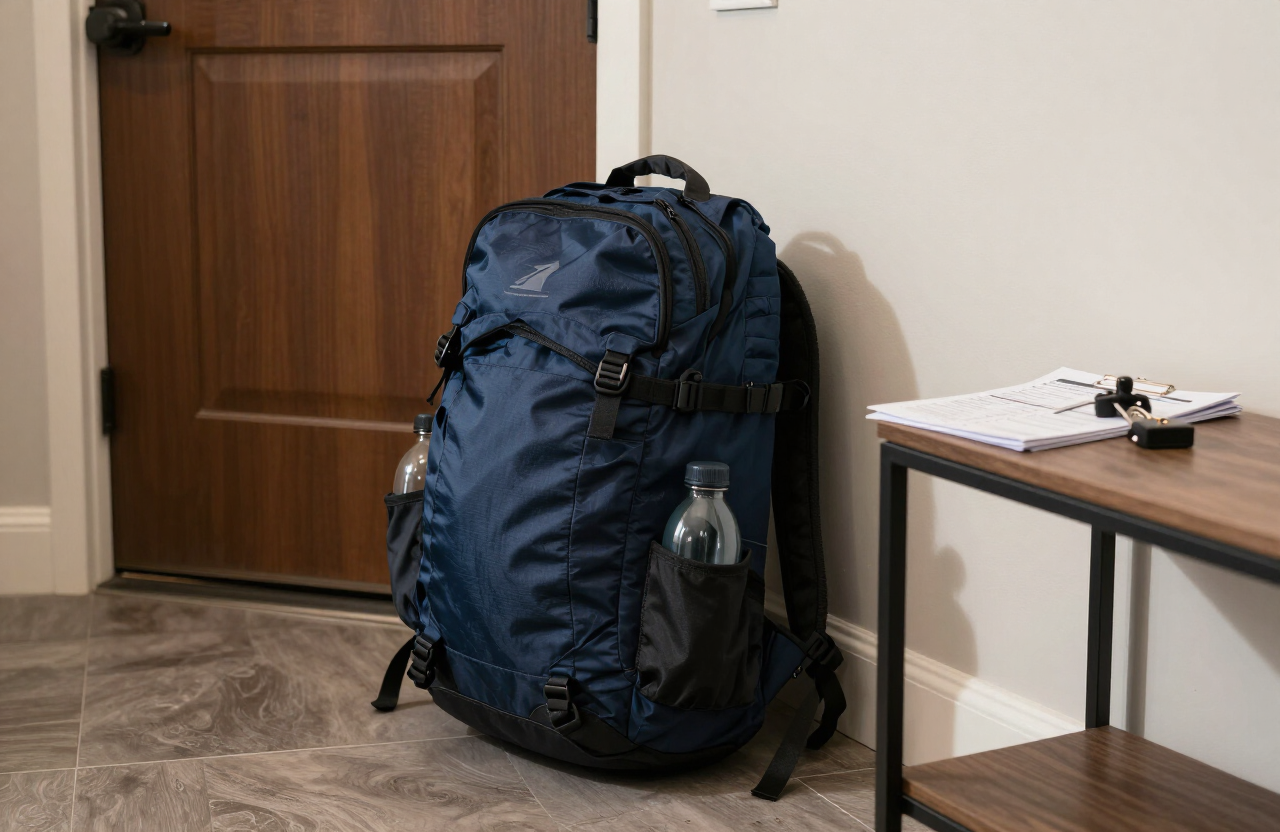
Even if you plan to shelter at home, pack one backpack you can grab in under a minute: water bottle, snacks, flashlight, first-aid pouch, documents pouch, phone charger, and a warm layer. If an evacuation order comes, you are already done.
Frequently asked questions
Editorial note: this guide provides general preparedness information, not emergency, medical, legal, or engineering advice. Recommendations are cross-checked against public emergency-management guidance and adapted for small-space living. During an active emergency, follow your local authorities and emergency services. See our editorial standards and affiliate disclosure.