Emergency Food Storage Without a Basement or Garage
Basements and garages solve two problems at once: space and cool temperatures. Apartments have neither — but they have five storage zones most people never use, and a few simple rules make them work just as well.
The two enemies: heat and pests
Every 10°F above about 70°F roughly halves the useful life of stored food. In an apartment, that means avoiding the cabinet above the stove, the shelf beside the radiator, and any exterior wall that bakes in afternoon sun. Pests are the second enemy — and airtight hard containers beat cardboard every time.
Five storage zones that work in any apartment
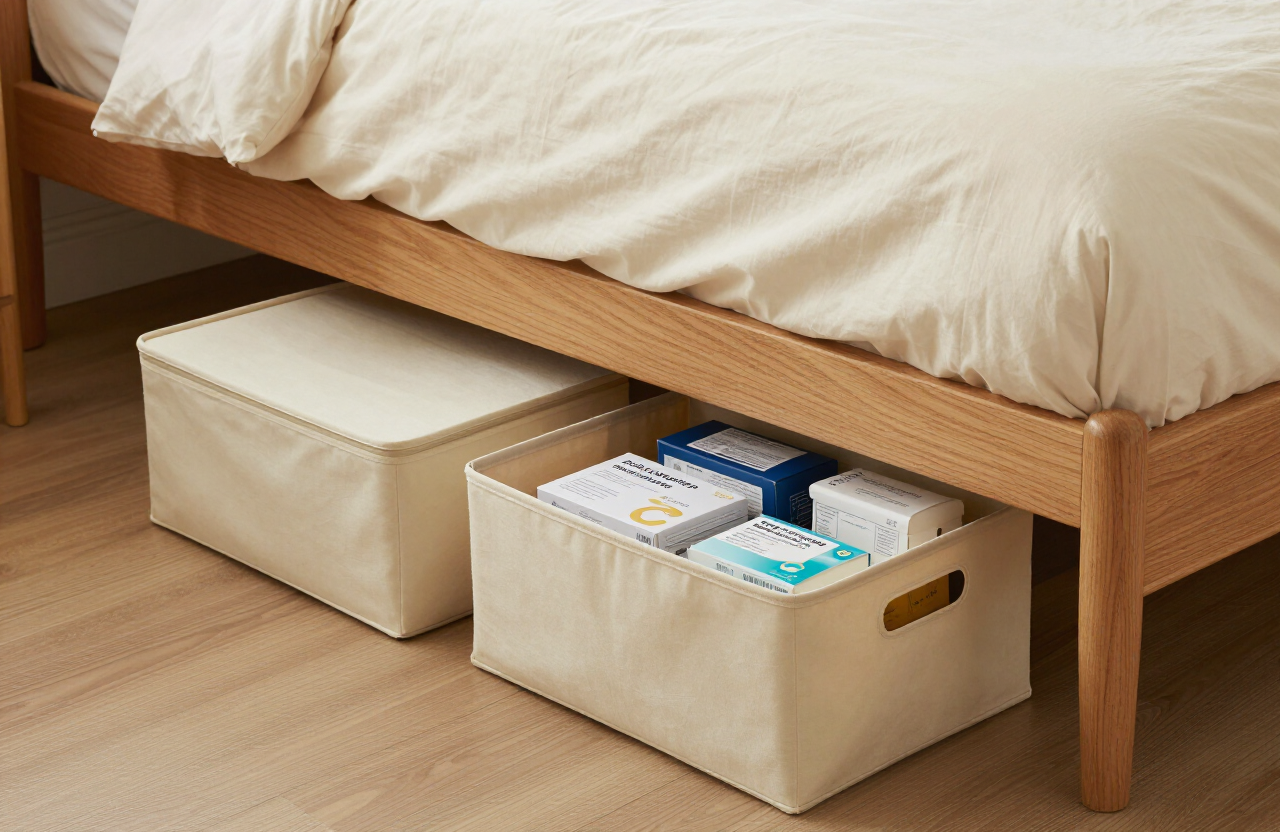
- 1Under the bed: the coolest, darkest large zone in most homes — ideal for water and canned goods in low bins
- 2Closet floors and top shelves: floor for heavy items, top shelf for light backup stock
- 3Behind the couch or under a console table: a 6–8 inch gap fits a surprising row of cans or bottles
- 4Storage ottoman or bench: doubles as furniture; best for sealed, pest-proof items
- 5High kitchen cabinets: the awkward above-fridge space is perfect for lightweight, long-life items you rarely rotate
Container rules for small spaces
- Hard-sided, gasket-lidded bins for anything a pest might want
- Clear bins where you can, labeled bins everywhere
- One category per bin so a check takes seconds, not an excavation
- Keep food off bare floors — a cheap rack or even a pallet-style mat prevents moisture damage
How much is enough without a stockpile room?
A 3-day no-cook reserve for two people fits in a single 14-quart bin. A two-week supplement of rice, pasta, and canned goods fits in two more. Three bins — under one bed — is a genuinely resilient apartment food supply.
Frequently asked questions
Editorial note: this guide provides general preparedness information, not emergency, medical, legal, or engineering advice. Recommendations are cross-checked against public emergency-management guidance and adapted for small-space living. During an active emergency, follow your local authorities and emergency services. See our editorial standards and affiliate disclosure.