Build a Small-Apartment Emergency Kit on a Budget
A complete 72-hour kit does not need to arrive in one expensive box. Spread over three months of normal grocery trips, a solid apartment kit costs less than most streaming subscriptions — if you buy in the right order.
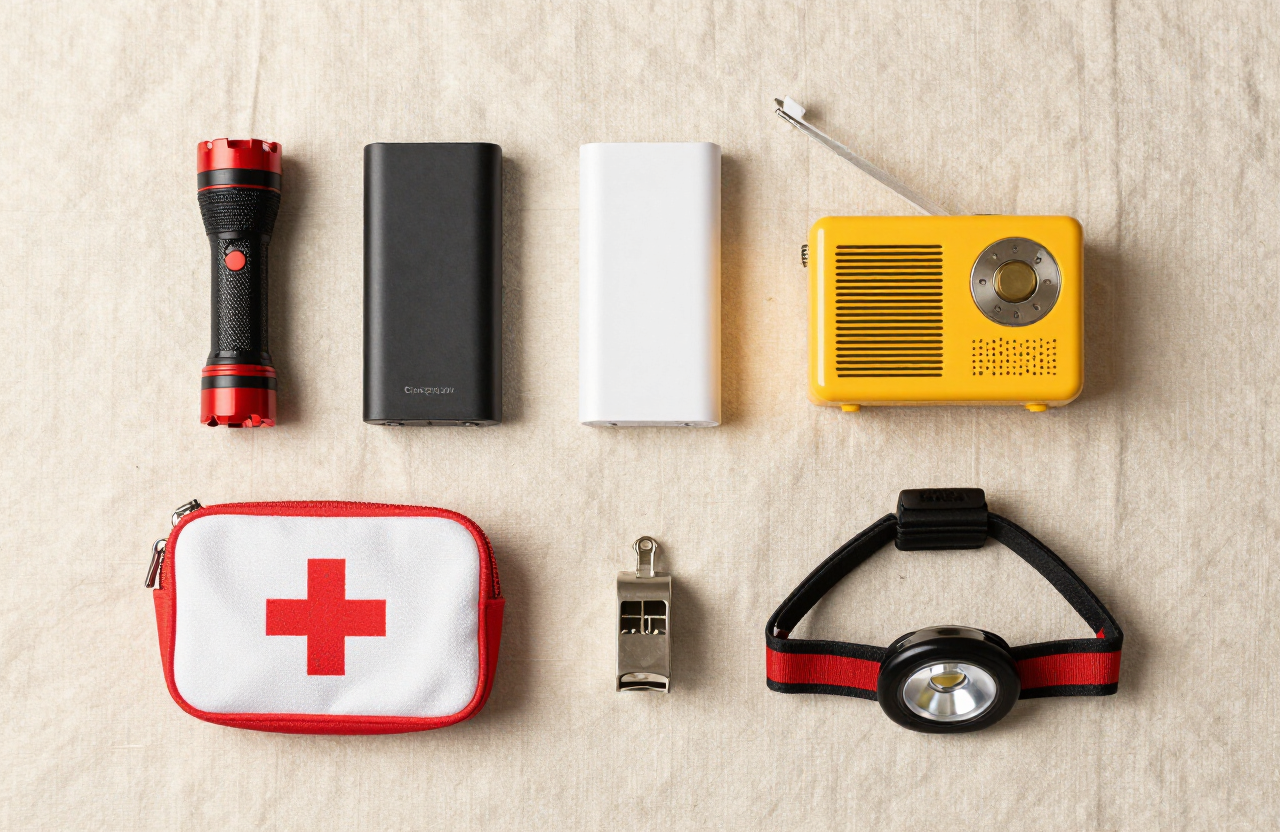
Month 1: water, light, and the can opener
- Water: 3 gallons per person — the cheapest life-safety item that exists
- One flashlight per person and one lantern (budget LED models are excellent)
- Spare batteries matched to your lights
- Manual can opener, moist wipes, hand sanitizer, trash bags
- A basic first-aid kit or a zip pouch of bandages, gauze, and pain relievers
This month covers the items with the highest safety value per dollar. Everything else is refinement.
Month 2: food and power
- Three days of no-cook food per person, bought as “one extra” item per grocery trip
- A mid-capacity power bank — watch for sales; prices drop constantly
- Short charging cables dedicated to the kit
- A battery or hand-crank radio (budget models receive the same broadcasts as premium ones)
Month 3: documents, cash, and comfort
- Waterproof pouch with copies of IDs, insurance, and contacts
- A small cash reserve in small bills, added a few dollars at a time
- Space blankets, a warm layer per person, and one comfort item each
- A multi-tool and a roll of duct tape
Where budget versions are fine — and where they are not
| Save money on | Do not cheap out on |
|---|---|
| Lanterns and flashlights (basic LEDs are great) | Water containers (food-grade, sealable) |
| Radios (reception is what matters) | Power banks (buy known brands — battery safety) |
| Bins and organizers (any clean lidded box) | First-aid consumables (sterile, in-date) |
| Multi-tools (occasional use) | Medications (correct, current, personal) |
Free steps that matter more than purchases
- Write your household plan and out-of-area contact on paper
- Photograph documents and store copies in cloud storage
- Learn your building’s exits, utility locations, and manager contact
- Practice finding your kit in the dark once — it changes how you pack it
Frequently asked questions
Editorial note: this guide provides general preparedness information, not emergency, medical, legal, or engineering advice. Recommendations are cross-checked against public emergency-management guidance and adapted for small-space living. During an active emergency, follow your local authorities and emergency services. See our editorial standards and affiliate disclosure.