What to Put in an Emergency Kit If You Live in a Small Apartment
A small-apartment emergency kit is not a shrunken bunker kit — it is a different design problem. You need the same capabilities (water, food, light, first aid, information) in a footprint of roughly two cubic feet, with nothing that violates a lease.
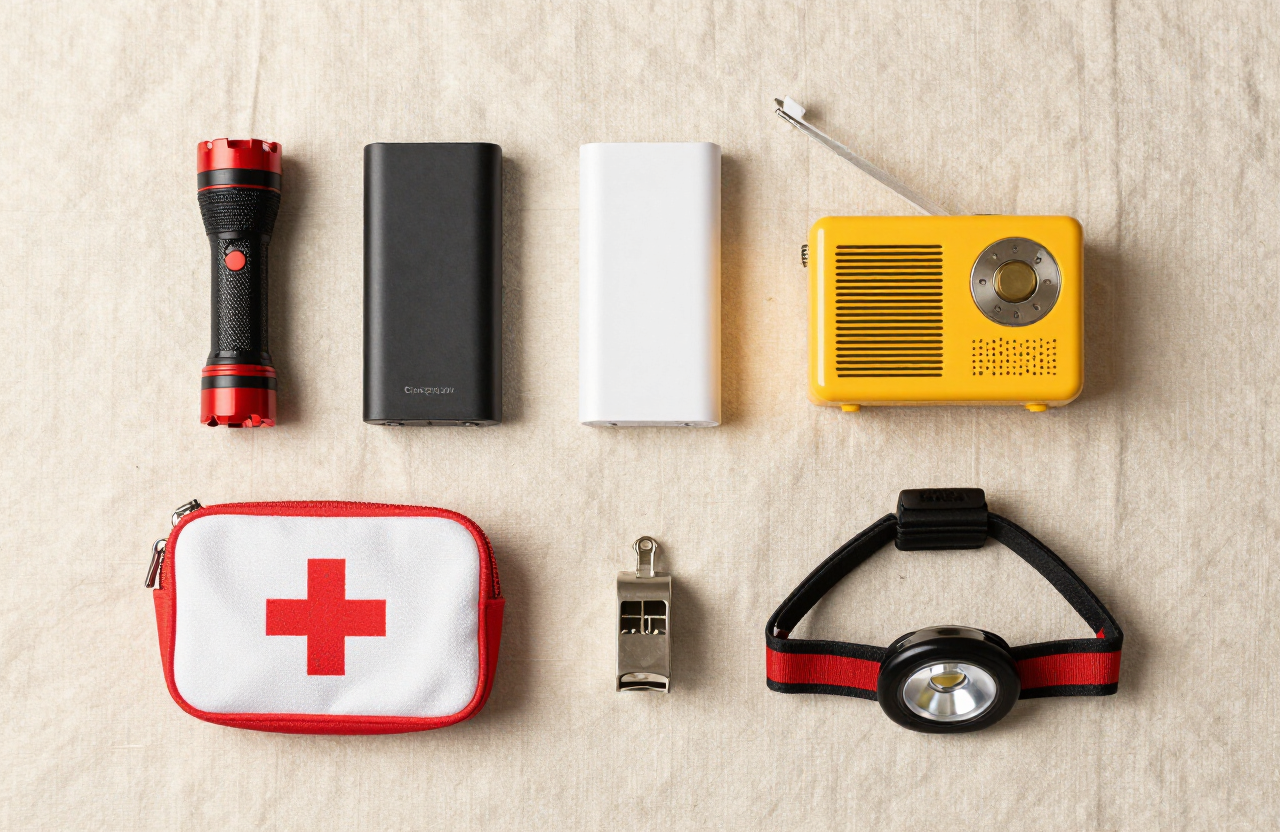
The core kit: ten categories that earn their space
- 1Water — 3 gallons per person, in stackable containers
- 2No-cook food — 3 days per person, plus a manual can opener
- 3Light — flashlight per person, one lantern, spare batteries
- 4Power — one high-capacity power bank and short charging cables
- 5First aid — a compact kit plus personal medications
- 6Radio — battery or hand-crank, for emergency broadcasts
- 7Documents — waterproof pouch with IDs, insurance, contacts
- 8Cash — small bills for when card systems are down
- 9Tools — a multi-tool and duct tape cover most apartment fixes
- 10Comfort — warm layer, space blanket, and one small morale item per person
What to leave out (and why)
- Camp stoves and fuel canisters — unsafe indoors and often prohibited by leases
- Bulk freeze-dried buckets — poor value per cubic foot unless you already camp
- Candles — fire risk; LED lanterns replace them completely
- Duplicate tools — one good multi-tool beats a toolbox in a studio
- Anything you have never opened — practice with gear before you need it
Size it to your floor plan
| Home size | Kit footprint | Best container |
|---|---|---|
| Studio / 1-person | ~1 cubic foot | One under-bed bin + door backpack |
| 1-bedroom / couple | ~2 cubic feet | Two under-bed bins or one closet shelf |
| Small family | ~3–4 cubic feet | One closet with labeled bins per category |
The rule of thumb: if you cannot carry the container to the door in one trip, split it. Two grab-able bins beat one immovable trunk.
The renter-specific additions most lists miss
- Your lease and renter’s insurance policy numbers in the documents pouch
- Your landlord’s and building manager’s phone numbers written on paper
- A photo of your utility shutoffs (if your unit has them) saved to your phone
- A door wedge — useful if a damaged door will not latch, and for travel
Frequently asked questions
Editorial note: this guide provides general preparedness information, not emergency, medical, legal, or engineering advice. Recommendations are cross-checked against public emergency-management guidance and adapted for small-space living. During an active emergency, follow your local authorities and emergency services. See our editorial standards and affiliate disclosure.