Hurricane and Severe Storm Preparation for Renters Who Cannot Board Windows
Most hurricane guides assume you own the building. Renters cannot install shutters or plywood — but the highest-value storm steps are interior ones you fully control: where you shelter, what you stage, and when you leave.
Know your zone before the season, not during the storm
- Look up your address in your local evacuation-zone map (city or county emergency management sites publish them)
- Learn your building’s floor and construction — interior rooms on lower floors of modern buildings are generally safest from wind
- Identify your interior shelter spot now: a bathroom, hallway, or closet with no windows and as many walls between you and outside as possible
- Save your local emergency management and non-emergency numbers on paper
What you can do about windows without touching the building
- Close and lock windows — locked sashes seal tighter against wind-driven rain
- Close blinds and curtains; they will not stop glass but reduce how far fragments travel
- Move furniture, beds, and your shelter spot away from window walls
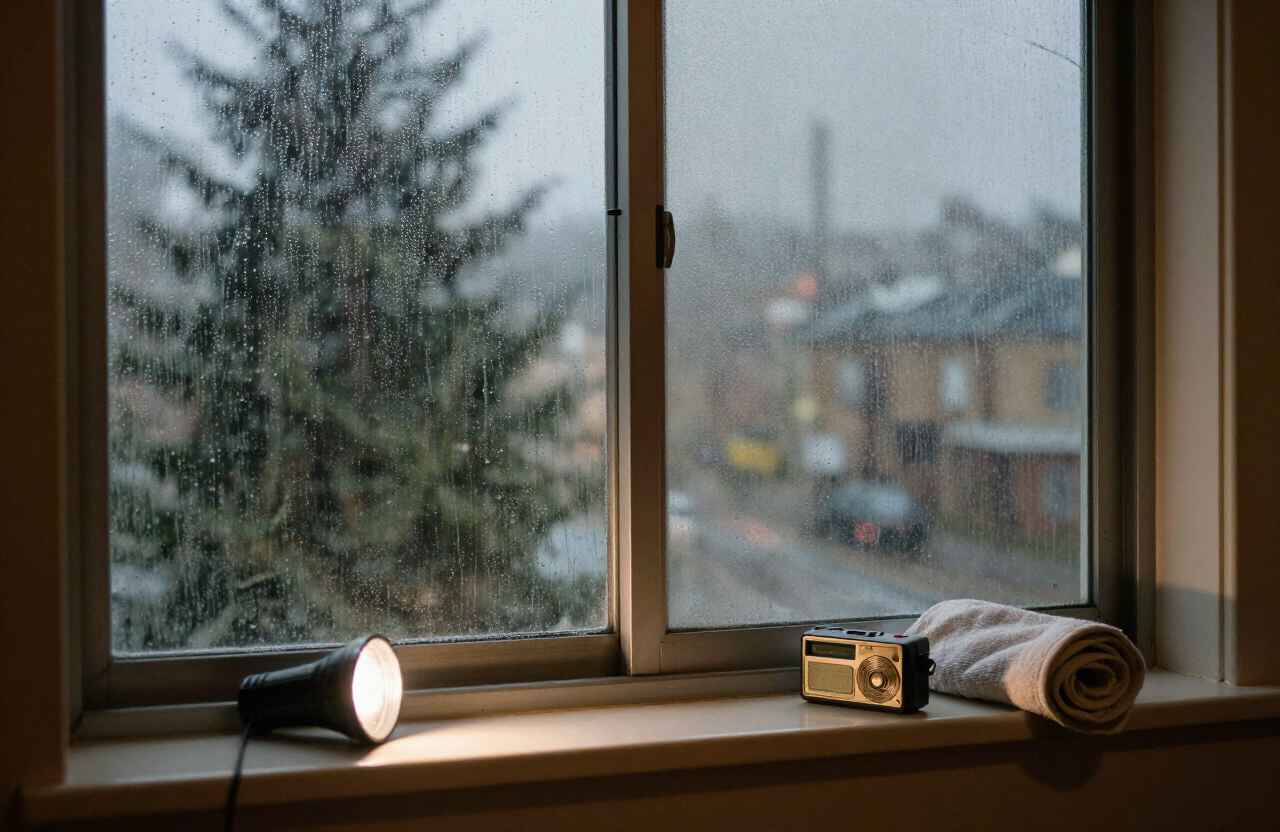
- Roll towels at door thresholds and window sills for wind-driven water
- Do not tape windows — it creates larger, more dangerous shards and does not prevent breakage
Stage water and supplies 48 hours out
- Fill every container you own, plus the bathtub if you have a liner — upper floors can lose water pressure when pumps lose power
- Charge every device and power bank; set phones to low-power mode
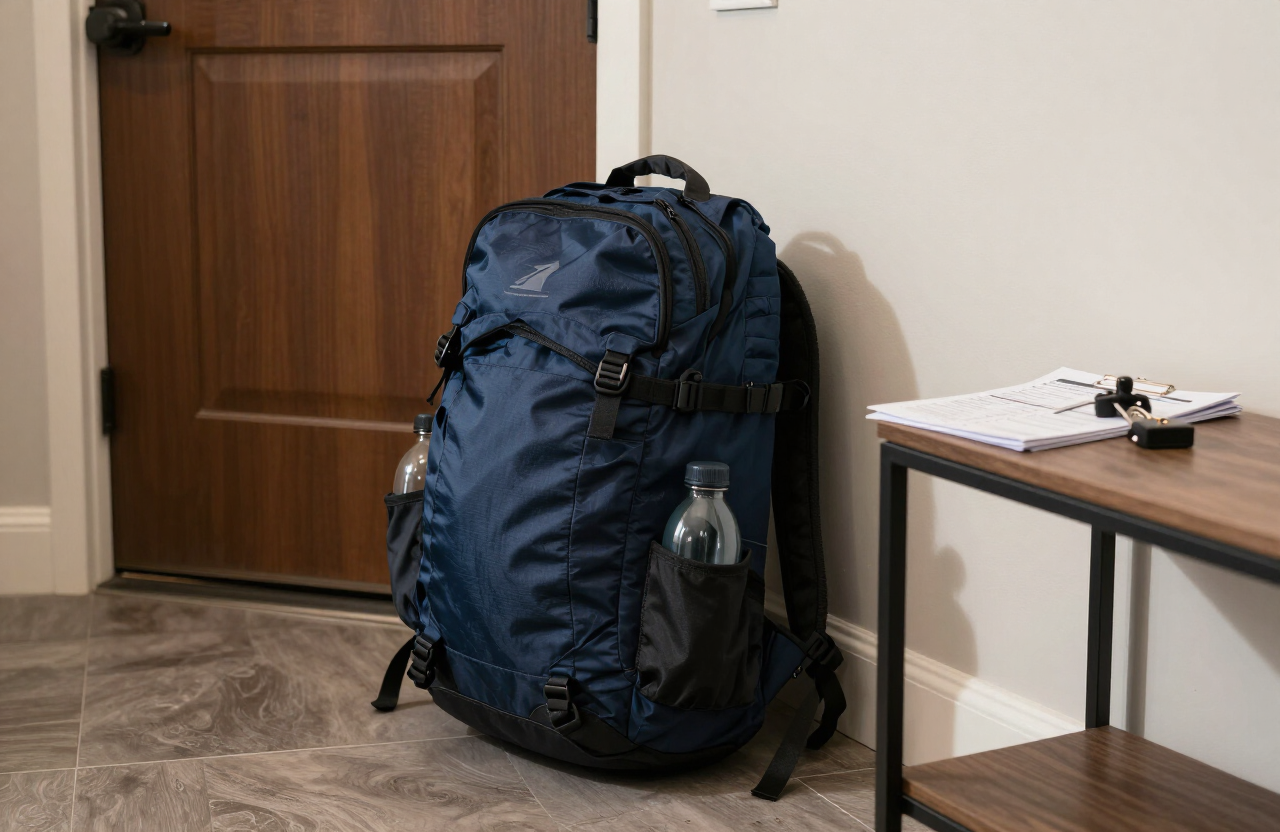
- Move your emergency kit and go-bag into your interior shelter room
- Park your car (if you have one) away from trees and on higher ground if flooding is forecast
- Photograph your unit and belongings for insurance before the storm arrives
The evacuation decision framework
Renters often hesitate to leave a home they do not own. Use three clear triggers instead of gut feel:
- 1Official orders: if your zone is told to evacuate, go — orders account for storm surge and flood risk you cannot judge from a window
- 2Building vulnerability: older buildings, top floors, and large window walls argue for leaving earlier
- 3Personal factors: medical needs, infants, or mobility limits mean leaving early, while routes are open
If you stay, shelter in your interior room during the worst winds, keep shoes and a flashlight within reach, and never go outside during the eye’s calm — the back side of the storm follows.
Frequently asked questions
Editorial note: this guide provides general preparedness information, not emergency, medical, legal, or engineering advice. Recommendations are cross-checked against public emergency-management guidance and adapted for small-space living. During an active emergency, follow your local authorities and emergency services. See our editorial standards and affiliate disclosure.