Emergency Supplies Under-Bed Storage for Apartments
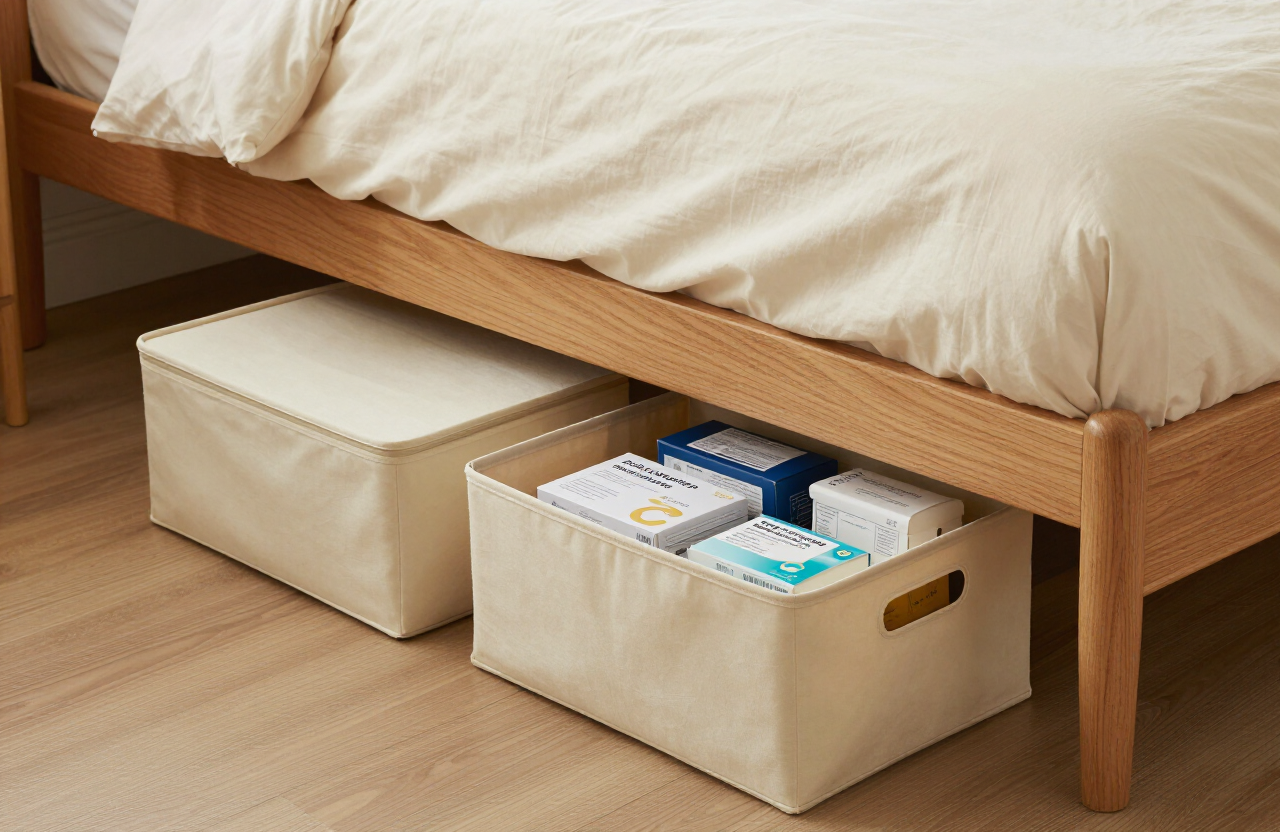
The space under your bed is the single best storage zone in a small apartment: it is cool, dark, out of the way, and surprisingly large. With the right bins and a simple layout, it can hold most of a 72-hour kit without taking up any living space.
Why the under-bed zone wins
Apartments have few hidden storage zones, and the under-bed area is the biggest one most people ignore. A standard queen bed has about 25 square feet of space underneath, and even a low frame usually clears 6 to 8 inches.
It is also cool and dark, which is exactly what stored water and food want. The only thing it cannot do is hold items you need in the first thirty seconds of an outage, which belong by the door instead.
See how it fits a full system in our one-closet storage guide.
Measure before you buy anything
Under-bed height varies a lot. Some frames clear 4 inches, some clear 12, and bed risers can add several more. Measure the gap, the width, and the depth before you shop, and write the numbers down.
- Measure the gap from floor to frame, not just the side rail
- Note any legs or supports that block the corners
- Check the width and depth so bins slide without catching
- Decide whether bed risers are worth it for more height
Choosing bins that fit and slide
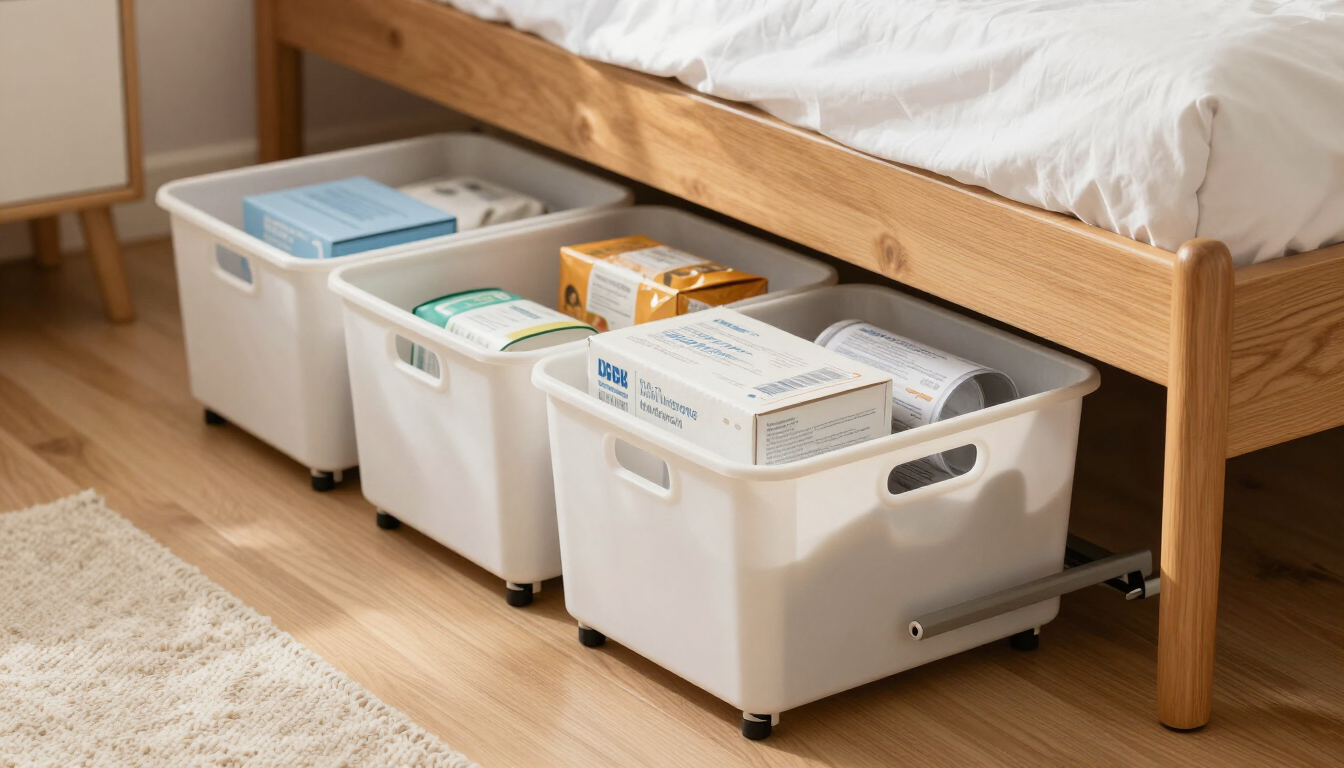
The right bin slides with one hand, seals against dust, and labels clearly. The wrong bin gets stuck, cracks, or hides its contents.
| Bin type | Best for | Under-bed note |
|---|---|---|
| Low lidded plastic bin | Water, food, first aid | The workhorse; measure height first |
| Wheeled under-bed bin | Heavy water and cans | Rolls out easily; needs a few inches of clearance |
| Shallow divided bin | Batteries, meds, small gear | Keeps small items from wandering |
| Vacuum bag | Spare clothing and bedding | Compresses bulky soft items flat |
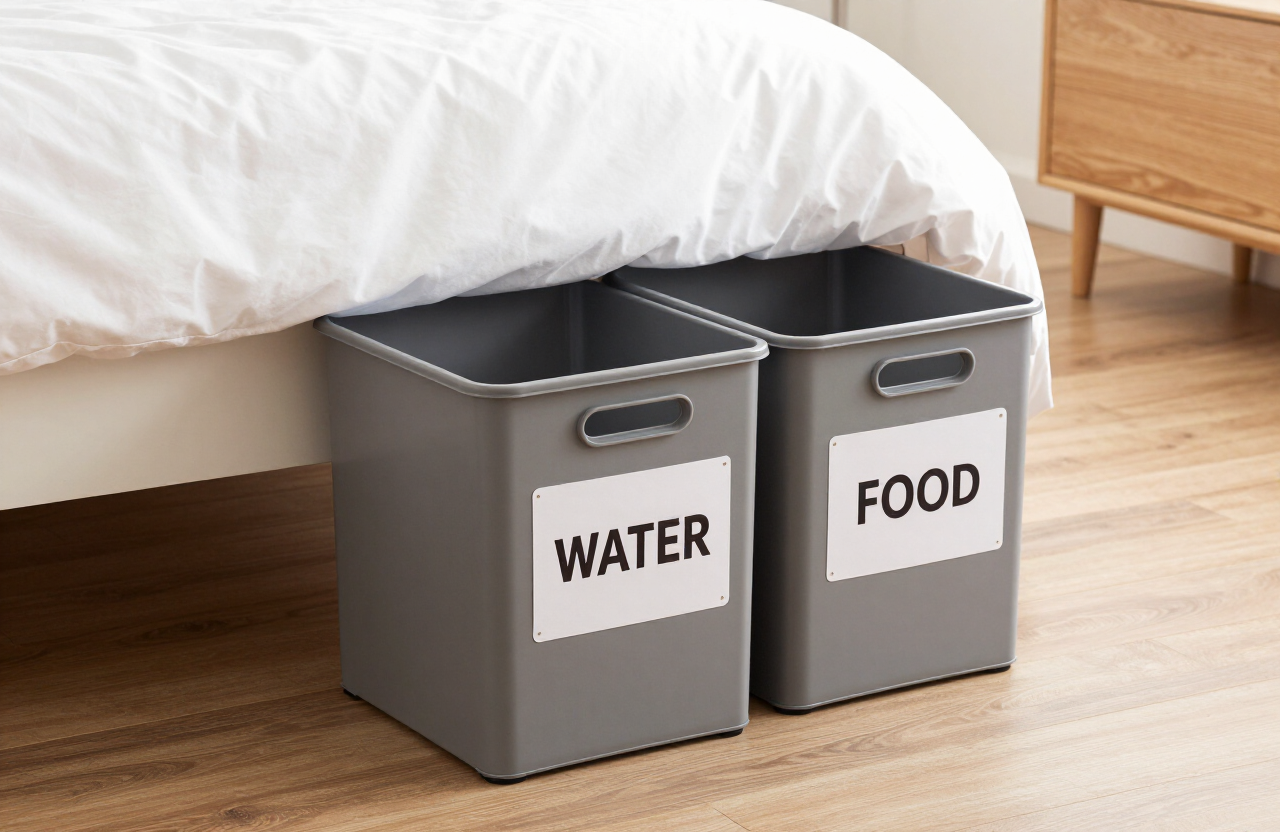
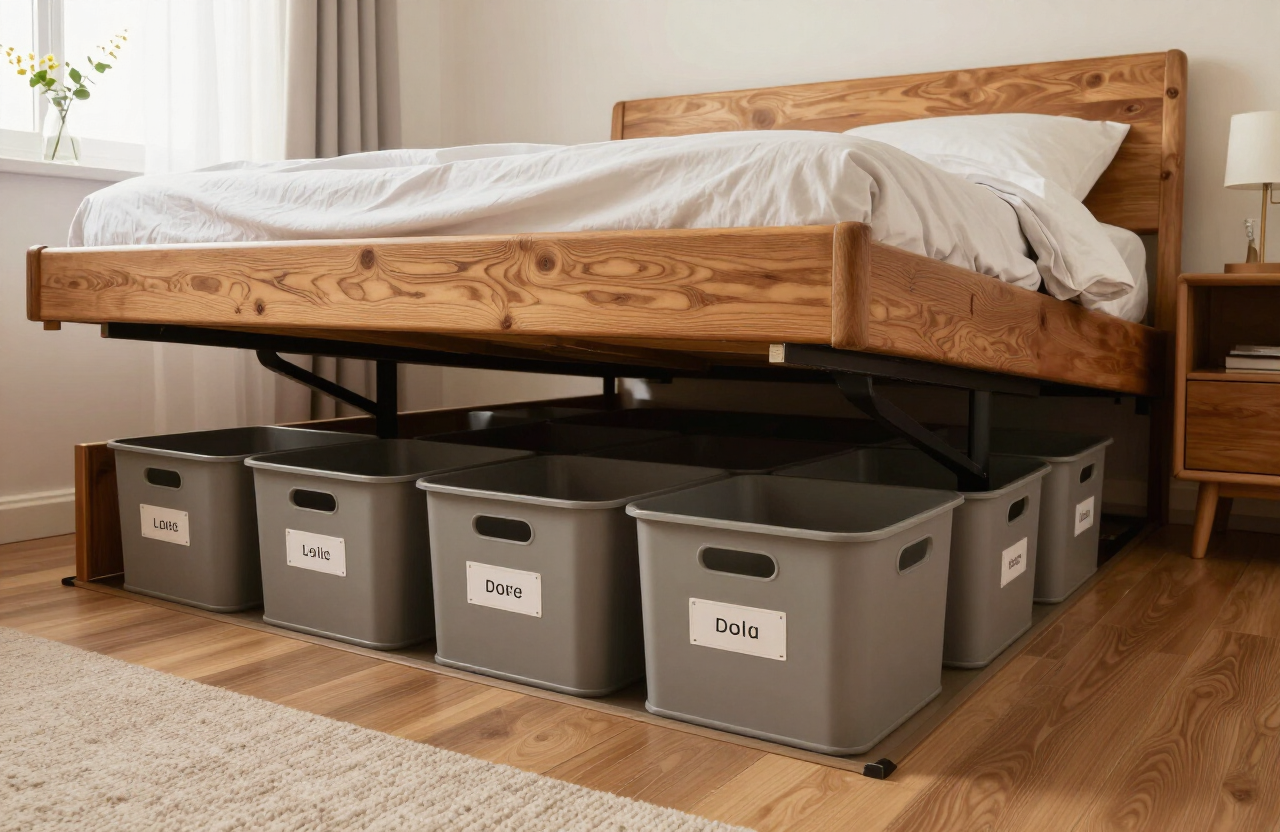
Clear bins let you see contents at a glance. If you use opaque bins, label two adjacent sides so a stack never hides the label.
For the full bin comparison, see our storage bin guide.
What goes where: the under-bed layout
Weight and rotation frequency decide placement. Heavy items go low and to the back, lighter and sooner-used items go on top and toward the front.
- Floor side, back: water in jugs or a low bin, the heaviest stock
- Floor side, front: canned food and the manual can opener
- On top of water: light gear, flashlights, batteries, radio
- On top of food: first-aid pouch and medications in a gasket bin
- Vacuum bags: spare clothing and blankets along the side
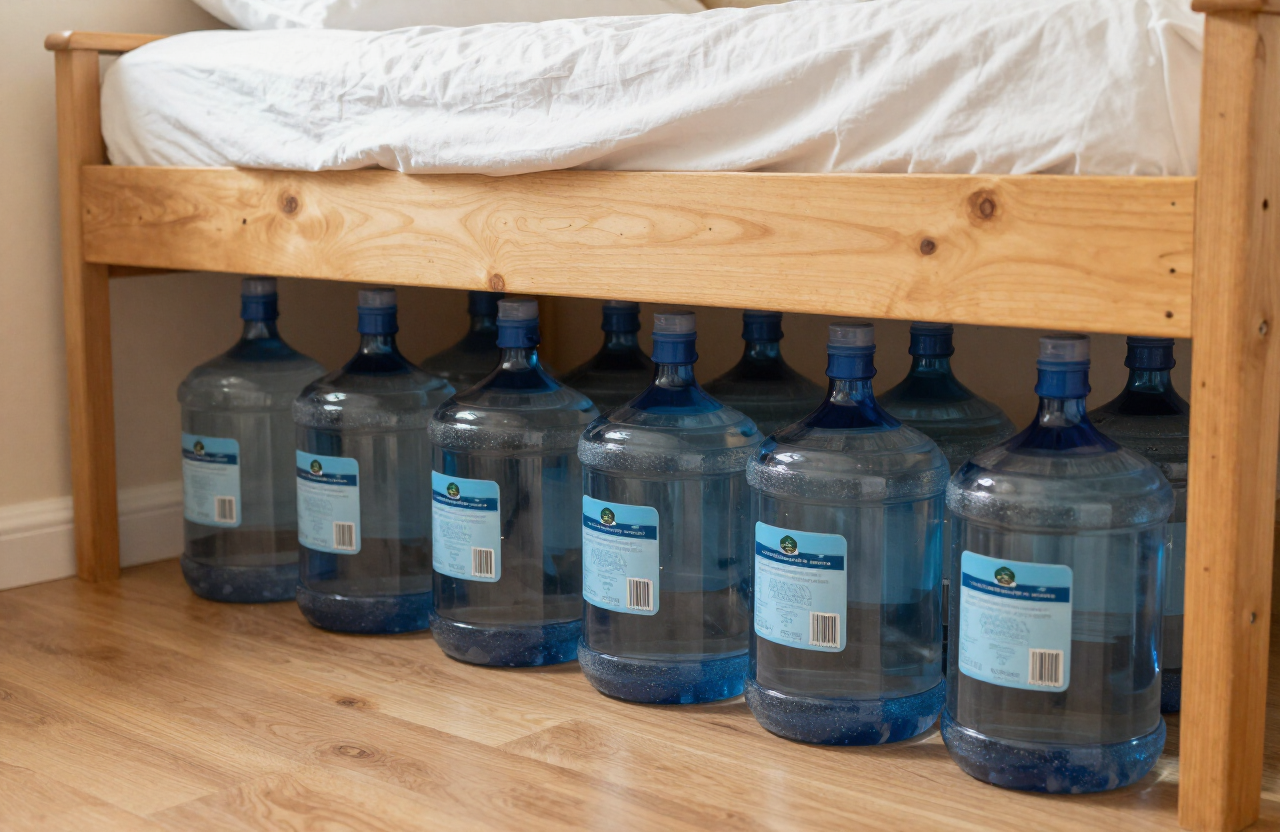
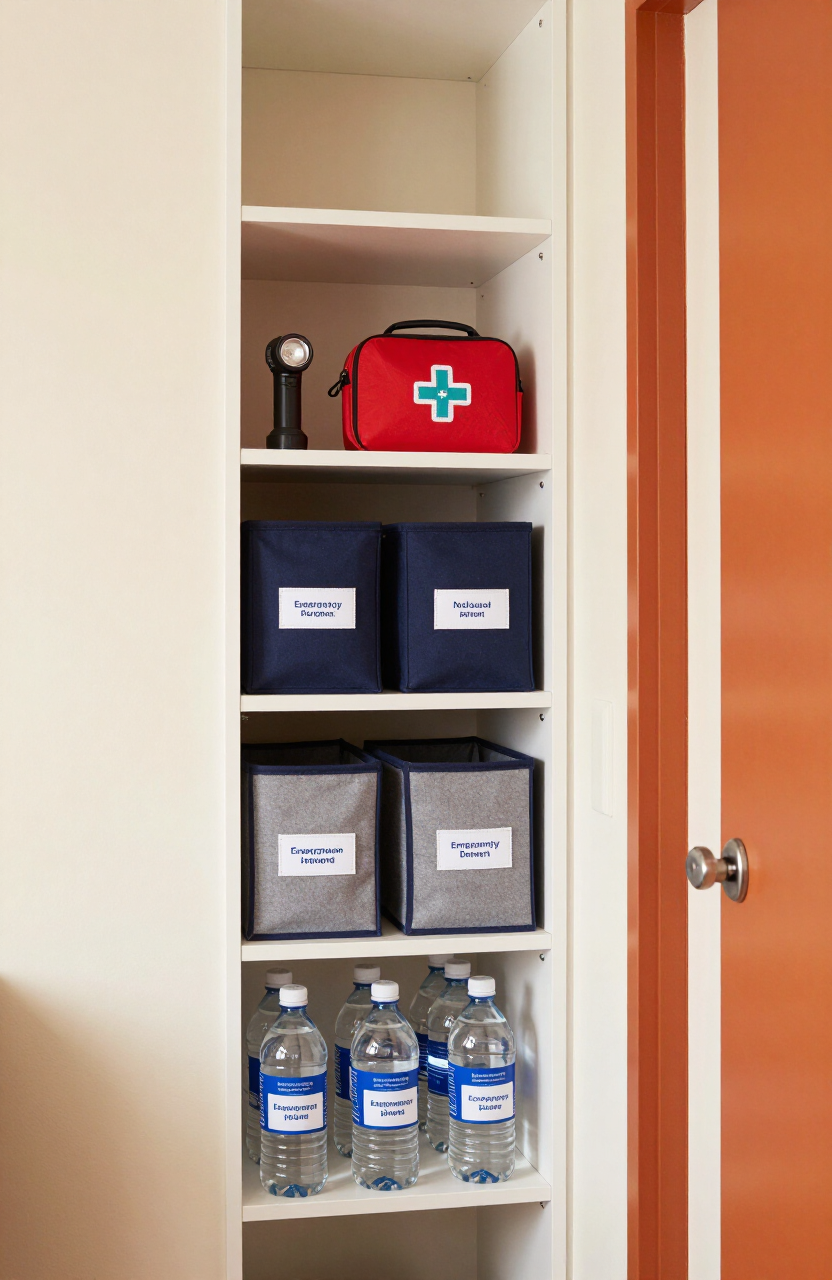
Keep one small caddy or backpack by the door for the things you need in the first minute: a lantern, a flashlight, the documents pouch. Under-bed storage is for the stock, not the grab-fast items.
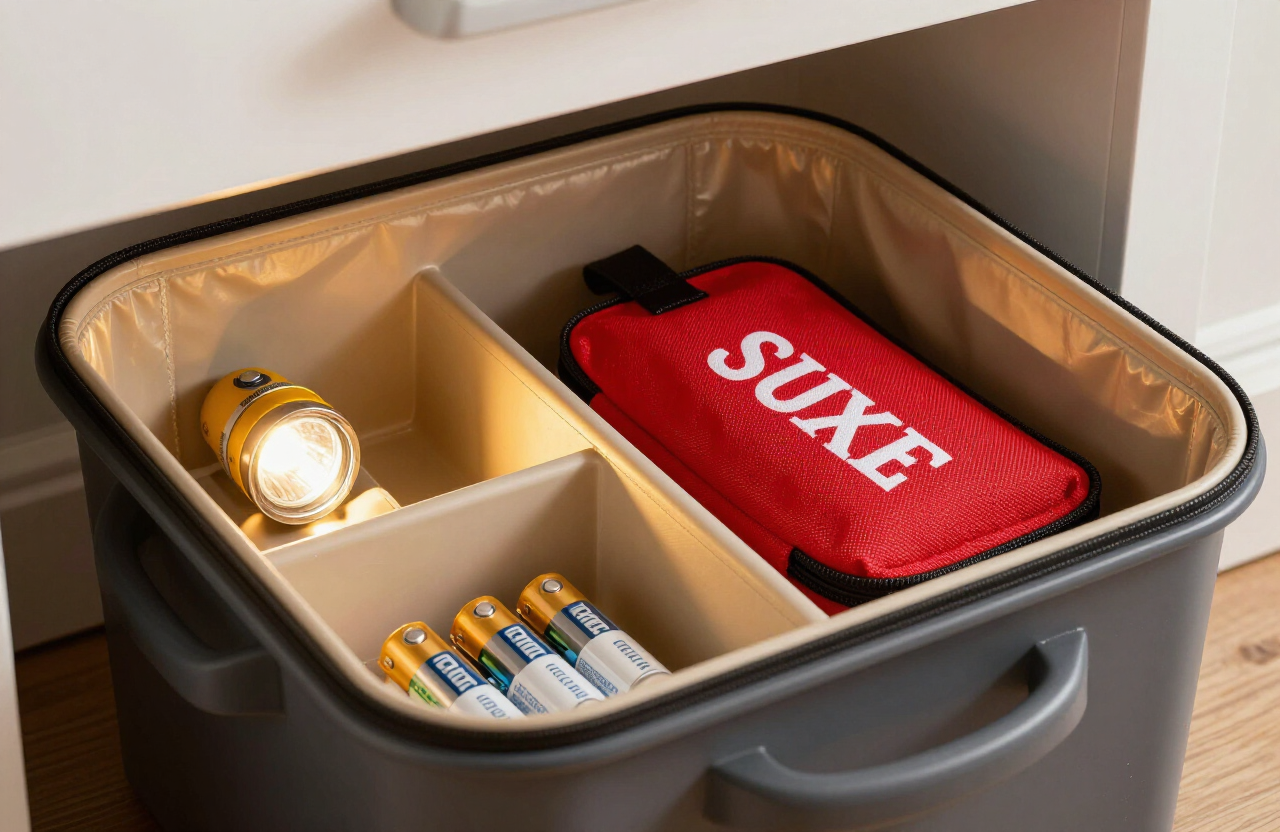
Labeling and the inventory card
You will search this storage in the dark, possibly. Labels and a one-page inventory turn a pile into a system.
- One word per label, large type: WATER, FOOD, LIGHT, FIRST AID
- Write expiry and rotation dates on a card taped to the bin front
- Label two adjacent sides so stacks never hide the label
- Keep the master inventory inside the closet door, not in a drawer
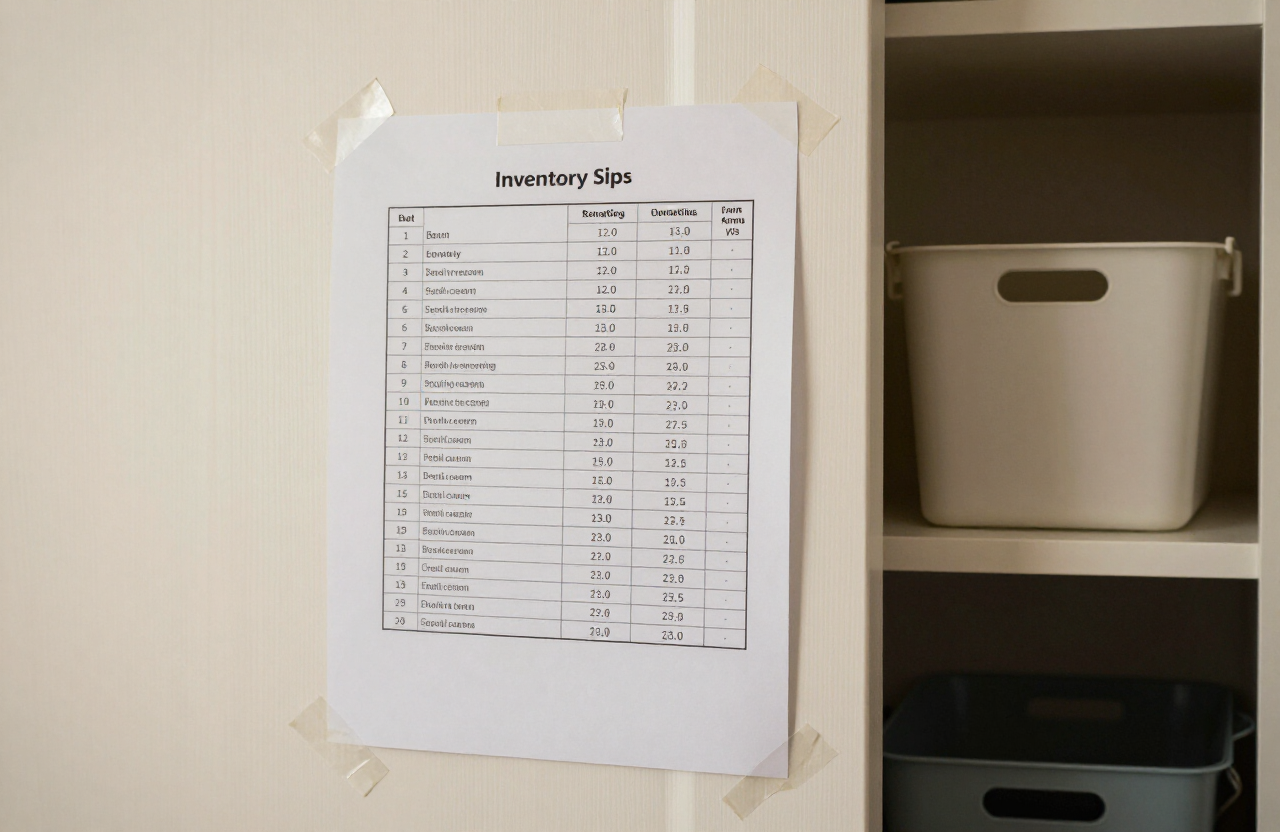
Rotation without waste
Twice a year, pull each bin, check dates, eat anything expiring within three months, replace it on your next grocery run, and recharge the power bank. Fifteen minutes keeps the whole system trustworthy.
Tie the rotation to daylight-saving weekends so you remember. The households that fare best are the ones whose gear actually works when they reach for it.
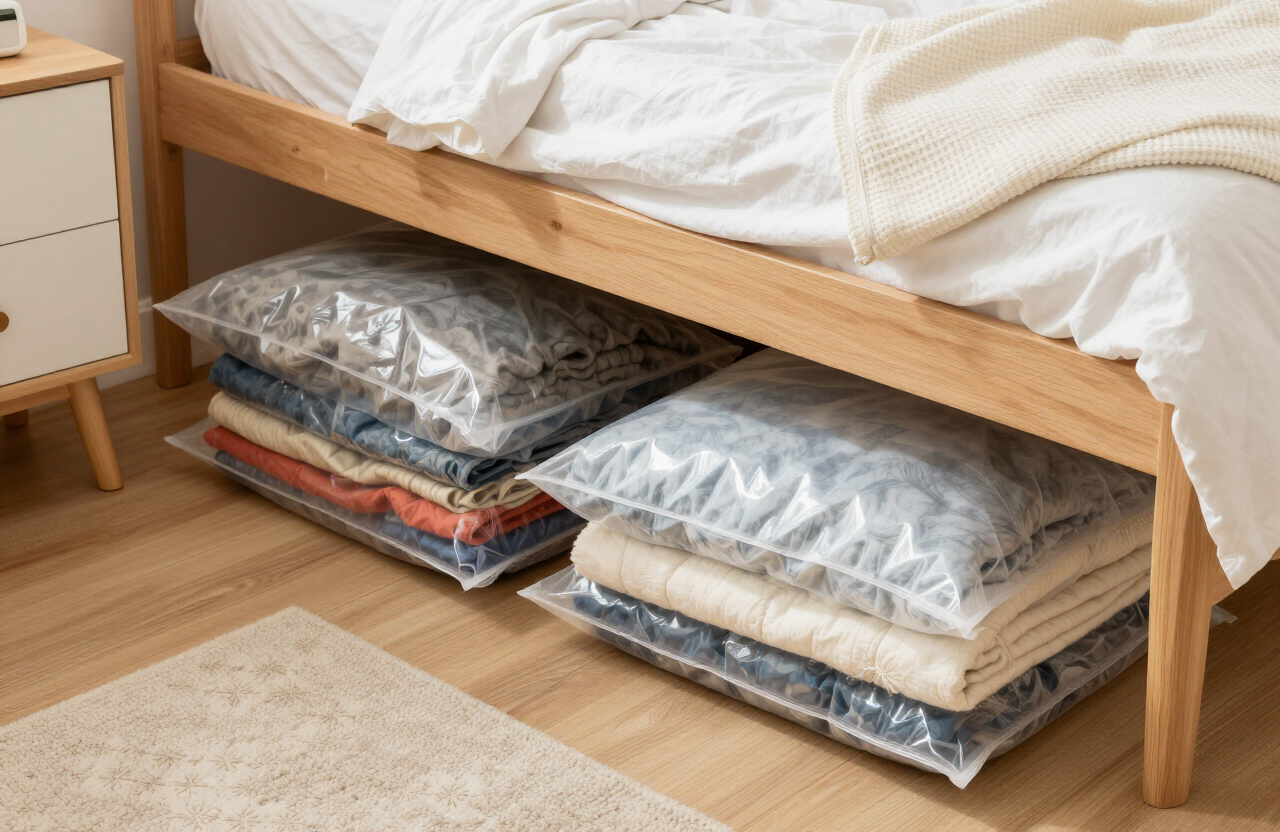
Under-bed storage turns dead space into your main kit. The space was already there. You just had to slide a bin into it.
Small Space Emergency editorial team
What not to store under the bed
A few items do not belong under the bed, even though the space is tempting.
- The go-bag: it belongs by the door, not under the bed
- Anything heat-sensitive near a heating vent
- Original documents: keep copies under the bed, originals in a fire-resistant pouch
- Anything in a fabric bin on a bare floor: use hard, lidded bins
For no-drill shelving options, see our renter-safe storage guide.
Frequently asked questions
Editorial note: this guide provides general preparedness information, not emergency, medical, legal, or engineering advice. Recommendations are cross-checked against public emergency-management guidance and adapted for small-space living. During an active emergency, follow your local authorities and emergency services. See our editorial standards and affiliate disclosure.