A One-Closet Emergency Storage System for Renters
You do not need a garage, a basement, or even a spare room. One standard reach-in closet — about 24 inches deep — can hold a complete 72-hour kit for a small household, if every shelf has a job.
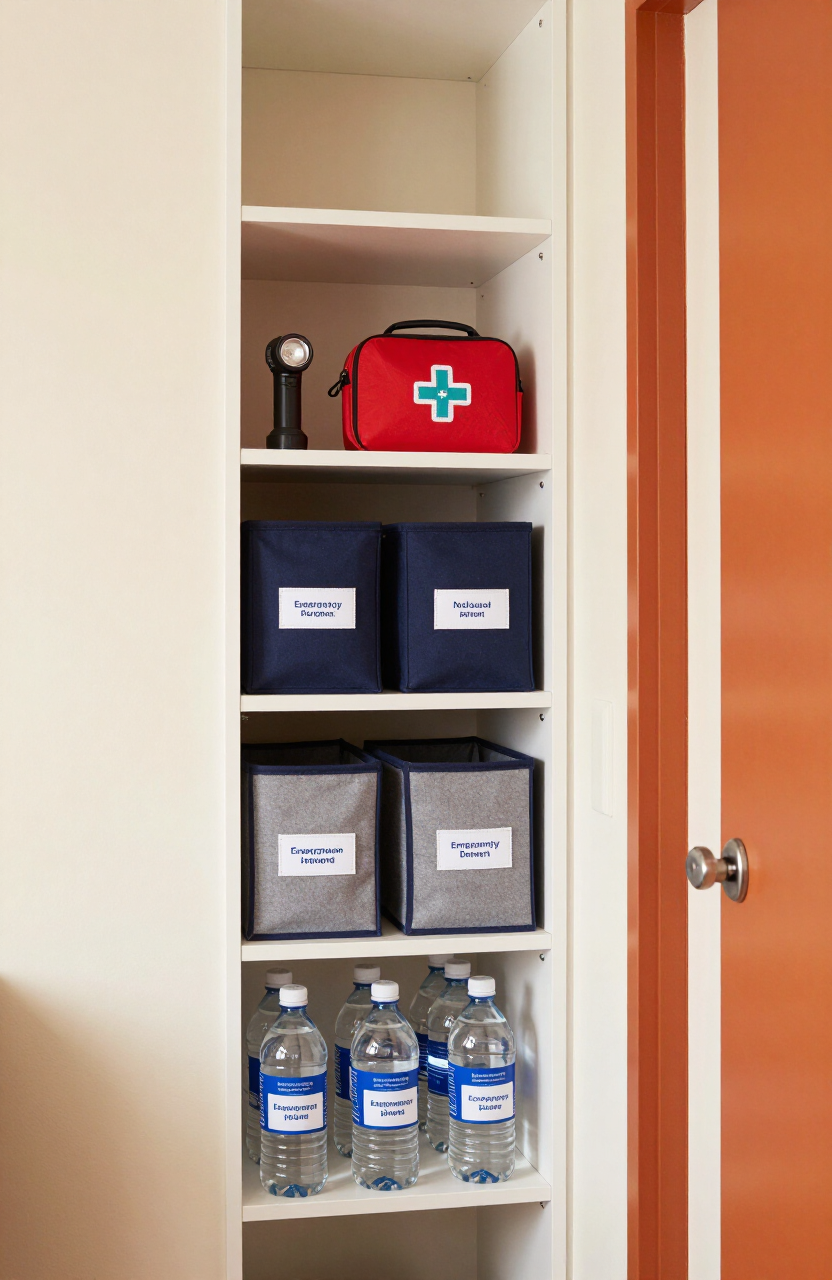
The zone layout, bottom to top
Weight and urgency decide placement: heavy and rarely touched items go low, grab-fast items go at eye level.
- Floor zone: water. Gallon jugs or a stackable water brick — the floor handles the weight and keeps bottles cool and dark.
- Low shelf: food bin. One lidded bin with no-cook food, heaviest cans at the bottom.
- Eye-level shelf: the “dark kit” — lantern, flashlights, batteries, power bank — the things you want in the first five minutes of an outage.
- Top shelf: light, rarely used items — space blankets, extra trash bags, seasonal clothing rotation.
- Door or side wall: the go-bag on a hook or leaning in the corner, never buried.
Choosing bins that fit a rental closet
Measure your closet before buying anything. A standard reach-in closet fits bins up to about 23 inches wide and 15 inches deep per shelf.
| Bin type | Best for | Watch out for |
|---|---|---|
| Lidded plastic bin (6–14 qt) | Food, first aid, documents | Measure shelf depth first |
| Fabric cube bin | Light gear, clothing, comfort items | Not water-safe — keep off the floor |
| Stackable drawer unit | Small items: batteries, meds, tools | Can tip if overloaded — heaviest drawer at bottom |
| Open caddy with handle | The dark kit — carry it room to room | No lid, so dust cover or frequent use |
Label like you will search in the dark — because you might
- One category per bin, one word per label: WATER, FOOD, LIGHT, FIRST AID
- Write expiry dates on a card taped to the bin front, not on individual items
- Keep a one-page inventory taped inside the closet door
- Use the same bin style throughout so stacks stay stable
The 15-minute rotation routine
Twice a year — daylight-saving weekends are an easy trigger — pull each bin, check dates, eat anything expiring within three months, replace it on your next grocery run, and recharge the power bank. Fifteen minutes keeps the whole system trustworthy.
Frequently asked questions
Editorial note: this guide provides general preparedness information, not emergency, medical, legal, or engineering advice. Recommendations are cross-checked against public emergency-management guidance and adapted for small-space living. During an active emergency, follow your local authorities and emergency services. See our editorial standards and affiliate disclosure.