How to Store Emergency Supplies Without Drilling or Remodeling
Every storage upgrade in this guide is reversible, deposit-safe, and installable in minutes. No anchors, no screws, no landlord emails — just hardware that works with a rental instead of against it.
The no-drill toolkit, ranked by usefulness
| Tool | Best use | Weight reality |
|---|---|---|
| Freestanding shelf unit | Closet or corner storage tower | Highest capacity — no wall needed at all |
| Tension rod | Hanging organizers inside closets | Light items only — check the rating |
| Over-door rack | Pantry-style storage on any door | Medium — great for bottles and pouches |
| Adhesive hooks (rated) | Go-bag by the door, caddies, flashlights | Follow the rated limit exactly |
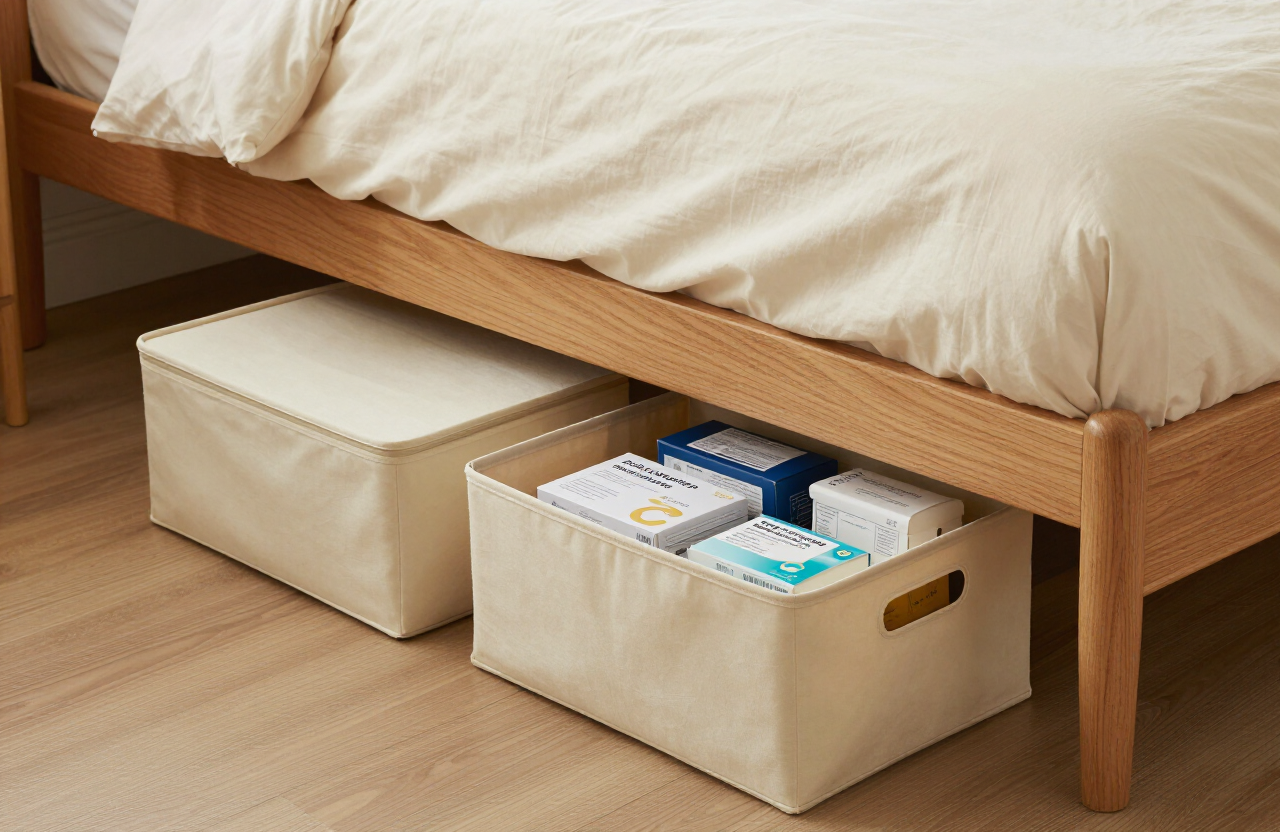
| Under-bed bins on wheels | Water and canned goods | Floor carries the load — very high |
Room-by-room renter-safe wins
- Entry: adhesive hook at adult shoulder height for the go-bag — visible means remembered
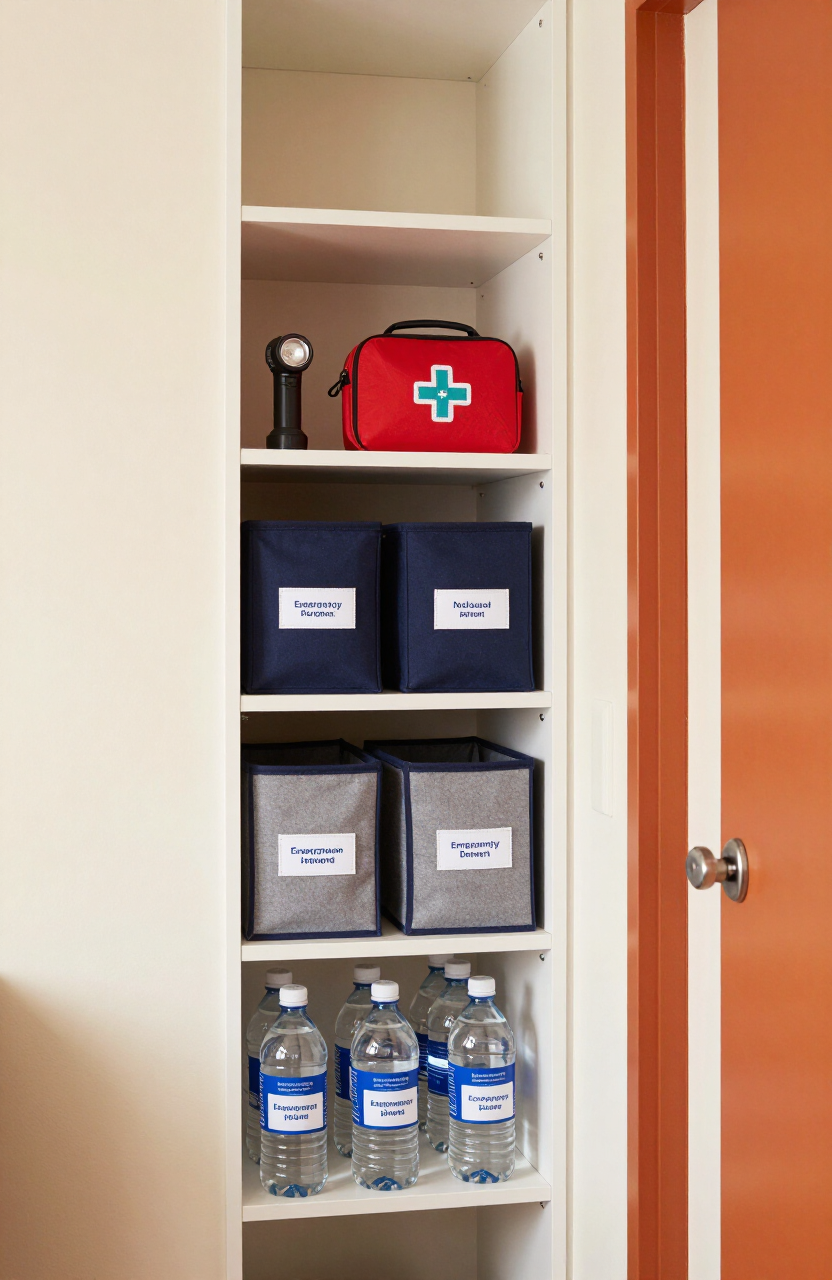
- Closet: a freestanding shelf insert doubles usable space with zero installation
- Kitchen: over-door rack on the pantry or bathroom door for bottles, foil, and supplies
- Bedroom: wheeled under-bed bins for the heavy water and food stock
- Bathroom: a tension-rod corner caddy for sanitation supplies and spare paper goods
Adhesive rules so nothing falls at 2 a.m.
- 1Clean the surface with rubbing alcohol and let it dry fully
- 2Respect the rated weight — and halve it for anything holding glass or liquids
- 3Press for the full recommended time, then wait the full cure time before loading
- 4Remove later with slow, straight-down pulls or dental floss behind the pad — no paint damage
What still should not hang
Water gallons, full toolkits, and anything over an adhesive rating belong on floors and freestanding shelves. The no-drill rule is about walls, not gravity — let the floor do the heavy work.
Frequently asked questions
Editorial note: this guide provides general preparedness information, not emergency, medical, legal, or engineering advice. Recommendations are cross-checked against public emergency-management guidance and adapted for small-space living. During an active emergency, follow your local authorities and emergency services. See our editorial standards and affiliate disclosure.