How to Set Up an Emergency Toilet in an Apartment
When the water stops or the power stays off long enough, the toilet stops working. In an apartment, you cannot dig a latrine and you cannot run a camp toilet vented outside. The realistic answer is a simple bucket toilet you can build for a few dollars, store in a closet, and set up in a bathroom in five minutes.
Why apartments need a different toilet plan
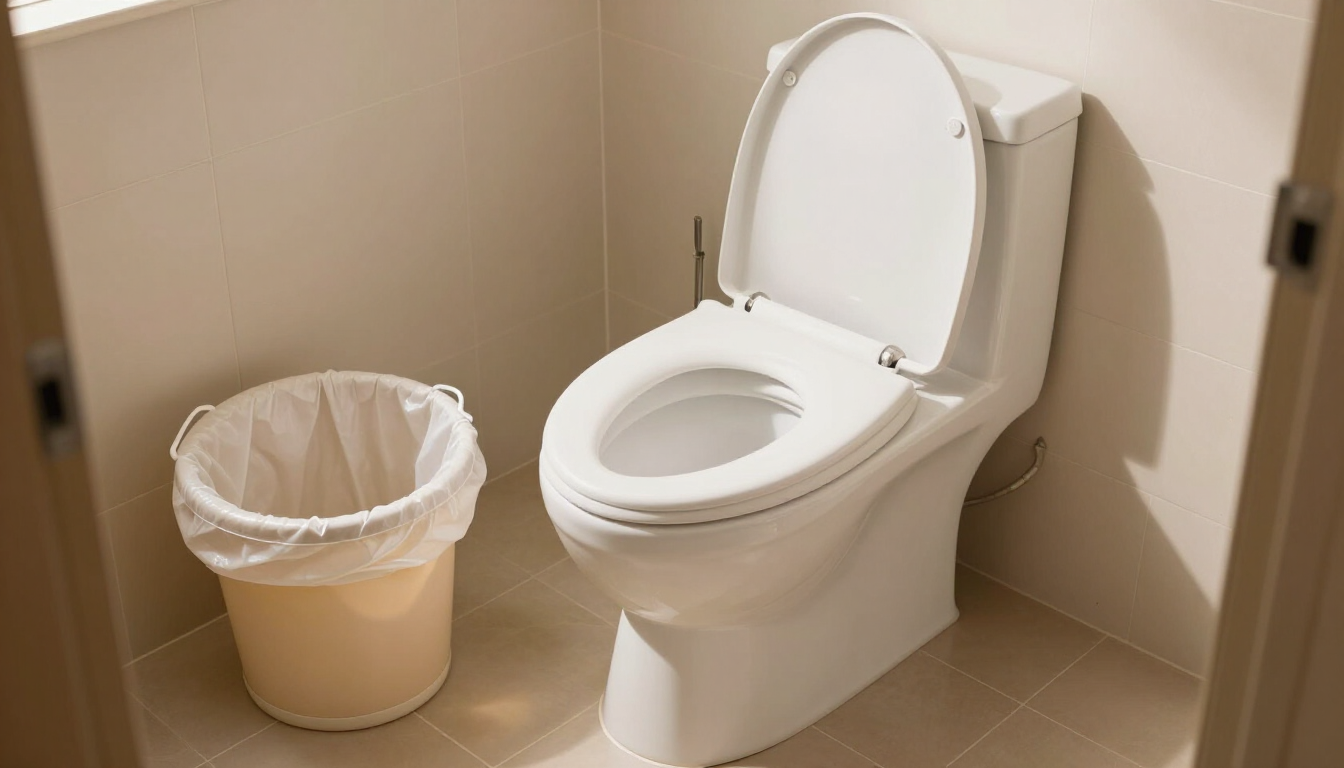
A house with a yard can use an outside latrine or a vented camp toilet. An apartment has neither option. You need something that works indoors, controls odor, and seals waste so it can be carried out when service returns.
The bucket toilet is the standard answer because it is cheap, compact, and uses supplies you can buy anywhere.
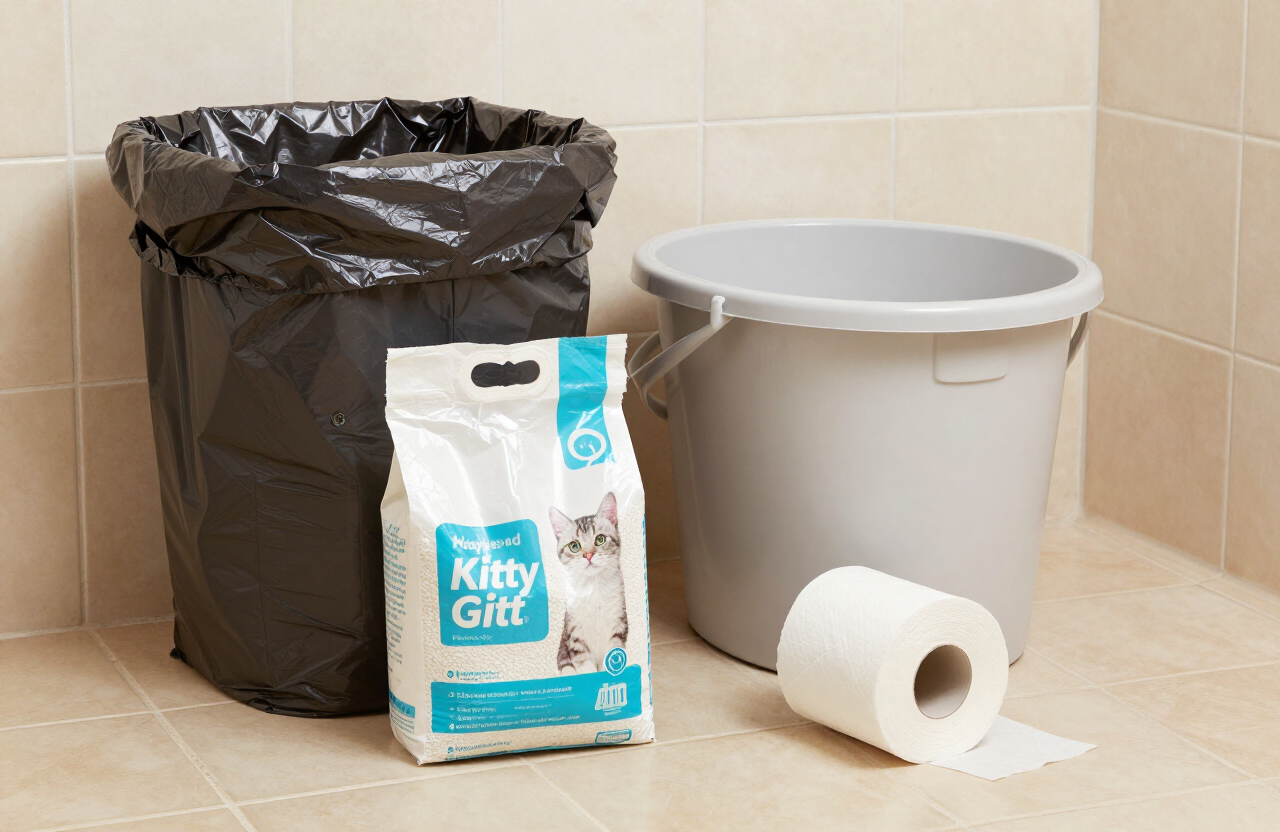
What you need: the bucket toilet kit
The whole kit stores in the bucket itself, so it takes up one corner of a closet or bathroom shelf.
- One five-gallon bucket with a tight-fitting lid
- A snap-on toilet seat lid that fits the bucket
- Heavy-duty trash bags, thick enough not to tear
- Kitty litter, pine pellets, or sawdust for odor and liquid control
- Toilet paper and a separate bag for it
- Disposable gloves and hand sanitizer
- Twist ties for sealing each waste bag
How to set it up in five minutes
When the toilet will not flush, set up the bucket toilet in your bathroom. Line the bucket with a heavy-duty bag, add a layer of kitty litter or sawdust in the bottom, and attach the seat lid.
- 1Line the bucket with one heavy-duty bag, folding the top over the rim
- 2Add a one-inch layer of kitty litter, pine pellets, or sawdust
- 3Snap the seat lid on top
- 4After each use, sprinkle more litter or sawdust to cover
- 5When the bag is about half full, tie it off, seal it, and start a new bag
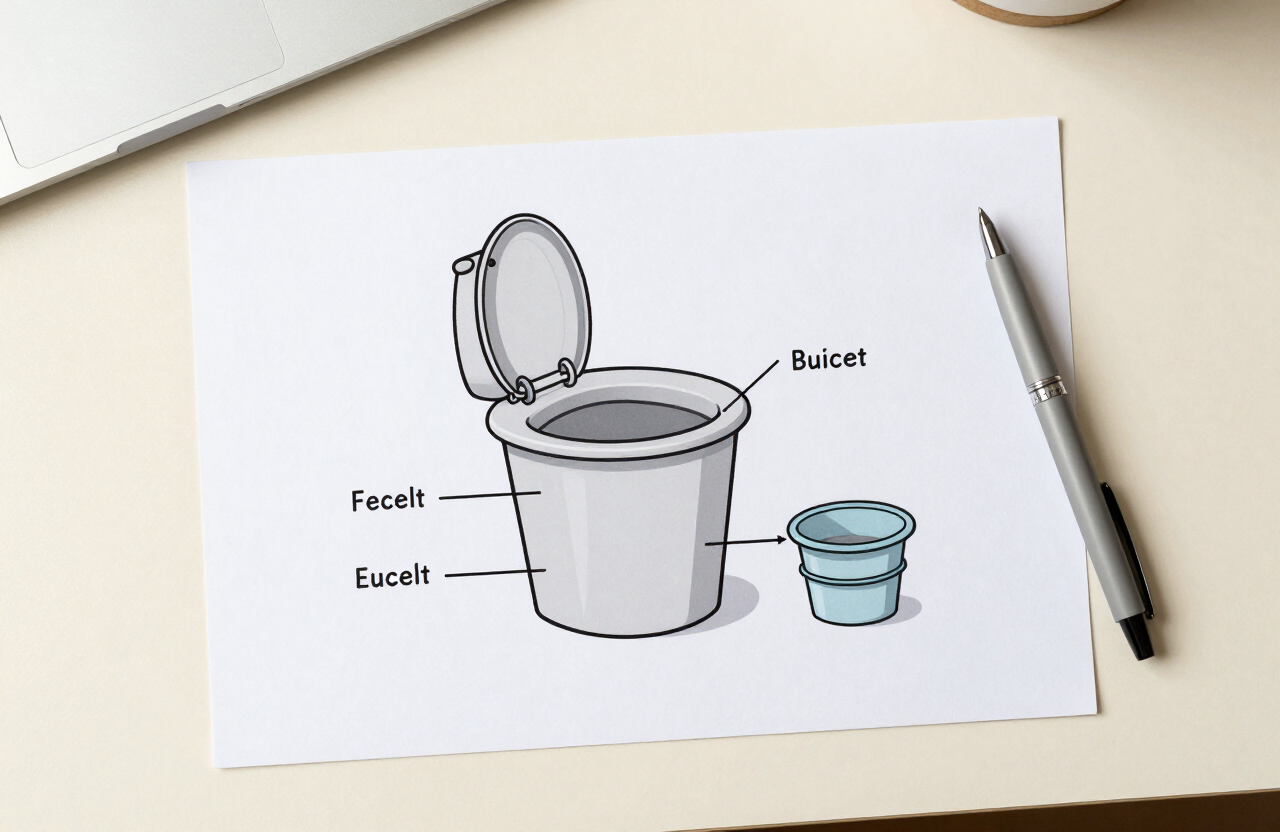
Covering each use is the single most important step. It controls odor and flies, which become a real problem in a small apartment after a day or two.
Controlling odor in a small space
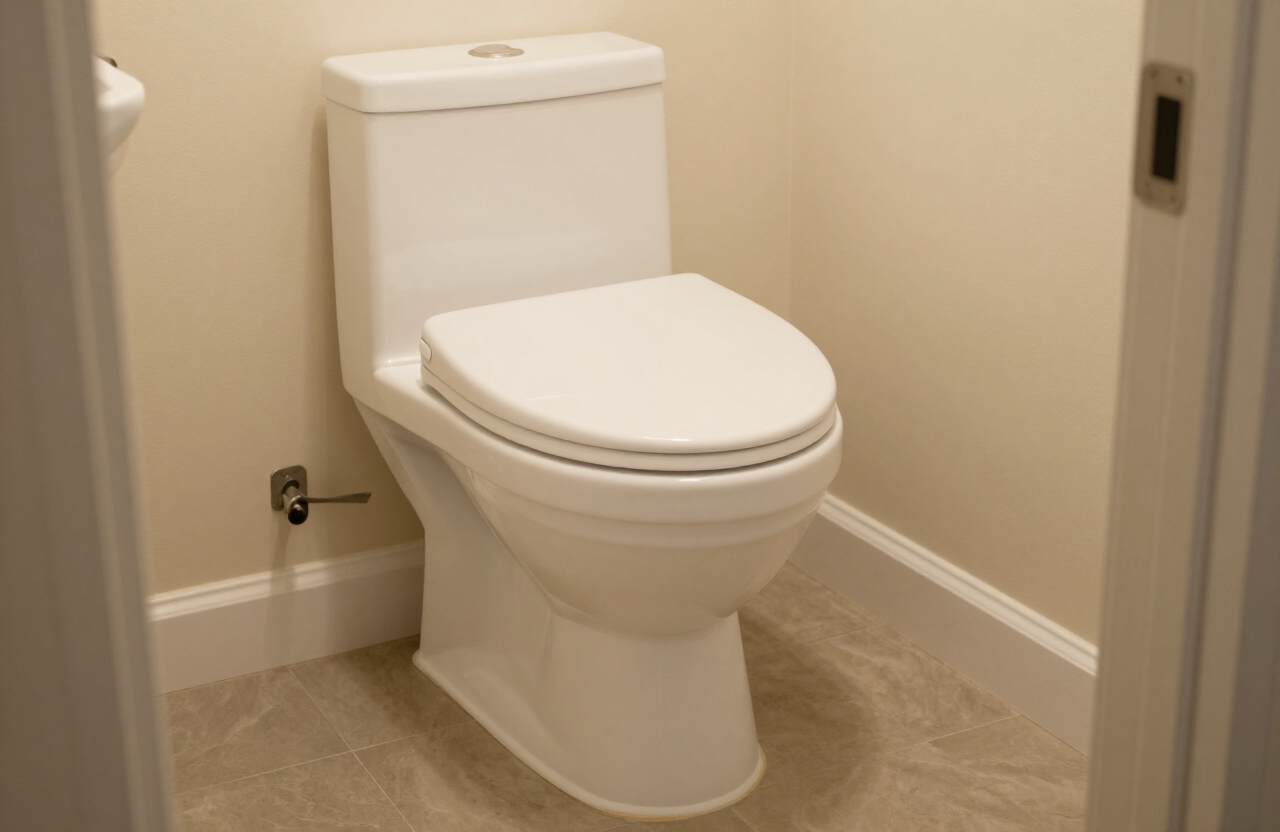
Apartments do not have the ventilation a house does, so odor control is the make-or-break part of an apartment toilet plan.
- Cover every use with litter, pellets, or sawdust
- Seal the lid tightly between uses
- Keep the bathroom window cracked if you have one and it is safe
- Empty the bag when it is half full, not when it is full
- Store sealed bags on a balcony or in a cool, isolated spot until pickup resumes
Hygiene when the water is off
Handwashing is how you stop a sanitation problem from becoming a health problem. When the tap does not work, you need a backup that does.
- Hand sanitizer with at least 60 percent alcohol
- Moist wipes for body and hand cleaning
- A squeeze bottle with a little stored water for rinsing hands
- Disposable gloves for handling waste bags
- A trash bag dedicated to hygiene waste
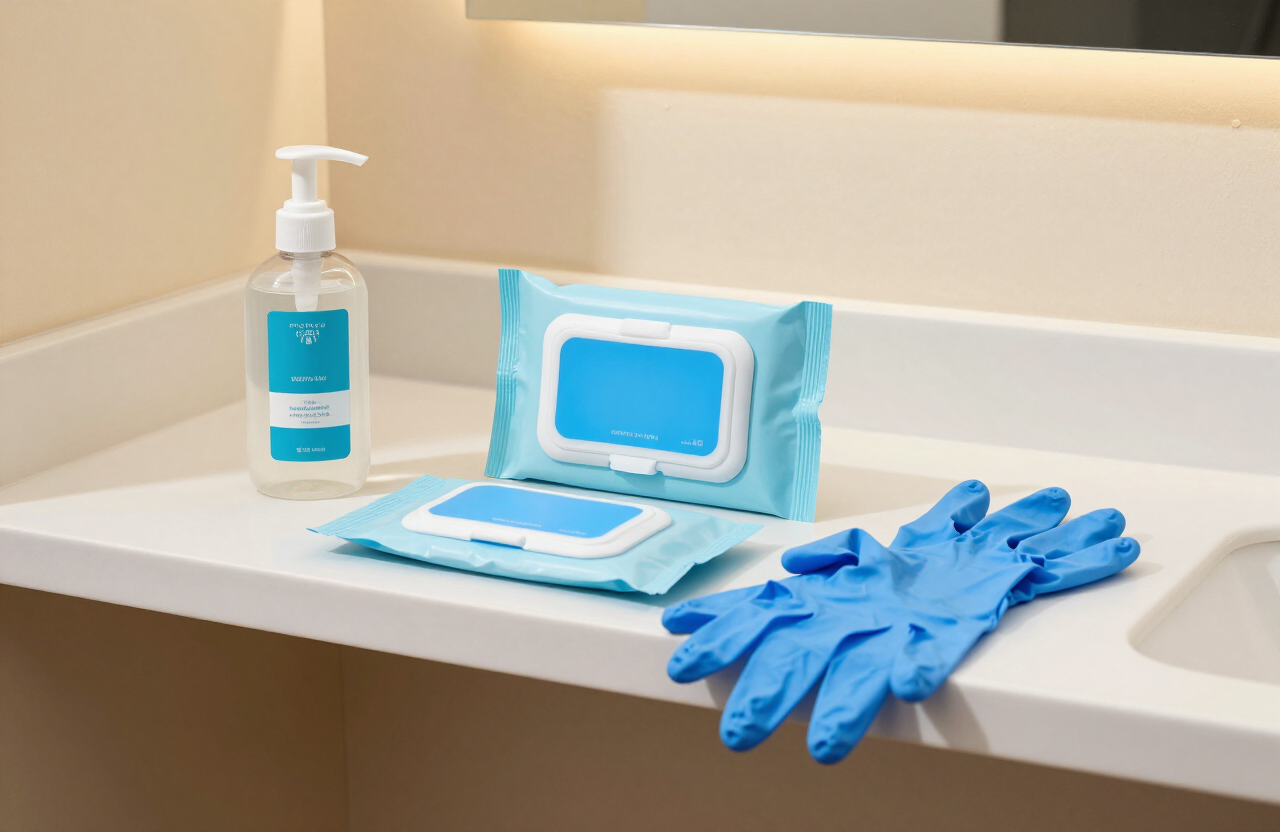
Wash your hands after every toilet use and before any food handling. In an outage, a stomach bug spreads fast in a small home.
This belongs in your main kit; see the 72-hour checklist.
What to do with sealed waste bags
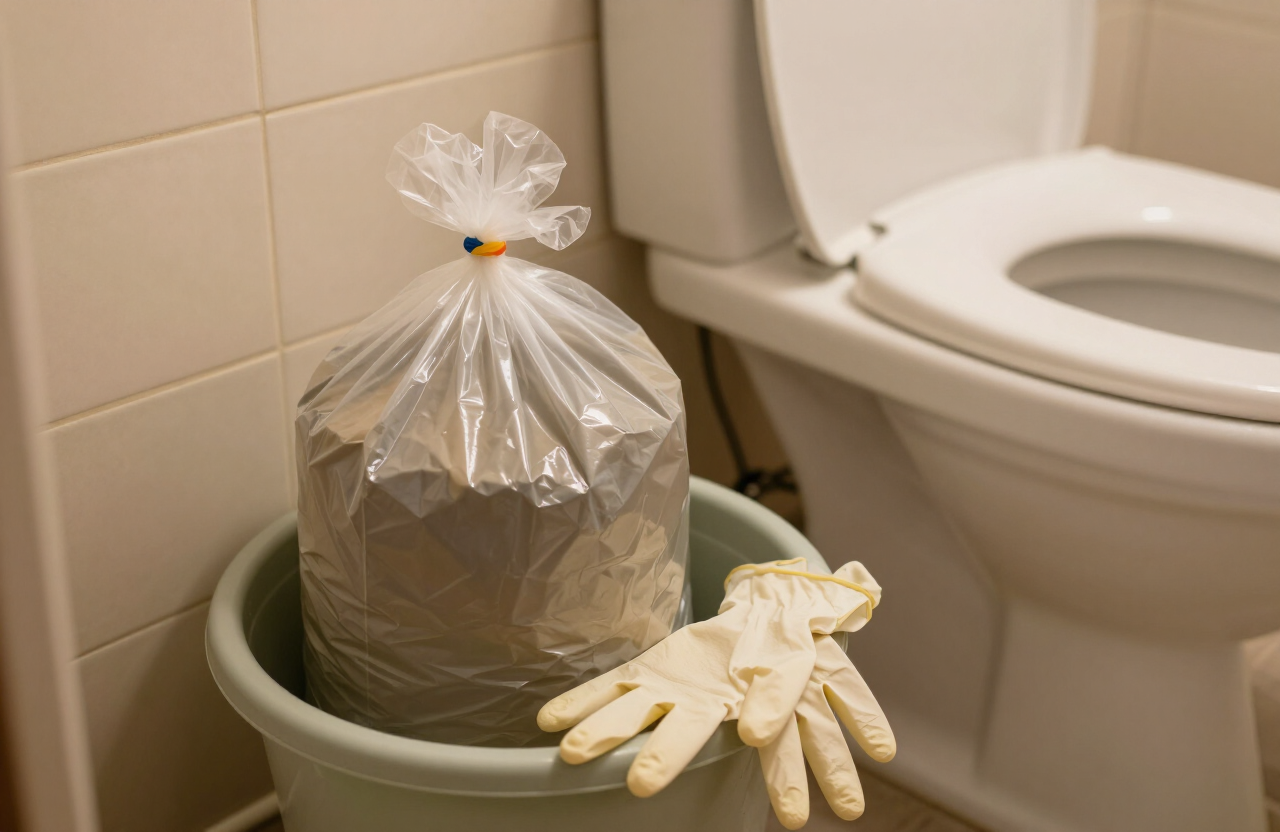
Sealed waste bags need a holding spot until trash pickup resumes. In an apartment, that spot has to be away from your living space and out of the sun.
- A balcony or fire escape is a temporary option if it is cool and shaded
- A sealed outdoor trash bin if your building has one
- A dedicated lidded bin in a cool, unused corner as a last resort
- Label the bin so no one opens it by mistake
Storing the kit between emergencies
The beauty of the bucket toilet is that it stores itself. Put the bags, litter, gloves, and paper inside the bucket, snap the lid on, and slide it into a closet or bathroom corner. It takes up about one square foot.
A bucket toilet is not glamorous, but it is the difference between a manageable outage and a health problem in a small apartment.
Small Space Emergency editorial team
Frequently asked questions
Editorial note: this guide provides general preparedness information, not emergency, medical, legal, or engineering advice. Recommendations are cross-checked against public emergency-management guidance and adapted for small-space living. During an active emergency, follow your local authorities and emergency services. See our editorial standards and affiliate disclosure.