Emergency Supplies for Menstrual Care in an Apartment
Building apartment emergency supplies for menstrual care means a disruption does not also become a stressful, unsanitary scramble for products, pain relief, and a way to stay clean without running water. A small dedicated kit handles all of it.
Why menstrual care belongs in your emergency kit
An outage or an evacuation can happen any day of the month, including the days when you need menstrual products and a working bathroom. Stores may be closed, deliveries delayed, and the corner pharmacy could be out of what you use. A small buffer means one less thing to solve during a stressful week.
This is also a dignity issue. Being unprepared is uncomfortable and unsanitary, and it is completely avoidable with a bin that costs very little to build.
What to stock: a starter list
Build the kit around what you actually use. The buffer does not need to be fancy, it just needs to match your routine.
| Category | What to include | How much |
|---|---|---|
| Products | Your usual pads, tampons, or cups | A two-week buffer |
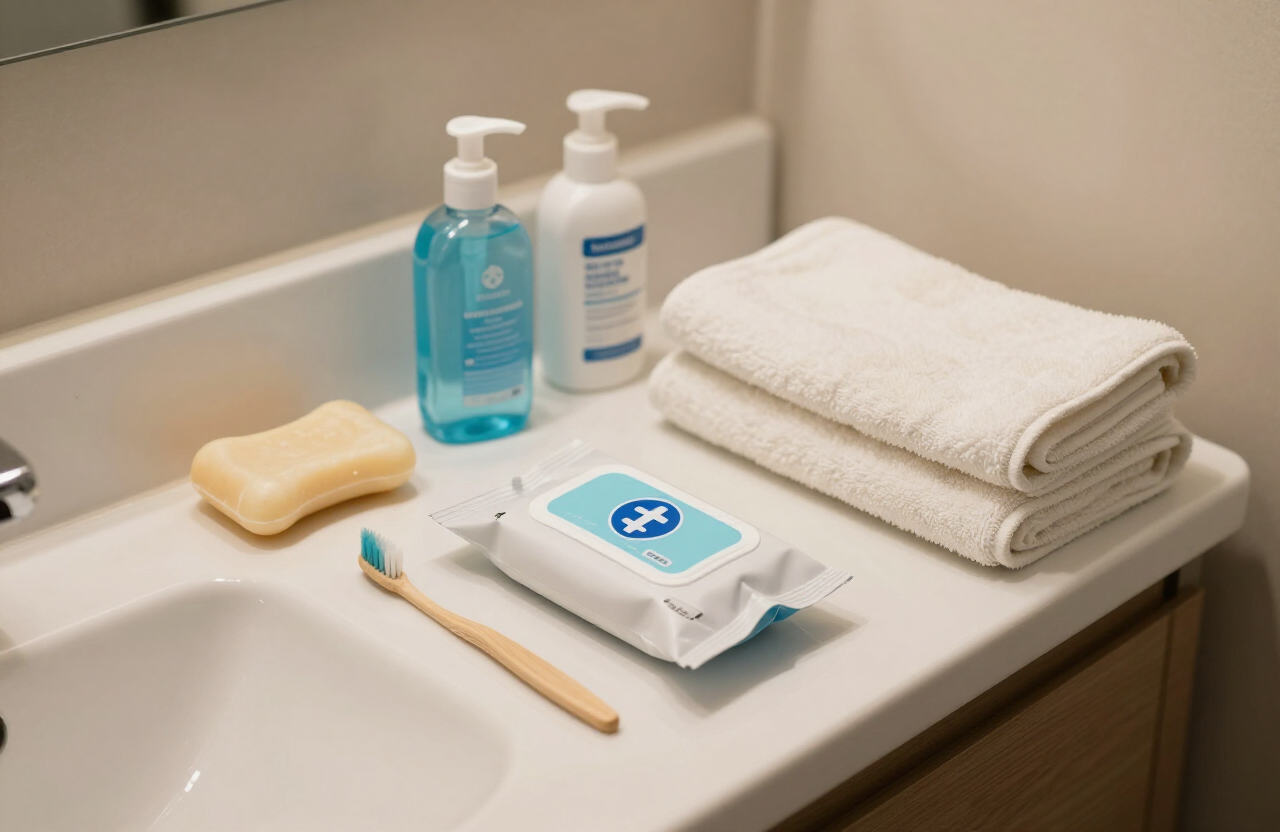
| Hygiene | Unscented wipes, hand sanitizer | One pack each |
| Disposal | Small zip or opaque bags | One box |
| Pain relief | Your usual cramp medication | One sealed bottle |
| Comfort | A heating pad or heat wrap | One |

Build a dedicated bin for home
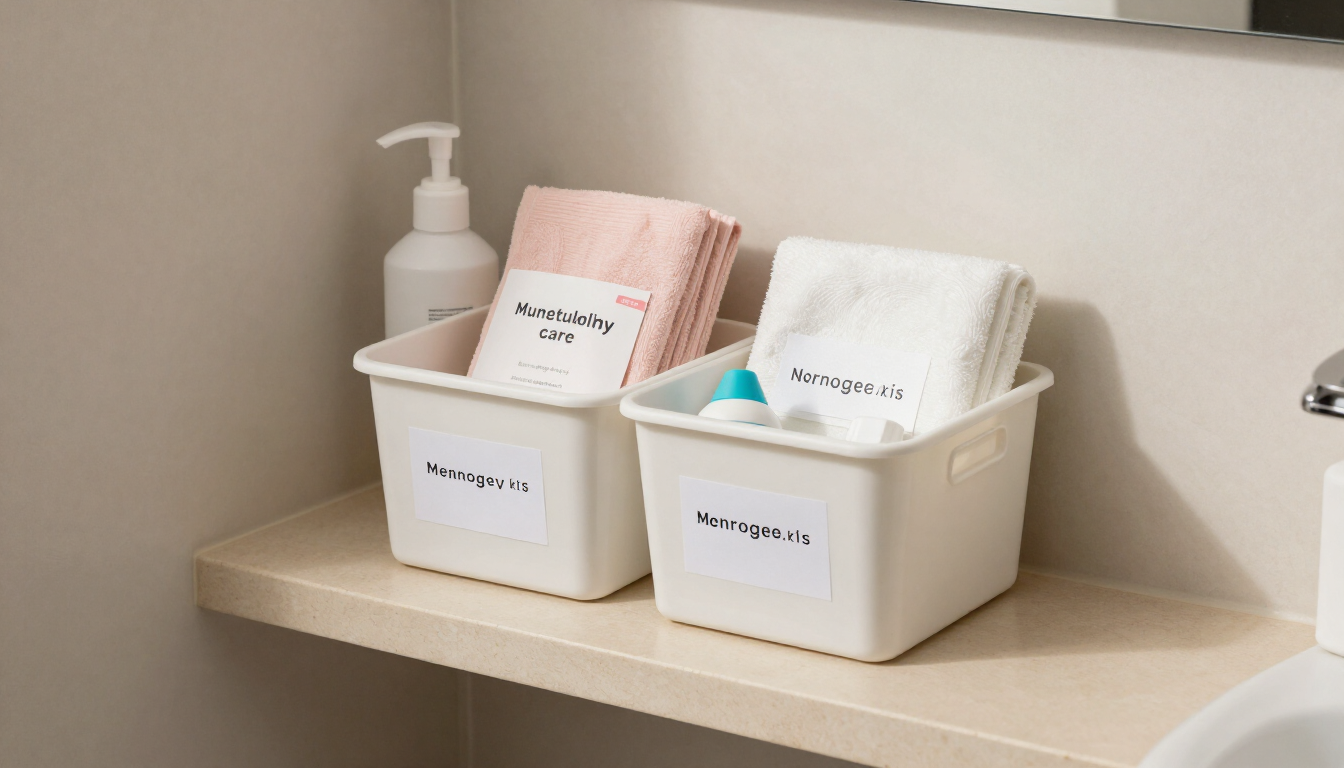
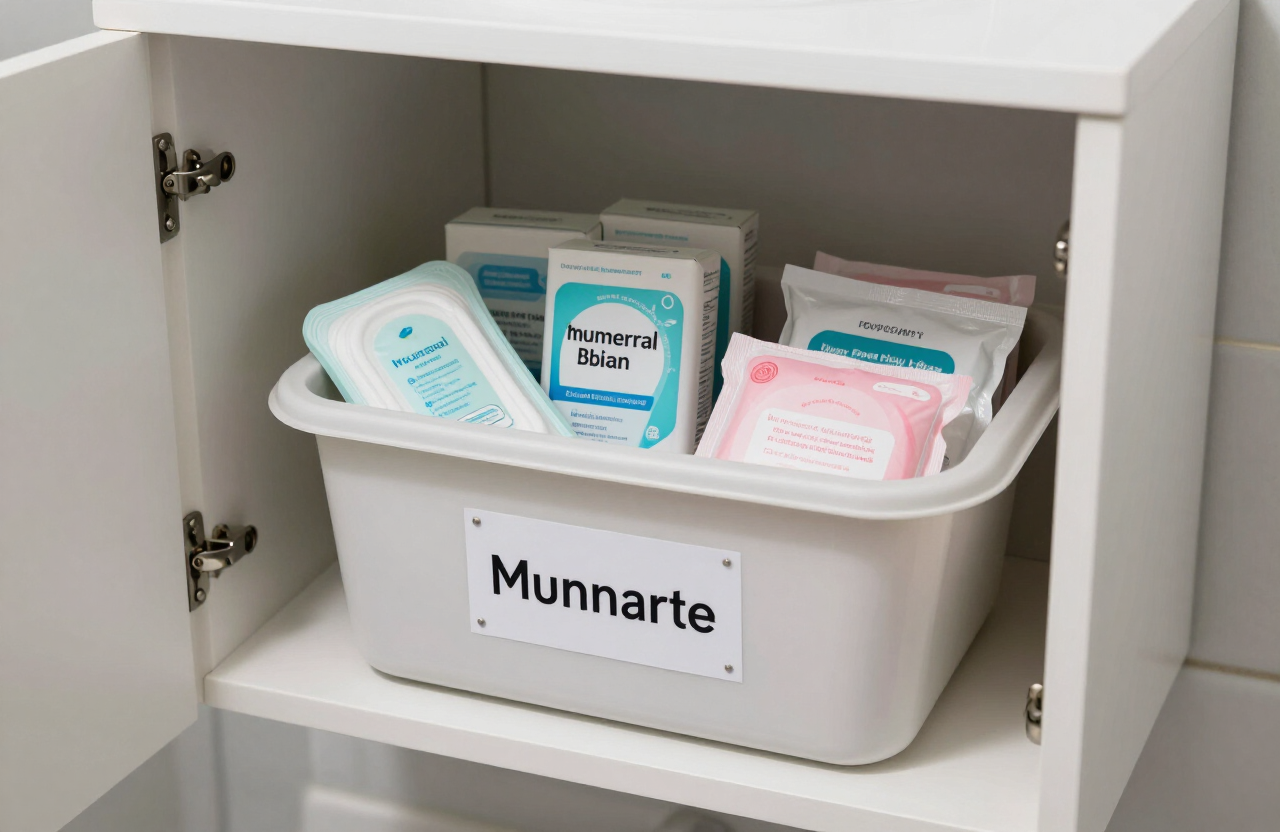
Keep the home buffer in one labeled bin in the bathroom so it is separate from your daily supply. That way you are not raiding it on a normal week, and you know exactly where to look when the stores are closed.
- A small lidded bin that fits a cabinet or shelf
- A label so roommates or family know it is the emergency buffer
- Everything grouped in zip bags so it stays dry and clean
Pack a discreet go-bag pouch
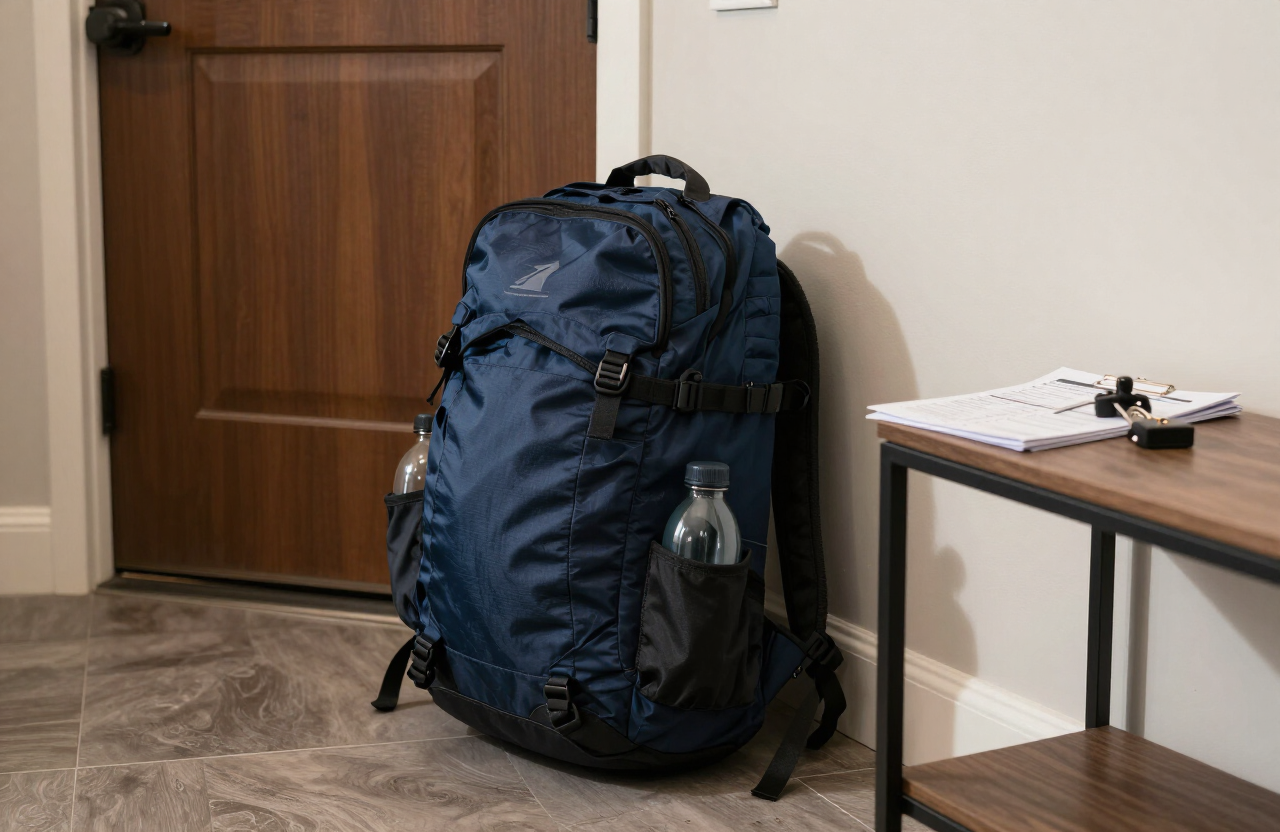
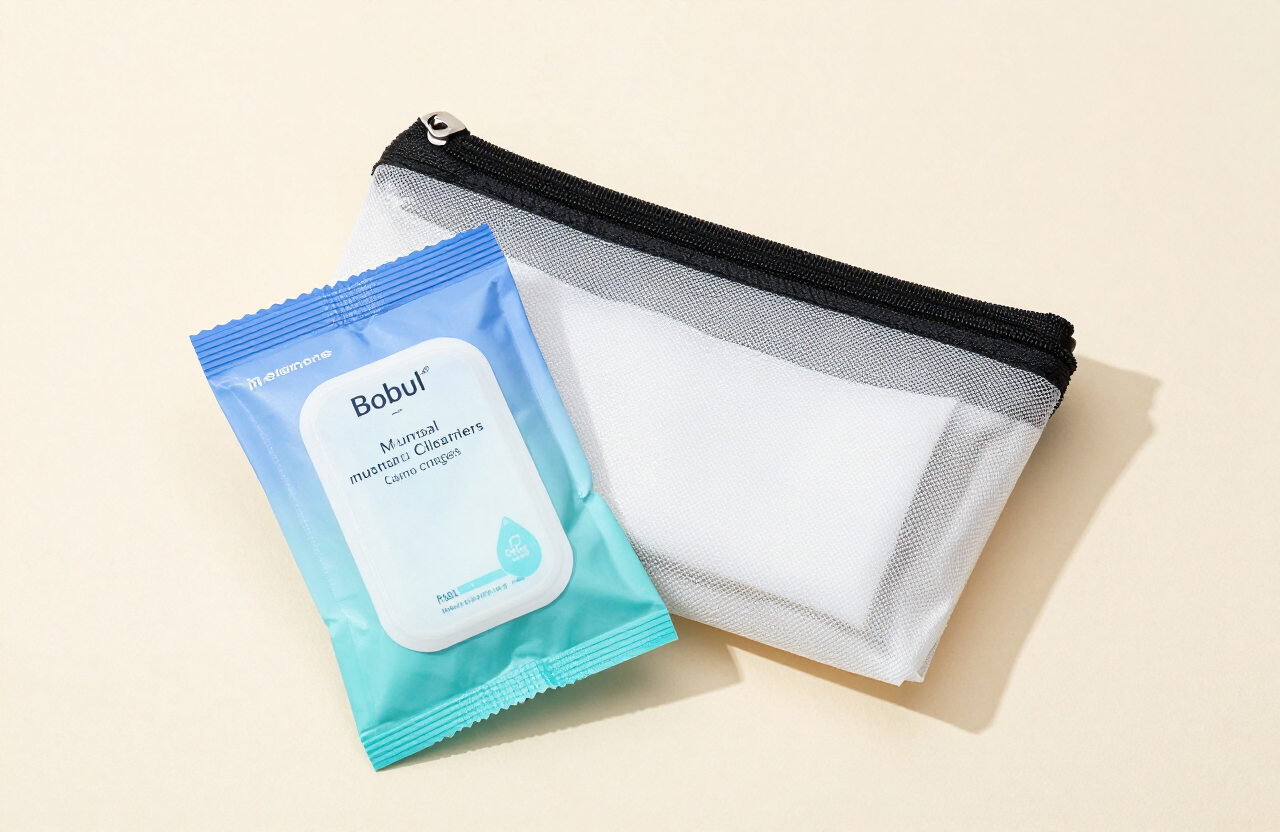
If you have to leave in a hurry, you want a small pouch that is already packed and easy to grab. A waterproof zip pouch with one cycle of products, a few wipes, disposal bags, and a dose of pain relief fits in any go-bag without taking over it.
Add it to the full bag with our apartment go-bag guide.
Hygiene when the water is off
A water outage is the hardest scenario, because you cannot rinse or flush as usual. Plan for it so you are not improvising in the moment.
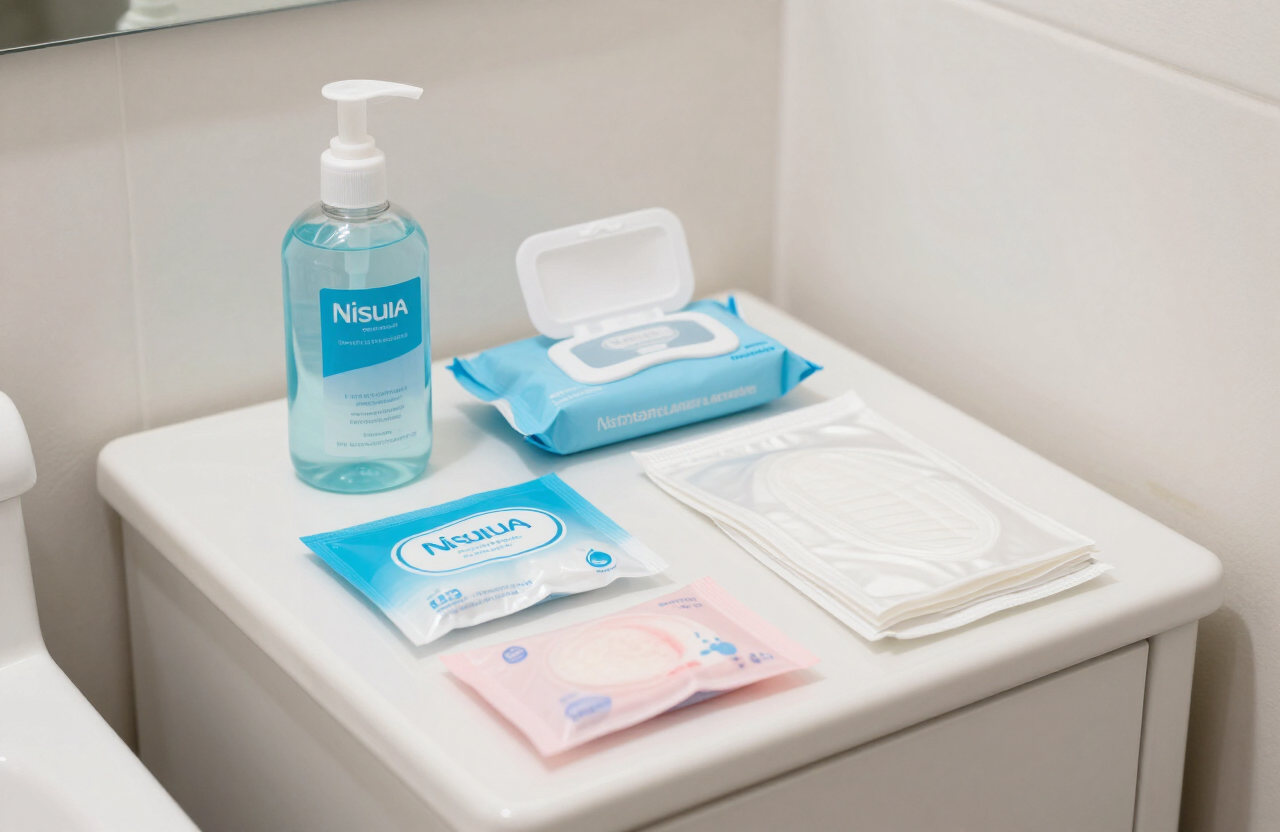
- Use unscented wipes for cleaning when you cannot shower
- Keep hand sanitizer within reach and use it before and after changing products
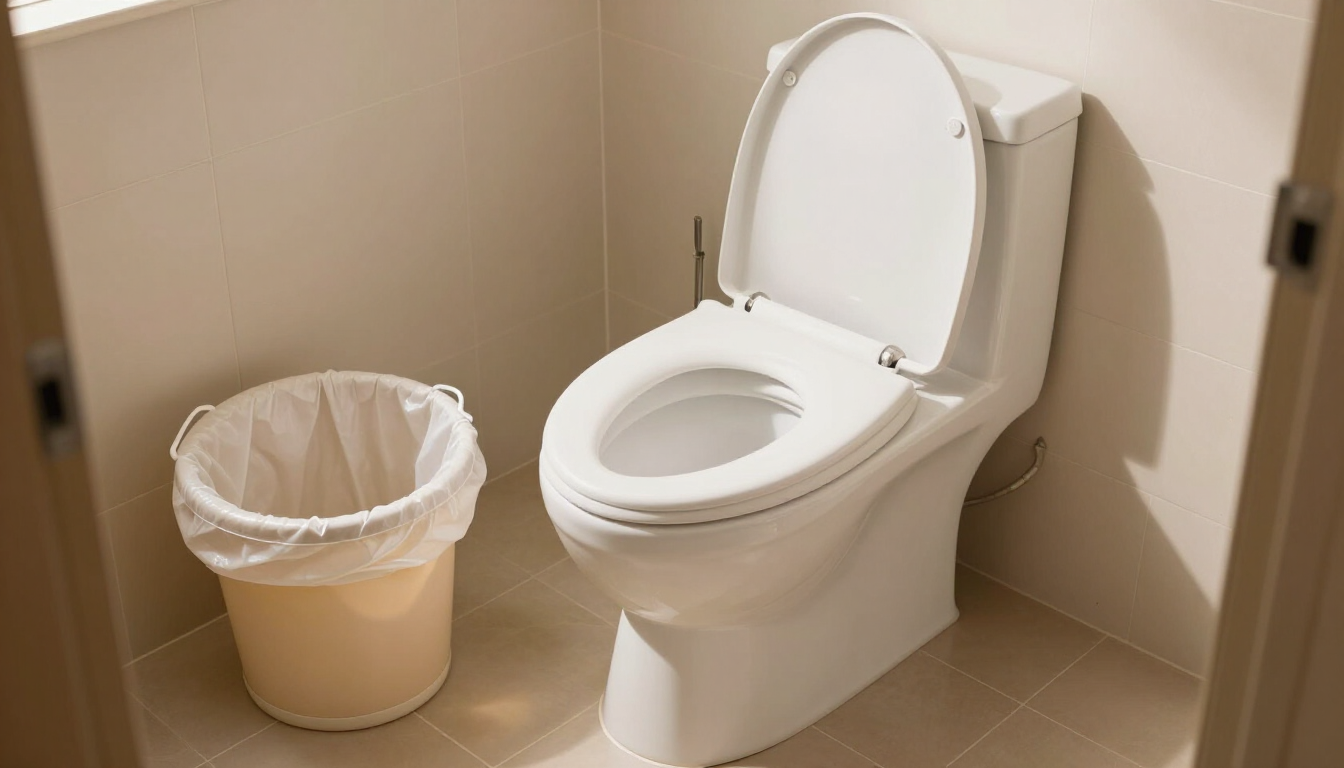
- Seal used products in opaque zip bags for disposal
- Store a small bottle of water dedicated to hand rinsing
See the broader sanitation plan in our apartment toilet setup guide.
Pain relief and comfort items
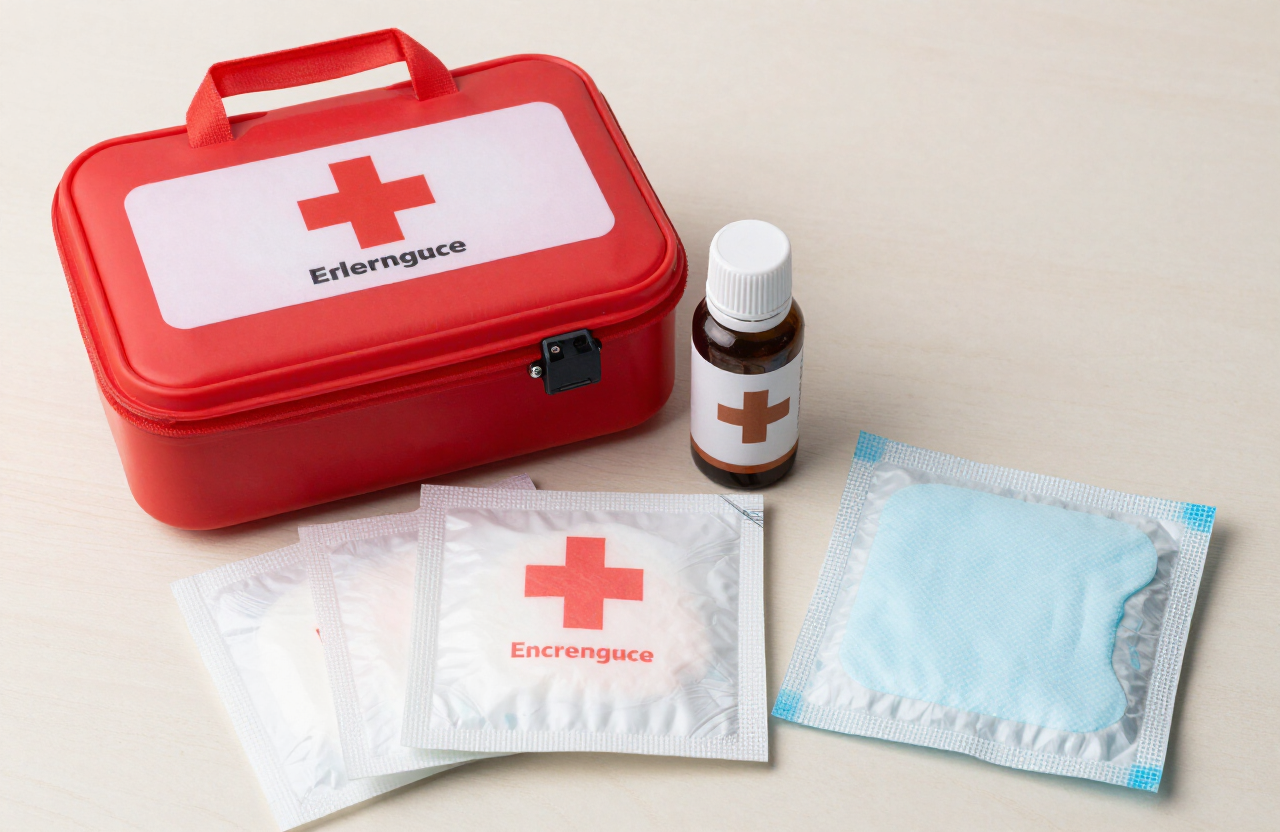
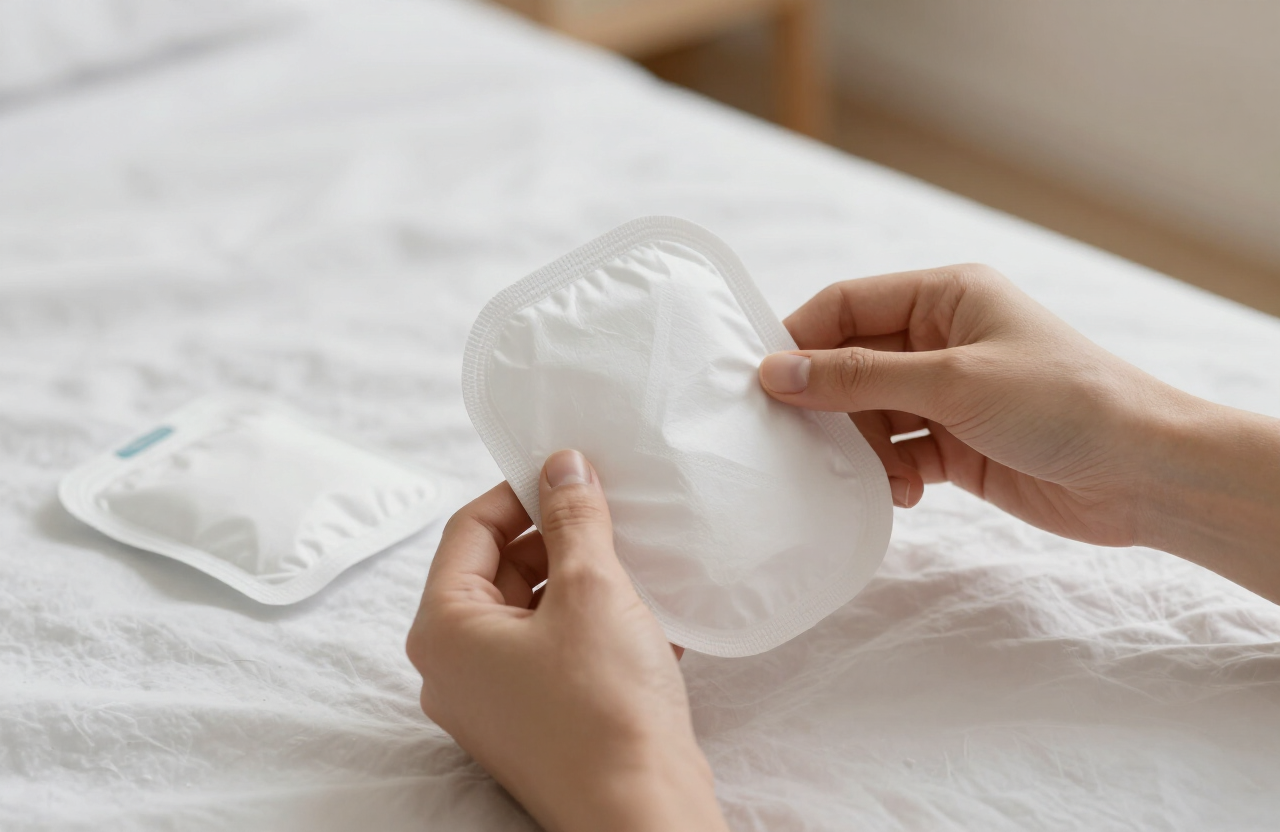
Cramps do not care that the power is out. Keep your usual pain medication sealed in the kit, plus a heat source that does not need electricity. A disposable heat wrap works during an outage when an electric heating pad does not.
Tracking supply and rotation
Products expire and medications lose potency, so rotate the kit the way you rotate food. The easy method is to drop a new pack into the bin each time you buy one, and pull the oldest to use first. That keeps the buffer turning over without a separate shopping trip.
- 1Check the bin every 3 months
- 2Use the oldest products in your daily routine and replace them
- 3Replace any medication past its expiry date
- 4Restock wipes and disposal bags if they are running low
Pair this with the broader hygiene kit in our apartment hygiene kit guide.
A note on dignity and privacy
If you share an apartment, you do not have to announce what is in the bin. A neutral label like personal care or bathroom buffer is enough. The point is that the supplies are there, organized, and yours, so a hard week stays manageable no matter what else is going on.
Preparedness is not just flashlights and water. It is also making sure a normal, personal need does not become a crisis.
Small Space Emergency editorial team
Frequently asked questions
Editorial note: this guide provides general preparedness information, not emergency, medical, legal, or engineering advice. Recommendations are cross-checked against public emergency-management guidance and adapted for small-space living. During an active emergency, follow your local authorities and emergency services. See our editorial standards and affiliate disclosure.