Preppers Website Guide: Small-Space Emergency Kits, Survival Gear & Smart Planning
Living in a studio apartment or compact rental doesn't mean you have to skip emergency preparedness. This listicle-style guide breaks down everything a modern preppers website should cover-optimized for people who measure their storage in inches, not acres.
Introduction: What a Modern Preppers Website Should Do in 2026
A preppers website in 2026 looks nothing like the bunker-and-ammo forums of a decade ago. The world has shifted. The threats that actually hit most people aren't zombie apocalypses-they're ice storms that knock out heat for five days, hurricanes that sever supply chains, and grid failures that leave your phone dead and your fridge warming.
Emergency preparedness resources should focus on practical, high-probability scenarios. And that's exactly where Small Space Emergency comes in: a brand built around compact survival gear, food storage, and actionable planning for people living in apartments, tiny homes, and rentals where every square foot matters.
Consider what's happened recently. In February 2021, Winter Storm Uri left over 5 million Texans without power-some for three days or more. In 2024, hurricanes Helene and Beryl were responsible for nearly 80% of the hours U.S. customers spent without electricity during major events. California heat waves, Northeast ice storms, and global supply-chain disruptions during 2020–2022 all pushed more people toward searching for preppers websites that actually make sense for their life.
Yet preparedness remains surprisingly low. A 2024 United Way survey found that cost is the single biggest barrier to being prepared (cited by 45% of respondents), followed by lack of knowledge (28%) and time (25%). Emergency preparedness websites should cite reputable sources such as FEMA and CDC, and they should avoid fear-mongering or sensationalized content. The goal of a good preparedness resource is a balanced tone focused on practical skills-and that's the mission behind everything you'll read below.
This article walks you through five core areas with eye-catching, HDR-style photorealistic images of small-space emergency kits illustrating each idea. Emergency preparedness resources should emphasize skills and mindset over buying things, so while we'll cover specific gear, the focus stays on understanding what you need, why you need it, and how to fit it all into a life that's already tight on space.
Here's what we'll cover:
- Core survival gear for small spaces
- Building an emergency kit from 72 hours to 2 weeks
- Apartment-friendly food storage that won't swallow your living room
- Preparing for a power outage in rentals and small homes
- How Small Space Emergency works as a practical preppers website, plus your next step
Let's jump in.
1. Core Survival Gear Every Small-Space Prepper Website Should Highlight
The right survival gear for a 500-square-foot apartment is radically different from what you'd store in a rural homestead. Every item must earn its place. Here's what a solid preppers website should recommend for compact living:
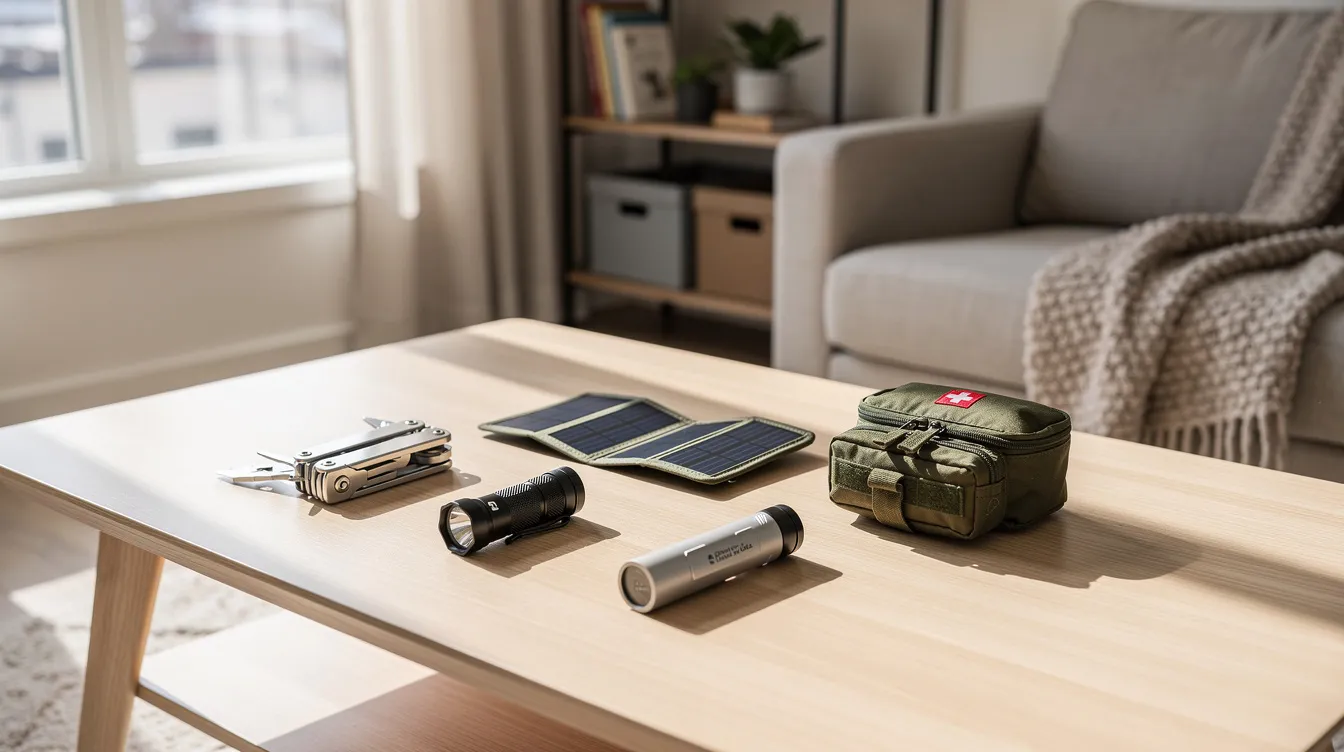
Must-Have Compact Survival Gear
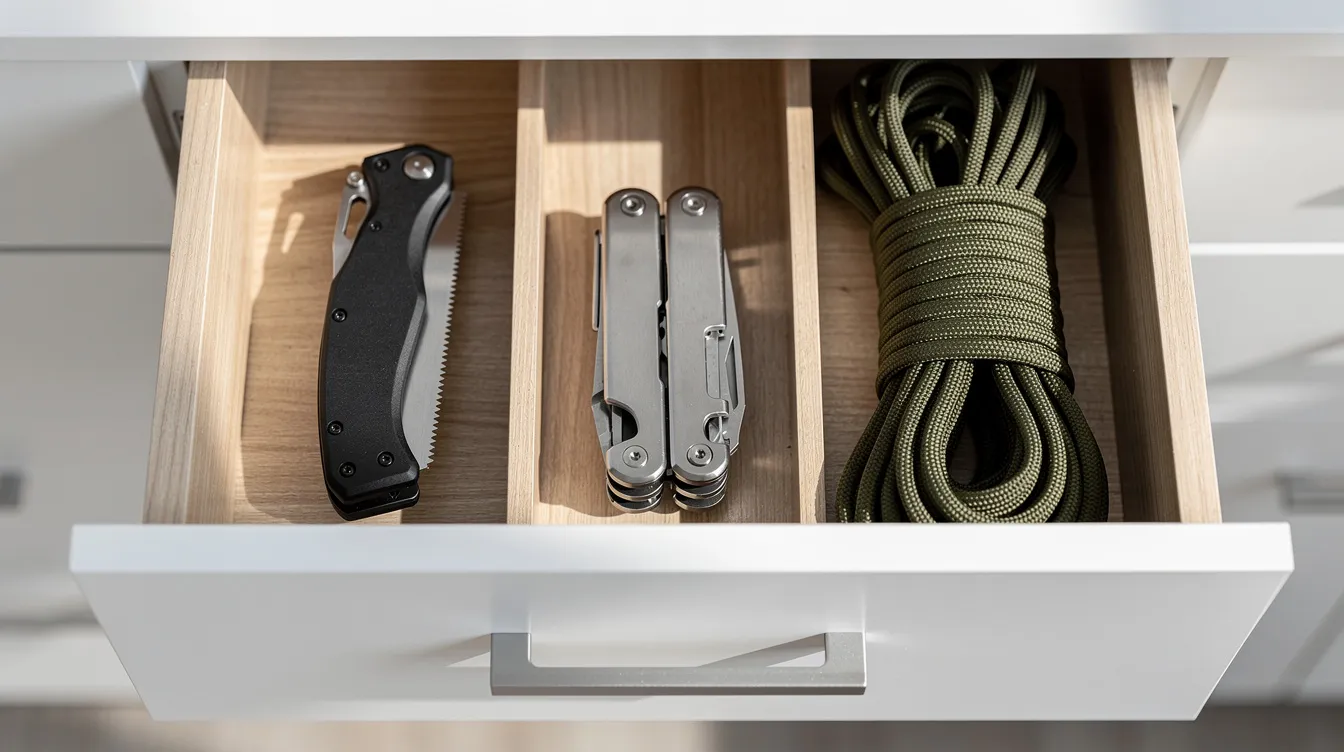
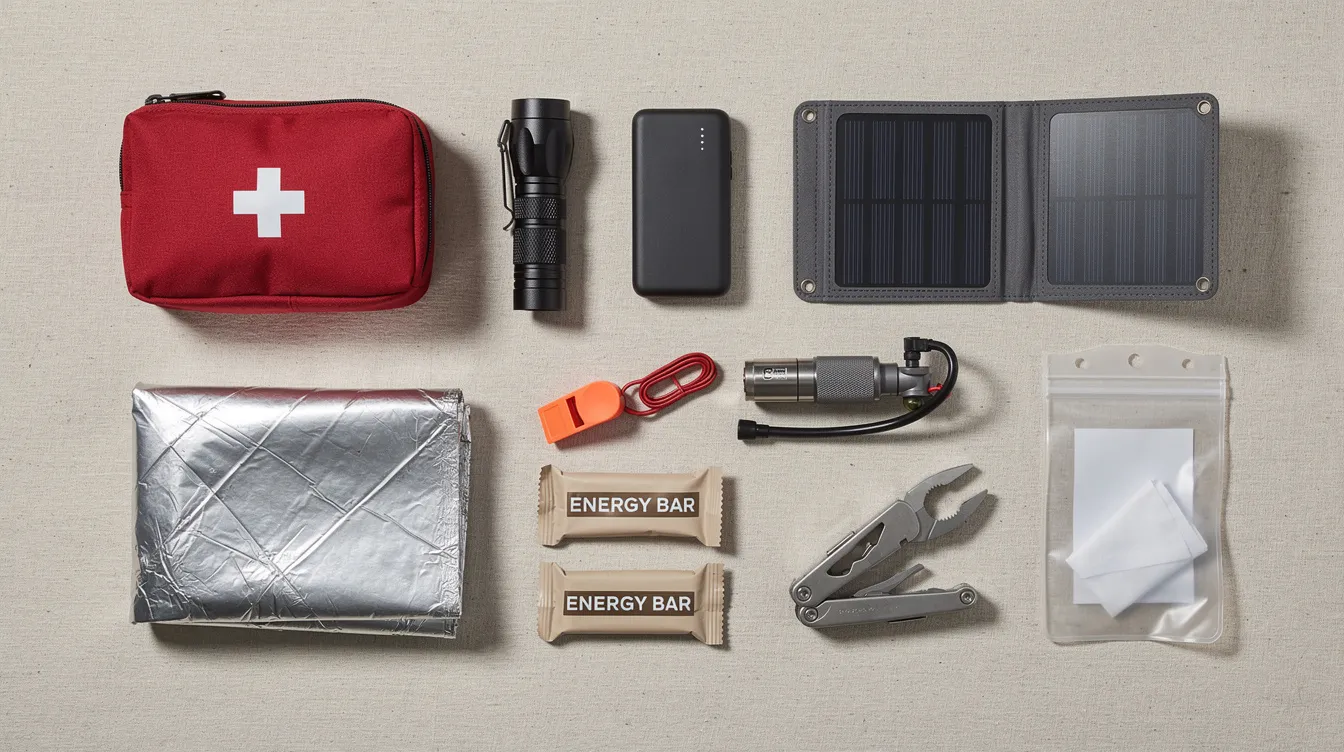
- Multi-tool (e.g., Leatherman Wave+): 18 tools in one device-pliers, wire cutters, scissors, knife, screwdrivers-at roughly 8.5 ounces. Fits in a kitchen drawer. Replaces an entire toolbox for emergency situations.
- Compact water filter (e.g., Sawyer Mini): Filters up to 100,000 gallons through a 0.1-micron membrane, small enough for a coat pocket. Good for filtering tap water that may be compromised after a storm or pipe break.
- Micro first-aid kit: Wound dressings, antiseptic wipes, adhesive bandages, medical tape, pain relievers, and any personal medications packed into a pouch no larger than a paperback book. Educational materials should provide clear safety, efficacy, and maintenance guidelines for every item in your kit.
- Solar lantern with USB charger: Dual-purpose lighting and device charging powered by the sun. Hang it in a window during the day, use it at night. Weighs under a pound.
- Emergency radio with flashlight and power bank: One device, three functions. NOAA weather alerts, LED light, and enough battery to charge a phone once. Critical for communications when cell towers are overloaded.
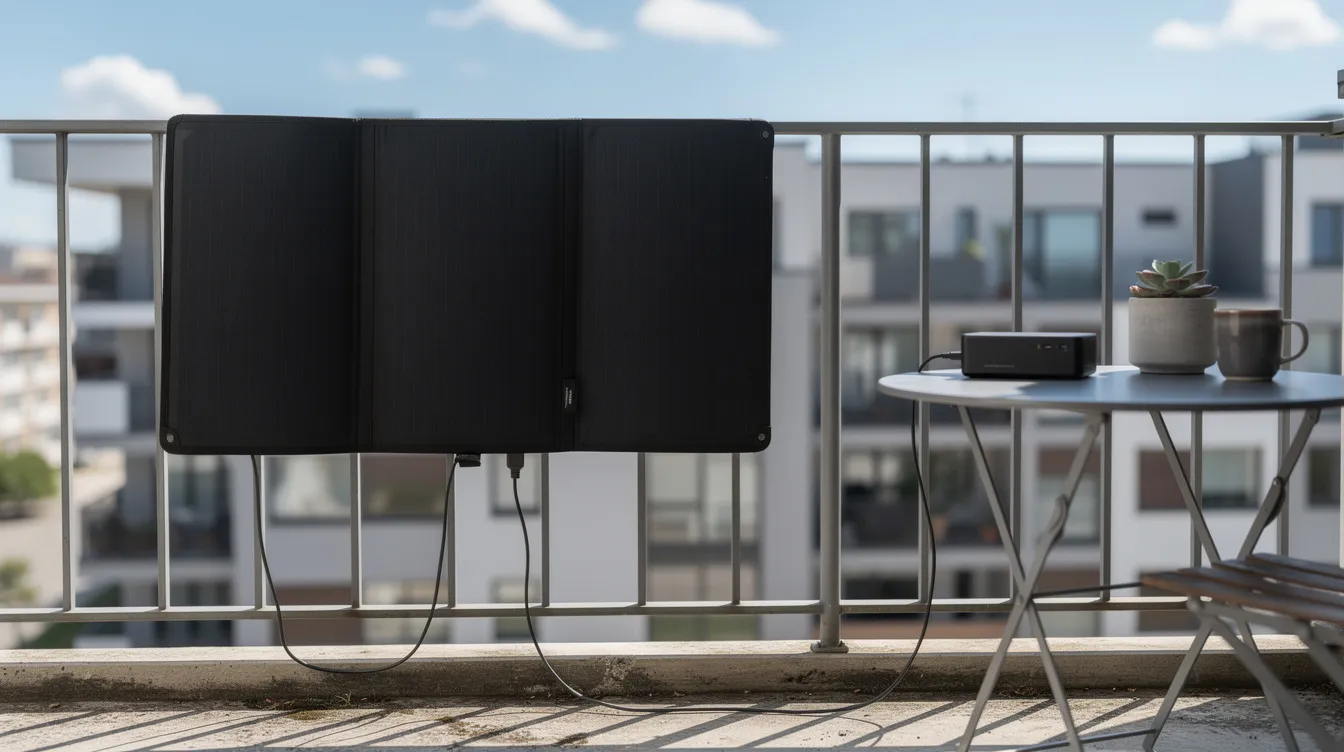
- Foldable solar panel (50–200W): Drape it over a balcony railing or prop it in a south-facing window. Pairs with a portable battery bank to keep devices charged during multi-day outages. Systems range from a few hundred to a few thousand dollars depending on capacity.
- Nesting cookware and folding utensils: Pots and pans that stack inside each other, taking up as little as 6 inches of shelf space. Essential if you need to cook during an extended emergency.
- Compact folding saw: For situations where debris blocks exits or you're in a semi-urban area and need to process wood. Folds to under 10 inches and stores flat in a drawer organizer.
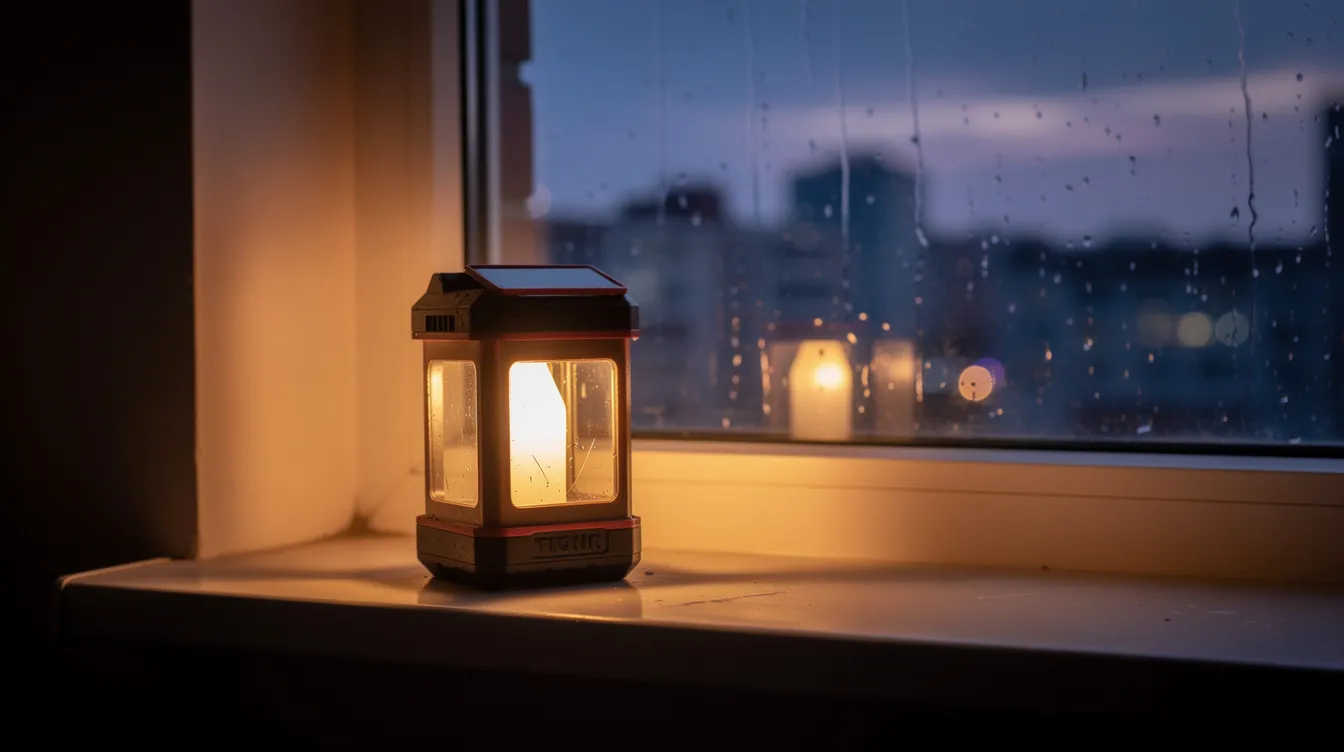
Why Multi-Use Matters
Every extra ounce and cubic inch in a small home must justify its presence. A preppers website that understands apartment living should prioritize multi-use items to reduce clutter-one device that handles light, radio, and charging beats three separate gadgets every time.
Good emergency preparedness information should also include location-specific guidance. Earthquakes in California call for different gear priorities than hurricanes on the Gulf Coast or winter storms in the Northeast. The core list above applies broadly, but your specific risk profile should drive what you buy first.
Objective product reviews should highlight pros and cons of recommended gear-not just affiliate links. And preparedness websites should distinguish educational content from commercial sales, so you always know when you're learning versus when you're being sold to. That transparency is something we care about at Small Space Emergency.
2. Building a Small-Space Emergency Kit: From 72 Hours to 2 Weeks
The standard FEMA recommendation is a 72-hour kit-three days of food, water, and basic supplies. That's a reasonable starting point, but recent multi-day outages have shown that 72 hours often isn't enough. Small Space Emergency encourages stepping up to a 7–14 day kit, even in a one-bedroom apartment. Here's how to build one without losing your living room.
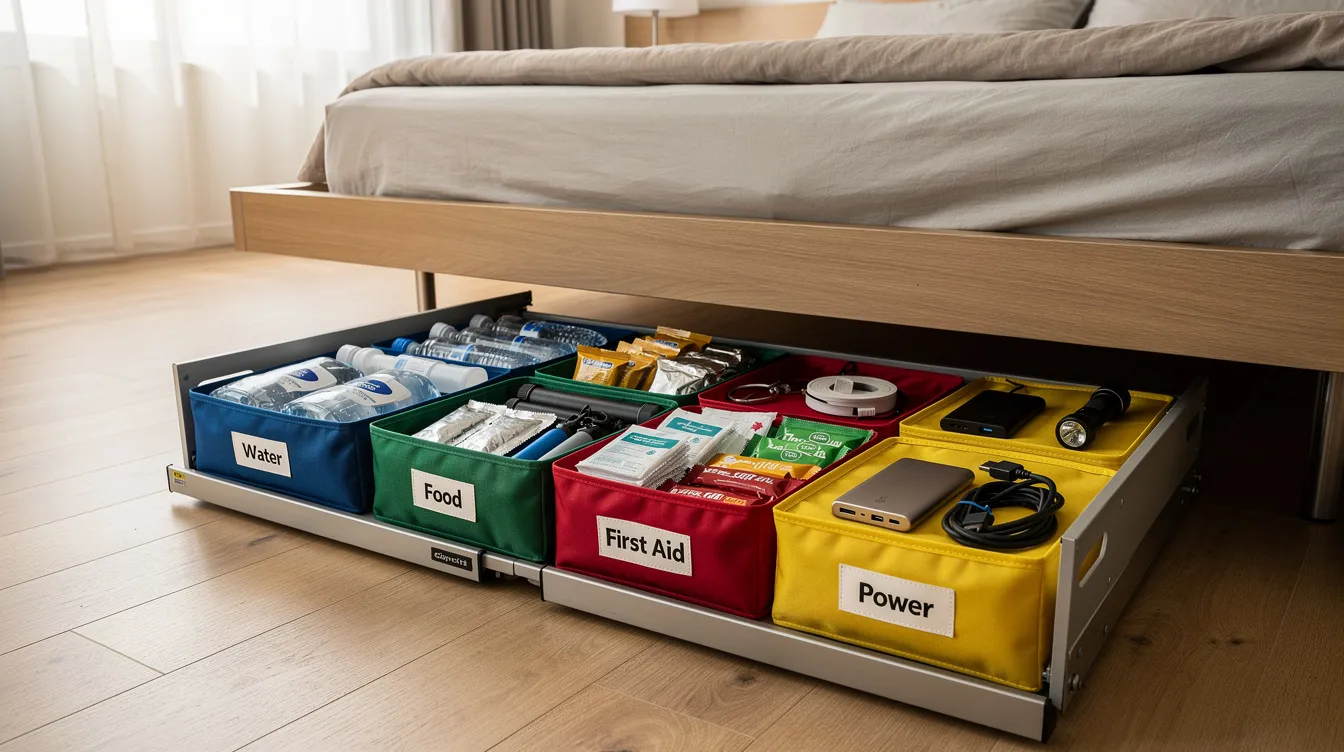
Key Categories for Your Small-Space Emergency Kit
Water
- Emergency kits should include at least one gallon of water per person per day. That's the FEMA baseline for drinking and basic sanitation. Store at least three days of water per person in your apartment as an absolute minimum.
- Water is essential during evacuations-keep at least one portable container in your grab bag.
- Use stackable water bricks or collapsible containers that flatten when empty and slide under a bed. A 14-day supply for one person (14 gallons) can fit in two under-bed bins when using collapsible containers.
Food
- A small-space emergency kit should contain non-perishable food for at least three days. Think energy bars, ready-to-eat pouches, peanut butter, crackers, and dried fruit.
- For a 7–14 day kit, add shelf-stable staples: rice, beans, oats, canned proteins. More on food storage strategies in Section 3.
First Aid
- First aid kits are essential for small-space emergency preparedness. Have a basic first aid kit with essential supplies: bandages, gauze, antiseptic, pain relievers, tweezers, medical gloves, any prescription medications, and an EpiPen if needed.
- Items sensitive to temperature (insulin, some antibiotics) may require portable cold packs or insulated storage.
Light & Power
- Flashlights and batteries are crucial items in emergency kits. Keep a flashlight with extra batteries in your apartment emergency kit-LEDs last longest and generate the least heat.
- A flashlight is crucial for visibility during evacuations, especially in apartment stairwells where backup lighting may fail.
- A portable phone charger is vital for communication during emergencies. A 20,000 mAh power bank can charge a smartphone 4–5 times.
Communications
- Emergency radio with NOAA alerts. If cell service is down, this is your lifeline to information.
- Create a communication plan for family members during emergencies-designate an out-of-area contact, agree on a meeting point, and share it with everyone.
Documents
- Keep important documents in a waterproof bag during evacuations: IDs, insurance policies, medication lists, emergency contacts, copies of your lease.
Signaling & Safety
- Emergency kits should include a whistle for signaling help. Cheap, weightless, and far more effective than shouting from a high-rise window.
Comfort Items
- A change of clothes, basic hygiene items (toothbrush, soap, hand sanitizer), a small blanket or emergency mylar blanket for warmth, and a deck of cards or paperback book.
Where to Store It All
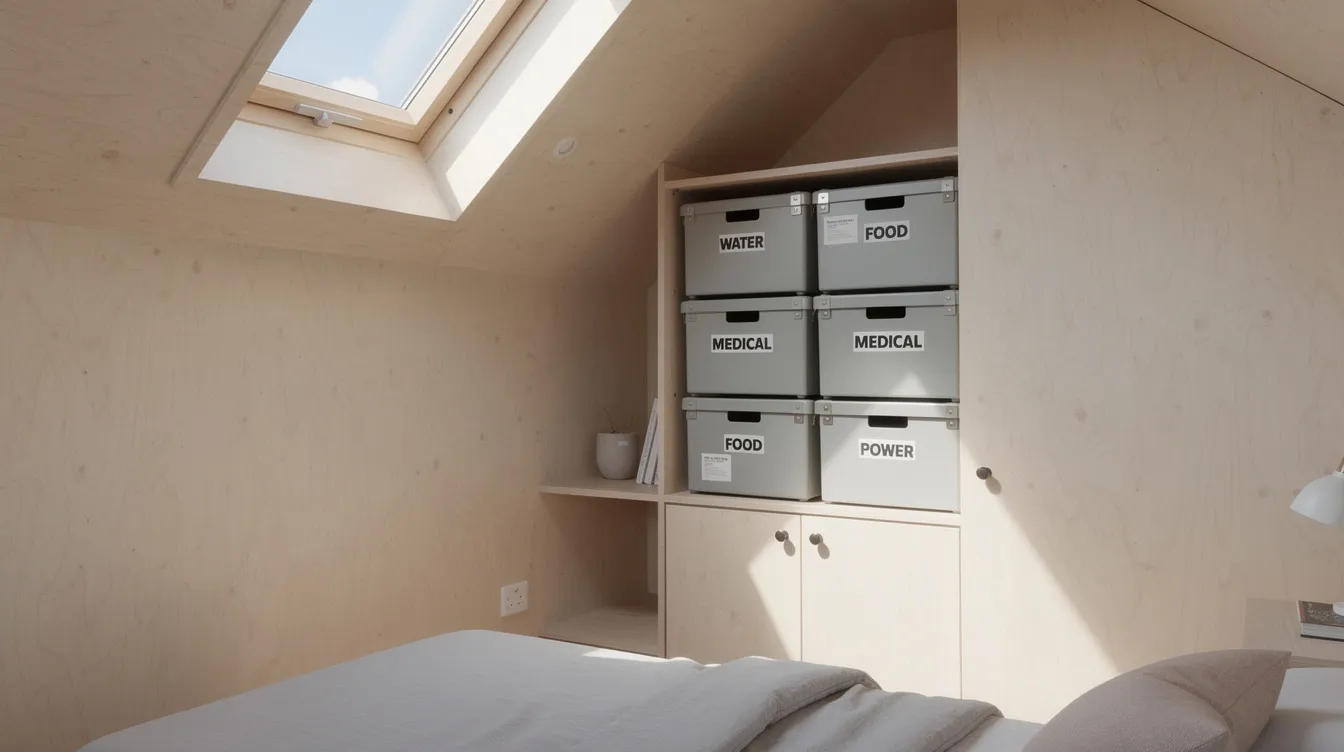
Compact storage solutions maximize limited space effectively. Under-bed storage can utilize otherwise wasted space-a 6-inch-tall rolling bin under a queen bed holds a surprising amount of supplies. Here's how to handle the rest:
- Behind closet doors: Hang a shoe organizer and fill pockets with flashlights, batteries, first-aid items, and document pouches.
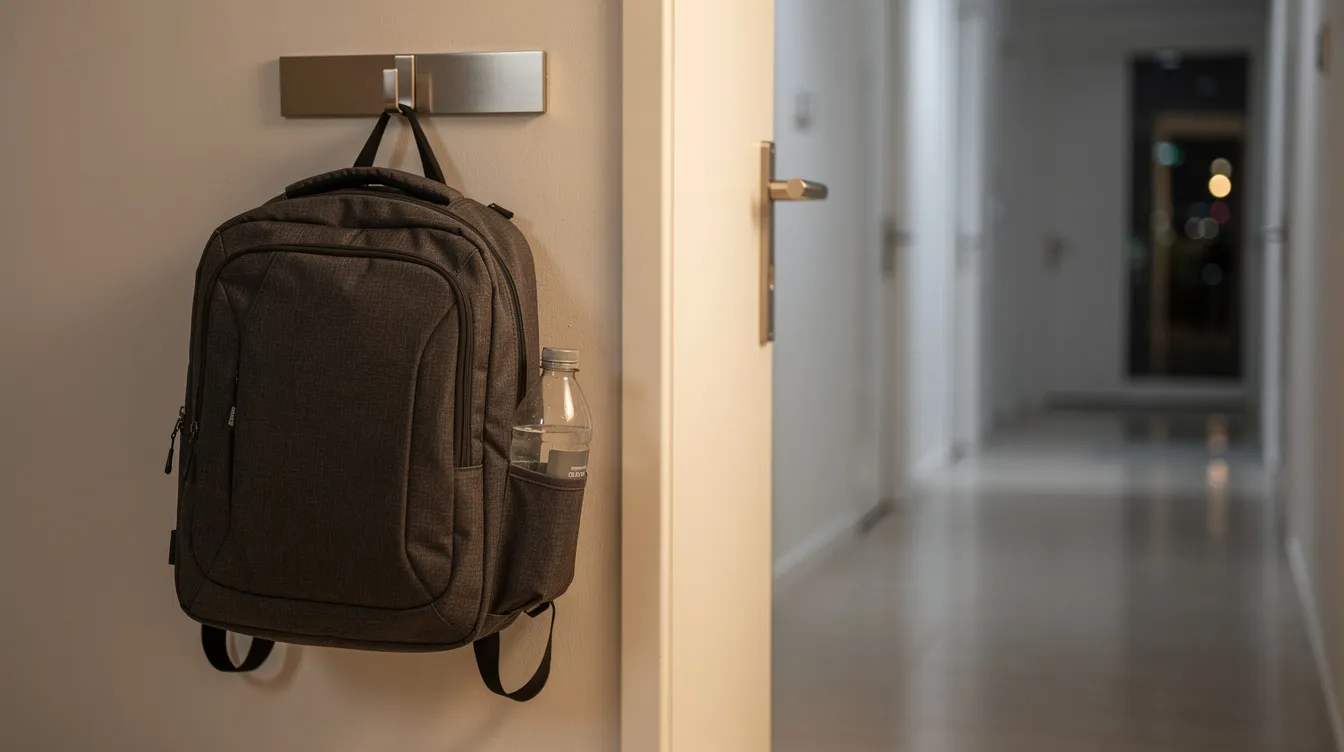
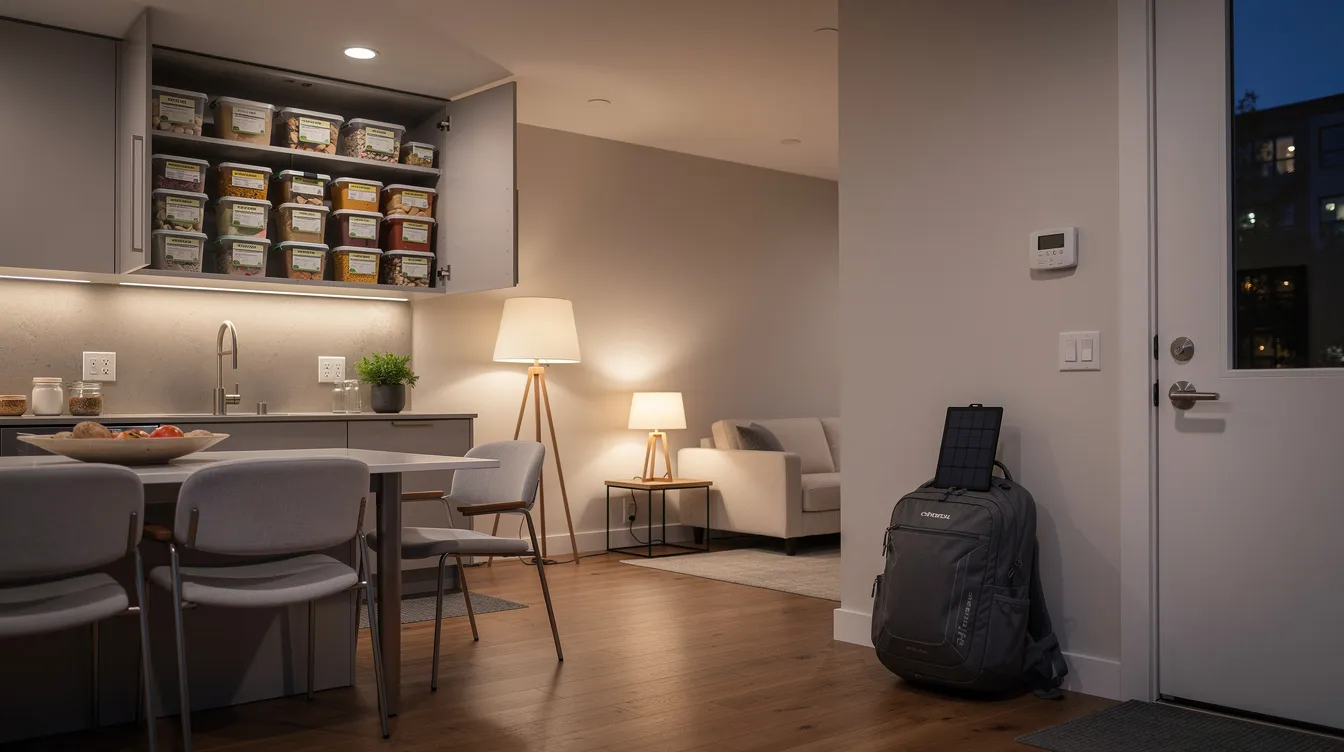
- Labeled suitcases: A carry-on suitcase doubles as a go bag and a storage container. Keep it packed and near your door.
- Overhead shelves above clothes rails: Most closets have 12+ inches of unused vertical space above the hanging rod. Use it for lightweight, labeled bins.
- Entry-hall closet: Dedicate one shelf to your emergency kit so it's the first thing you grab.
Kit Examples from Small Space Emergency
- Studio-Ready 72-Hour Kit: Supports one person in a studio apartment. Includes 3 gallons of water, a first-aid pouch, 3 days of no-cook food, an LED lantern, a compact radio, and a USB power bank. Total footprint: about the size of a carry-on bag.
- Two-Week Balcony Box: A weather-protected chest placed on a balcony, storing longer-shelf staples, a folding tool set, hygiene supplies, a 20,000 mAh power bank, and LED lights. Designed for extended shelter-in-place situations.
3. Apartment-Friendly Food Storage Without Losing Your Living Room
Food storage is a core topic on any serious preppers website, and it's where small-space living creates the biggest challenges. You don't have a basement. You probably don't have a garage. Your pantry might be two shelves wide. But that doesn't mean you can't store enough food to ride out a 2-week disruption-it just means you need a smarter way to do it.
The reason most people skip food storage isn't laziness-it's that traditional prepping advice assumes you have a spare room to fill with five-gallon buckets. For apartment dwellers, the answer is layered storage that hides in plain sight.
The Three Layers of Small-Space Food Storage
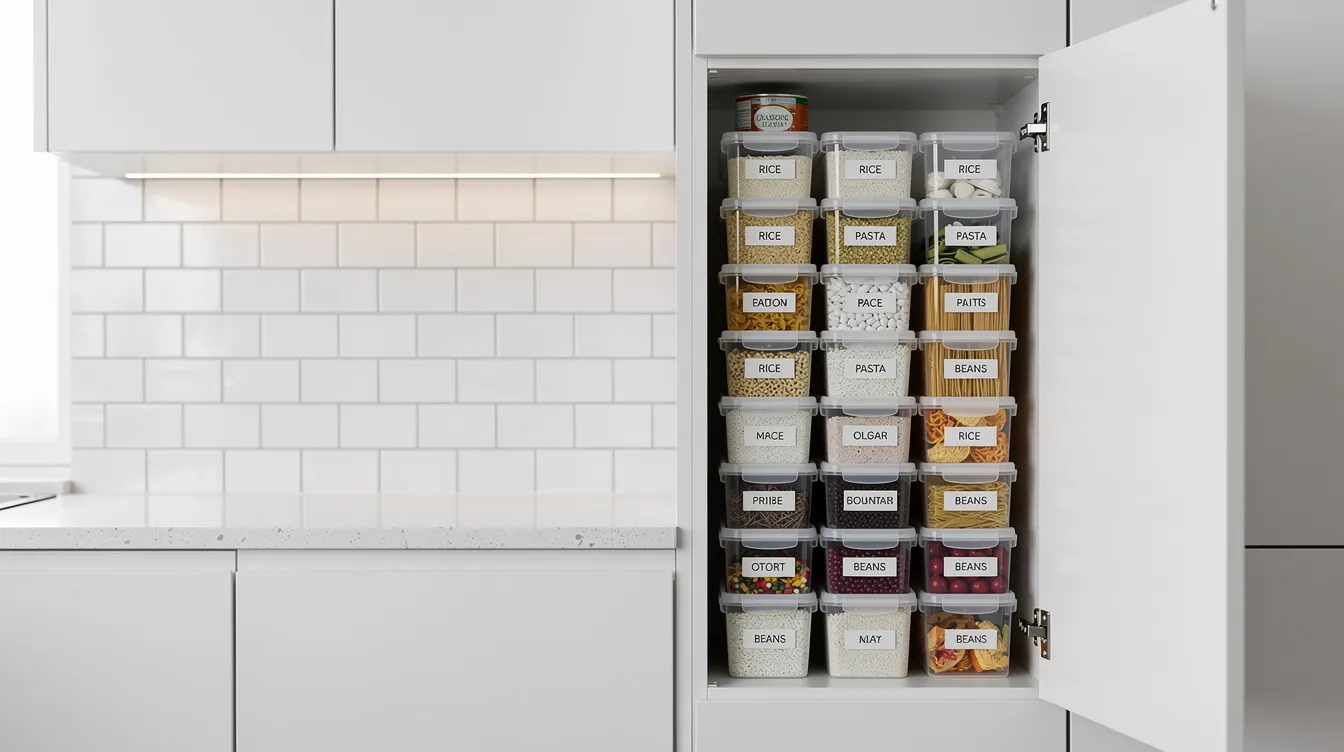
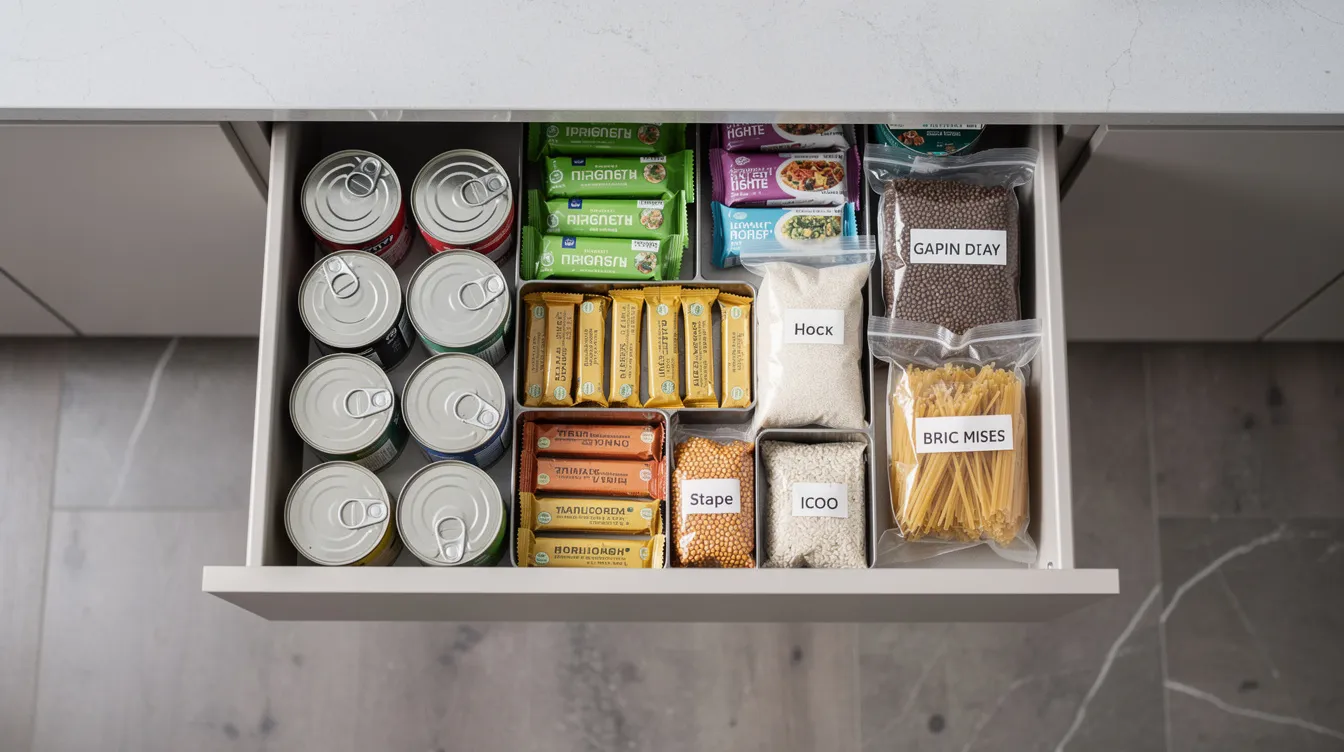
- Layer 1 - Everyday Pantry (2 weeks): Items you already eat and rotate naturally. Canned soups, pasta, rice, peanut butter, oats, dried fruit, shelf-stable milk. Keep these in your normal kitchen cabinets using a "first in, first out" system. Label everything with the purchase date, not just the "best by" date.
- Layer 2 - Shelf-Stable Backups (1–3 months): Freeze-dried meals, vacuum-sealed pouches, protein bars, and dehydrated staples stored outside the kitchen. Think: top of kitchen cabinets, a labeled bin in a closet, flat pouches slid behind books on a shelf. Stackable containers optimize storage in small areas-shoe-box-size bins of mylar-packed rice, lentils, and oats take up remarkably little room.
- Layer 3 - Long-Term Cache (3+ months): A small reserve of bulk staples (rice, beans, oats) packed in mylar pouches with oxygen absorbers. Stored in cool, dark spots. Research from Utah State University Extension confirms that keeping storage temperatures between 50–70°F and humidity below 15% dramatically extends shelf life. Above 90°F, shelf life can drop by half. Dehydrated or freeze-dried items stored properly can last 5+ years.
Temperature, Pests, and Urban Realities
- Avoid storing food near radiators, water heaters, or south-facing windows. Heat accelerates spoilage and degrades nutritional value.
- Sealed containers of glass, rigid plastic, or metal with tight lids are essential to deter cockroaches, mice, and pantry moths. UC Agriculture and Natural Resources notes that pantry pest lifecycles can complete in as few as 45 days under warm conditions-eggs may already be present in store-bought packaging.
- Use desiccant packets and oxygen absorbers inside mylar bags to preserve dry goods. Vacuum sealing is excellent for rationing and minimizing volume.
Making It Invisible
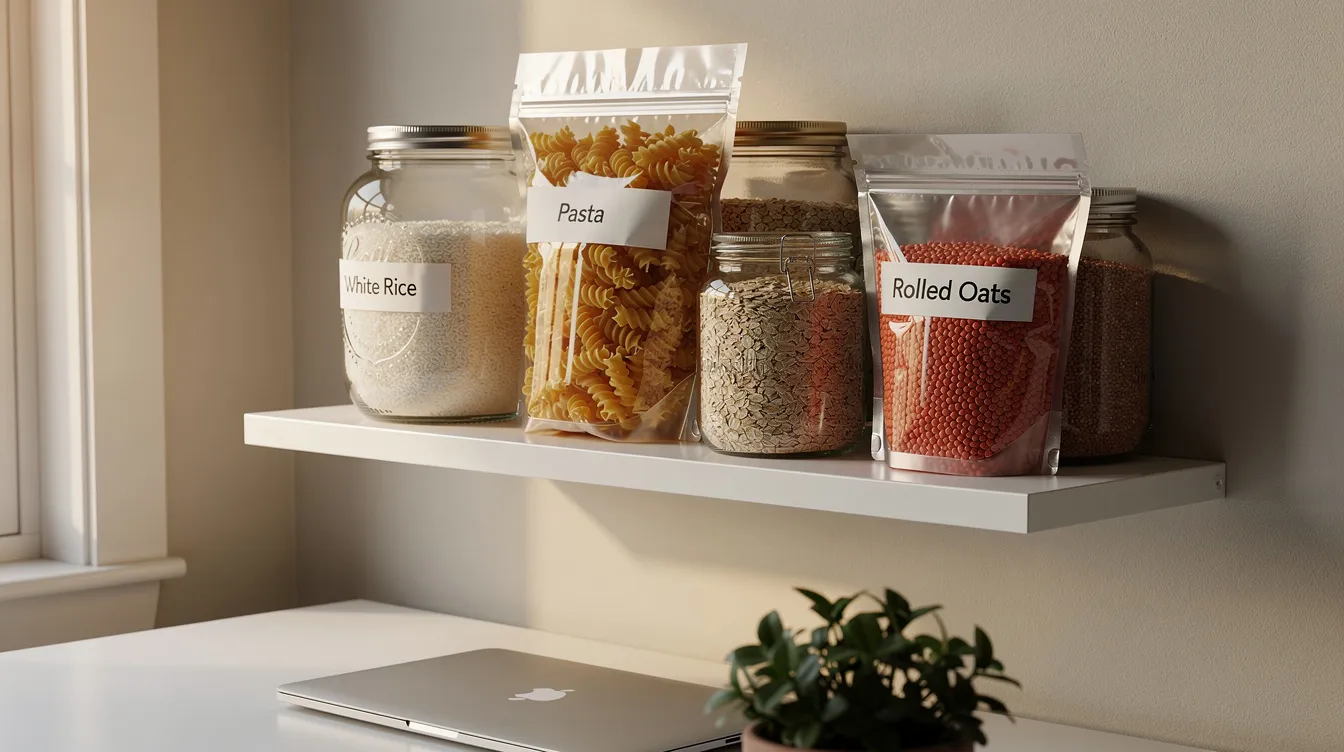
Using vertical storage can increase usable space by up to 30%. The top of your kitchen cabinets, the space above your closet rod, and narrow floating shelves above a desk are all prime real estate for food storage that nobody will notice unless they're looking.
Multi-functional furniture can serve as storage solutions too. An ottoman with a lift-top lid, a bench seat with internal compartments, or a coffee table with drawers can each hold a week's worth of canned goods and dry staples while looking completely normal.
Menu Planning for Emergencies
Small Space Emergency recommends building your food cache around easy, low-prep recipes that work even during a power outage:
- Pre-mixed dry soup kits (just add water)
- Rice-and-beans jars with pre-measured seasoning packets
- No-cook options: canned tuna, crackers, peanut butter, granola, dried fruit
- Cold-soak meals: couscous, instant oats, or ramen noodles rehydrated with room-temperature water
Plan for dietary restrictions and food allergies. If your family includes young children or elderly members, factor in softer foods and higher-calorie options.
4. Preparing for Power Outages in Small Homes and Rentals
A power outage is the single most common emergency most people will face. U.S. Census Bureau data shows that nearly 1 in 4 U.S. households experienced a complete outage in the past year, and among those, roughly 70% had at least one lasting 6 or more hours. In 2024, the average U.S. customer spent about 11 hours without electricity-nearly double the average from the prior decade.
Renters felt this acutely during the 2021 Texas freeze, New York summer storms, and British Columbia winter events. Without backup generators (often banned in apartment leases) or land to set up solar arrays, many people simply sat in the dark. But there are practical, renter-friendly solutions that fit in a closet.
Small-Space Power Outage Essentials
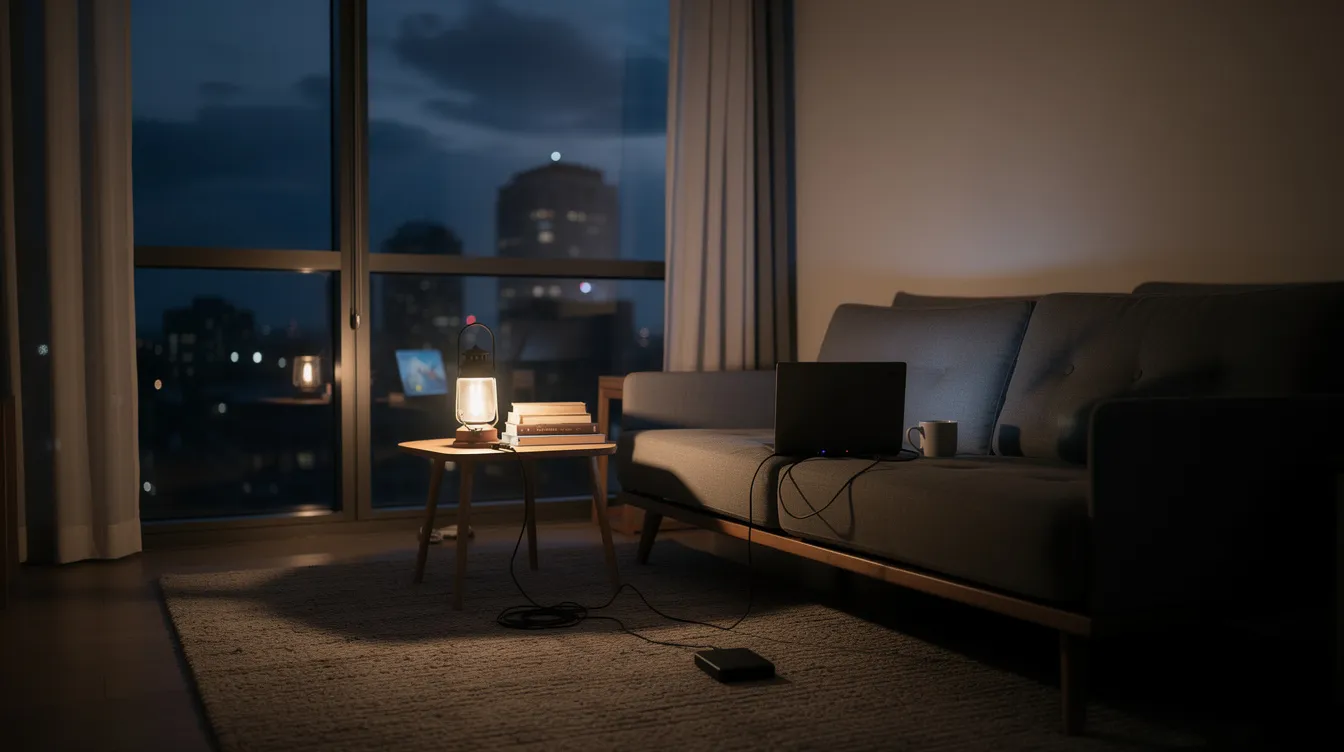
- Compact battery banks (10,000–20,000 mAh): Keep phones, tablets, and LED lanterns running. A 20,000 mAh bank weighs about a pound and charges a phone 4–5 times-enough for 2–3 days of careful use.
- Foldable solar panels (50–200W): Drape over a balcony railing or prop in a window. Paired with a battery station, a 100–200W panel system can deliver 4–6 hours of basic power to devices and lights daily. Costs typically range from $200 to $3,000 depending on capacity. Renters increasingly adopt plug-in solar kits that require zero permanent installation.
- LED lanterns: Far safer than candles in apartments. Look for models with adjustable brightness and USB charging ports. One lantern can light a room for 50+ hours on a single charge.
- USB fans for heat waves: Small, battery-powered fans that plug into a power bank. Not a luxury-heat kills more people in the U.S. than any other weather event.
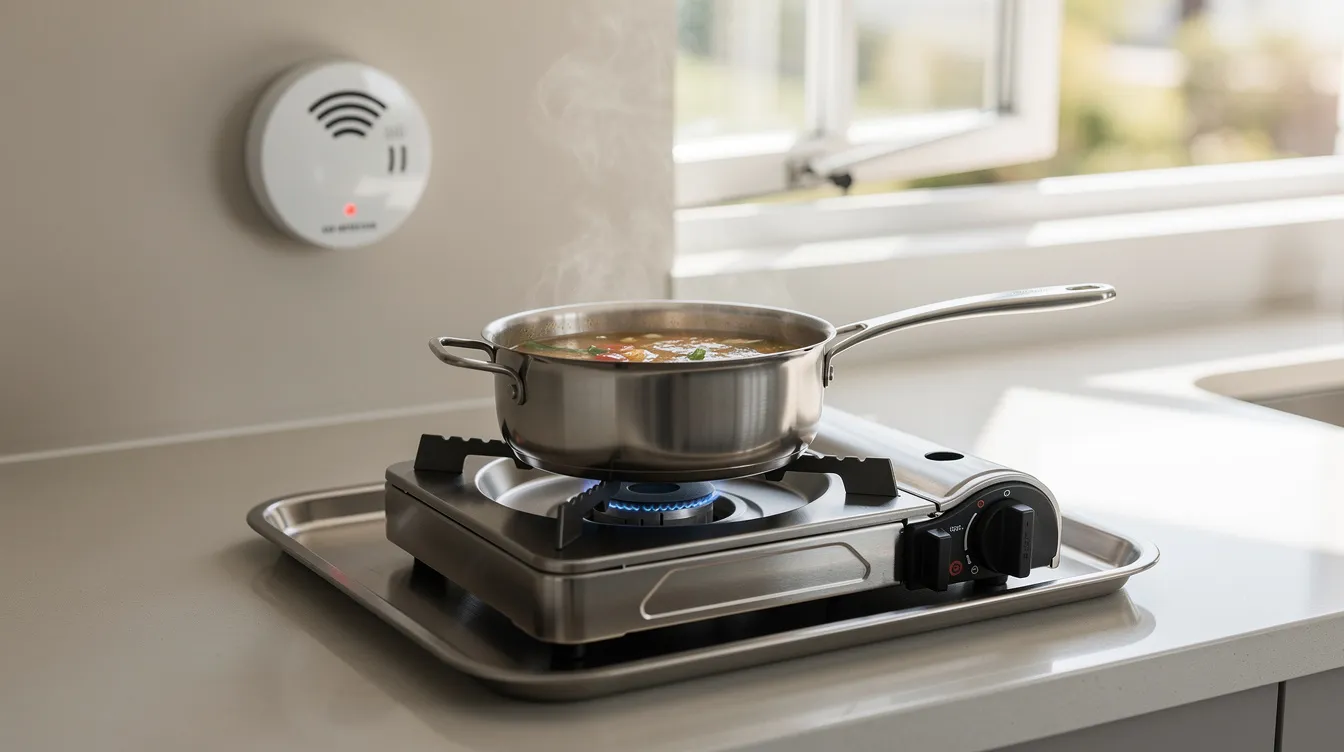
- Battery-powered carbon monoxide detector: Non-negotiable if you use any fuel-burning device indoors, even a candle warmer.
Keeping Food Cold Without Power
- Pre-freeze water bottles and pack them tightly in your freezer. A full freezer holds temperature far longer than a half-empty one. This also gives you drinkable water as they melt.
- In winter, use a cooler or insulated bag on a balcony as a makeshift cold-storage unit.
- Consume perishables in order: refrigerator items first (safe for about 4 hours if door stays closed), then freezer items (a full freezer holds temperature for roughly 48 hours), then shelf-stable reserves.
Non-Electrical Cooking Options
- Compact butane stoves: safe for indoor use with a window cracked open and a CO detector installed. Always place on a metal tray on a stable surface. Check your lease for restrictions on open flames.
- Cold-soak meals: instant oats, couscous, ramen, and dehydrated soups rehydrated with room-temperature water. No heat required.
- Candle warmers: can heat a small cup of soup or water slowly. Not fast, but functional and very low risk.
Renter-Specific Safety and Legal Considerations
- Review your lease for clauses about open flames, portable stoves, and window-mounted equipment before you buy anything. Some buildings restrict even plug-in solar panels.
- Use surge protectors on all electronics to guard against power spikes when the grid comes back online.
- Emergency plans should include escape routes for apartments-know your building's stairwell exits, not just the elevator.
- Check smoke detectors monthly in your apartment. Replace batteries at least once a year.
- Have a communication plan for family members in emergencies. Designate a meeting spot outside the building and an out-of-area phone contact.
- Talk to your building management about emergency procedures: where are the manual door releases, are there backup lights in stairwells, and is there a building-wide emergency plan?
Fallback plans and safety instructions should be included in any preparedness resource. Preparedness websites should include practical guides and actionable plans-not vague suggestions to "be ready."
5. How Small Space Emergency Serves as a Practical Preppers Website & Next Steps
Everything above connects to one idea: self reliance doesn't require a compound in the mountains. It requires a plan, a few well-chosen items, and the knowledge to use them. That's the community Small Space Emergency is building.
Here's how Small Space Emergency positions itself as a modern preppers website:
- Clear checklists: Printable apartment emergency checklists broken down by kit size (72-hour, 7-day, 14-day) so you can track your progress without guessing.
- Step-by-step guides: Actionable plans that walk you through each category-water, food, power, first aid, documents-with specific product recommendations and honest reviews that highlight both pros and cons.
- Curated gear lists: Comparison guides for compact survival gear and small-space emergency kits, filtered by apartment size, budget, and risk profile. No 50-pound bug-out bags designed for wilderness survival-just practical gear that fits your lifestyle.
- Interactive tools: Kit-builder calculators that estimate how much space your supplies will occupy, helping you find room before you buy.
- Ongoing updates: Regular updates on preparedness standards and guidelines are necessary for credibility. As products improve, regulations change, and new weather patterns emerge, the site evolves with them.
Emergency management frameworks provide foundational guidelines for preparedness, and credible emergency preparedness sites provide transparent author credentials. At Small Space Emergency, verification of information is essential-every recommendation is grounded in data from sources like FEMA, CDC, and peer-reviewed research, not internet rumors.
High-quality preparedness platforms adhere to standards of expertise and transparency. That means distinguishing between educational content and product recommendations, so you always know when you're learning a skill versus when we're suggesting you store something specific.
Community forums can enhance learning and information sharing on preparedness topics, and we encourage readers to share their own setups, lessons learned, and local tips. The best prepping knowledge often comes from people who've actually lived through an outage, a storm, or an evacuation in a 400-square-foot apartment.
Your Next Step
Review your emergency plan at least once a year-and if you don't have one yet, today is the day to start. You don't need to spend money right away. You don't need to grow a garden or learn to handle a firearm. You just need to start with one small step:
- 1This weekend: Fill three gallon jugs with water and store them under your bed. Cost: about $3.
- 2This month: Assemble a basic 72-hour kit using items you likely already own-flashlight, batteries, first-aid supplies, a bag of rice, a can opener.
- 3This season: Build out to a 7-day supply and add a power bank and LED lantern.
That single step puts you ahead of the roughly two-thirds of Americans who don't have an emergency supply kit at all, according to CDC survey data. The peace of mind that comes from being prepared-even minimally-is worth more than any amount of money spent on gear you'll never need.
The future of prepping isn't about bunkers-it's about smart, space-conscious planning that fits the way people actually live. Whether you're in a studio in Brooklyn, a tiny house in Portland, or a one-bedroom rental in Houston, you can be prepared without turning your home into a warehouse.
Bookmark this page, share it with someone in your building, and start building your small-space emergency kit today.
Editorial note: this guide provides general preparedness information, not emergency, medical, legal, or engineering advice. Recommendations are cross-checked against public emergency-management guidance and adapted for small-space living. During an active emergency, follow your local authorities and emergency services. See our editorial standards and affiliate disclosure.