Prepper Bag List: Complete Bug Out Bag Checklist for Small Spaces
Whether you live in a 400-square-foot studio or a cozy one-bedroom apartment, a well-built prepper bag list is the difference between scrambling during an evacuation and walking out the door with confidence. This guide breaks down every essential item you need, organized by survival priority, with weight targets and storage solutions designed for compact living.
Key Takeaways
- A bug out bag is a 72-hour mobile survival kit that every small-space household should keep packed and ready by the door. It should sustain you for at least 72 hours after an emergency forces evacuation.
- This complete bug out bag checklist is organized by survival priorities (water, shelter, food, first aid kit, fire kit, tools, documents, and more) with concrete item examples and suggested quantities for each category.
- Your bug out bag should weigh no more than 20% of your body weight. For most adults, that means keeping the fully loaded pack between 15 and 30 lbs, making it easier to grab, carry, and store in tight spaces.
- The article includes 10 high-quality, photorealistic images showing real-world, urban-friendly bag contents, compact gear close-ups, and apartment storage ideas.
- A printable-style checklist section and detailed FAQ cover cost, storage in small apartments, kids and pets adaptations, and how often to update gear.
What Is a Bug Out Bag (and How It Differs From Other Emergency Kits)?
A bug out bag is a grab-and-go emergency kit packed to sustain one person for at least 72 hours when you need to evacuate fast. Think of it as your survival bag for the first three critical days after a disaster, when official help, utilities, and normal supply chains may be completely unavailable.
The key difference between a bug out bag and a shelter-in-place bin is mobility. A home emergency kit might include gallon jugs, bulk food, and comfort items. A bug out bag strips everything down to what you can carry on your back. Go bags are designed for speed, not luxury.
FEMA and the American Red Cross both recommend that each household member have an individual go bag, particularly in areas prone to wildfires, hurricanes, earthquakes, or urban emergencies. At Small Space Emergency, we focus on compact, apartment-friendly kits that fit in closets, under beds, or beside desks without eating into your living area.
For most adults, a backpack in the 40–50 liter range hits the sweet spot. It holds all the core bag essentials without encouraging overpacking. And remember: your bug out bag is only one piece of a broader emergency preparedness plan that includes home supplies, a communication plan, and knowledge of your local risks.
Photo 1: Complete Bug Out Bag Layout (Top-Down Flat Lay)
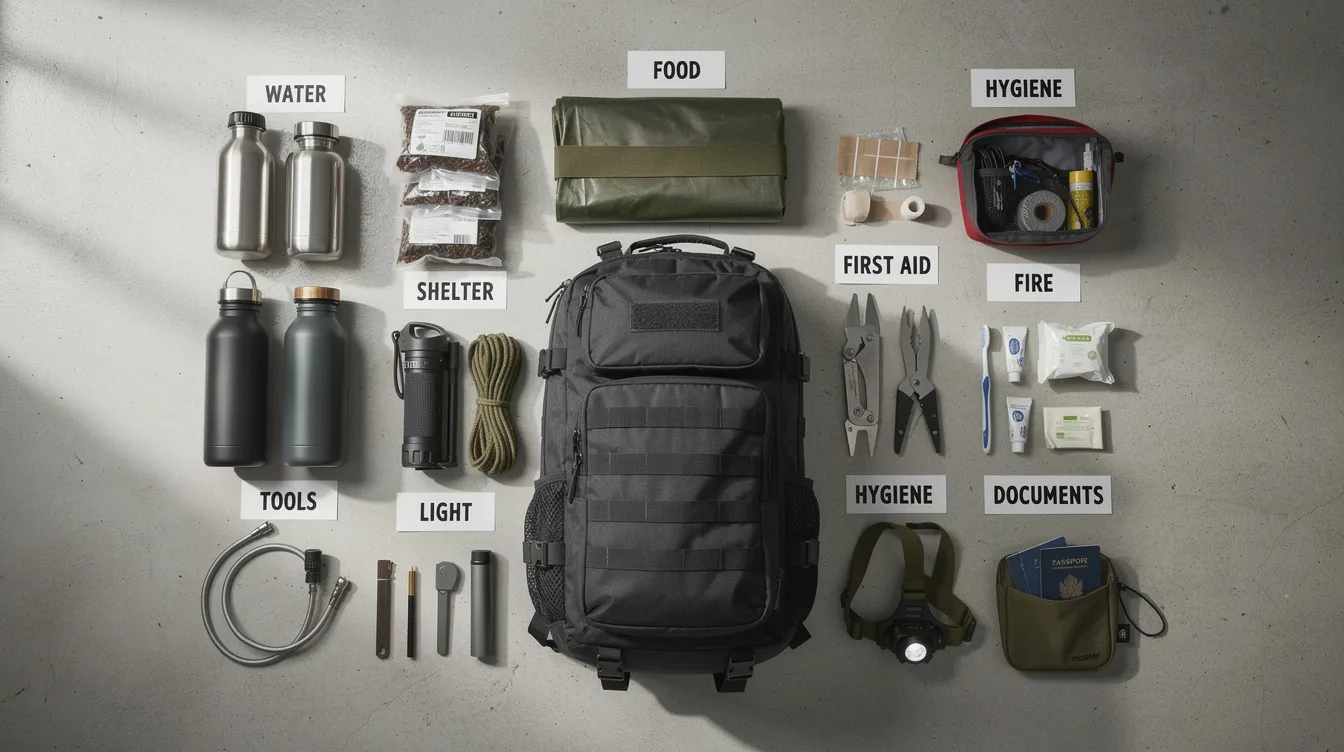
This is what a complete, apartment-friendly bug out bag looks like when laid out flat. Every item earns its place by covering a specific survival priority.
- Water gear: stainless bottle, collapsible bladder, squeeze filter, purification tablets
- Food: energy bars, freeze-dried pouches, electrolyte packets
- Shelter and clothing: compact tarp, emergency bivy, layered clothing in compression cubes
- First aid kit: bandages, gauze pads, medications, trauma gear
- Fire kit: lighters, ferro rod, waterproof matches, tinder tin
- Tools: multi tool, knife, headlamp, duct tape
- Documents and cash: waterproof pouch with IDs, insurance copies, small bills
- Hygiene: wipes, hand sanitizer, toothbrush, soap
Core Bug Out Bag Essentials: Survival Priorities Overview
Before diving into the full bag checklist, it helps to understand why items are ordered the way they are. The rough "rule of threes" guides every prepper bag list:
- 3 minutes without air (or in severe bleeding)
- 3 hours without shelter in harsh weather
- 3 days without water
- 3 weeks without food
This article unpacks each survival priority category in detail:
- 1Water and hydration
- 2Shelter and clothing
- 3Food and cooking
- 4First aid and medications
- 5Fire kit
- 6Tools and repairs
- 7Navigation and communication
- 8Documents and cash
- 9Hygiene and sanitation
- 10Self defense and personal safety
- 11Comfort and morale items
Every item on this list is chosen with small-space emergency preparedness in mind: compact, multi-use, stackable, or compressible gear that won't consume your entire closet.
Choosing the Right Bug Out Bag Itself
The bag itself is the foundation. A durable, comfortable backpack is recommended for carrying emergency supplies, and picking the wrong one can make everything else harder.
- Volume: 26–45L for most adults. This range fits all core essentials without encouraging the "just one more thing" trap.
- Fit features: Padded shoulder straps, a hip belt to transfer weight to your hips, a sternum strap, and at least one external water bottle pocket.
- Low-profile design: Choose gray, black, or dark earth tones. Bags designed with a civilian look avoid drawing attention during urban evacuations. Skip anything with MOLLE webbing or camo patterns.
- Interior organization: Use 3–4 packing cubes or zip pouches sorted by category (medical, food, clothing, tools) so you can find what you need under stress.
- Empty bag weigh: Keep it under 4 lbs so your fully packed kit stays within that 10–20% body weight window.
Water and Hydration: Absolute Priority in Your Bug Out Bag
Water is the most critical bug out bag essential and also one of the heaviest. Dehydration can become life-threatening within days, so your list must balance stored water with treatment options.
You should pack a minimum of 1 gallon per person per day of drinking water. Water weighs 8.35 pounds per gallon, which means carrying water for three full days would add over 25 lbs, an impossible weight penalty for a mobile kit. The solution: carry 1–2 liters and treat more along the route.
Recommended water gear:
- At least one 1L (32 oz) single-wall stainless steel water bottle, which is ideal for boiling water over a fire
- One collapsible 1–2L bottle or bladder for extra capacity when sources are available
- One compact squeeze filter (like a Sawyer-type) as your portable water filter
- 20+ water purification tablets for backup treatment
- A bandana or pre-filter cloth for sediment
Carrying water at 1–2 liters (roughly 2–4 lbs) is realistic for most adults. Use multiple methods for water treatment so you're never dependent on a single device.
Home storage note: Store a minimum of three gallons of water per person separately in your apartment, in closets or under beds. Your stainless bottle stays pre-packed in the bag; larger reserves stay behind for shelter-in-place scenarios.
Food and Cooking: Lightweight, No-Fuss Bug Out Bag Nutrition
Bug out bag food should be lightweight and calorie-dense. Emergency meal packs should require minimal preparation since you may not have a stove, clean water, or time to cook.
Top food picks for your bag:
- Energy or ration bars (SOS Emergency Food Rations provide 3,600 calories with no preparation needed)
- Nut mixes and beef jerky for protein and fat
- Instant oatmeal packets and freeze-dried meals (just-add-hot-water)
- Peanut butter packets and electrolyte drink mix sachets
Aim for at least 2,000 calories per person per day for three days, totaling roughly 6,000–7,200 calories. Avoid canned goods in a bug out bag due to weight. A day's worth of canned food can weigh 3–4 lbs; the same calories in bars and dehydrated pouches weigh under 1.5 lbs.
Minimal cooking kit (optional): A compact nesting pot, folding spork, and small stove with one fuel canister if your lease allows it. Otherwise, rely on cold-soak foods to skip fuel entirely.
Rotation: Rotate food items every 6 months to maintain freshness. Label everything with month and year, and check expiration dates at daylight saving time shifts. Eat what's expiring and replace it.
Shelter and Clothing: Staying Warm and Dry on the Move
Exposure to cold weather, wind, and rain can kill faster than hunger. A bug out bag should include lightweight shelter items that compress small but deploy quickly.
Shelter gear:
- Lightweight ripstop tarp (a durable tarp can keep you dry during emergencies) or emergency bivy sack
- 4–6 aluminum tent stakes
- 50 ft of paracord for rigging shelter or a rain poncho as dual-purpose rain protection
- One compact mylar emergency blanket per person
Clothing layers:
Clothing should protect against rain, wind, cold, and sun. Pack changes of clothes for hygiene and protection:
- Moisture-wicking base layer (synthetic or merino wool)
- Insulating mid-layer (fleece or packable down jacket)
- Waterproof shell jacket
- Spare socks and underwear
- Hat and work gloves for cold temperatures or debris handling
- Comfortable shoes are critical in an emergency kit, so wear or pack sturdy, broken-in footwear
Store clothing in a waterproof compression sack to save space and keep everything dry. Rotate clothing at least twice a year (spring and fall) so your bag checklist stays weather-appropriate.
First Aid and Medical: Building a Compact but Capable Aid Kit
A bug out bag must include a first aid kit. The difference between a basic aid kit and a trauma-capable one comes down to training. Having supplies you don't know how to use helps no one.
Basic first aid kit contents:
- Assorted adhesive bandages
- 4×4 gauze pads and 2 elastic wraps
- Antiseptic wipes and antibiotic ointment
- Medical tape, tweezers, small scissors
- Pain relievers (ibuprofen, acetaminophen)
- Antihistamines and blister care supplies
- Include gauze pads, bandages, and pain relievers as your minimum baseline
Trauma items (if trained):
Use the MARCH protocol for organizing first aid supplies: Massive hemorrhage, Airway, Respiration, Circulation, Hypothermia. Add tourniquets for severe bleeding control in first aid kits, along with one pressure dressing, trauma shears, and nitrile gloves. Store trauma gear in a bright-red pouch for instant identification.
Pack prescription medications with at least a 7-day supply, written dosing info, and a list of conditions and allergies in a waterproof bag. Training in the use of emergency supplies is important, so take a basic first aid course if you haven't already.
Fire Kit: Reliable Ignition for Warmth, Cooking, and Signaling
Fire starting tools are necessary for warmth and signaling. A reliable fire kit should have three ignition sources so you're never left without the ability to create flame.
Ignition sources:
- 2 Bic-style lighters in waterproof sleeves
- 1 ferrocerium rod (ferro rod) with striker
- 1 small waterproof match tube with strike-anywhere waterproof matches
Tinder:
- Cotton pads saturated with petroleum jelly, stored in a crush-proof tin
- Commercial tinder tabs or waxed wood shavings as backup
Safety notes: In urban areas, open flames may be illegal or dangerous. Know your local rules and prioritize shelter over fire when stealth matters. Practice with your fire kit in safe, controlled conditions before relying on it during a real emergency.
Tools, Repairs, and Everyday Utility Gear
Every tool in this category must justify its weight. If it only does one job, it probably doesn't belong in an emergency preparedness kit.
Core tool list:
- 1 quality multi tool with pliers, knife blade, screwdriver bits. Multi-tools should include a blade, saw, and awl for maximum versatility.
- 1 small fixed-blade knife, which is essential for survival situations where a folding blade might fail under stress
- 1 compact headlamp with spare lithium batteries (hands-free lighting beats a handheld flashlight)
- A small roll of duct tape wrapped around a pencil or old card to save space. Note that duct tape is less effective in dirty or wet conditions, so carry zip ties as backup.
Repair and utility items:
- Sewing kit with heavy-duty needles and thread
- 6–10 zip ties in assorted sizes
- Safety pins and a mini roll of bank line
- Eye protection (clear safety glasses) for debris or smoke
Store sharp or regulated items responsibly, especially around children, and confirm they comply with local laws. Pack your headlamp and multi tool in a dedicated outer pocket for fast access.
Navigation and Communication: Staying Oriented When Systems Fail
Cell towers, Wi-Fi, and GPS may be overloaded or offline during major disasters. Analog tools are essential when cell towers fail, so every serious prepper bag list needs non-digital backups.
Navigation items:
- A waterproof local map covering at least 50–100 miles around your home
- A baseplate compass, which is crucial for navigation in emergencies
- Printed directions to primary and backup evacuation locations
- A signal mirror for daytime visual signaling
Communication equipment:
- Fully charged battery pack (10,000–20,000 mAh) with phone charging cable
- A NOAA weather radio (crank or solar powered). A compact AM/FM radio can provide emergency information, and emergency radios can inform you of conditions while also charging devices.
- Two-way radios allow for communication without cell service, useful for family members who may be separated
Pre-program offline maps on your phone for emergencies, and store critical phone numbers and addresses on a laminated card inside the bag in case your phone is lost or dead. Keep a written family communication plan with meeting points and an out-of-town contact. Stay informed by monitoring weather bands whenever conditions deteriorate.
Documents, Cash, and Personal Items
Important documents and a bit of cash can dramatically speed recovery after evacuation. Emergency documents should be stored in a waterproof pouch placed near the top of your bag for quick removal at checkpoints or shelters.
Document copies to include:
- Government-issued IDs (driver's license, passport)
- Insurance policies (health, renter's, auto)
- Lease or mortgage paperwork
- Medical cards, prescriptions, and personal documents listing conditions and allergies
- Short inventory of major possessions (photos on a USB drive work well)
Cash in small bills is important for emergencies when electronic systems fail. Keep $100–$300 in 5s, 10s, and 20s in a discreet envelope, plus a few quarters. Spare keys to your vehicle and apartment are worth including.
Morale items: A small notebook, pen, family photo, or lightweight paperback can help manage stress during extended displacement. These weigh almost nothing and provide real psychological benefit.
Hygiene, Sanitation, and Comfort Items
Poor sanitation leads to illness fast, which quickly derails any survival plan, especially in crowded urban shelters.
Hygiene list:
- Travel-size toothbrush and toothpaste
- Biodegradable soap bar or liquid
- Small pack of baby wipes
- Hygiene supplies should include hand sanitizer and wet wipes as baseline items
- Compact towel or bandana
- At least 1 roll of toilet paper compressed in a zip bag
- Insect repellent (travel size)
- Pepper spray or legal self defense tool if permitted in your area
Additional needs: Feminine hygiene options (compact pads, tampons, or menstrual cup) and baby supplies (diapers, rash cream, wipes) scaled for a 3-day window if applicable.
Waste management: Pack a few heavy-duty garbage bags that double as rain covers, ground sheets, or improvised ponchos. Keep all hygiene items sealed and rotate occasionally to prevent dried-out wipes or leaking bottles.
Photo 2–6: Detailed Gear Close-Ups
Each image below matches the same HDR, photorealistic visual style as the flat lay above, with consistent olive and gray color tones.
Photo 2: First Aid Kit Close-Up
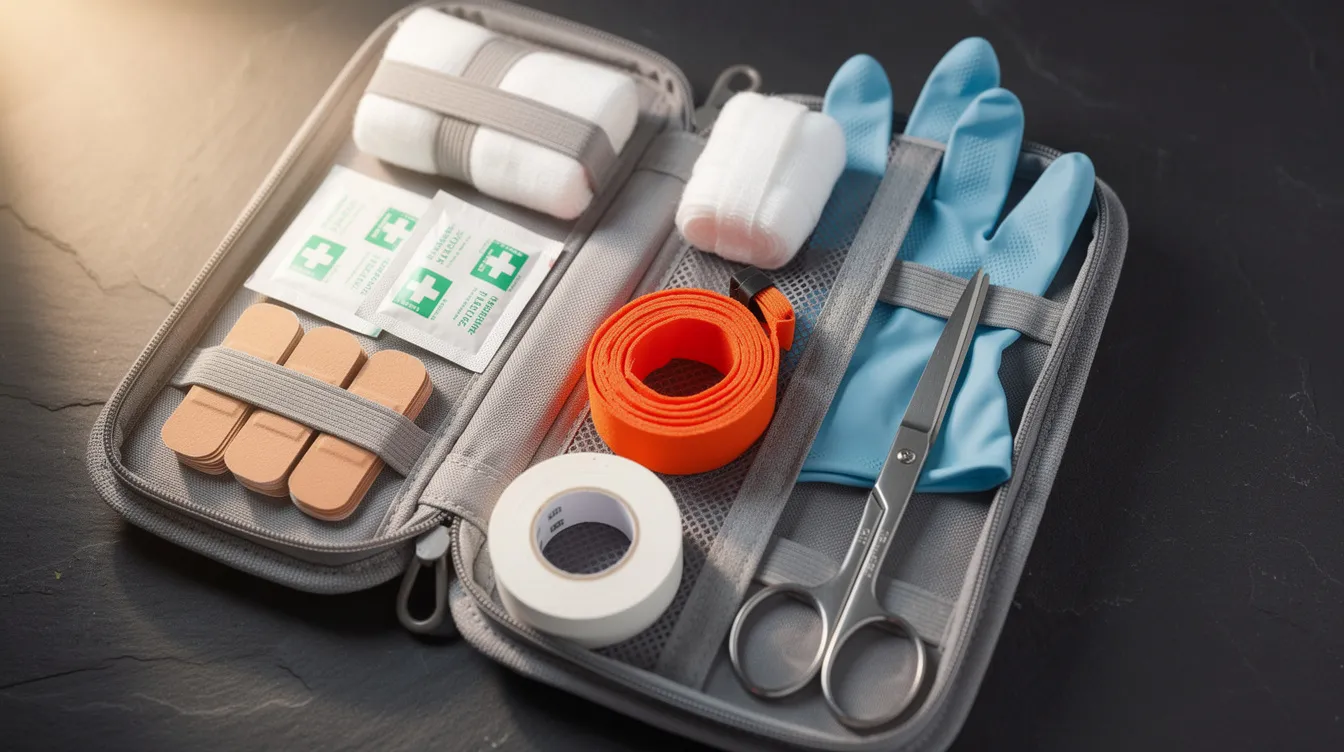
A well-organized aid kit means finding what you need in seconds, not minutes. The bright-red pouch makes it instantly identifiable inside any pack.
Photo 3: Hydration and Water Treatment Setup
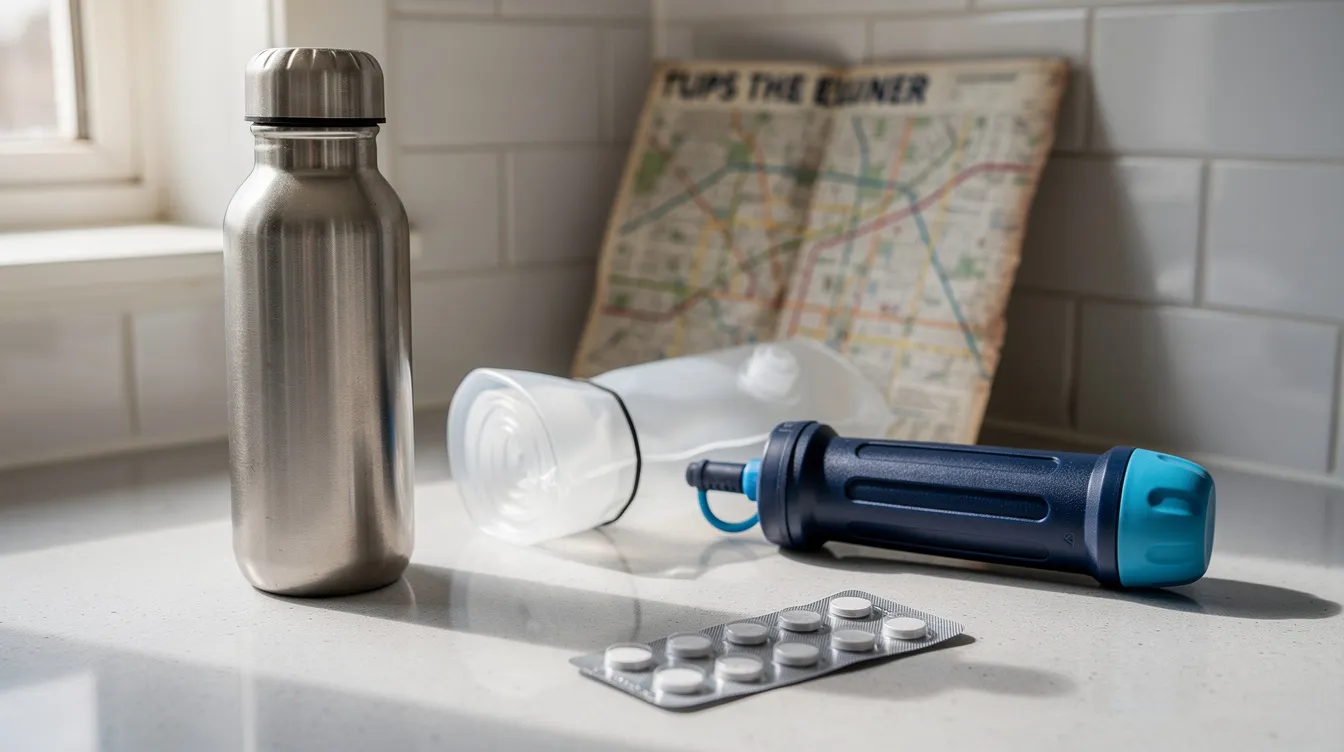
Your stainless bottle doubles as a boiling vessel. The squeeze filter and tablets give you multiple methods for treating water from unknown sources.
Photo 4: Shelter and Clothing Kit
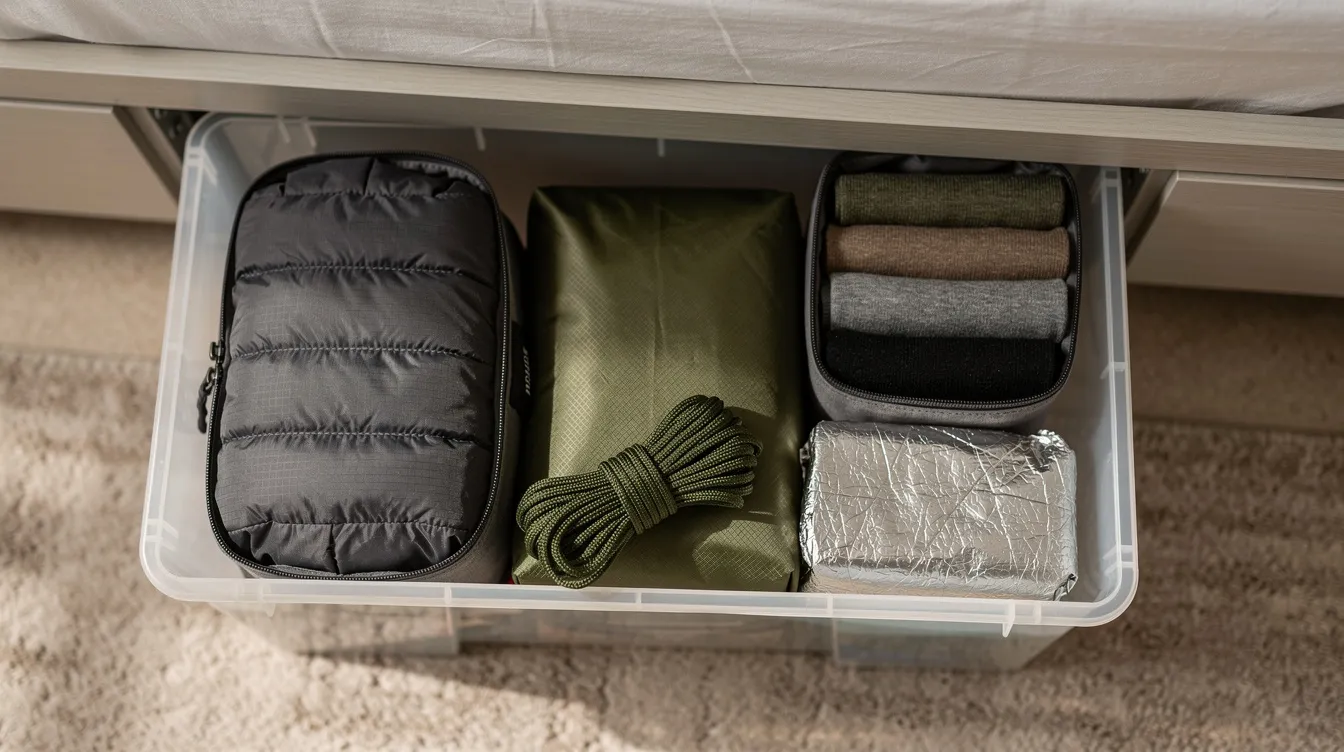
Everything here fits into a standard under-bed bin, proving you can save space without sacrificing coverage for cold weather or rain.
Photo 5: Tools and Fire Kit Grid
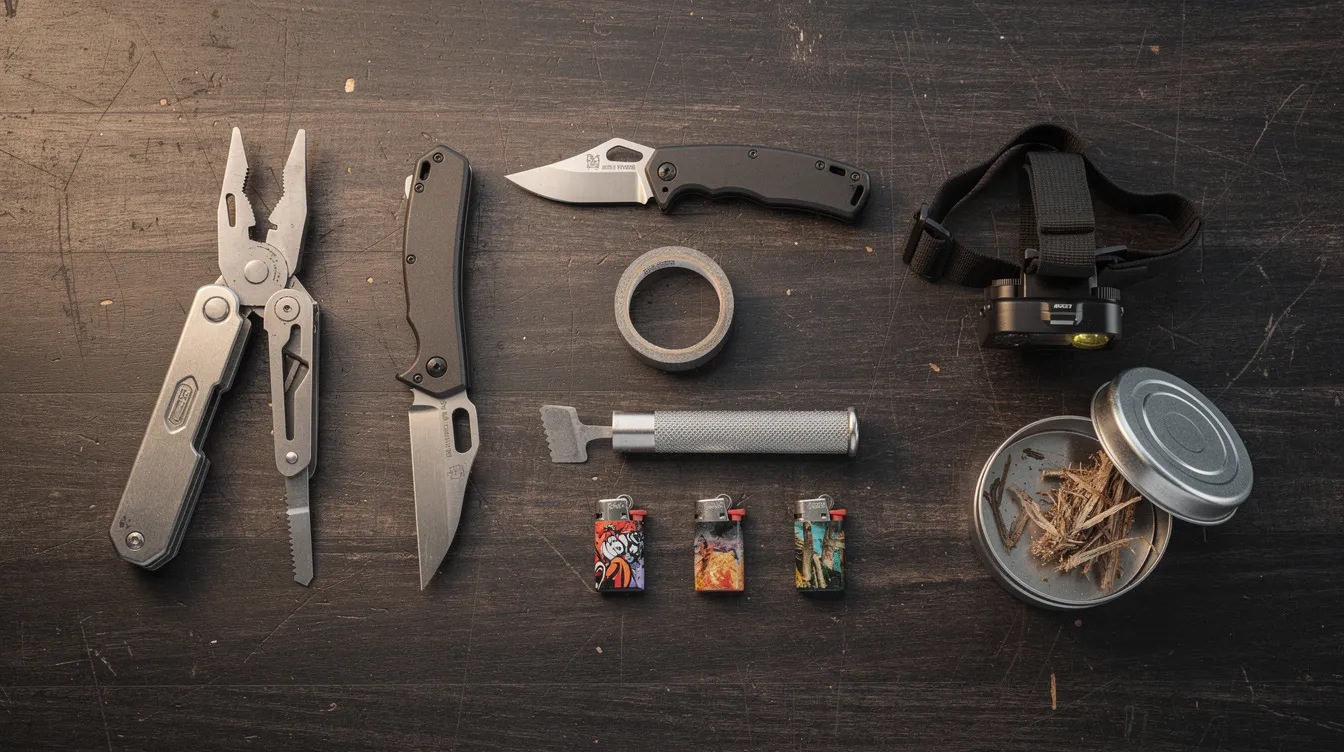
Grid layouts like this make it easy to audit your everyday carry gear at a glance. Missing something? You'll spot the gap immediately.
Photo 6: Documents and Valuables Pouch
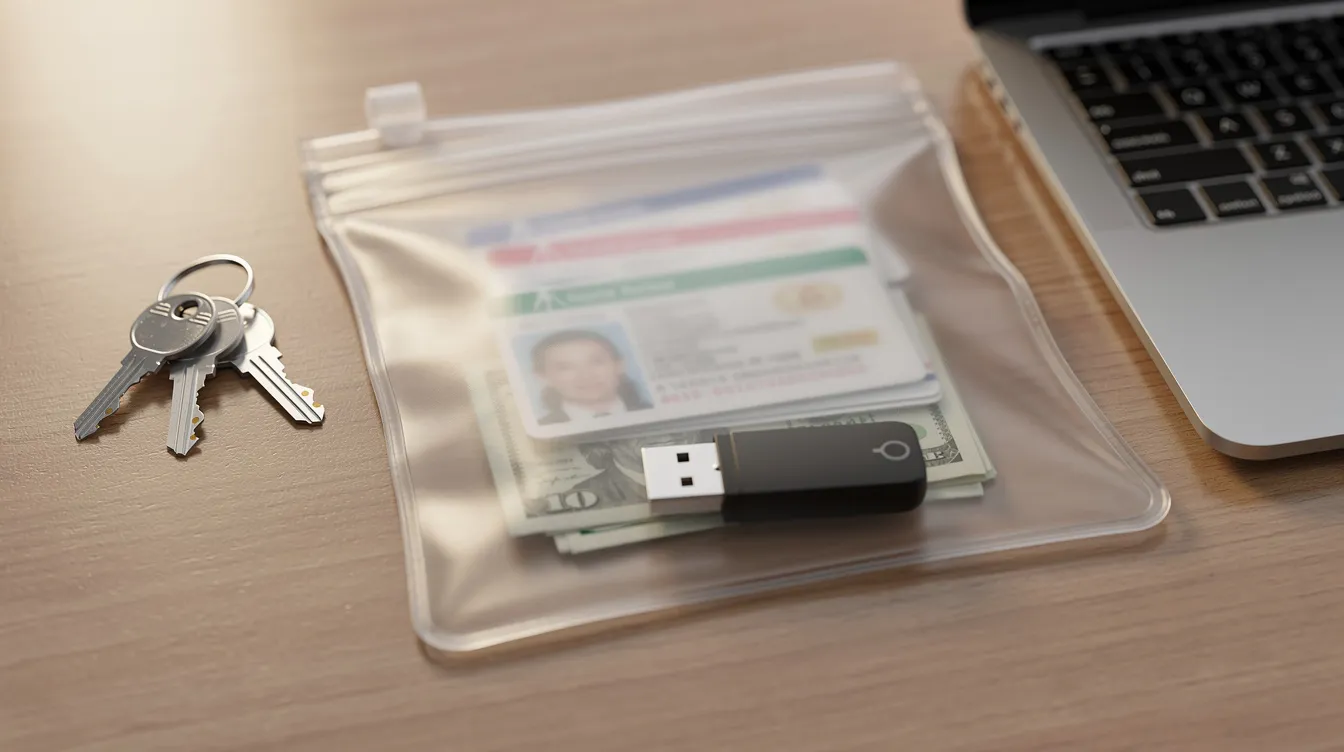
Documents and cash travel in a single waterproof pouch near the top of the bag. Quick to pull out at a shelter check-in or insurance claim.
Photo 7–10: Small-Space Storage and Real-World Scenarios
Photo 7: Hall Closet Storage
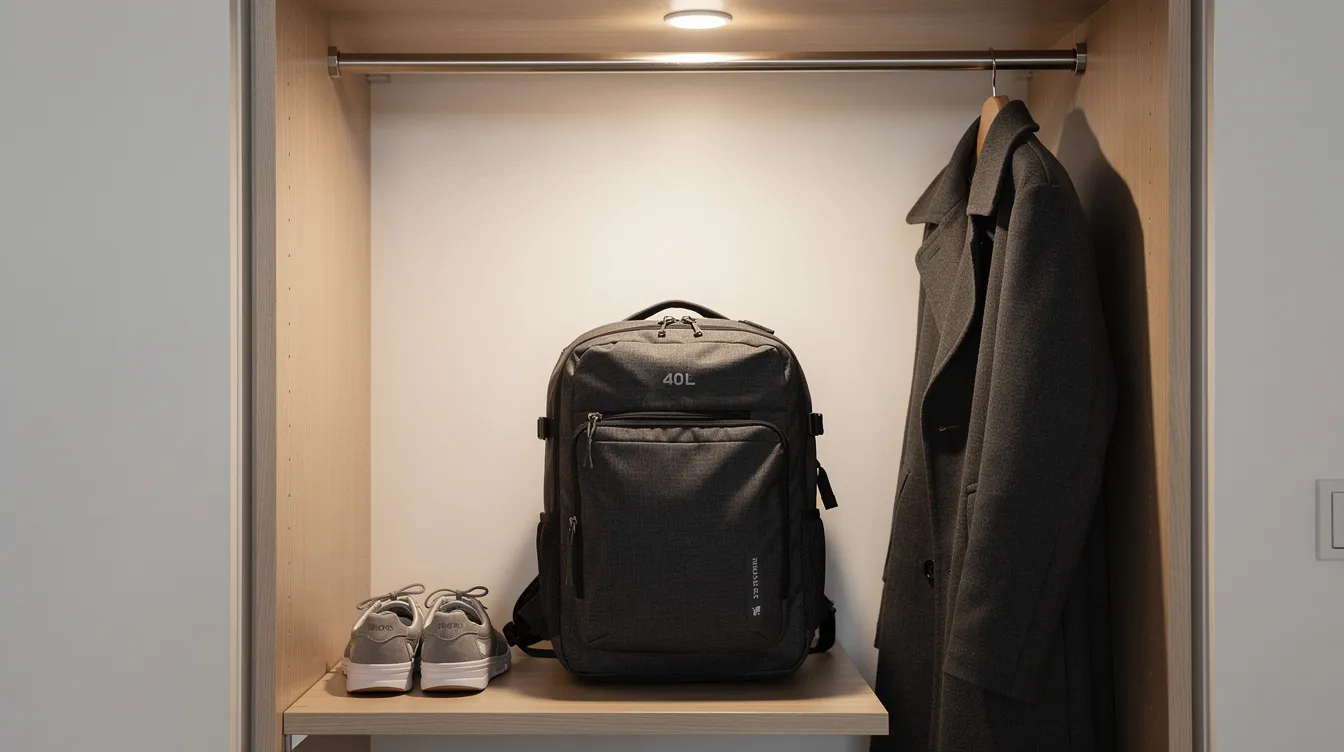
Your bug out bag lives by the front door. In this closet setup, it's reachable in under 10 seconds, even at 2 a.m.
Photo 8: Under-Bed Storage Drawer
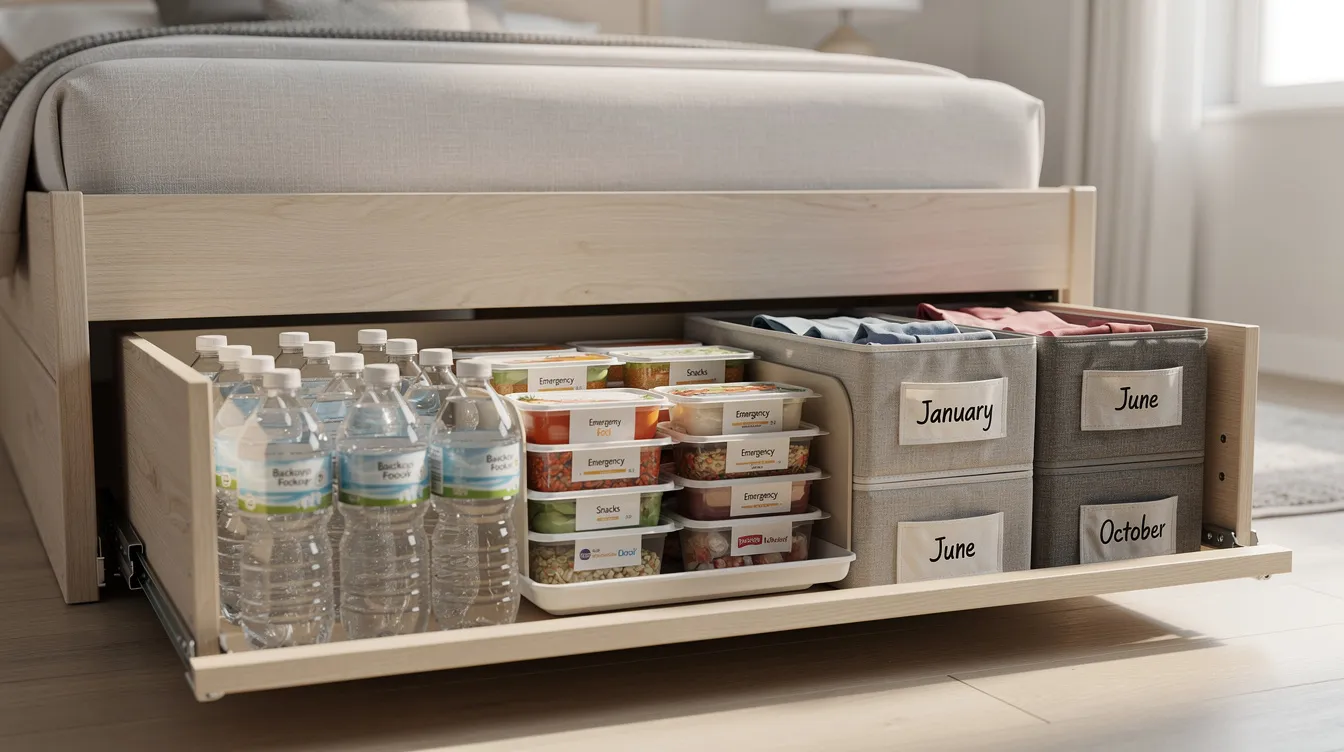
Backup supplies that don't fit in the bag itself go under the bed. Label cubes by month so seasonal rotation takes minutes.
Photo 9: Office Desk Emergency Kit
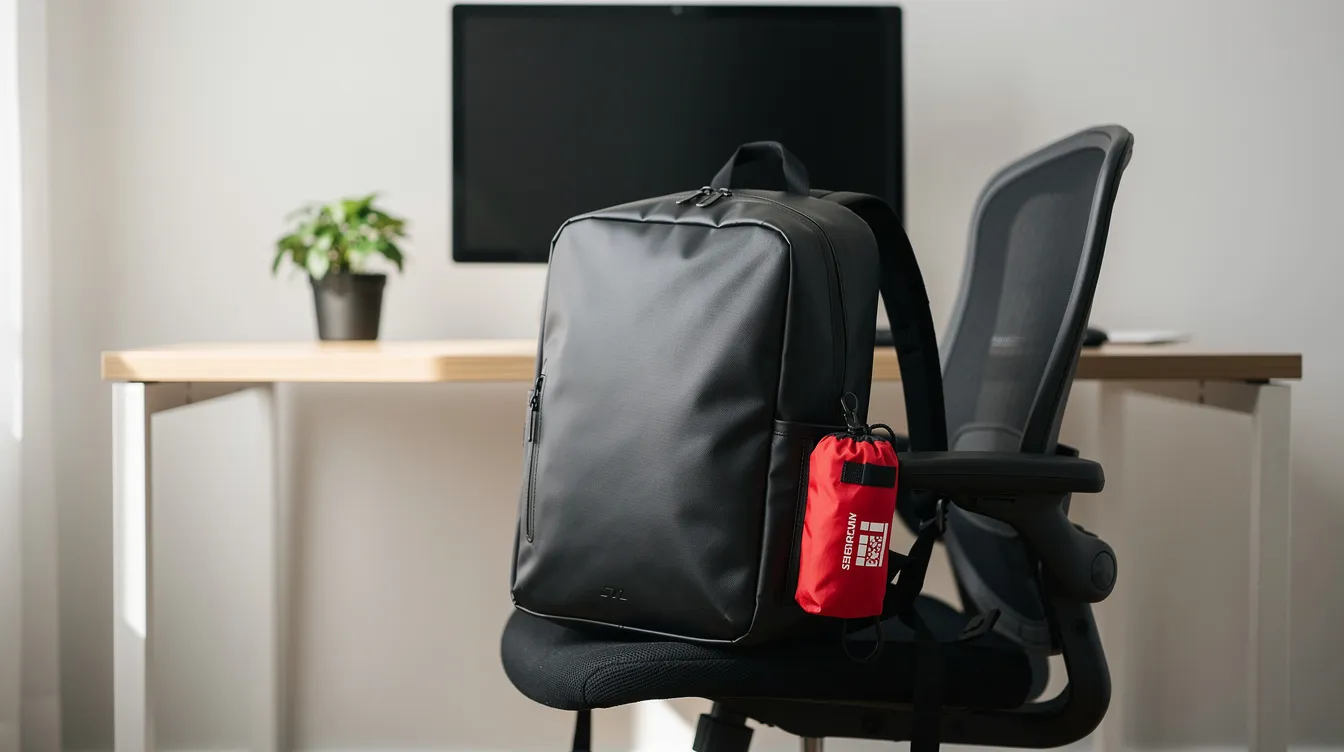
For freelancers and remote workers, a compact survival kit under your desk means you're prepared means you're covered whether disaster strikes during work hours or the middle of the night.
Photo 10: Urban Evacuation

This is the moment your prepper bag list pays off. Bags bug you to maintain them, but when you're walking down that stairwell, you'll be glad every item was checked and packed.
How Much Should a Bug Out Bag Weigh (and How to Keep It Light)?
A bug out bag should weigh no more than 20% of your body weight. For a 150 lb adult, that means the fully loaded pack should stay between 15 and 30 lbs, including water.
Keep emergency bags lightweight to ensure mobility during evacuation. Here's how to trim:
- 1Use multi-use gear: A bandana serves as pre-filter, tourniquet, sun shade, and washcloth. Garbage bags work as rain covers, ground sheets, and waste disposal.
- 2Skip canned foods: Replace with freeze-dried or bar-format options that deliver the same calories at a fraction of the weight.
- 3Decant toiletries: Transfer soap, sanitizer, and sunscreen into travel bottles.
- 4Limit duplicates: One knife and one multi tool cover all cutting and prying tasks. Don't pack three of everything.
Weigh-in routine: Once your bag is fully packed, weigh it on a household scale. Do this twice a year and after any major gear changes. In tight urban spaces, lighter bags are also easier to store on closet shelves and safer to grab quickly.
Printable-Style Bug Out Bag Checklist at a Glance
Use this complete bug out bag checklist as your packing and review reference. Print it, copy it into a notes app, or keep it in a spreadsheet for annual reviews.
| Category | Items | Qty / Notes |
| Bag | 30–45L backpack, packing cubes | 1 bag, 3–4 cubes |
| Water | Stainless bottle, collapsible bladder, squeeze filter, purification tablets | 1L bottle, 1–2L bladder, 20+ tablets |
| Food | Ration bars, nut mix, jerky, freeze-dried meals, electrolyte packets | 3 days (~6,000+ kcal) |
| Shelter | Tarp or bivy, paracord, mylar blanket, sleeping bags liner (optional) | 50 ft cord, 1 blanket/person |
| Clothing | Base layer, mid-layer, shell, socks, underwear, hat, gloves | 1 change, seasonal |
| First Aid | Bandages, gauze, antiseptic, tape, meds, tourniquet | 7 days prescriptions |
| Fire Kit | 2 lighters, ferro rod, waterproof matches, tinder | 3 ignition sources |
| Tools | Multi tool, knife, headlamp, duct tape, zip ties, sewing kit | Spare batteries |
| Nav / Comms | Map, compass, NOAA radio, battery pack, cables, laminated contacts | 10,000+ mAh bank |
| Documents | IDs, insurance policies, medical info, USB backup | Waterproof pouch |
| Cash | Small bills | $100–$300 |
| Hygiene | Toothbrush, soap, wipes, hand sanitizer, TP, insect repellent | Travel sizes |
| Personal | Notebook, pen, photo, whistle, signal mirror, pepper spray | As needed |
Small Space Emergency specializes in helping apartment dwellers adapt this bag list to tiny closets, under-bed bins, and office desks.
Maintaining, Updating, and Storing Your Bug Out Bag
A prepper bag list only works if the physical bag is maintained and accessible when disaster strikes. Emergency kits should be inspected regularly to replace expired supplies.
Maintenance schedule:
- Monthly: Quick visual check. Are batteries charged? Any visible damage or leaks?
- Quarterly: Deeper review. Check expiration dates on food, medications, and water treatment. Weigh the bag. Rotate seasonal clothes.
- Annually: Full unpack and repack. Walk a few city blocks or climb stairs with the loaded bag to confirm comfort and fit.
Ideal storage locations in small homes:
- By the primary exit door, inside a hall closet
- Under a bed in a pull-out bin
- Behind a couch or beside a desk (never in hot attics or damp basements)
If budget allows, keep secondary kits in your vehicle trunk or workplace, mirroring the main bag essentials in smaller form.
FAQ
How much does it cost to build a complete bug out bag from this list?
Expect to spend roughly $250–$600 per person using mid-range gear in 2026. The range depends on what camping or outdoor equipment you already own and whether you shop sales or surplus. You don't need to buy everything at once. Start with water treatment and a first aid kit (around $50–$80), then add shelter and food ($80–$120), then tools and electronics. Small Space Emergency focuses on compact, budget-friendly options that double as everyday items, like using your commuting backpack as your go bag.
Where should I store my bug out bag in a very small apartment or studio?
Three proven spots: on a low shelf in a hall or bedroom closet, under the bed in a pull-out bin, or hanging from a heavy-duty hook near the entry door. The key rule is visibility and access. Don't bury it behind boxes or seasonal decor. You need to grab it in seconds, not minutes. Avoid extreme heat zones (next to radiators, attic spaces) and areas prone to leaks or pests, which can ruin food and degrade equipment.
How often should I update my bug out bag list and supplies?
Review your bug out bag checklist at least twice a year (March and September work well) and after major life changes like moves, new medications, or having a child. Food, batteries, and medications usually need the most frequent rotation. Durable tools and shelter gear change less often unless damaged. If you move from a rural area to an urban one, adjust your maps, clothing layers, and self defense choices accordingly.
How do I adapt this bug out bag for kids or pets?
Each child should eventually have their own scaled-down bag: a water bottle, snacks, a change of clothes, a comfort item, a whistle, and simple ID info with emergency contacts. For pets, pack 3 days of pet food, a collapsible bowl, leash, waste bags, vaccination records, and any pet medications in a small pouch clipped to the main bag. Adults will carry most of the shared shelter, first aid, and water gear for all family members, so keep bag weigh limits in mind when distributing the load.
Should my bug out bag stay the same for every type of emergency?
The core essentials (water, food, first aid, documents, basic tools) stay largely the same across survival situations. What changes is a small "seasonal/situational" pouch you can swap in and out: winter gloves and hat for blizzards, N95 masks and goggles for wildfire smoke, extra power banks for expected blackouts, or sleeping bags liners for cold temperatures below freezing. Tailor your prepper bag list to local risks. Hurricanes on the Gulf Coast, earthquakes in California, ice storms in the Midwest, and urban unrest in dense city centers each demand slightly different emphasis, but the prepared means having the fundamentals covered first.
Editorial note: this guide provides general preparedness information, not emergency, medical, legal, or engineering advice. Recommendations are cross-checked against public emergency-management guidance and adapted for small-space living. During an active emergency, follow your local authorities and emergency services. See our editorial standards and affiliate disclosure.