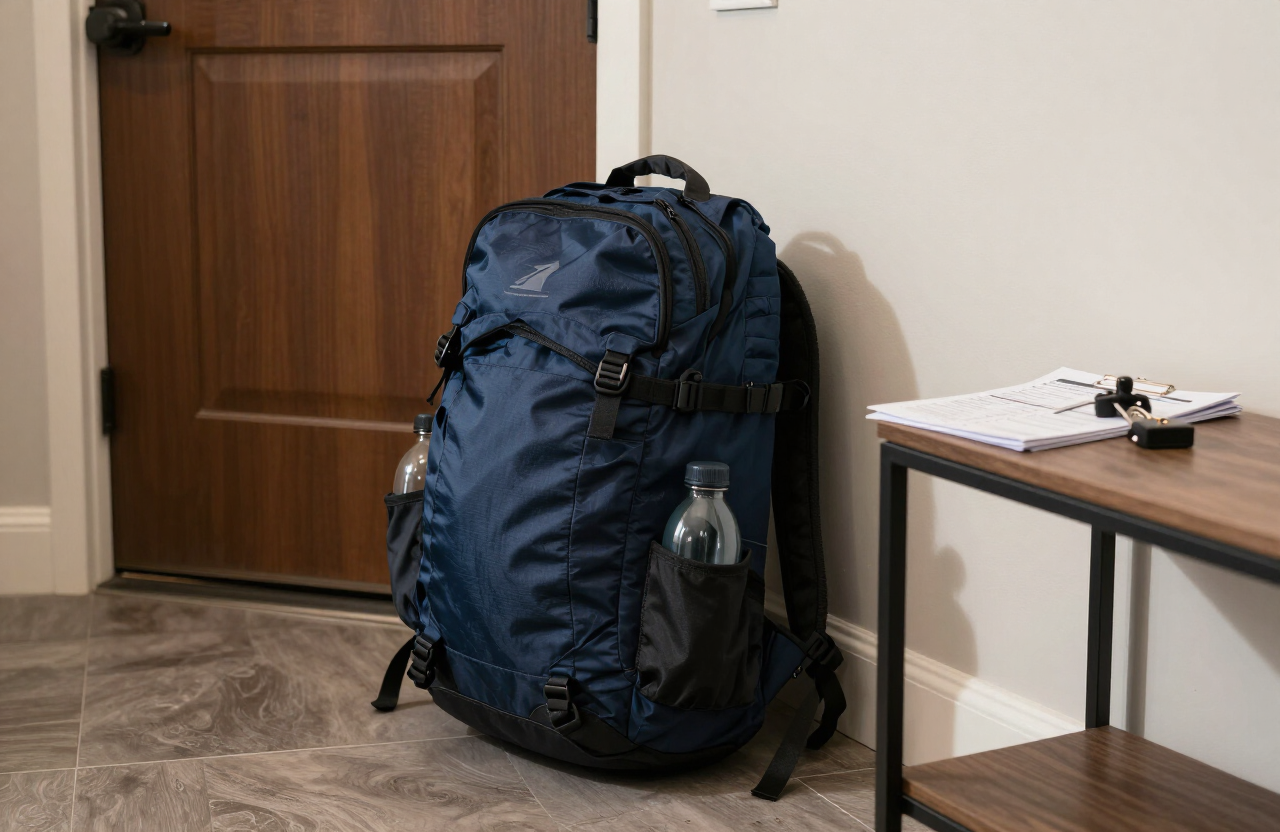
Apartment Evacuation Plan When You Do Not Have a Car
Most evacuation advice assumes you will load the car and drive. Plenty of renters do not have a car, or the car is parked blocks away, or the roads are closed. A no-car apartment evacuation plan is a different problem, and it is solvable with a lighter bag, a route you can walk or ride, and a clear meeting point.
The no-car difference: weight and route
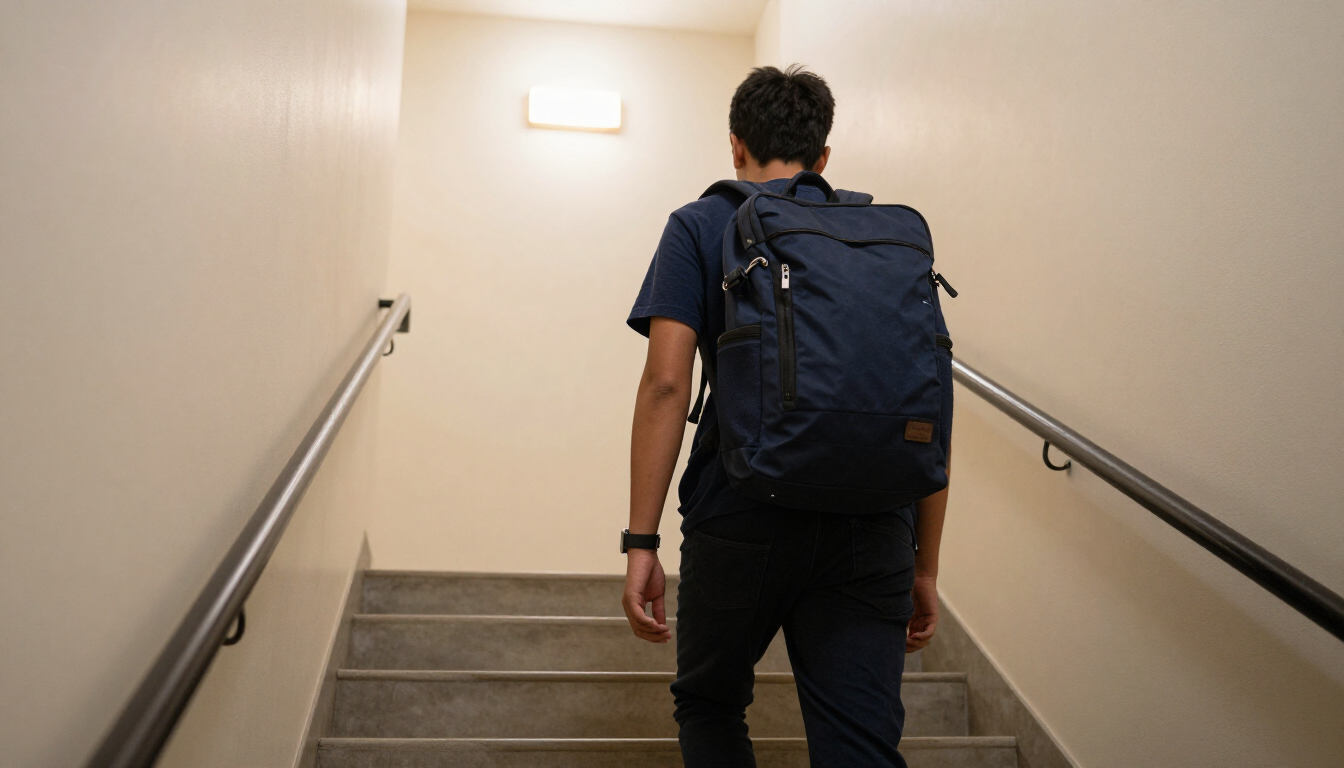
Without a car, you are your own vehicle. Every pound in the bag is a pound you carry, possibly down many flights and across a city. That single fact reshapes the whole plan.
- The bag must be a backpack, not a duffel
- Target 15 to 20 percent of your body weight, less with stairs or kids
- You carry one bottle of water plus purification, not three days of water
- Your route has to work on foot or by transit, not by highway
Start from the full bag list in our apartment go-bag guide.
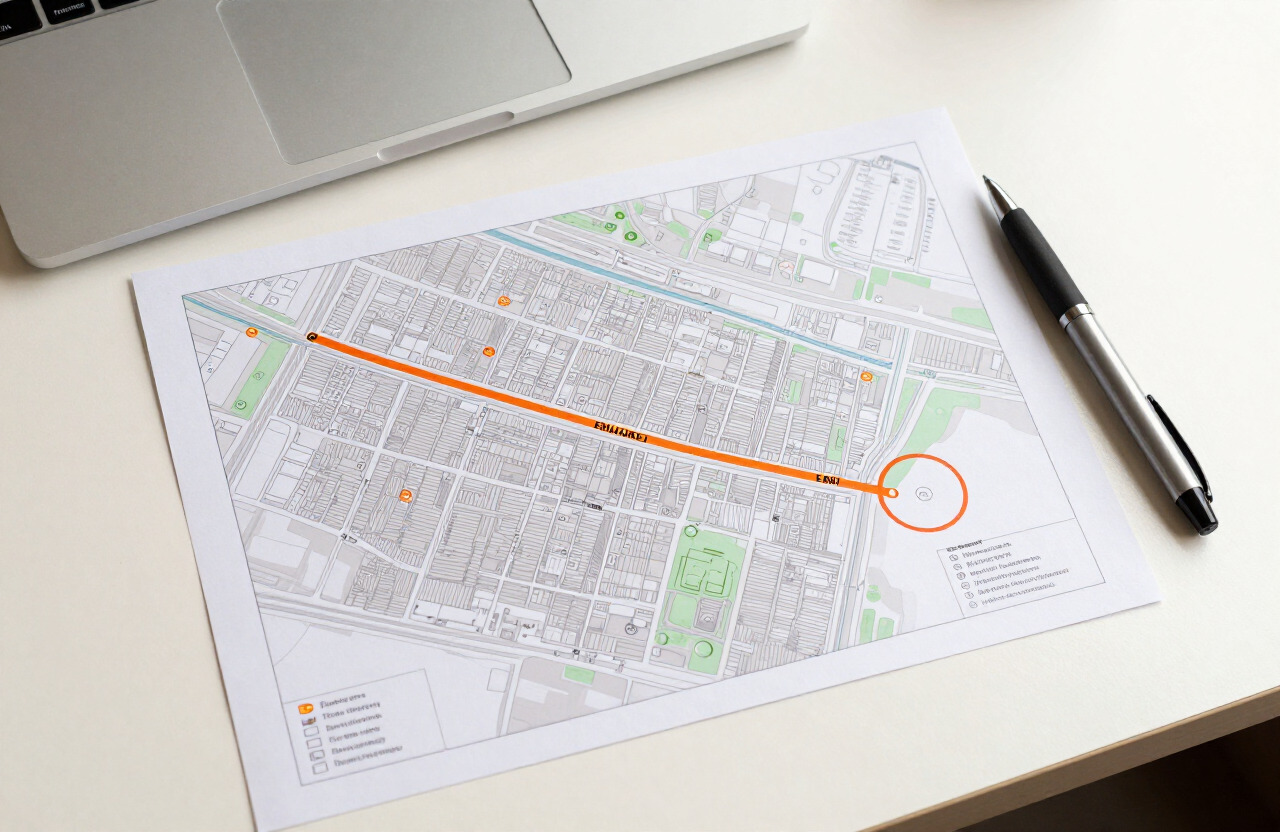
Map two routes that do not need a car
Before any emergency, walk your two best routes out of your neighborhood. One should be the most direct. The other should avoid low ground if flooding is a risk, or avoid glass-heavy commercial blocks if high winds are the concern.
- Note the nearest transit stops and which lines run late
- Identify a pedestrian bridge or path that cars cannot use
- Mark a backup route in case the first is blocked
- Save a paper map; phone batteries die and cell networks jam
Line up transit and a backup ride
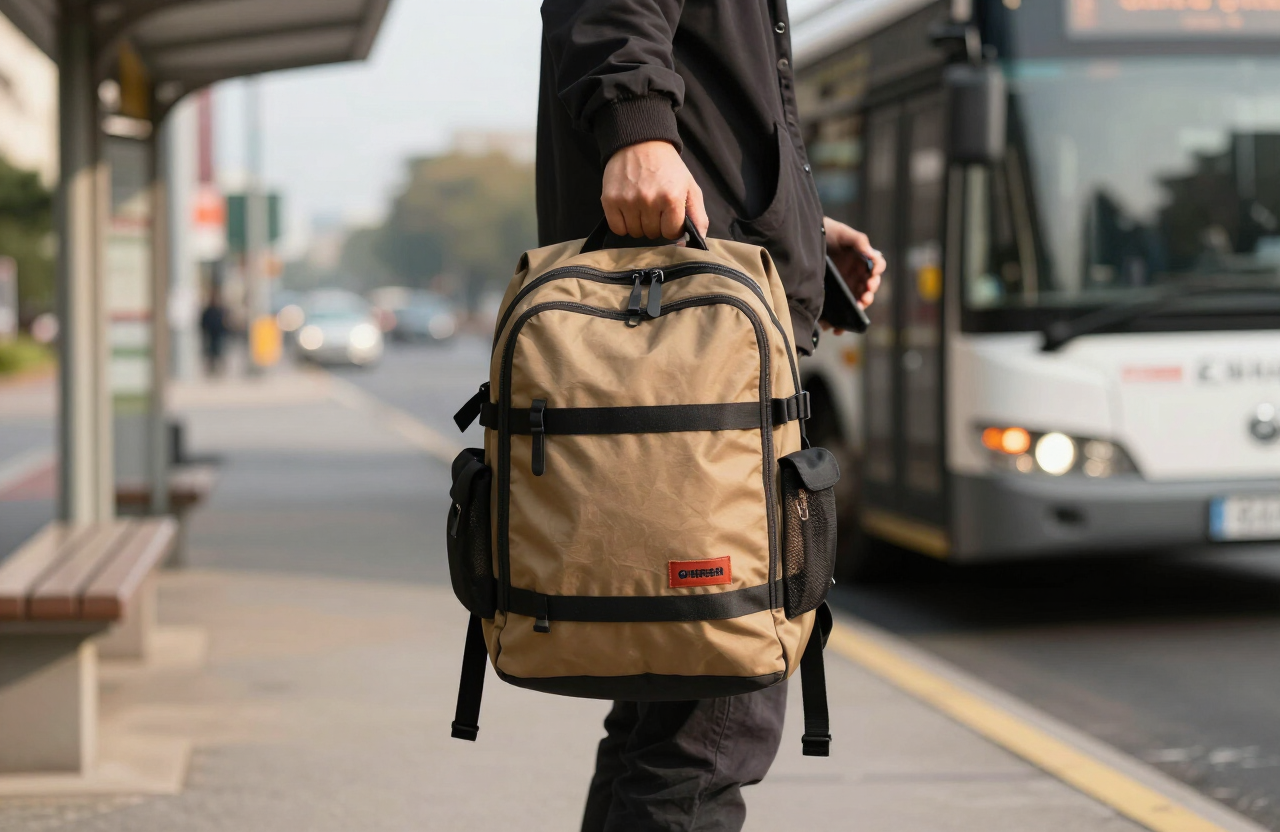
Public transit often keeps running during evacuations, and many cities add free emergency shuttle service during mandatory orders. Know your options before you need them.
- Save the transit agency service-alert page and phone line
- Identify two bus or train lines that head away from your zone
- Ask a friend or family member with a car to be your backup ride
- Know the nearest pickup point for emergency transport if your city offers it
If you have a disability or medical need, register with your local emergency management office now. Many areas keep a list and send help to registered households during evacuations.
See the stay-or-go framework in our renter storm-prep guide.
Pack a bag you can actually carry
The no-car bag is smaller than the car bag. You trade comfort items for mobility, because a bag you cannot carry is not an evacuation bag.
- Water: one full bottle plus purification tablets
- Food: two to three days of dense, no-cook calories
- Documents: waterproof pouch with ID copies, insurance, lease, and cash in small bills
- Light and power: headlamp, power bank, short cable
- First aid and a 3 to 7 day medication buffer
- One change of clothes, a warm layer, and sturdy shoes worn if possible
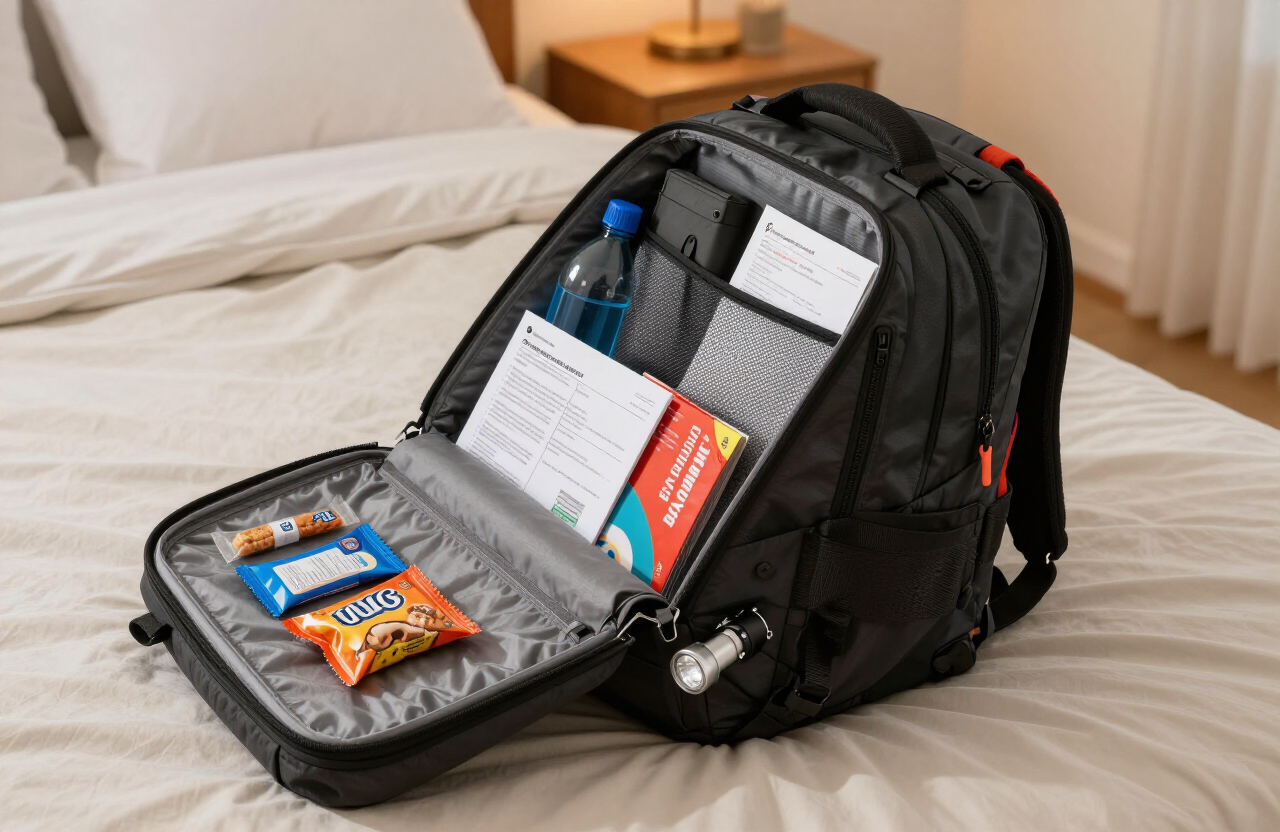
Heavy items go close to your spine, centered between your shoulder blades. Documents and medications go in the fastest-access pocket. Nothing dangles outside to catch on rails.
Use a rolling cart for the heavy extras
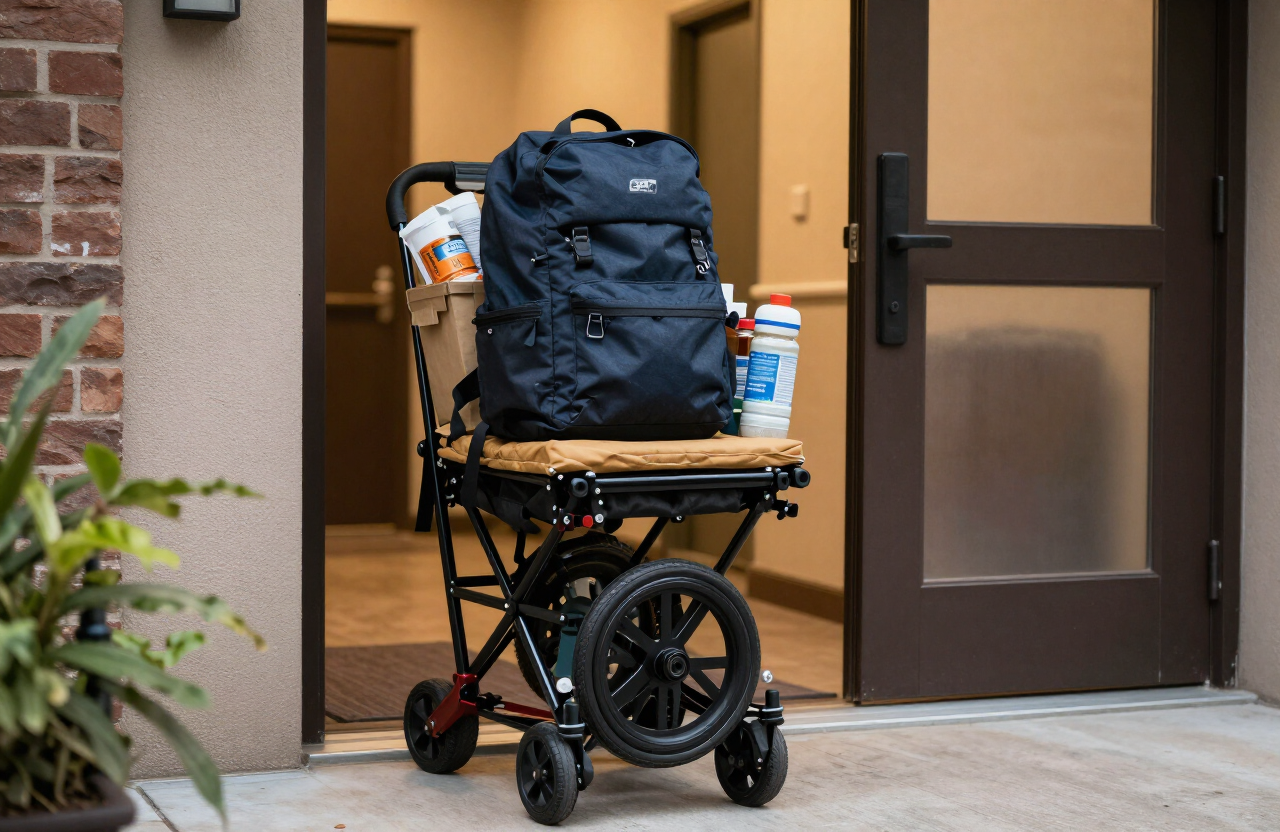
If you cannot carry everything and you have a clear walking route, a small folding cart or a luggage cart extends what you can move. It is not for stairs, but it is a lifesaver on flat ground to a transit stop or shelter.
- A folding utility cart carries water and a bin you cannot backpack
- Keep the cart by the door, packed or ready to load
- Practice the route with the cart once so you know where the curbs and gaps are
- Have a plan to abandon the cart and carry the bag if stairs appear
Agree on a no-car meeting plan
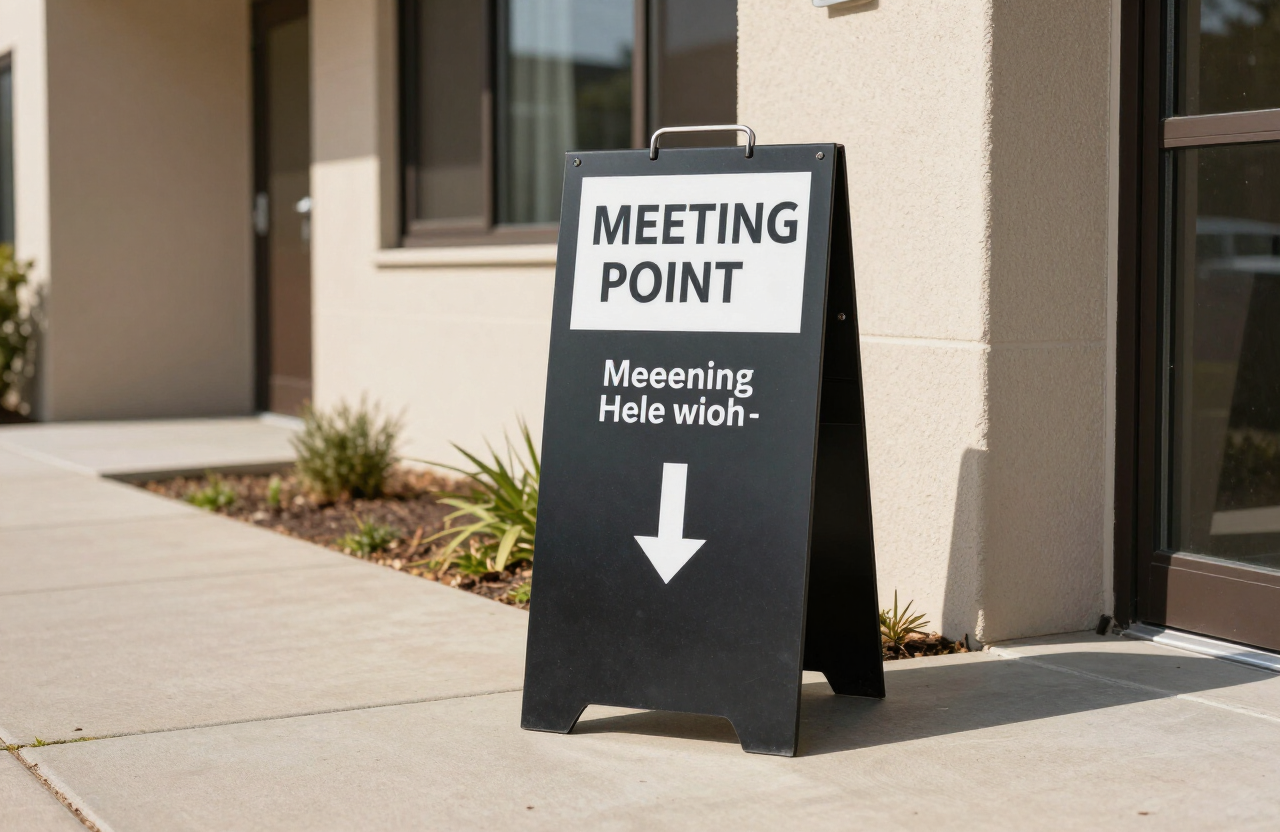
Without a car, your household may not all leave at the same time. A meeting plan keeps you from searching for each other in a crowd.
- Pick a meeting point right outside the building
- Pick a backup meeting point a few blocks away
- Pick a third point outside the neighborhood, like a transit hub or a friend place
- Share the plan with your out-of-area contact so they can relay
The no-car plan trades weight for planning. You carry less and think more, and that is what gets you out safely.
Small Space Emergency editorial team
The 60-second no-car drill
Twice a year, time the drill: shoes on, bag on, cart if you use one, out the door and to your first meeting point. Sixty seconds to the door is the goal. The drill shows you what is missing while it is still free to fix.
Build the full kit behind the plan with the 72-hour checklist.
Frequently asked questions
Editorial note: this guide provides general preparedness information, not emergency, medical, legal, or engineering advice. Recommendations are cross-checked against public emergency-management guidance and adapted for small-space living. During an active emergency, follow your local authorities and emergency services. See our editorial standards and affiliate disclosure.