Emergency Documents Every Renter Should Grab in an Evacuation
Emergency documents every renter should grab in an evacuation are the papers that prove who you are, what you own, and what you owe. Replacing them after a fire or flood takes weeks and slows down insurance, aid, and a new place to live. A small waterproof grab bag and a few digital copies mean you walk out with what matters in under a minute.
Why documents are the first thing to lose
After a disaster, you need identification to file insurance, apply for aid, pick up prescriptions, and sign a new lease. Without your documents, every one of those steps slows down. The papers themselves are hard to replace, and the delay costs you most when time matters.
A grab bag of copies solves this in advance. You build it once, update it once a year, and it sits ready for the day you hope never comes.
The core document checklist
These are the papers that prove identity, ownership, and obligations. Gather copies of each, not the only original unless you have no choice.
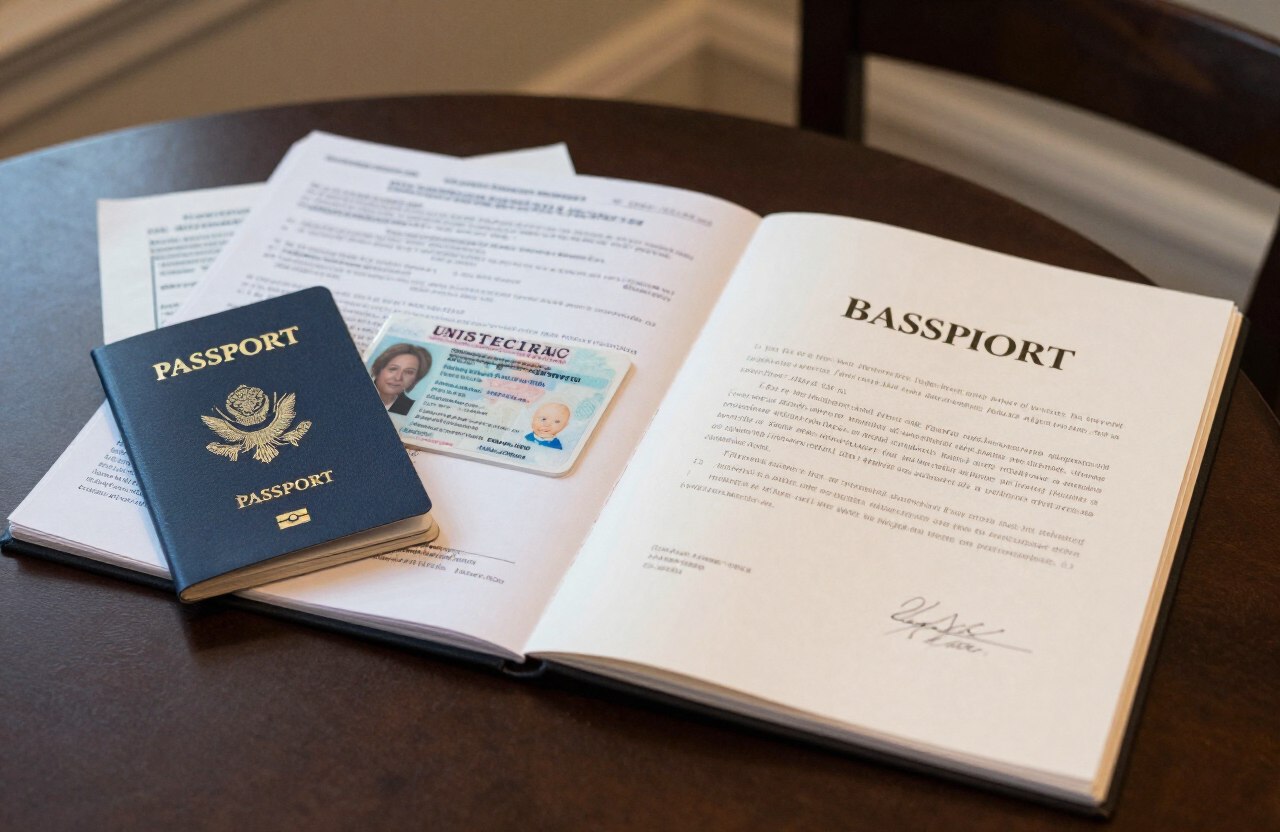
- Government photo IDs for each adult, like a driver license or state ID
- Passports and Social Security cards
- Birth and marriage certificates, or copies
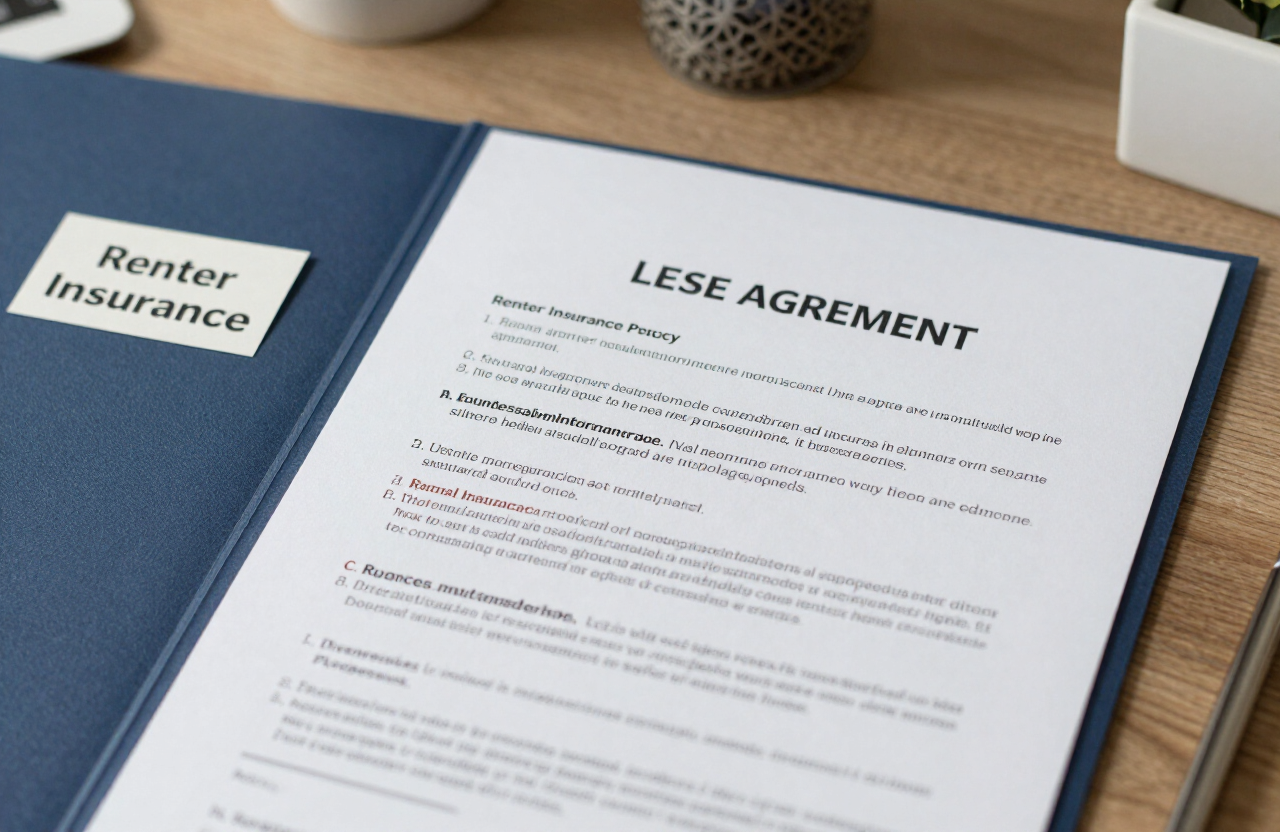
- Renter insurance policy and contact number
- Your lease or rental agreement and your landlord contact info
- Health insurance cards and a list of medications
- Bank and credit card contact numbers, not the card numbers themselves
Renter-specific papers to include
Renters have a few extra documents that a homeowner does not, and they matter most right after a disaster.
- A copy of your lease, in case you must prove your tenancy to a new landlord or aid agency
- Your renter insurance policy and the claims phone number
- A home inventory with photos of your belongings and their value
- Your landlord and building manager contact numbers
- A recent utility bill as proof of address
Store them so they survive
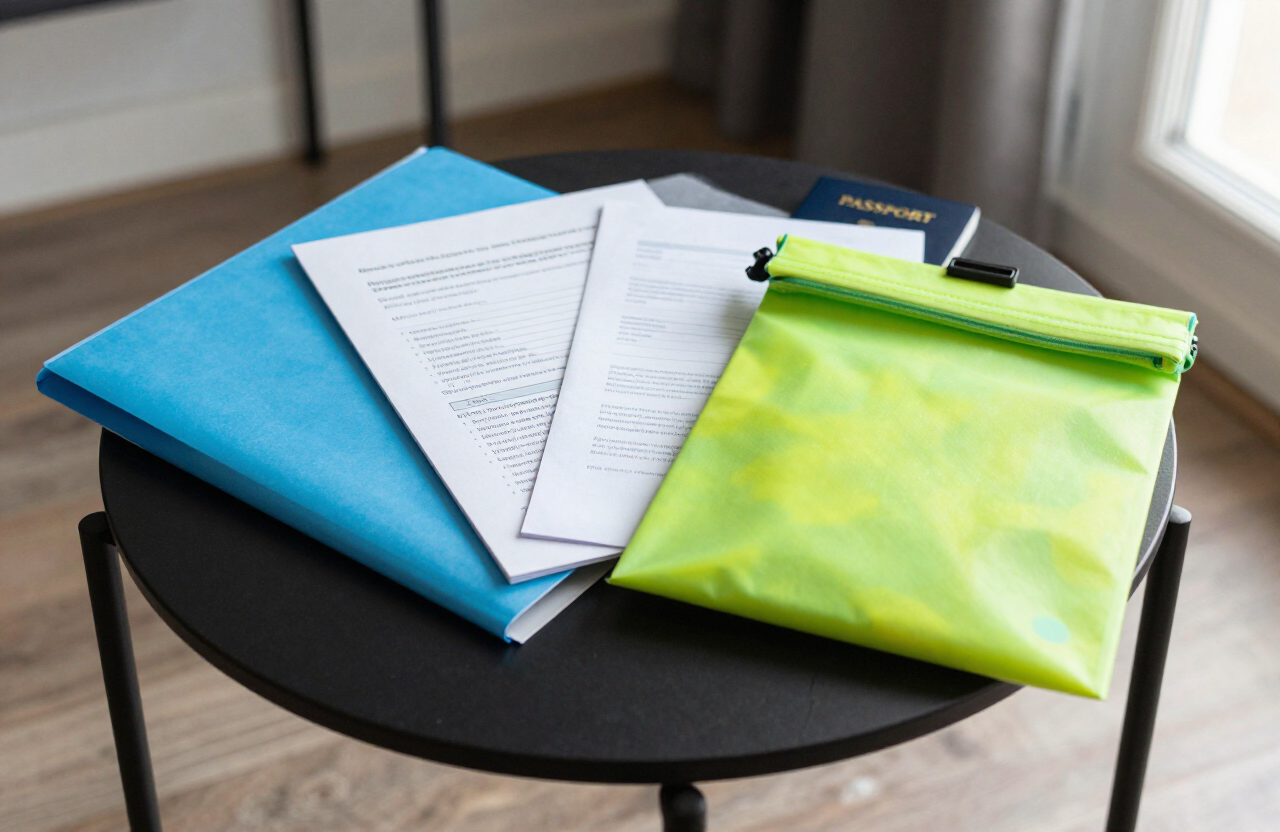
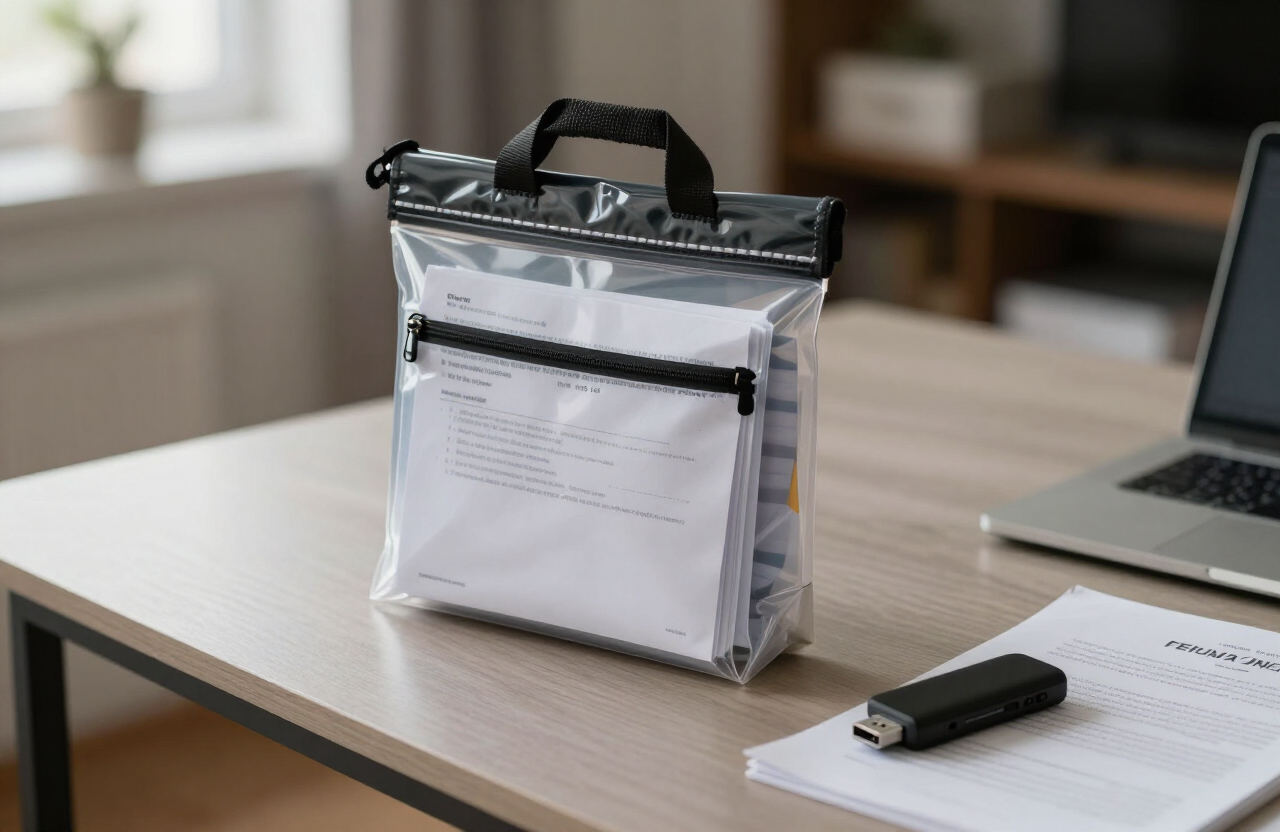
Paper survives nothing if it is loose in a drawer. A waterproof pouch and a second copy somewhere else protect what you cannot easily replace.
- Keep originals or certified copies in a small waterproof, fire-resistant pouch
- Store a second set of copies with a trusted relative or in a safe deposit box
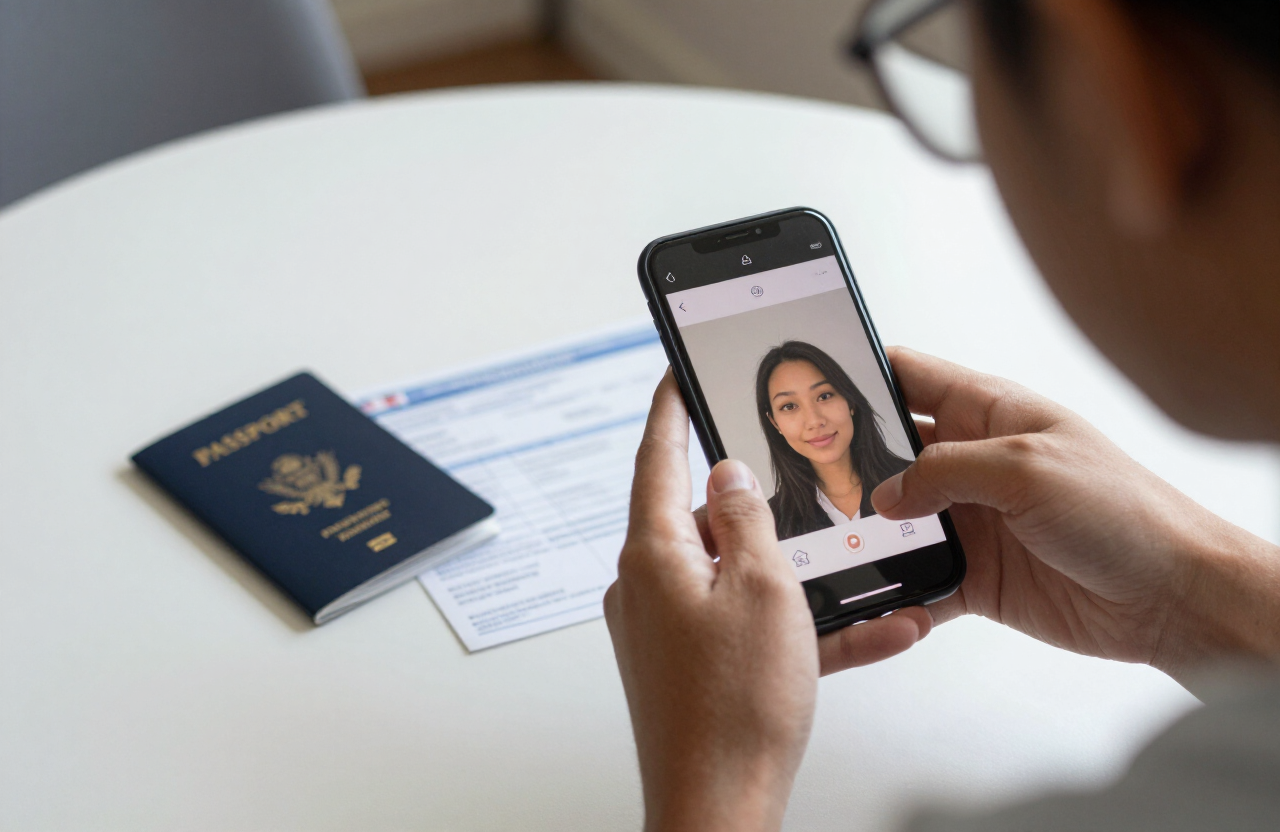
- Photograph every document and keep the photos on your phone
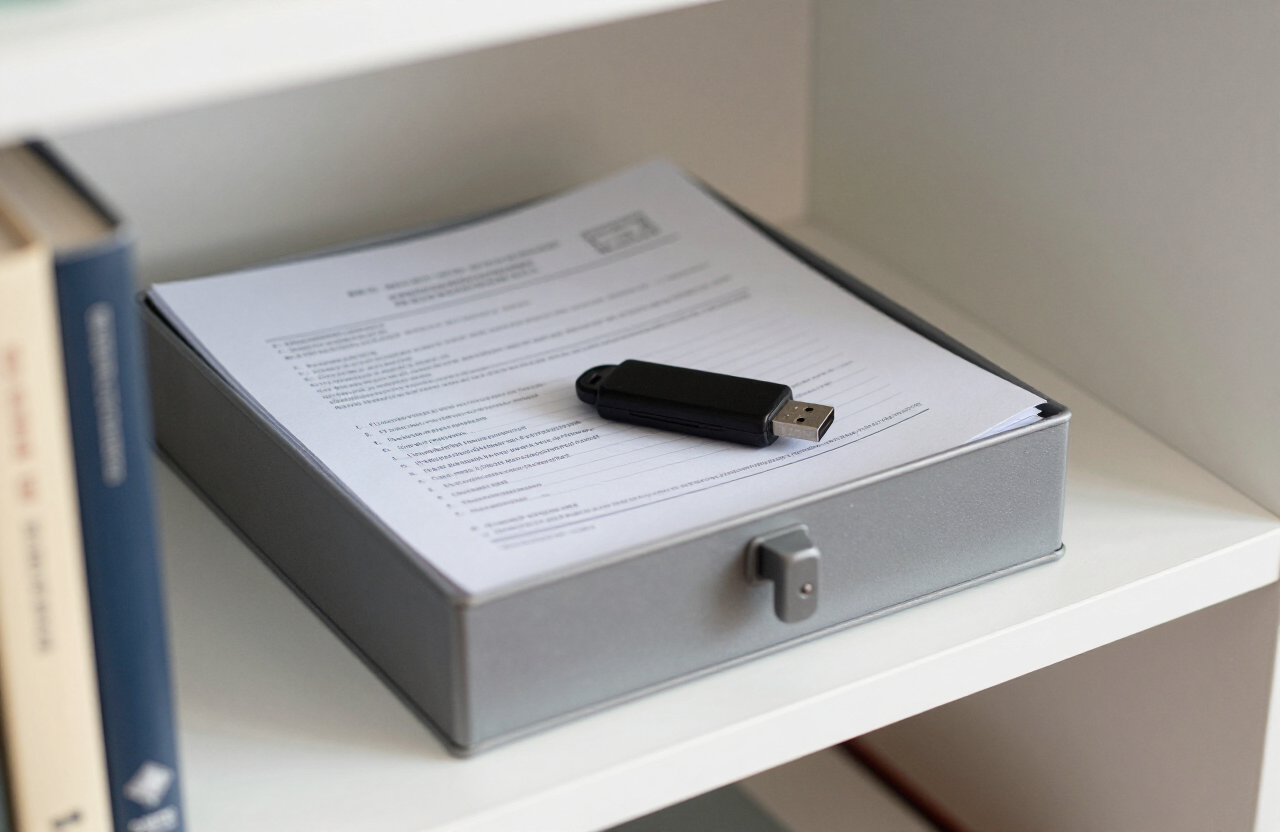
- Copy everything to a USB drive stored in the grab bag
Make digital copies the easy way
A phone camera is all you need to back up your documents. Do it once, then store the files somewhere you can reach from any device.
- 1Photograph each document front and back in good light
- 2Store the photos in a cloud service you can access from any phone
- 3Copy the photos to a USB drive in the grab bag
- 4Use a password or encrypted folder for sensitive records
Stage the pouch for a fast exit
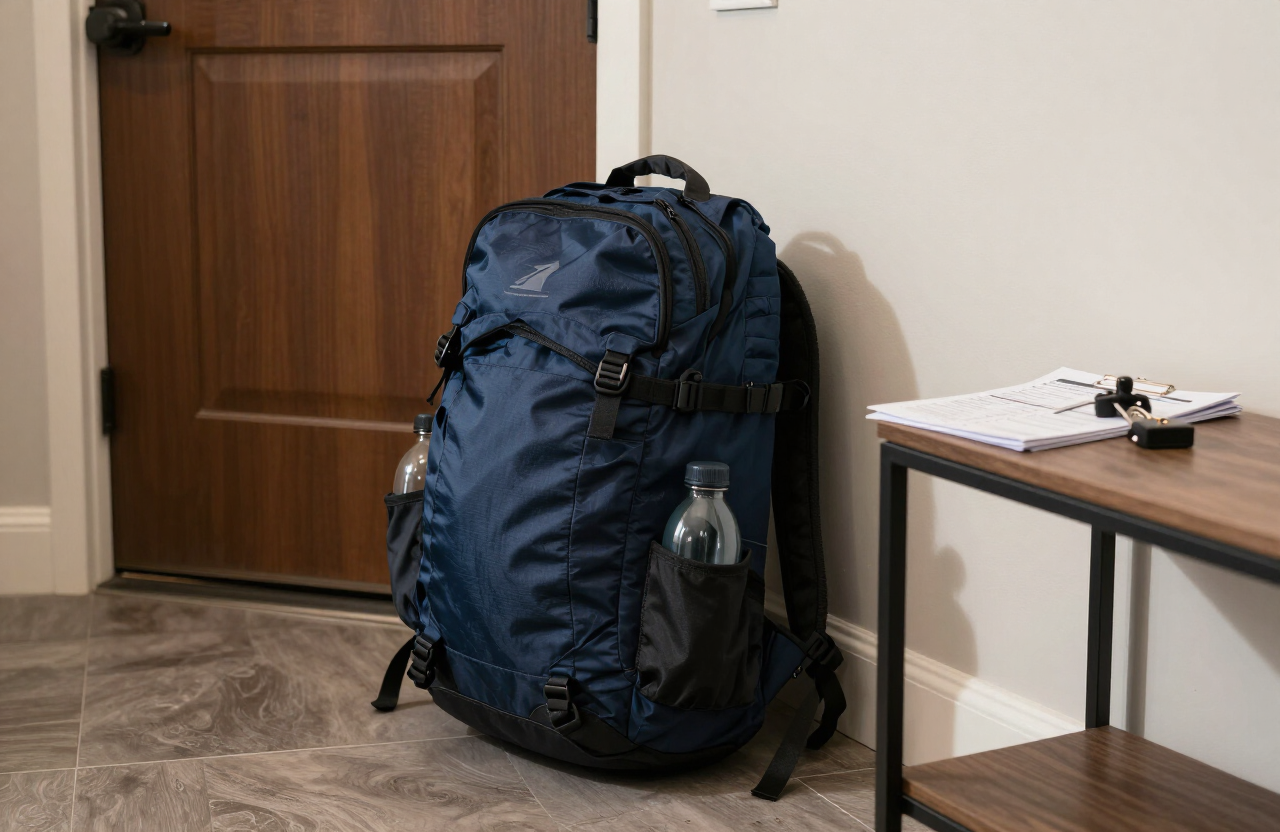
A document pouch only helps if you can grab it in seconds. Keep it in or right next to your go bag, by the door, and tell everyone in the household where it is.
| Step | Why it matters |
|---|---|
| Keep the pouch in your go bag | One grab, one exit, nothing forgotten |
| Tell household members where it is | Anyone can grab it if you are not home |
| Update it once a year | Expired IDs and old leases cause delays |
| Carry some cash too | Cards and ATMs may not work after a disaster |
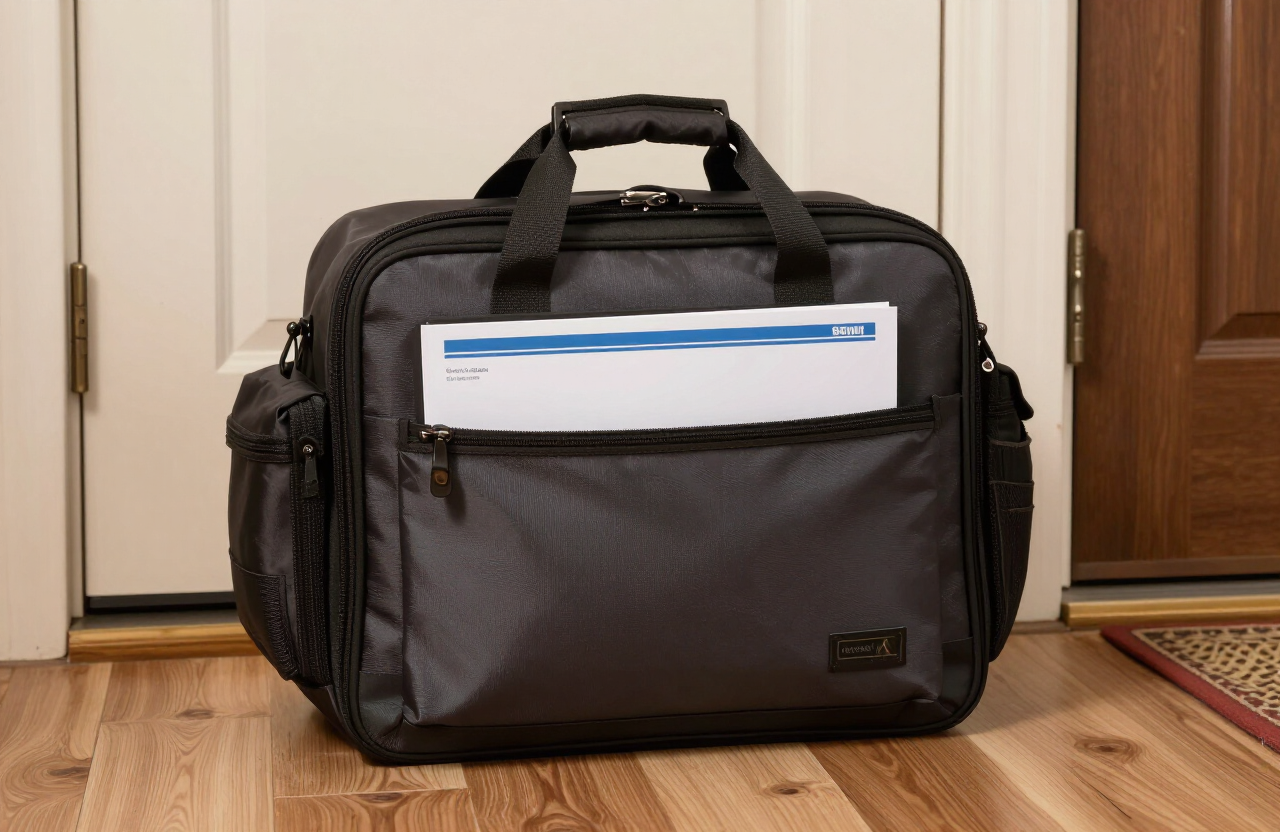
Build the bag it travels in with our apartment go bag guide.
Frequently asked questions
Editorial note: this guide provides general preparedness information, not emergency, medical, legal, or engineering advice. Recommendations are cross-checked against public emergency-management guidance and adapted for small-space living. During an active emergency, follow your local authorities and emergency services. See our editorial standards and affiliate disclosure.