Truck Emergency Kits: Compact Roadside Readiness for Pickups, Box Trucks & Rigs
Whether you drive a half-ton pickup through city traffic or pilot a Class 8 rig across mountain passes, a well-organized truck emergency kit keeps you prepared for flat tires, dead batteries, severe weather, and the unexpected delays that turn minor issues into dangerous situations. This page covers every style of truck emergency kit-from slim under-seat bags for compact cabs to modular bunk storage for sleeper rigs-so you can find the setup that fits your vehicle, your route, and the space you actually have.
Small Space Emergency specializes in space-saving emergency preparedness, so every kit and strategy here is optimized for tight truck cabins and limited storage compartments. Below, you'll find kit types broken down by truck size and use case, a visual gallery of 10+ high-quality photos showing real-world layouts, detailed feature guidance, a decision checklist, and answers to the questions drivers search most.
Types of Truck Emergency Kits
"Truck emergency kit" means very different things depending on whether you're hauling groceries in a step van or crossing the Rockies in a Peterbilt. The right kit depends on your truck's size, how far you drive from help, and the climate you operate in. This breakdown will help you instantly recognize which setup matches your vehicle and your life on the road.
Compact Pickup Truck Emergency Kits
Designed for personal pickups and light-duty trucks-think F-150, Tacoma, or Silverado-these kits live in grab-and-go soft bags that slide behind the rear seat or tuck into under-seat bins. Core items include heavy-duty jumper cables (2-gauge or thicker for larger truck batteries), a compact tire inflator rated above 80 PSI, LED flare alternatives, a basic first aid kit with bandages, gauze, and supplies to treat minor injuries, plus an emergency blanket and a flashlight with spare batteries. This is the kit for commuters, tradespeople, and weekend adventurers who need roadside safety gear without sacrificing cab space. A well-stocked kit like this includes first aid supplies and safety gear sufficient to handle the most common roadside emergencies a pickup driver will face.
Commercial Delivery & Service Truck Emergency Kits
Box trucks, step vans, and service vehicles spend all day in urban and suburban environments with frequent stops and high traffic exposure. Beyond the basics, these kits require reflective warning triangles that meet federal standards, high-visibility vests (ANSI Class 2 or 3 personal protective equipment), LED beacons, and lockout tools for door jams. First aid should accommodate worksite-type injuries-cuts, punctures, burns-so include trauma dressings and an instant cold pack alongside standard bandages. Because cabs are cluttered and vehicles are often shared across a fleet, kits should be clearly labeled, modular, and easy to mount on a bulkhead or behind the driver seat. Wall-mount pouches or magnetic pads keep everything accessible without eating into cargo space.
Long-Haul Semi & Over-the-Road Truck Emergency Kits
Heavy-duty kits for tractor-trailers and long-haul rigs must cover survival scenarios: being stranded in remote areas, stuck on a snow-closed pass, or waiting hours for a tow in extreme cold weather. These kits include 72-hour food and water reserves (at least two gallons of water per driver), cold-weather blankets rated for sub-zero temperatures, heavy-duty tow straps crucial for trucks during recovery situations, tire chain accessories, and lithium jump starters rated for high cold-cranking-amp diesel engines. Portable power banks should keep your phone charged when the engine is off, especially critical for maintaining ELD compliance and communication. Even larger sleepers benefit from organized, space-efficient storage-stackable clear bins in under-bunk drawers, labeled by category-to keep critical gear instantly accessible without cluttering the living space.
Seasonal & Climate-Specific Truck Emergency Kits
Smart drivers layer a year-round base kit with seasonal add-ons rather than swapping entire setups. Winter modules include traction aids, a folding snow shovel, an ice scraper, insulated gloves, hand warmers, and anti-gel additives-all items that pack into a slim, labeled pouch. Summer add-ons cover extra water, electrolyte packets, sun protection, and cooling towels. Per Penske's fleet safety guide, items such as snow chains and winter clothing become mandatory for certain routes or passes, so drivers in northern or high-altitude areas must carry gear appropriate for worst-case conditions. Small Space Emergency recommends storing seasonal modules in compact, labeled pouches that can be added or removed in under a minute-no rearranging the entire cab.
DIY vs. Pre-Assembled Truck Emergency Kits
Pre-assembled kits save time and offer curated contents, but many are designed for a car rather than a truck-cable gauge too light, inflator PSI too low, gloves not industrial grade. They may also waste space on items your truck doesn't need. DIY or "top-up" kits let you tailor every item to your truck's weight class, your route, and your climate. You choose the bag format-soft pouches, roll-up wraps, slim bins-so nothing wastes a cubic inch. The trade-off is sourcing time and ensuring standards: your fire extinguisher needs a proper UL rating (5B:C or higher), and your warning triangles must meet the reflective standard in 49 CFR § 571.125 for vehicles over 10,000 lb GVWR. A well-stocked truck emergency kit should be split into core safety gear and recovery tools, whether you buy it ready-made or build it yourself.
Visual Inspiration: 10 High-Impact Truck Emergency Kit Photos
Seeing a kit in context makes all the difference between a generic checklist and a setup you'll actually build. Below are 10 photorealistic, HDR-quality images showing compact, effective truck emergency kit layouts in real vehicles-proof that serious preparedness fits in even the tightest cab.
Photo 1: Under-Seat Truck Emergency Kit in a Compact Pickup
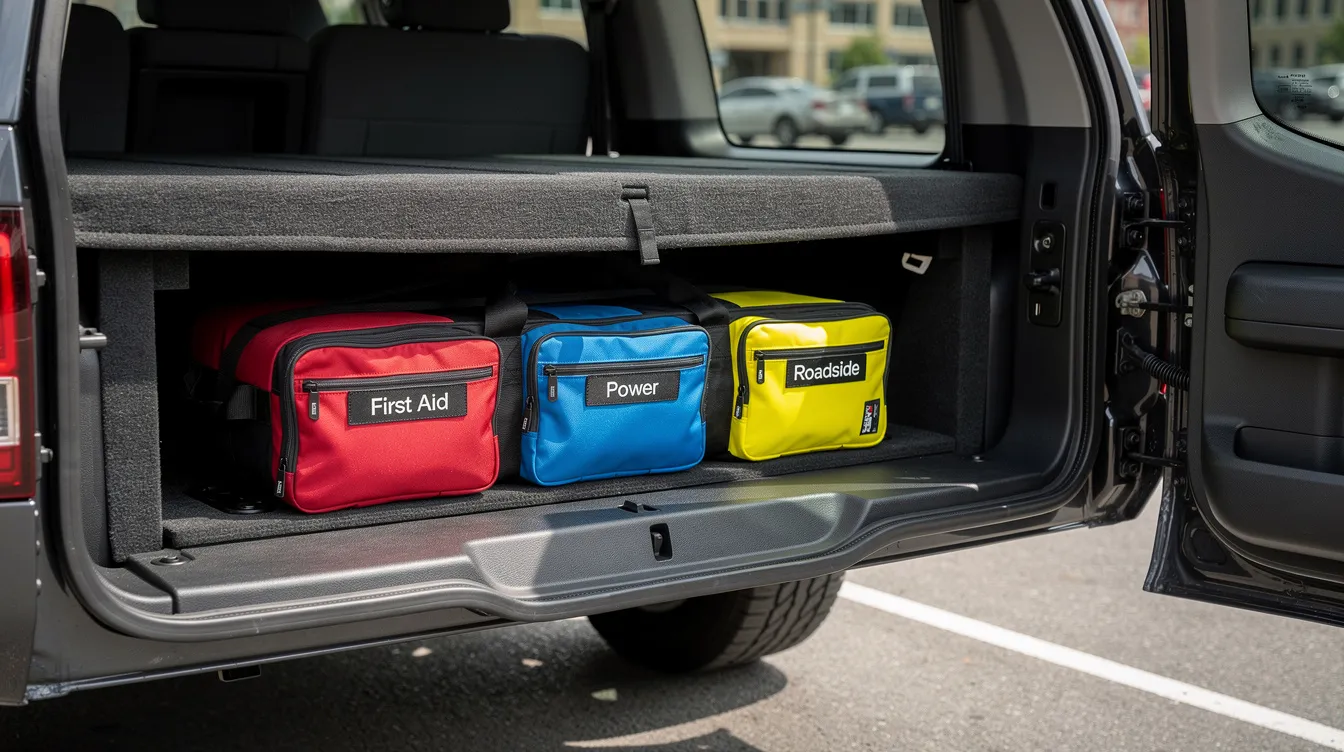
The rear seat of a crew-cab pickup lifts to reveal a low-profile, soft-sided emergency bag filling the under-seat cavity. Labeled zipper pouches in distinct colors-"Power," "First Aid," "Roadside"-let you pull exactly what you need without unpacking the whole kit. Natural daylight picks up the texture of the seat fabric and the bag's durable Cordura-style material. This is what compact preparedness looks like when every inch of the compartment is used intentionally.
Photo 2: Tailgate Layout of a Fully Packed Pickup Truck Emergency Kit
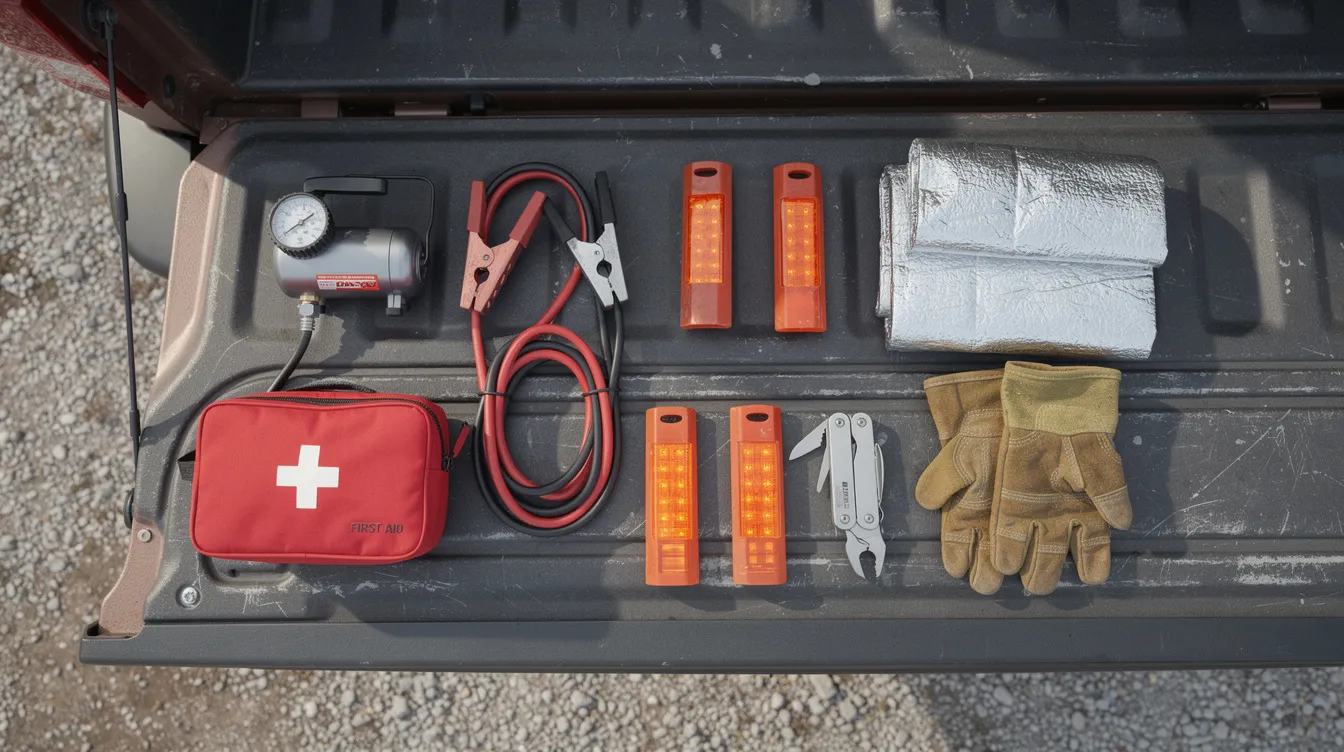
A dropped tailgate becomes a workbench. Crisp overhead light reveals the full contents of a compact duffel: portable tire inflator, heavy-duty jumper cables, LED road beacons, first aid pouch with gauze and bandages, mylar emergency blankets, a multi-tool, and work gloves. The flat-lay composition on a gravel turnout background makes it absolutely clear-all of this fits in one bag. Emergency kits can prevent minor issues from becoming dangerous, and this layout proves you can carry everything without a truck bed full of loose gear.
Photo 3: Compact Emergency Kit Mounted Behind Seat in a Box Truck
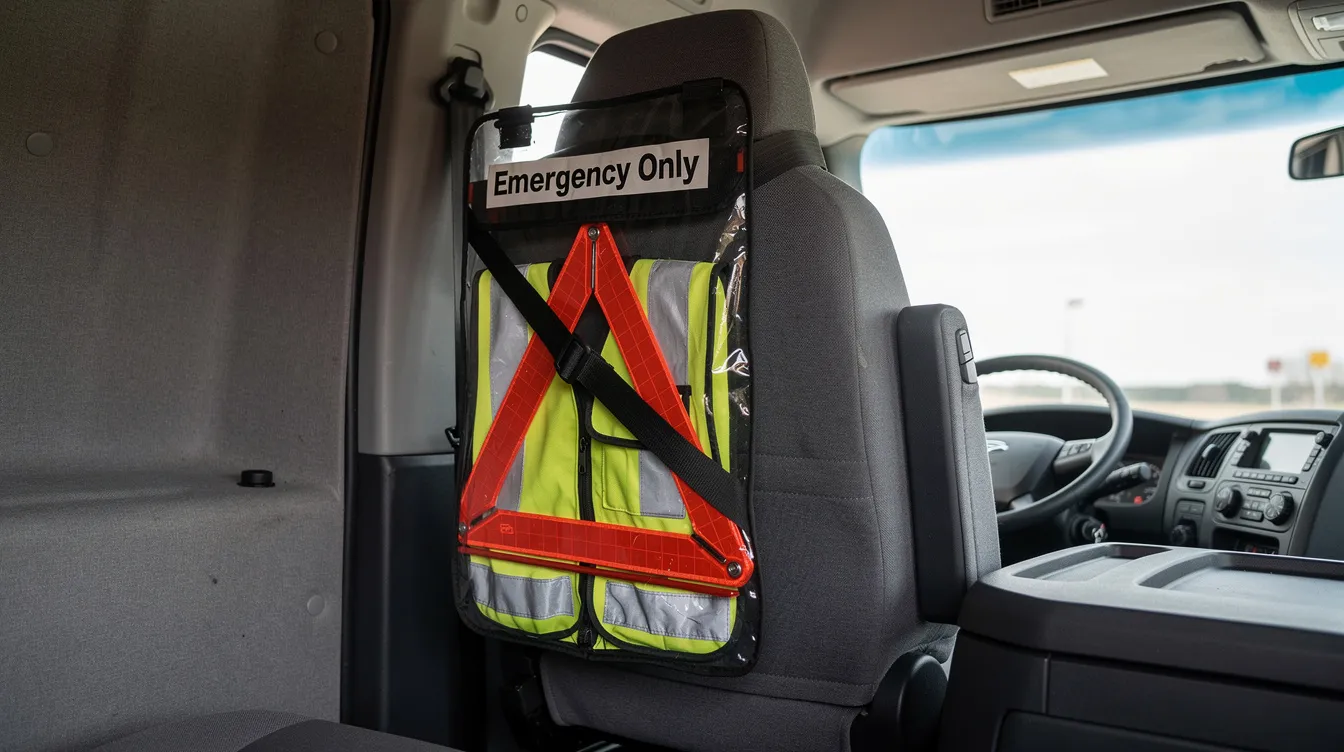
Inside a commercial box truck cab, a slim rigid pack mounts vertically behind the driver's seat. Transparent pockets show reflective warning triangles and a high-visibility vest ready for instant access. The printed "Emergency Only" label prevents the kit from being raided for everyday use-a common fleet problem. Slightly moody HDR lighting emphasizes the cab's tight quarters while keeping every detail of the kit sharp and legible. High-visibility apparel increases safety when inspecting vehicles outside at night, so keeping that vest front and center matters.
Photo 4: Long-Haul Semi Bunk with Space-Saving Emergency Storage
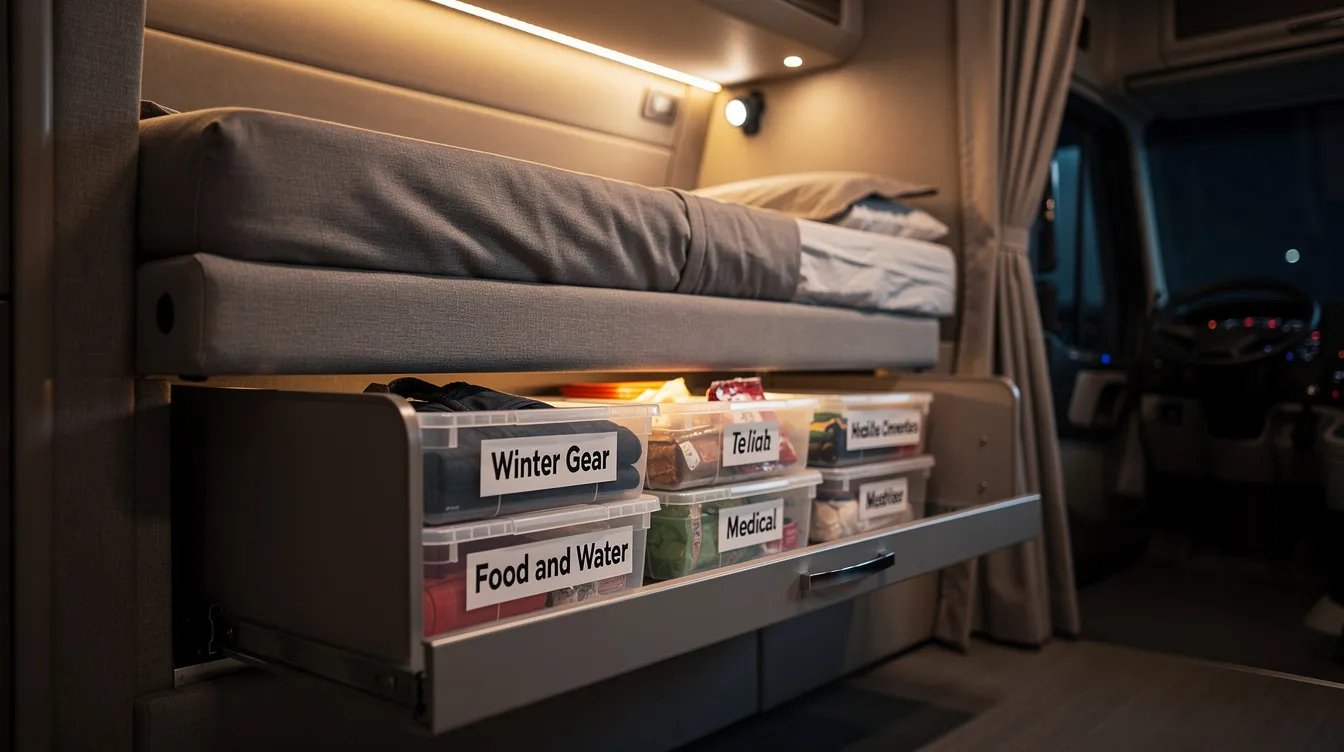
The sleeper of a long-haul rig doesn't have to be a disorganized survival closet. Here, under-bunk drawers pull out to reveal stacked, clear containers labeled "Winter Gear," "Food & Water," and "Medical." Shallow bins maximize vertical space without clutter. Warm interior lighting balances with faint highway lights through the side window, capturing the night-on-the-road reality where organized access can save your life. Non-perishable food should be rotated seasonally to prevent degradation, and these clear bins make date-checking effortless.
Photo 5: Winter Truck Emergency Kit in Use on a Snowy Shoulder
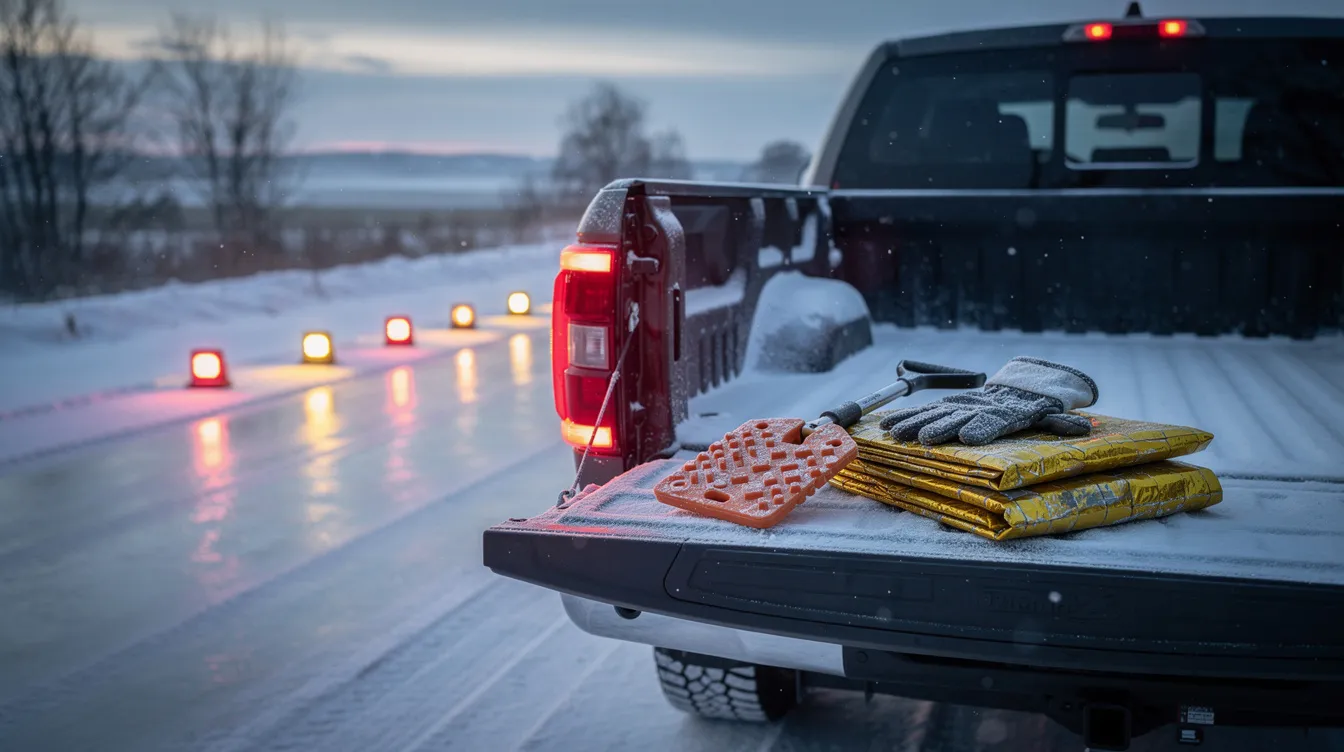
Dusk on a snowy rural road. A pickup sits on the shoulder, hazard lights pulsing, LED road beacons forming a visible triangle behind the truck. On the snow-dusted tailgate: a folding shovel, traction boards, insulated gloves, and a bright emergency blanket ready for deployment. HDR processing captures the headlight glow, reflective surfaces, and crisp snow texture without losing detail. Emergency blankets help retain body heat in cold weather-and when you're stranded on a mountain pass, that retained heat can be the difference between discomfort and hypothermia.
Photo 6: Minimalist Urban Delivery Van Emergency Kit
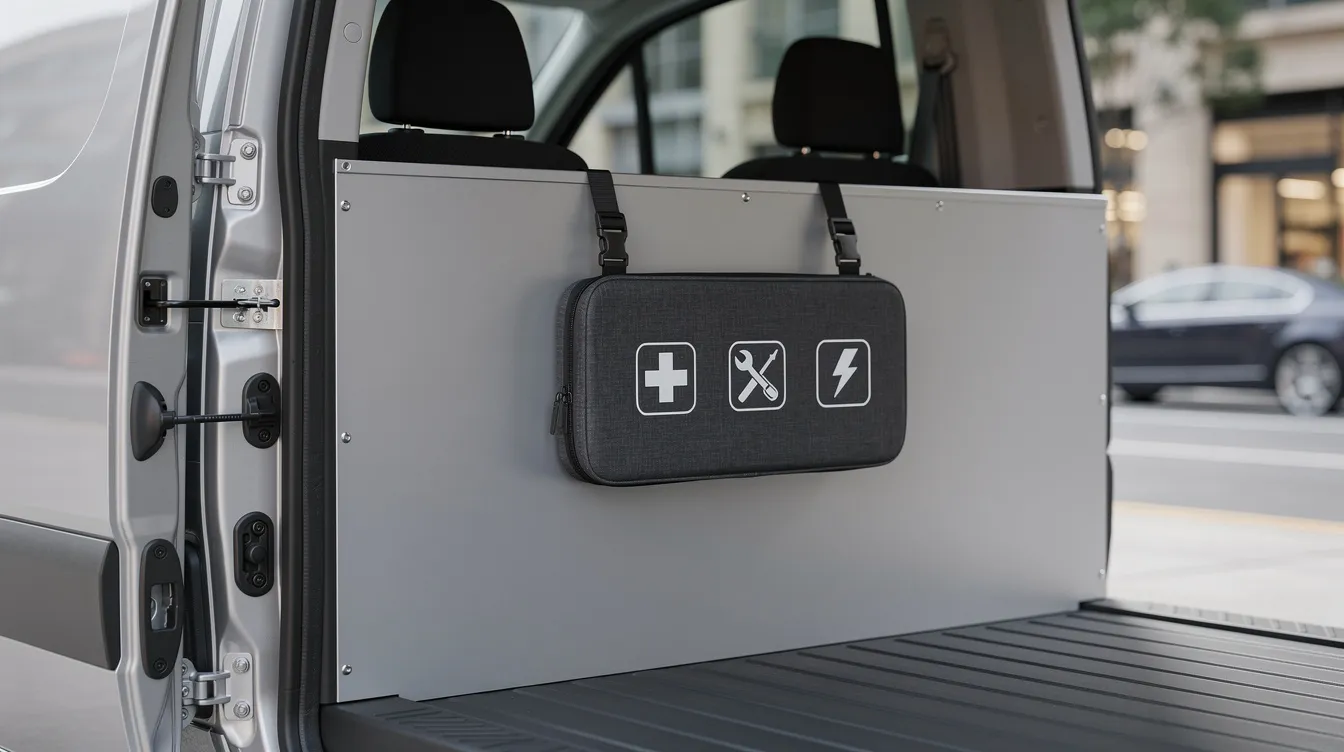
Through the open side door of a city-parked delivery van, a slim emergency kit bag straps flat against the partition wall. Printed icons indicate contents-first aid, tools, power-so any driver on the fleet can find what they need instantly. The kit occupies almost no cargo space, proving that even the most demanding urban delivery routes leave room for roadside safety gear. Clean lines, neutral colors, and a tidy van interior convey professional fleet readiness without clutter.
Photo 7: Close-Up of Organized First Aid Module for Trucks
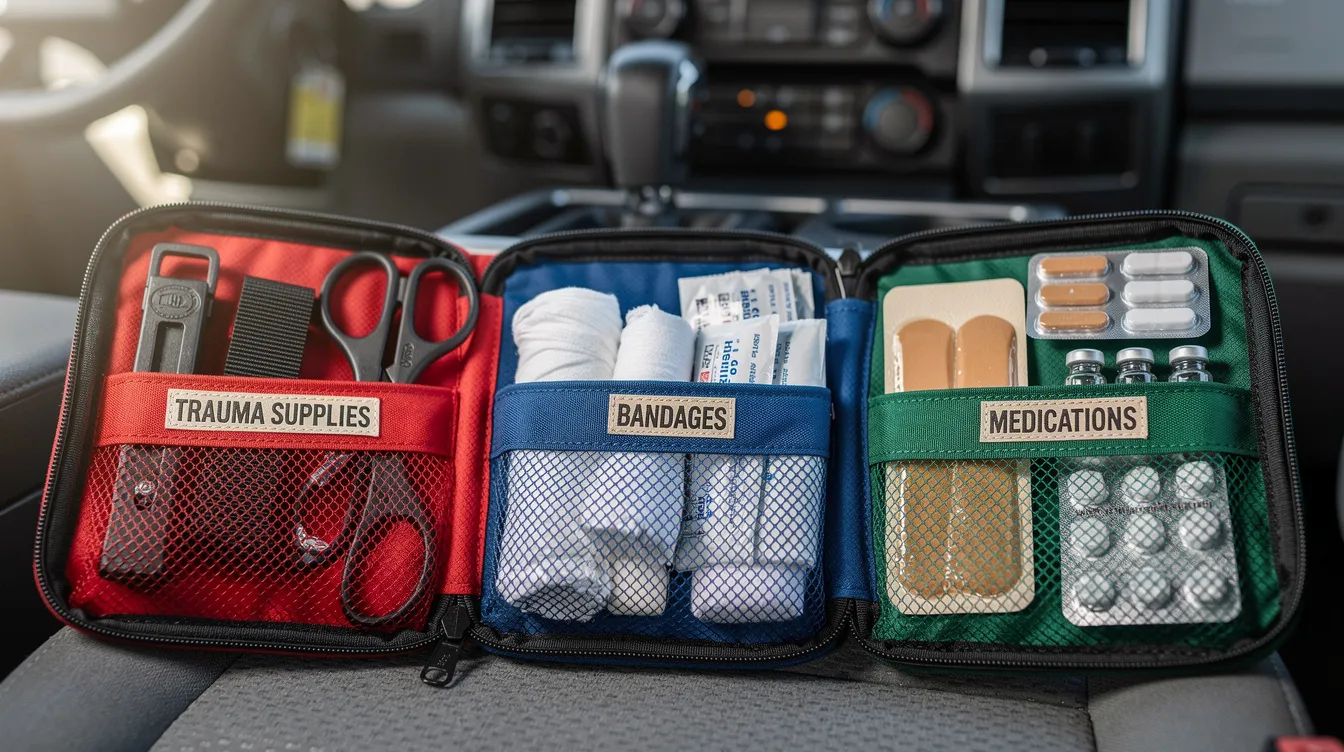
A macro-style close-up reveals the interior of a first aid organizer built for truck cabs. Mesh pockets separate color-coded sections: bandages and gauze in one, trauma dressings and a tourniquet in another, medications and tweezers in a third. A blurred gearshift and dashboard in the background anchor the image to its vehicle context. A first aid kit is crucial for treating minor injuries, but in a truck, organization is what makes it usable under stress-clear pouches and labeled sections mean you never waste time searching.
Photo 8: Compact Power & Lighting Module for Truck Emergencies
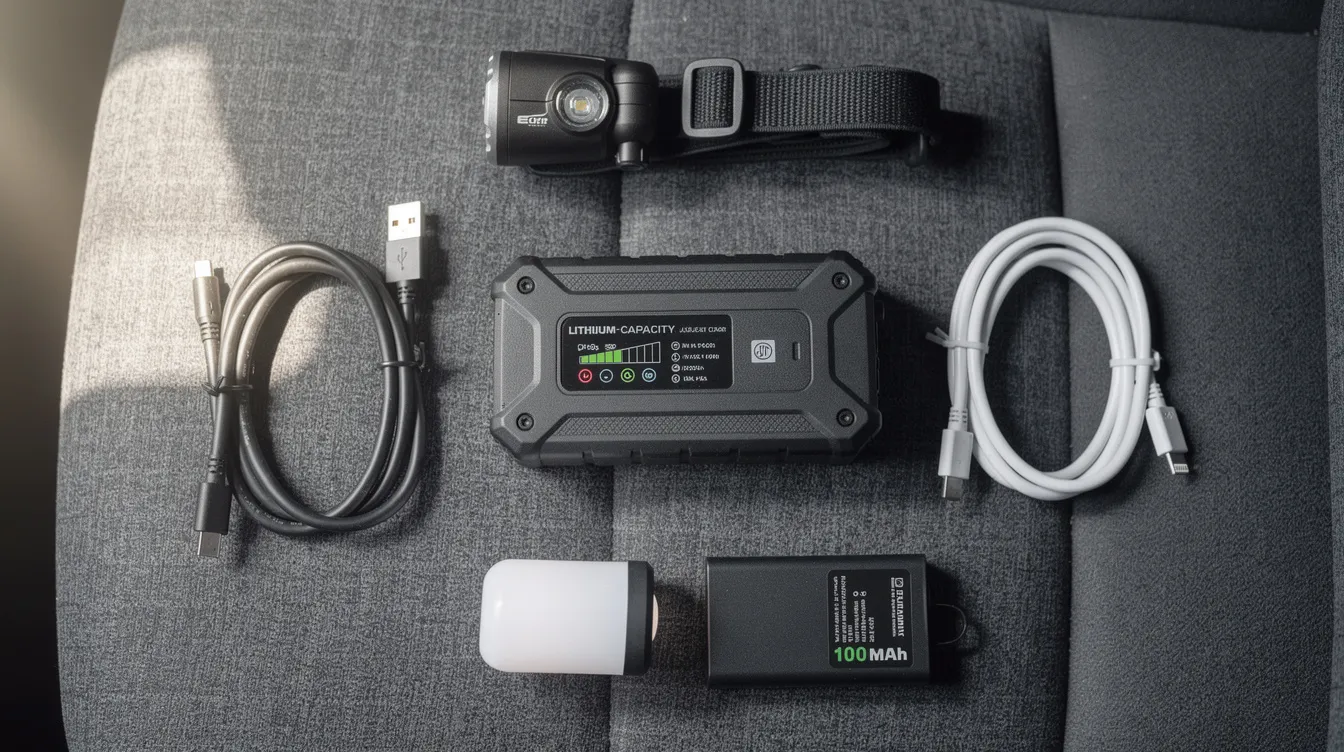
Soft side-window light illuminates a flat-lay on a truck seat: lithium jump starter with visible CCA rating, coiled USB-C cables, a compact headlamp, a small lantern, and a battery pack with capacity clearly printed. Flat tires and dead batteries are common roadside issues, and this module addresses the electrical side with serious capability in a compact footprint. A heavy-duty flashlight or headlamp is essential for low-light repairs-and when paired with a jump starter that handles truck-size batteries, you have power and visibility covered in one slim pouch.
Photo 9: Family Pickup Truck with Kid-Friendly Emergency Kit
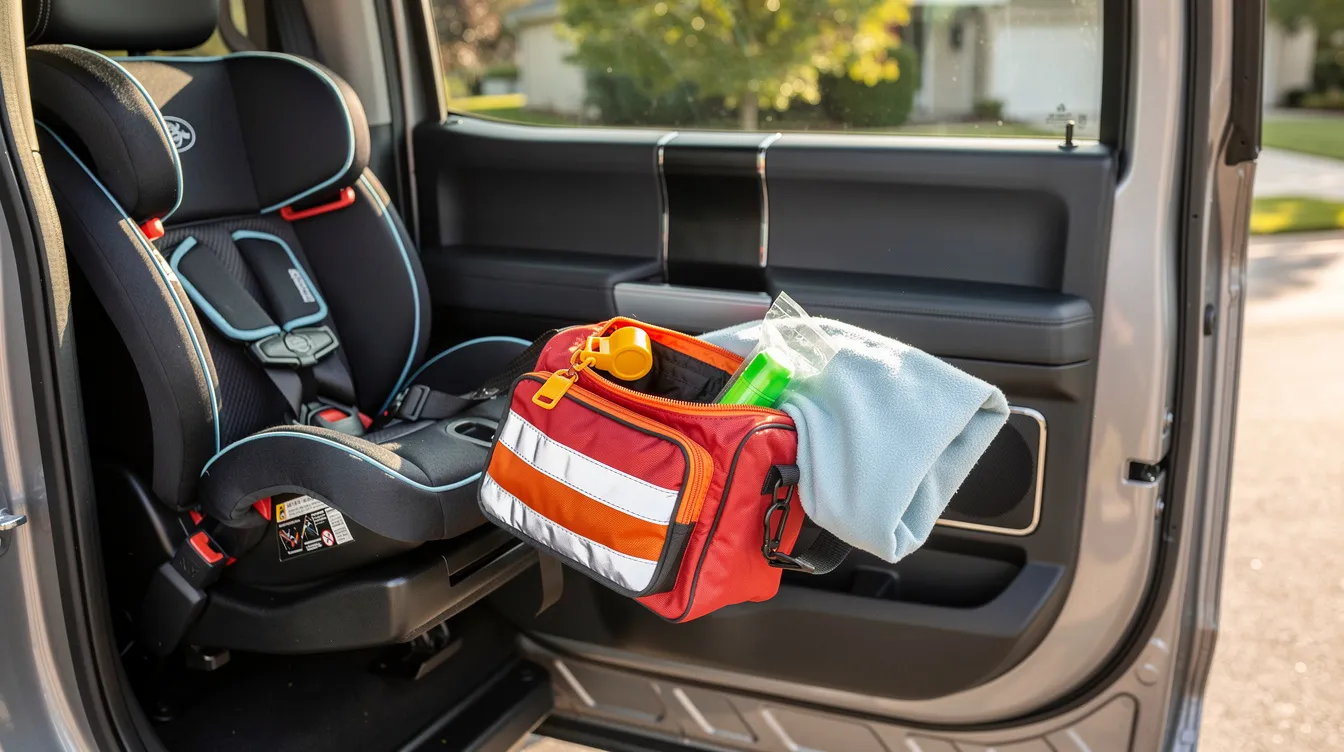
From the open rear door of a crew-cab pickup, a brightly colored emergency kit wedges neatly between a child car seat and the door panel. Visible kid-safe items-whistle, glow stick, small blanket-suggest family readiness without clutter. Warm, natural light with shallow depth of field keeps focus on the kit while a suburban neighborhood softens in the background. Families who drive trucks deserve emergency preparedness that doesn't require rearranging car seats, and this layout proves it fits.
Photo 10: Nighttime Roadside Scene with Reflective Gear in Action
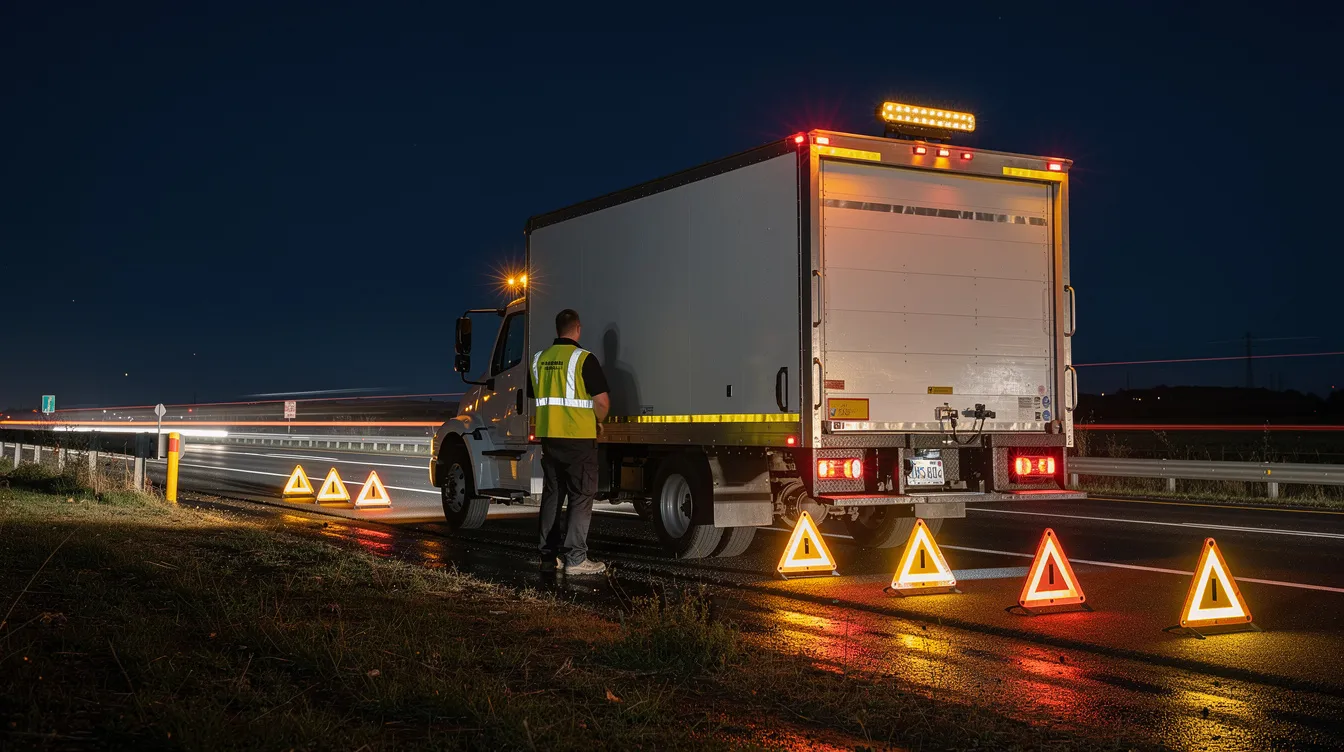
A medium-duty truck sits on a dark highway shoulder. The driver, wearing a high-visibility vest, places reflective warning triangles while LED beacons cast steady light against the asphalt. HDR processing preserves detail in the dark road surface and the bright reflective gear simultaneously, creating a dramatic, safety-first image. Over 650 people die annually from vehicle fires in the U.S.-and many more are struck during roadside stops. Warning triangles help alert other drivers during emergencies, and this image shows why visible, properly deployed signaling gear is non-negotiable.
What to Look For in a Truck Emergency Kit
Every item in your truck emergency kit should earn its place. Trucks demand higher-capacity tools than a typical car kit provides, but cab space is limited-so you need gear that's both capable and compact. Here's what to evaluate before you buy or build.
Roadside Recovery Tools Sized for Trucks
A vehicle emergency kit should include jumper cables-but for trucks, those cables need to be heavy-duty, typically 2-gauge or 1/0 gauge, and 20–30 feet long to reach between dual batteries or from tractor to trailer. Heavy-duty jumper cables are recommended for their thickness and gauge because lighter car-grade cables simply can't handle the cold-cranking amps of a diesel starter. Portable tire inflators are essential for checking and inflating tires, but truck-rated models must reach 80–110 PSI for commercial tires. Add a tire repair kit with plug tools sized for larger punctures, a tire pressure gauge, and a functional spare tire that's been verified as road-ready. Heavy-duty tow straps are crucial for trucks during recovery situations where a standard car strap would snap under load. Store these in durable cases with ratchet straps to prevent rattling around a small cab.
Highly Visible Warning & Signaling Gear
Under 49 CFR § 393.95, commercial motor vehicles must carry warning devices-three reflective warning triangles, or alternatively six fusee-type flares with a 30-minute burn, or three liquid flares with 60-minute burn time. Reflective warning triangles are essential for roadside safety and must meet Standard No. 125 for reflective and fluorescent materials on vehicles over 10,000 lb GVWR. LED road beacons are gaining traction as safer, reusable alternatives accepted in most jurisdictions. Include at least one high-visibility vest (ANSI Class 2 or 3) and a headlamp that frees both hands for roadside work. Look for fold-flat triangle designs and stackable beacon cases that fit behind seats or in door pockets-a warning flag or reflective streamer can serve as a lightweight backup in tight storage situations.
Truck-Friendly First Aid & Trauma Supplies
A first aid kit is essential for truck drivers-but a glovebox kit designed for a car won't cover the hazards trucks encounter. Long-haul and service truck drivers face deeper injuries from metal, machinery, and high-stress incidents. Stock trauma dressings, a tourniquet (with training), burn gel, splints, nitrile gloves, and a CPR barrier mask alongside everyday bandages, gauze, tweezers, and pain relievers. An instant cold pack addresses sprains and swelling on the spot. Keep first aid supplies in a waterproof pouch with clear, labeled sections so you can grab the trauma module without sorting through bandages under stress. Wear work gloves to protect hands when handling tools or chains before you even open the aid kit.
Compact Survival Essentials for Delays & Breakdowns
Emergency kits should include a blanket for warmth-mylar emergency blankets pack to the size of a deck of cards and retain up to 90% of body heat. Emergency blankets are crucial for cold weather situations where a driver may wait hours for help. Pair them with calorie-dense food bars (aim for at least 3,000 kcal reserve), water in collapsible pouches or slim rigid bottles, and chemical hand warmers. Rotating bottled water every six months prevents it from freezing or degrading in temperature extremes. Connect these supplies to realistic truck scenarios: being stuck on a snow-closed mountain pass, stranded behind a hazmat closure, or gridlocked in a city heatwave where extra water and cooling towels become urgent.
Space-Saving Storage & Organization
The best truck emergency kit is the one you can actually find and access when you need it. Slim, soft-sided bags with multiple labeled pouches ("Power," "Medical," "Roadside") enable quick pulls without dumping everything out. Foldable organizers, under-seat bins, and wall-mounted pouches for cargo boxes maximize tight spaces. Use modular packing cubes so drivers can grab only what they need-the "winter module" stays stowed until November, keeping the permanent footprint minimal. Color-coding with bright zipper pulls and panel outlines helps find items in low light, and roll-up tool wraps slide into narrow gaps that rigid boxes can't reach.
Durability & Weather Resistance
Truck cabins see temperature swings from 100°F+ in summer to -20°F in winter, plus constant vibration, dust, and UV exposure. Bags should be water-resistant with reinforced bottoms and sealed zippers. A fire extinguisher must be UL-rated (5B:C or higher) and securely mounted-FleetRabbit notes that fire extinguishers frequently fall out of mounted brackets during driving, a failure that can cost you during inspection or, worse, during an actual vehicle fire. Flashlights and headlamps should carry IP ratings for water and dust resistance. Tools need rust-resistant coatings, and gloves should be rated for the weather you'll encounter. Regular maintenance of emergency kits includes replacing expired food and testing chargers-durability means nothing if the contents inside have degraded.
How to Choose the Right Truck Emergency Kit
Knowing what features matter is step one. Turning that knowledge into the right purchase for your specific situation is step two. Use this decision framework to narrow your choices:
- Truck Type & Weight Class - Match tools and recovery gear to your vehicle's size. A half-ton pickup needs different cable gauge, jack capacity, and strap rating than a Class 8 tractor. Gloves are necessary for handling roadside emergencies safely regardless of truck size, but the tools those gloves handle vary dramatically.
- Daily Route & Distance from Help - Urban, short-haul routes can focus on basic roadside and first aid gear since help is usually nearby. Remote or cross-country routes require 24–72 hours of survival supplies-food, water, extra clothing, and backup communications like a satellite messenger when cellular coverage lapses.
- Climate & Seasonality - Build a year-round base kit, then add slim seasonal modules. Winter demands traction aids, an ice scraper, insulated gloves, hand warmers, and cold-weather blankets. Summer calls for extra water, sun protection, and cooling gear. Design for the worst-case weather your region produces.
- Cab Space & Storage Constraints - Measure your actual spaces: under-seat height (typically 4–6 inches in crew cabs), door pocket depth, and area behind seats. Only pick bags and modules that physically fit without blocking seat movement, seat belts, or airbags. A kit you can't access in an emergency might as well not exist.
- Driver Experience & Comfort Level - Newer drivers benefit from simpler, clearly labeled kits with instructions. Experienced drivers with mechanical skills may prefer tool-heavy setups with recovery gear, spare belts, and repair modules. Either way, know how to use what you carry-a tourniquet without training is just nylon in a pouch.
- Budget vs. Risk Exposure - Prioritize high-impact items first: legally required gear (fire extinguisher, warning triangles), then a jump starter, first aid, and visibility gear. Layer extras-sand for traction, a tire pressure gauge, upgraded power banks-as budget allows. For fleet managers, bulk purchasing across a department can reduce regular price per unit significantly.
Small-Space Strategies for Truck Emergency Kits
Small Space Emergency exists because preparedness shouldn't require a warehouse. Trucks present unique storage challenges, but they also hide surprisingly useful pockets of space if you know where to look.
Use "Dead" Space in the Cab
- Behind and under seats in crew cabs typically offers 4–6 inches of height-perfect for flat pouches and slim organizers.
- Seat-back pockets hold fold-flat documents, mylar blankets, and a compact first aid pouch.
- Door pockets and roof consoles accommodate a flashlight, seatbelt cutter, or LED beacon.
- Roll-up tool wraps slide into the narrow gap between the seat rail and center console.
- Hook-and-loop-backed pouches mount vertically on bulkheads in delivery trucks without drilling.
Modular Packing: Break the Kit into Mini-Kits
- Split one large kit into smaller, purpose-specific modules: "Medical," "Power & Lights," "Winter," "Food & Water."
- Color-code or icon-label each module so a driver under stress can grab the right pouch instantly-red for trauma, blue for winter, yellow for power.
- Store only the current-season modules in the cab; keep off-season modules in a garage or fleet stock room until the date they're needed.
Keep the Heaviest Gear Low and Secure
- Heavy items like recovery gear, tools, jacks, and a fire extinguisher should be stored low, strapped down, and away from airbag zones.
- Compact ratchet straps, cargo nets, and under-floor compartments (where available) prevent dangerous projectiles during a sudden stop or accident.
- Weight distribution matters-don't stack heavy gear on the passenger seat where it can shift during hard braking.
Build an Everyday Carry Layer for Truck Drivers
- Propose a minimal EDC setup that lives on the driver or in a center-console tray: small flashlight, seatbelt cutter/window punch, whistle, and a few basic bandages.
- This layer complements the main kit if the driver can't reach the primary bag after a collision-think of it as your personal insurance policy.
- A compact flashlight with batteries is necessary for nighttime emergencies even before you access the full kit.
Frequently Asked Questions About Truck Emergency Kits
These answer the real questions truck owners and drivers ask about building, storing, and maintaining emergency kits-specific to trucks, not generic car guidance.
What should be in a basic truck emergency kit?
At minimum: jumper cables or a lithium jump starter, compact air compressor, tire repair kit, reflective warning triangles or LED flares, high-visibility vest, a first aid kit stocked with bandages, gauze, and aid supplies to treat minor injuries, a multi-tool, gloves, a flashlight with spare batteries, and at least one emergency blanket and water. Emergency kits should include jumper cables and a flashlight as non-negotiable baseline items. For most pickup and light-duty truck drivers, this core list fits comfortably in a single compact duffel or under-seat organizer. Think of it as a more capable version of a basic AAA kit, purpose-built for trucks.
Where is the best place to store an emergency kit in a truck?
In pickups: under or behind the rear seats for the primary bag, with a small flashlight and seatbelt cutter in the center console for immediate access. In box trucks and service vehicles: behind-seat wall mounts or bulkhead mounts keep the kit secure and out of the cargo area. In semis: under-bunk drawers, side lockers, or overhead cubbies. The critical rule across all truck types: frequently needed items-flashlight, seatbelt cutter, small first aid-should be reachable from the driver's seat without leaving the cab.
How often should I check or replace items in my truck emergency kit?
A quick check every oil change or at least every six months covers the basics: verify fire extinguisher pressure, confirm warning triangles aren't cracked, test the flashlight and power bank. Do a deeper annual review where you check expiration dates on medications, food bars, and water pouches, and inspect gloves, straps, and tools for wear. Rotating bottled water every six months prevents degradation, and regular maintenance of emergency kits includes replacing expired food and testing chargers to ensure everything works when it matters.
Do long-haul truck drivers need different emergency kits than local drivers?
Yes. Over-the-road drivers should add 24–72 hours of water, food, extra clothing, and cold- or heat-weather gear, plus backup communications like a fully charged power bank or satellite messenger if routes cross remote areas. Industry guides from Papé Kenworth stress that core year-round gear must include visibility equipment, communication backup, basic tools, and first aid, with seasonal overlays for the specific hazards of each route. Local urban and suburban drivers can usually prioritize compact roadside and first aid gear over extended survival supplies.
Can I fly or cross borders with certain truck emergency kit items?
Most kit items are road-legal, but some require attention at borders or in specific jurisdictions. Pyrotechnic flares may be restricted for transportation across certain borders; aerosol tire sealants and certain knives can also trigger control issues at customs. Medications may require prescriptions or declarations. LED beacons are broadly accepted and carry fewer restrictions than traditional flares-making them the smarter purchase for drivers whose routes cross national borders. Always verify local government regulations for flares, knives, and medical supplies before crossing.
Get Your Truck Emergency Kit Road-Ready
A well-thought-out, compact truck emergency kit can live in even the smallest cab without getting in the way-and when you need it, every item is ready, accessible, and sized for your vehicle. Use the guidance above to audit your current setup: check that you're carrying legally required gear, fill gaps in first aid and survival supplies, and organize everything into modules that fit the spaces your truck actually has. Then explore Small Space Emergency's compact kit recommendations and storage solutions designed specifically for trucks, vans, and small work vehicles-because being prepared shouldn't mean being buried in gear.
Editorial note: this guide provides general preparedness information, not emergency, medical, legal, or engineering advice. Recommendations are cross-checked against public emergency-management guidance and adapted for small-space living. During an active emergency, follow your local authorities and emergency services. See our editorial standards and affiliate disclosure.