Best Survival Item List for Small Spaces: 10 Essentials You Really Need
A survival item list is a curated set of supplies built to keep you safe during power outages, water failures, building fires, and evacuations. Most checklists assume you have a garage, a basement, or a shed. If you live in a studio, a one-bedroom apartment, or a micro-home, those lists create more anxiety than preparation.
This guide from Small Space Emergency covers the 10 core survival kit categories that fit real city apartments:
- Compact water storage and filtration
- Shelf-stable, space-saving food
- Ultra-compact lighting
- Small-footprint power and charging
- Shelter and warmth bundle
- First aid and personal medications
- Multi tool, compact tools, and repair gear
- Documents, cash, and identity protection
- Communication and information kit
- Grab-and-go personal essentials pouch
An emergency survival kit should sustain households for at least 72 hours to two weeks. Emergency kits should prioritize compact storage for small living spaces, and every item here was chosen for space efficiency, multi-use function, reliability, and suitability for both shelter-in-place and fast evacuation. A compact survival kit should help meet the basic survival needs of shelter, water, food, warmth, and first aid. Each section below features a photorealistic HDR image to make this survival list skimmable and visually useful.
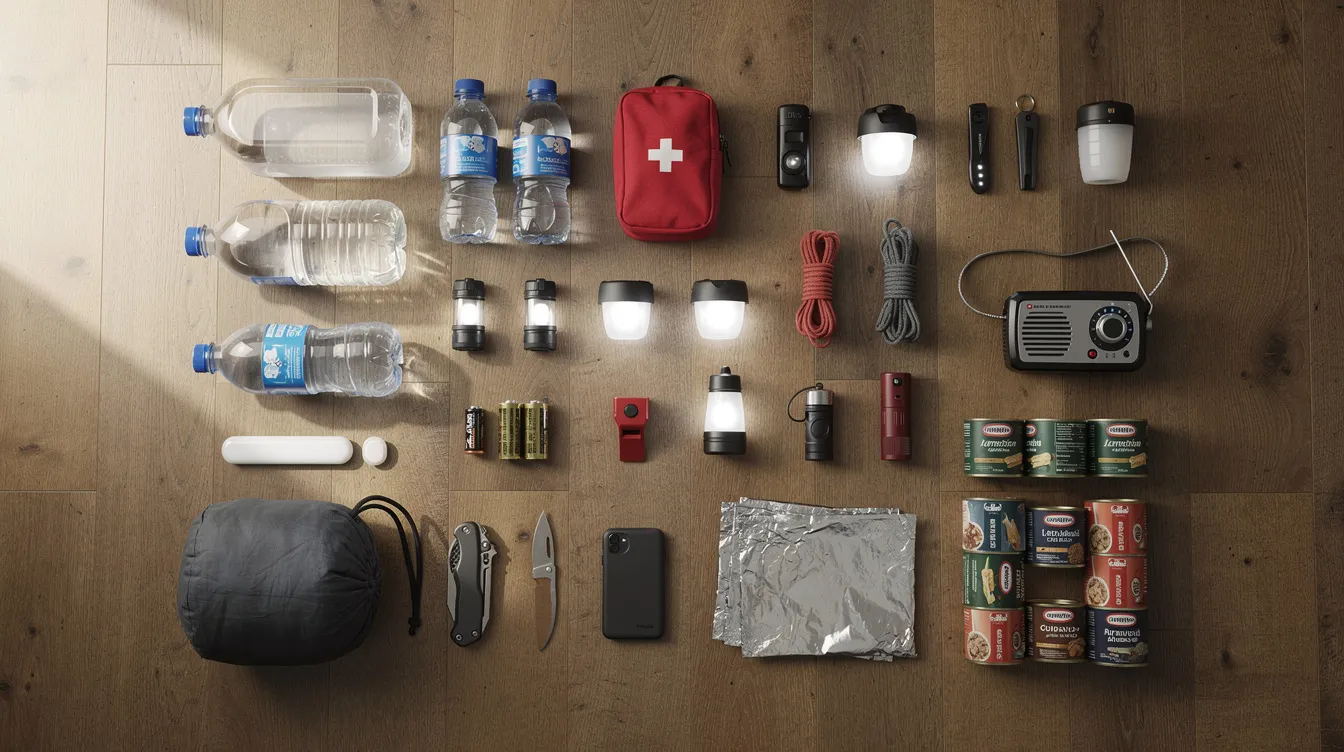
How We Built This Survival Item List for Small Spaces
We did not dump a 100-item checklist. Instead, we filtered every item through six criteria:
- Space efficiency: folding, nesting, stackable, vacuum-sealed, or pocket-sized gear only.
- Multi-functionality: one item solving two or more problems (a headlamp that charges via USB, duct tape that doubles as a bandage wrap).
- Shelf life and reliability: 5+ year storage where possible, with low failure rates.
- Weight and portability: light enough to carry down stairwells or onto public transit.
- Urban threat suitability: tuned for blackouts, water outages, building fires, and storms.
- Affordability: accessible for renters and young professionals building their first emergency kit.
Store emergency supplies in one or two containers. Keep a primary kit at home and smaller kits elsewhere, like a workplace drawer or car trunk. Store emergency supplies in airtight plastic bags where moisture or pests are concerns.
Top 10 Survival Item List Essentials for Small Apartments
Each numbered section below covers one category of survival gear, with specific examples, who it serves best, and real limitations.
1. Compact Water Storage and Filtration Kit
Water is your first priority. FEMA recommends one gallon of water per person per day for drinking, cooking, and brushing teeth. Maintain a three day supply of water per person; for two people, that means six gallons. Water weighs 8.3 lbs per gallon, making storage challenging in apartments without closets to spare.
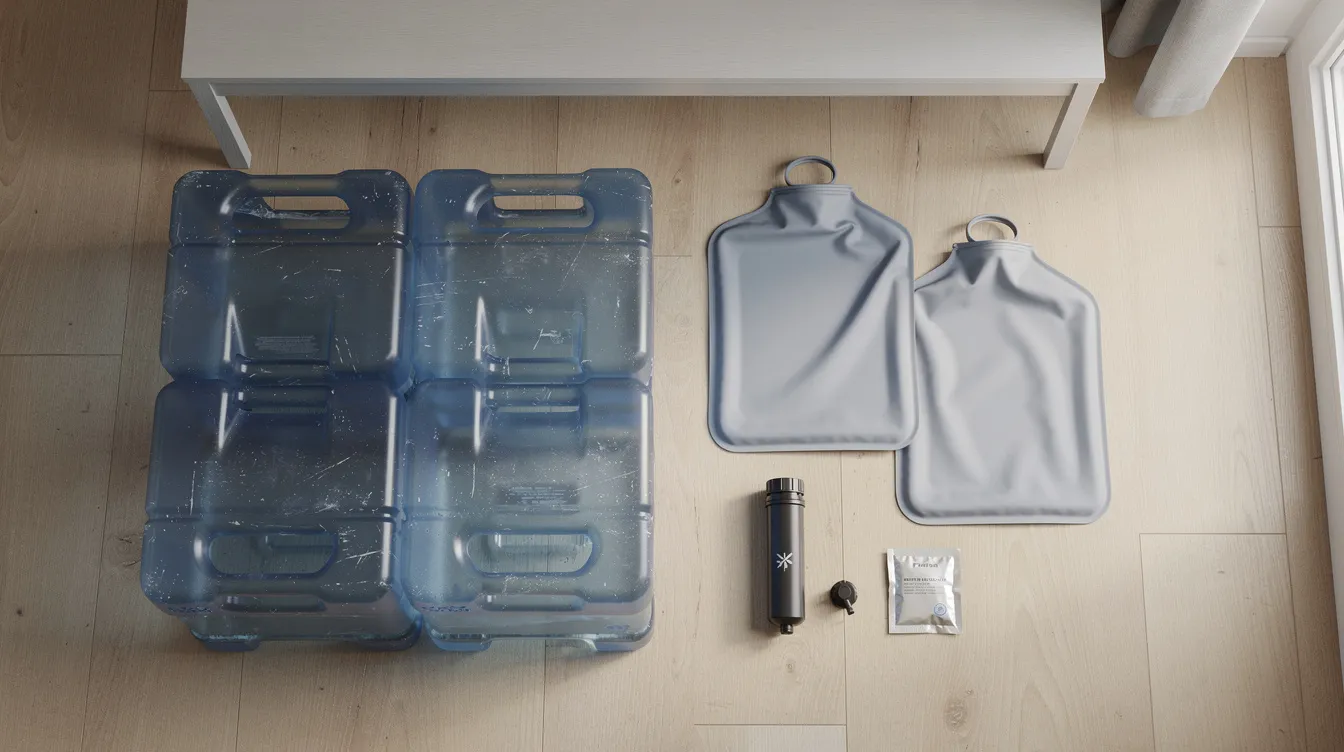
Concrete items to stock:
- Stackable 3-to-5 gallon BPA-free water bricks (roughly 14×9×5 inches) that slide under beds
- Collapsible 1-to-2 gallon water containers that fold flat when empty
- At least one portable water filter (straw filter or small pump) plus chlorine dioxide tablets for when you need to boil water or treat it chemically
Why it stands out: Under-bed clearance in most apartments runs 10 to 14 inches; water bricks fit. A combination of storage and filtration covers both short outages and longer events, and the filter and tablets are backpack-ready for evacuation. Easy to carry containers like collapsible jugs weigh almost nothing when empty.
Limitations: Stored water must be rotated every 6 to 12 months. Very tiny studios may need fewer, smaller containers. Store at least one gallon of water per person daily as an absolute minimum.
2. Shelf-Stable, Space-Saving Food Core
A three day supply of non-perishable food is essential for emergencies. Have a three day food supply for each family member; 7 days is better if your region faces supply-chain risks from hurricanes or ice storms. Canned food should be stored in a cool, dry place to maximize its 2-to-5 year shelf life.
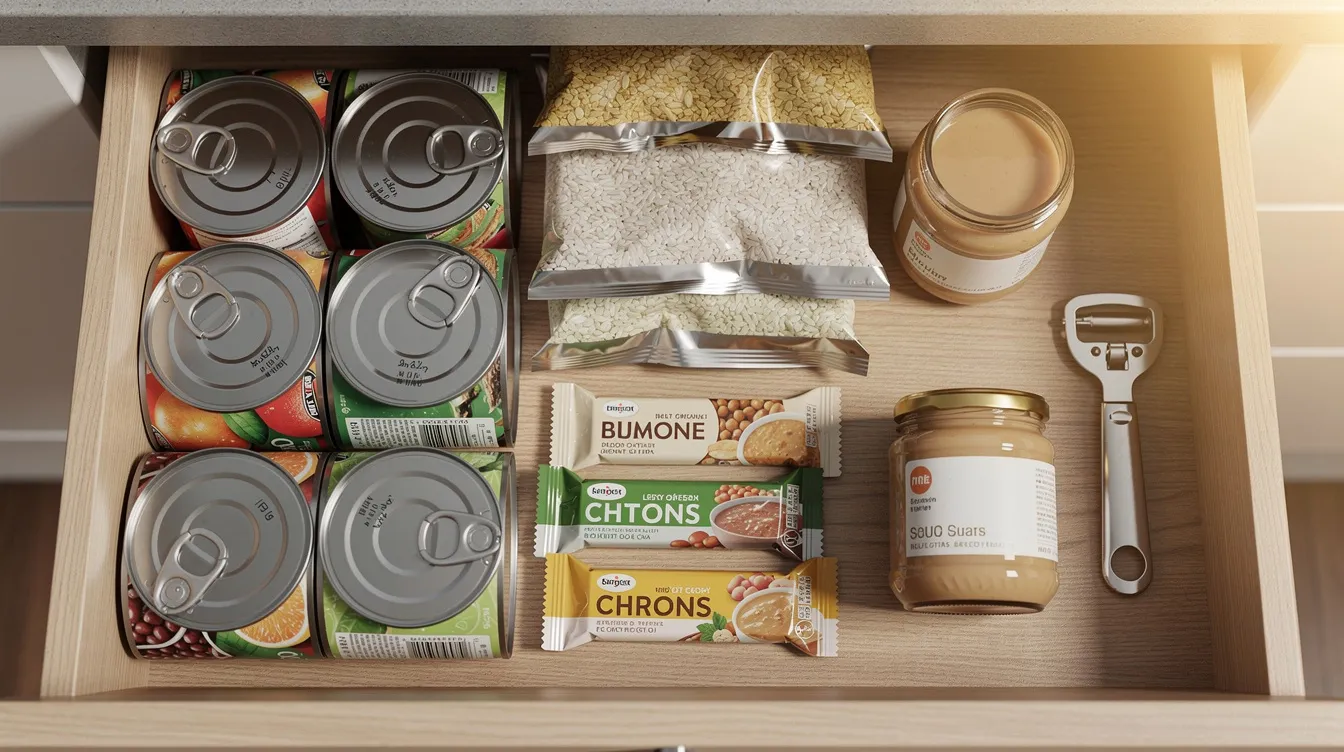
What to stock:
- Stackable mylar-packed staples (rice, oats, lentils) in flat bins
- Ready-to-eat canned meals with easy-open lids
- Non-perishable food includes canned fruits and protein bars for no-cook calories
- A small manual can opener clipped to a keyring
All components fit in one defined storage zone. The food core supports both shelter-in-place and grab-and-go; pack the bars and nut butter into a bag, leave the cans for staying put. A lightweight option like freeze-dried pouches works for long-distance evacuations where weight matters more.
Limitations: Limited menu variety in very small spaces. Heavier than backpacking meals. Rotate items into everyday meals before expiration.
3. Ultra-Compact Lighting and Blackout Kit
LED emergency lights last 30,000 to 50,000 hours, compared to roughly 1,000 hours for incandescent bulbs. Pack multiple flashlights with extra batteries for lighting. The NFPA reports about 20 home candle fires per day in the U.S., so LED is the safer choice for apartment dwellers.
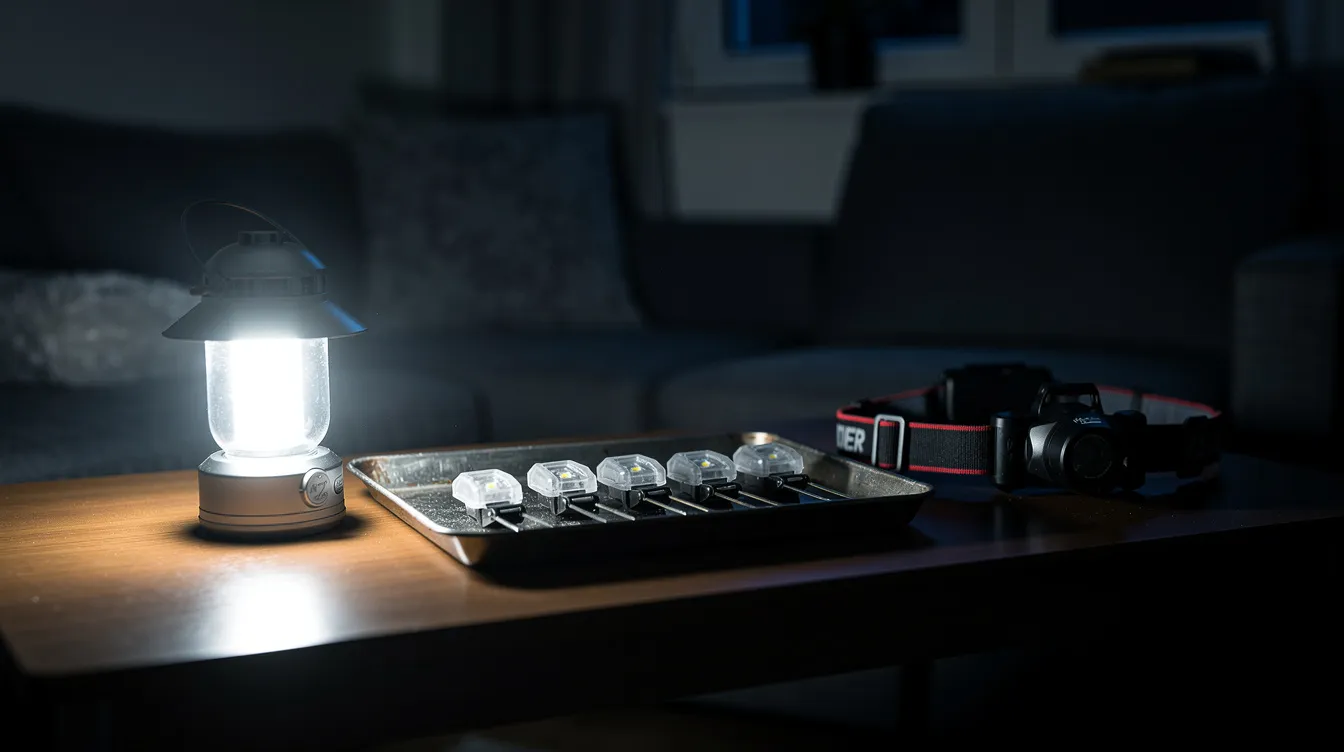
Kit contents:
- One rechargeable LED headlamp per person (hands-free for cooking and basic first aid tasks)
- Flat-pack LED lantern or folding "book" light for ambient room lighting
- Small clip-on lights for hallways and stair rails
- A few long-burn emergency candles with stable metal bases (check lease rules first; candles may not be allowed in some buildings)
Everything fits in one labeled "Blackout Box" by the main entrance. Battery powered headlamps keep your hands free for almost anything during an outage. Rechargeable gear reduces the need to store piles of extra batteries.
Limitations: Requires a way to recharge; the next section covers that.
4. Small-Footprint Power and Charging Setup
A 20,000 mAh power bank charges a typical smartphone 4 to 5 times and fits in a drawer. Portable solar panels in the 20-to-40-watt range offer the best balance of size and output for apartment windows.
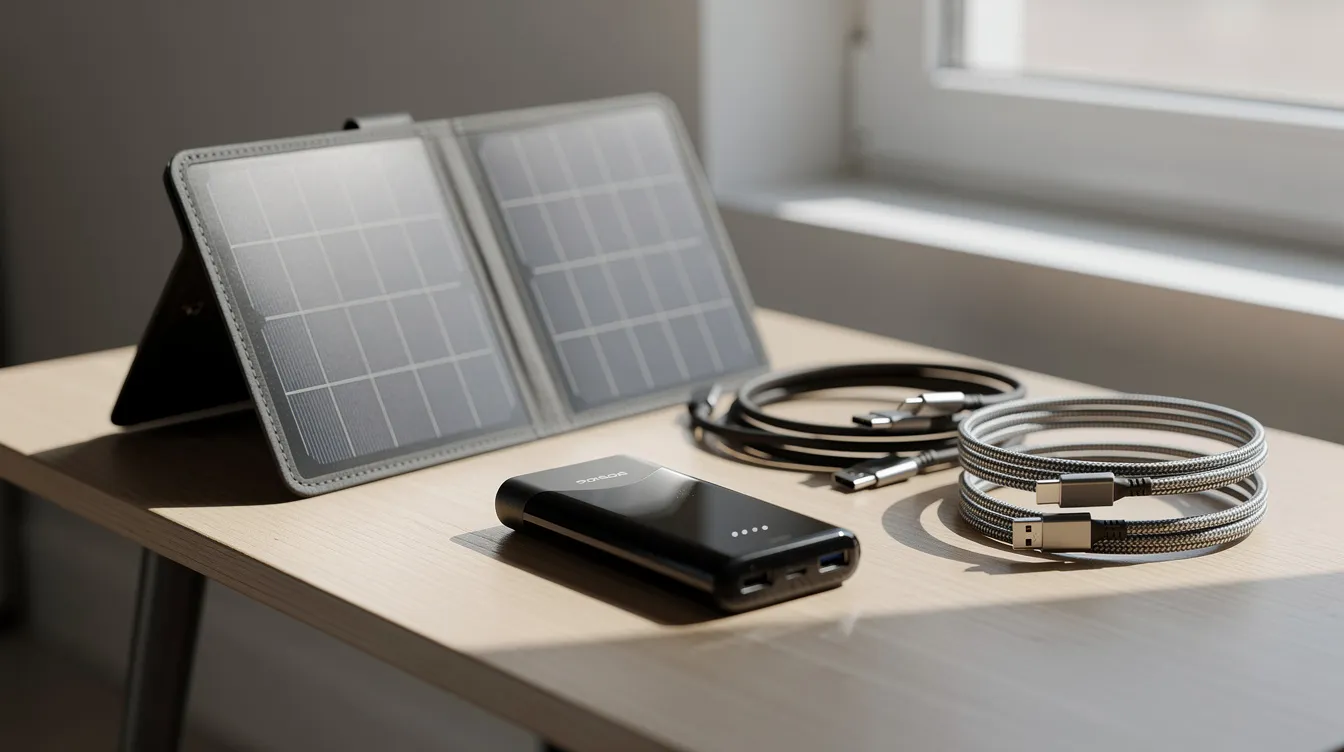
Components:
- At least one 20,000 mAh power bank per household (or two smaller ones for portability)
- A flat, folding 20-to-40W solar panel that hangs from a balcony rail or sits in a window
- Short, durable USB-C and Lightning cables plus a multi-head cable
Silent and landlord-friendly, unlike gas generators. No fuel storage required. Flat components tuck behind books or inside a file box. Power banks degrade roughly 20% capacity after 500 full charge cycles, so budget for replacement every few years and recharge stored banks every 3 months.
Limitations: Solar charging is slower with north-facing windows. Integrated solar-plus-battery units are often less efficient than separate panels and banks.
5. Apartment-Friendly Shelter and Warmth Bundle
Staying warm in an unheated apartment during a winter blackout or sleeping in your car at an evacuation point requires layered gear that compresses small.
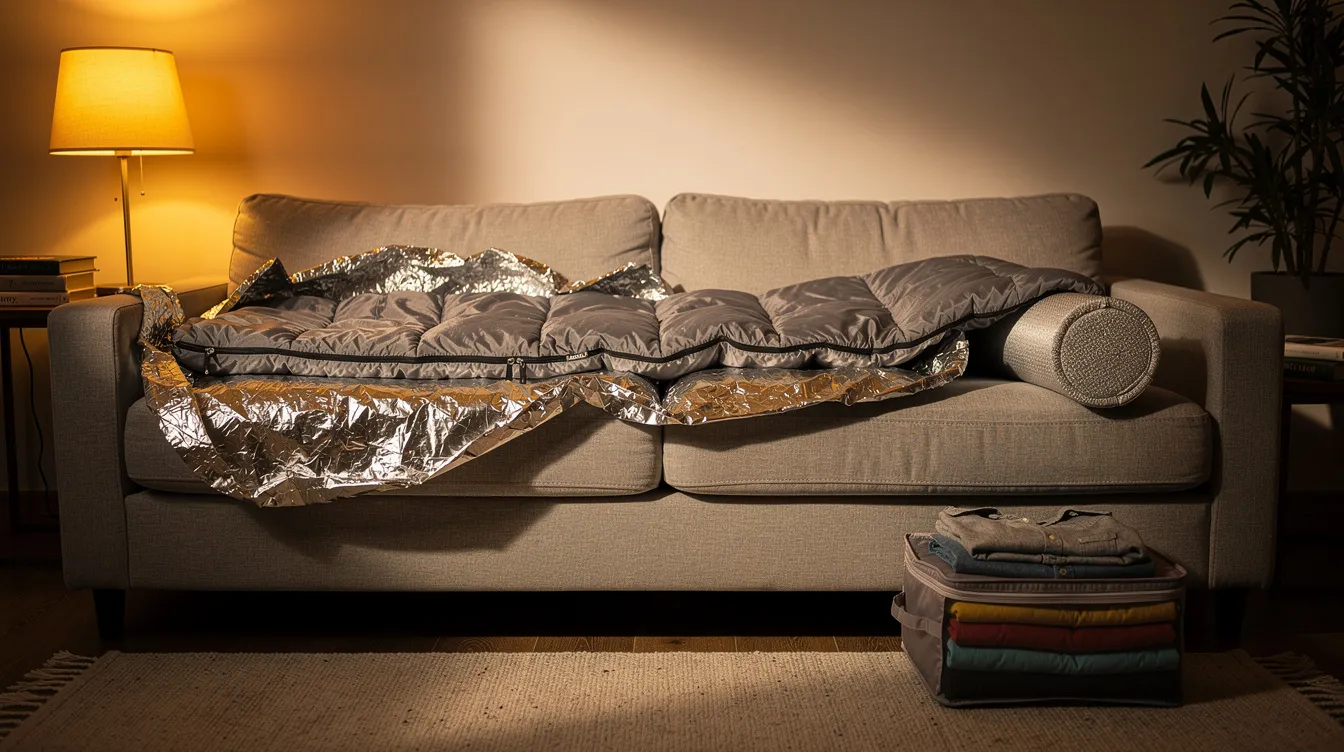
What to store:
- One compact synthetic 3-season sleeping bag (or quilt) per person that compresses into a small sack
- Emergency mylar blankets or bivy sacks for cold weather backup
- A lightweight, packable jacket and thermal base layers stored in a labeled cube
- Compact foam or inflatable pad that rolls under a bed
Clothing and a sleeping bag together form a layered system for staying warm without power. A waterproof tarp folded flat can serve as a ground cloth or improvised shelter if you evacuate outdoors. All components compress into one or two duffel bags. Items double for travel and camping, so they earn their closet space year-round. Family members each need their own sleeping layer; sharing a quilt works for couples.
Limitations: Quality sleeping bags are a bigger upfront investment. People in hot climates will prioritize lighter gear.
6. Compact First Aid and Personal Medications Kit
Medical assistance may be delayed during widespread disasters. A solid first aid kit is essential for emergency preparedness. A comprehensive first-aid kit includes bandages and antiseptic wipes, compress dressings, gloves, and pain relievers at a minimum.
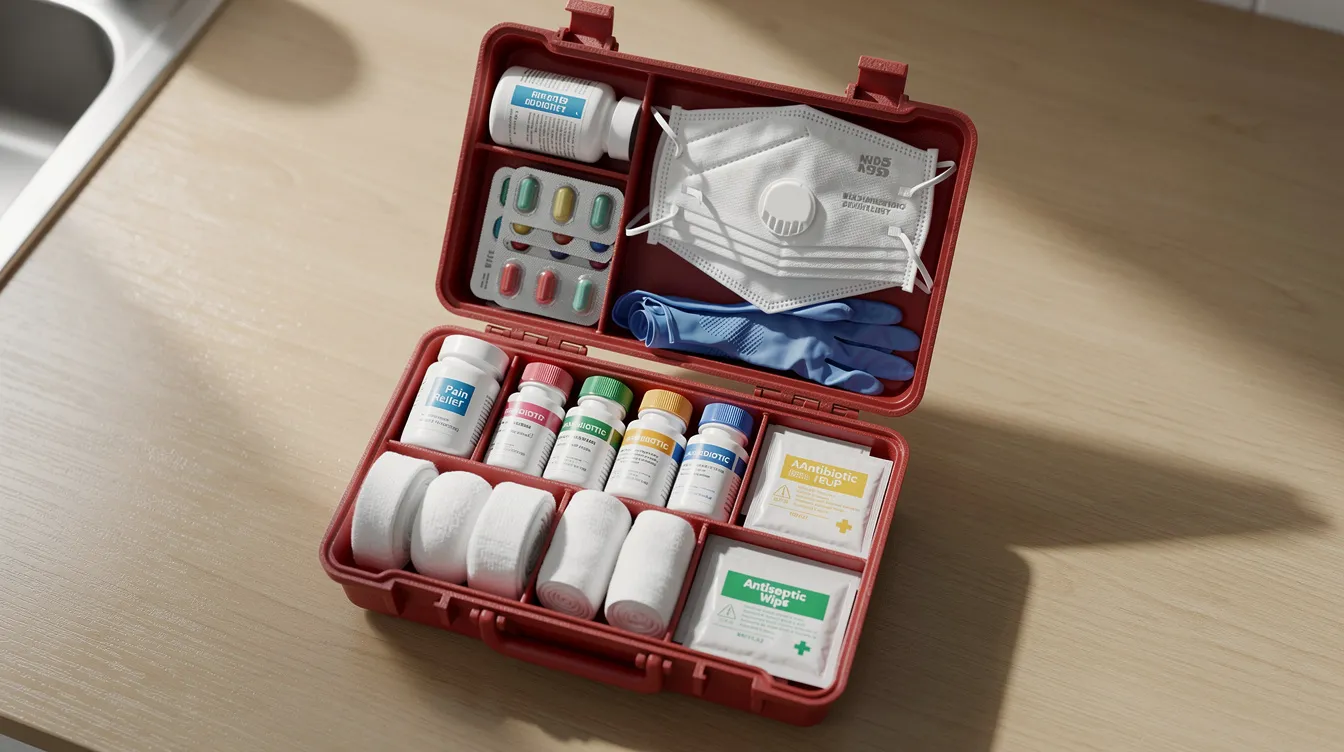
Kit contents:
- Pre-built compact first aid kit in a hard case, customized with extra bandages and blister care
- At least 7 days of critical prescription medications in labeled, waterproof containers; include prescription medications and work with your doctor on a rotation plan
- Small bottles of pain relievers, antihistamines, and anti-diarrheal tablets
- N95 respirators folded flat, plus nitrile gloves and hand sanitizer
Emergency preparedness includes learning basic first aid and navigation skills; supplies alone are not enough. The hard case protects items when tossed in a bag. Moist towelettes and antiseptic wipes serve double duty for wound cleaning and hygiene. Everything fits in a single grab-and-go pouch that slides into a backpack.
Limitations: Some prescriptions are difficult to stockpile; talk to your prescriber. Medications require tracking expiration dates; check supplies annually to replace expired items.
7. Multi-Tool, Compact Tools and Repair Core
Emergency kits should have tools for shelter building and repairs. A few smart tools beat a full toolbox when closet space runs 12 to 16 inches deep. Include a multi-tool for repairs and utility tasks.
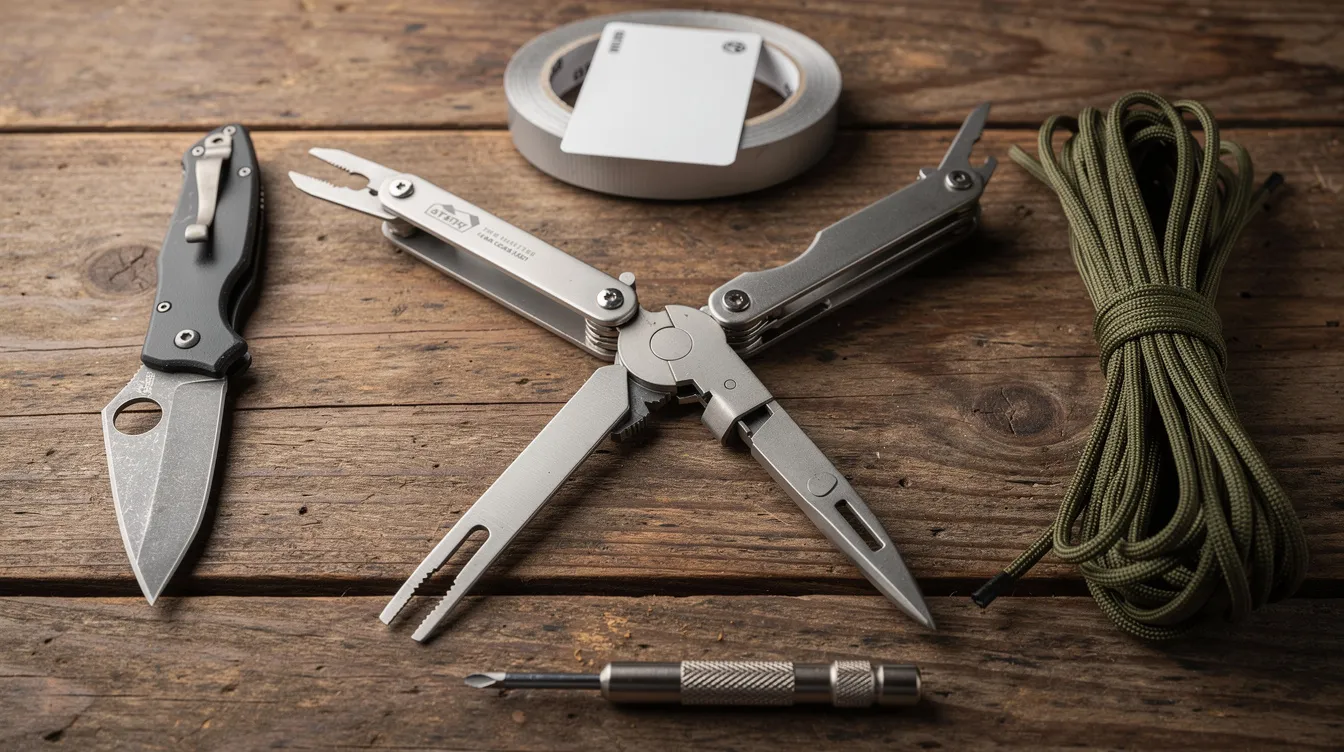
The core set:
- Quality multi tool (pliers, knife, screwdriver bits) with a belt clip
- Compact folding knife with a locking blade for food prep and cutting
- Small roll of heavy-duty duct tape flattened around a credit card; duct tape can be used for improvised bandages and slings in a pinch
- 25 to 50 feet of 550 paracord stored in a tight hank
- Pencil-sized screwdriver with interchangeable bits
- A handful of zip ties and plastic ties for bundling, securing, and quick fixes
- Fishing line serves as backup cordage; pair with fishing lures if near water
- A sewing kit and a sharpening stone round out long term survival readiness
A good axe has no place in an apartment, but this pouch handles door, window, furniture, and gear repairs. All components hang on a single closet hook. Useful every week, not just in disasters. You can start fires with a lighter or ferro rod stored alongside these tools.
Limitations: Not suited for heavy demolition. Requires some basic DIY knowledge.
8. Documents, Cash and Identity Protection Packet
Paperwork slows post-disaster recovery more than missing gear. Store important documents in a waterproof container; fire-resistant pouches buy time but do not offer absolute protection.
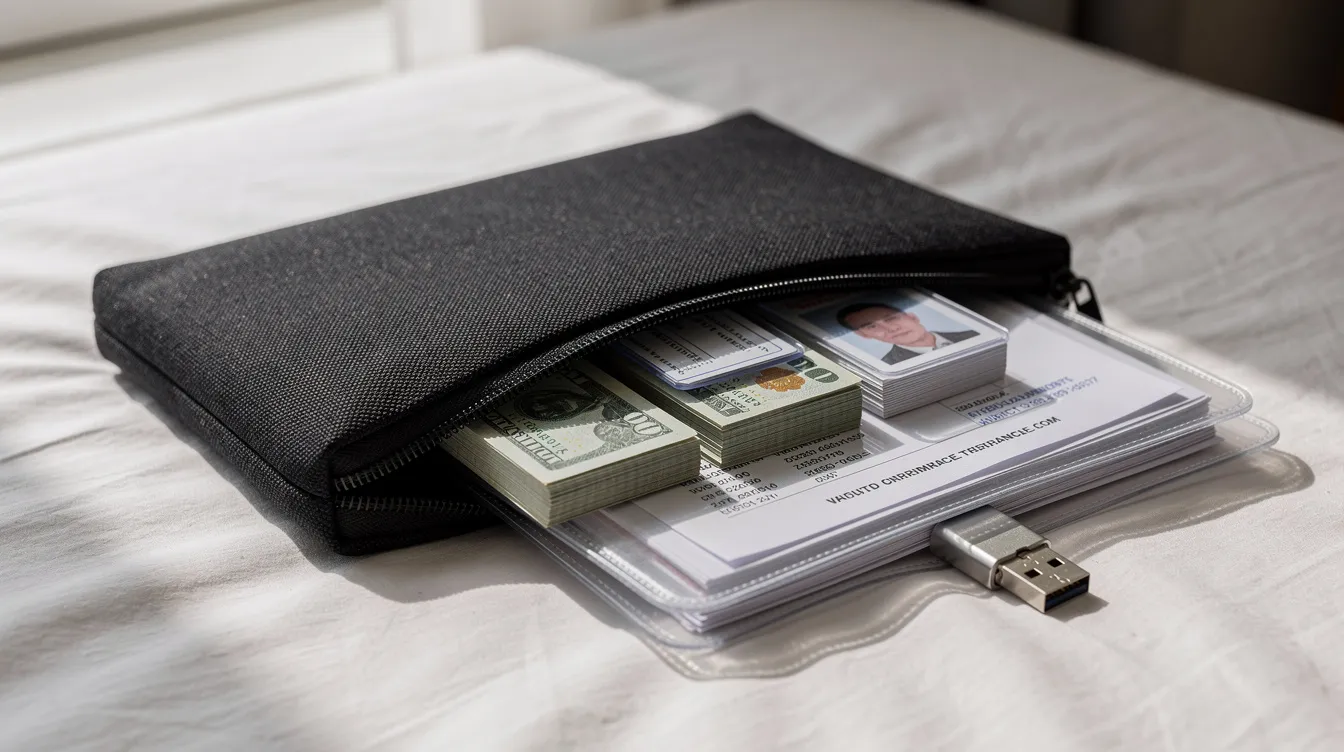
Contents:
- Waterproof, fire-resistant pouch with copies of IDs (including birth certificates), insurance policies, lease, medical records, and emergency contacts
- At least 2 to 3 days' worth of small bills ($1s, $5s, $10s); card networks fail during outages
- List of critical account numbers
- USB drive with encrypted digital copies
Essential items in emergencies should include personal identification and cash. The pouch is thin enough to slip into a laptop bag in seconds. Slim design stores vertically with books. Review contents when IDs, leases, or policies change.
9. Communication and Information Mini-Kit
Include a weather radio in your emergency kit. A battery powered NOAA weather radio picks up alerts on 162.4 to 162.55 MHz even when cell networks are overloaded. Keeping emergency contacts and evacuation maps in the kit is crucial for a person navigating an unfamiliar evacuation route.
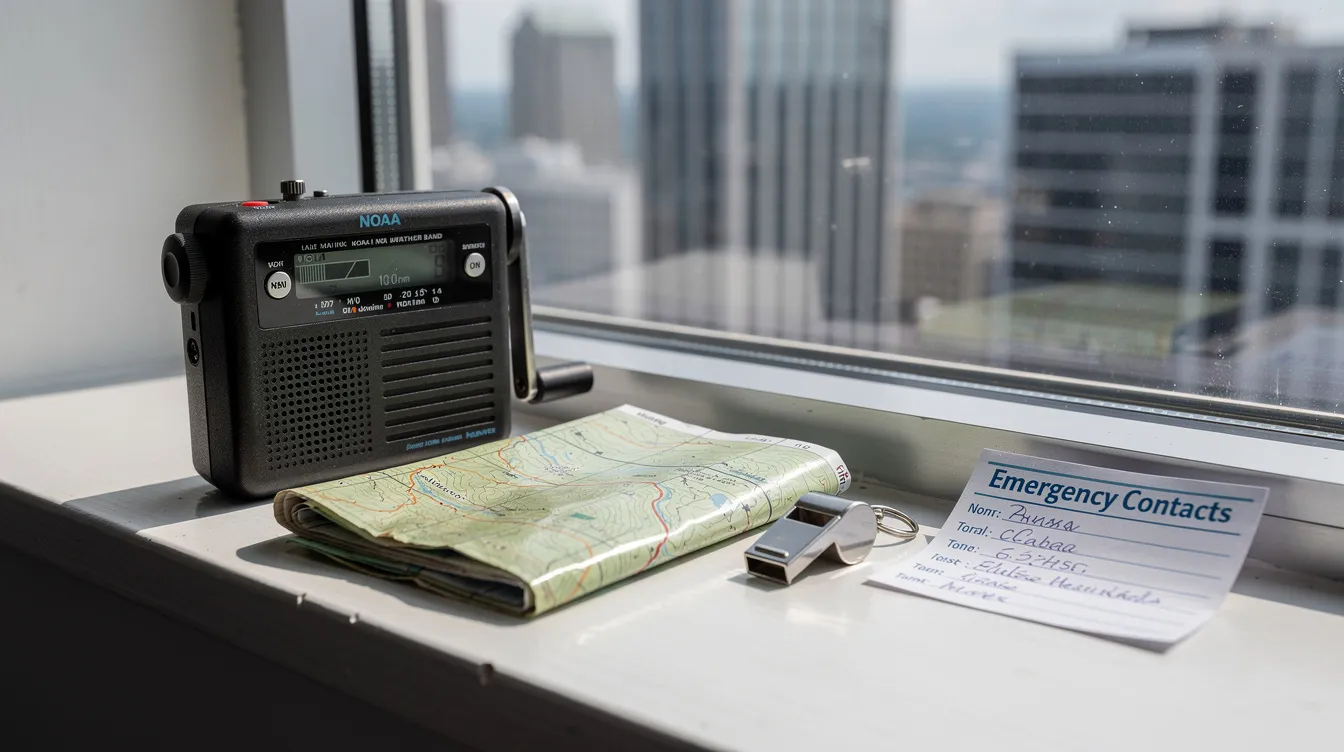
Components:
- Compact NOAA weather radio (battery, solar, or hand-crank) sized to fit in one hand
- Printed local evacuation maps and building exit routes in a small waterproof sleeve
- Written emergency contact card for wallet and fridge
- Whistle clipped to a keychain or go-bag strap
- Two way radios are a good choice for buildings where family members may be on different floors
Paper maps do not die when batteries do. The whistle and contact card weigh almost nothing but aid rescue and reunification during a disaster. These items stack on top of the power kit or fit in a single small pouch.
Limitations: Keep radio batteries fresh; tie into the power section for recharging. Update contact details as people move.
10. Grab-and-Go Personal Essentials Pouch
This is the smallest unit of your survival gear list; it lives by the door and leaves with you every time you evacuate. Emergency kits should be accessible and easy to transport in case of evacuation.
Contents:
- Travel-sized hygiene items: toothbrush, toothpaste, soap sheet pack, small pack of wipes, compact toilet paper or tissue pack
- Spare socks and underwear vacuum-bagged flat
- Basic PPE: 2 to 3 respirators, small hand sanitizer, a pair of work gloves that fold flat
- Copy of keys (home, car, storage) on a backup ring
- Garbage bags for waste disposal and as improvised rain protection
Sanitation supplies should include wet wipes and garbage bags for waste disposal. Emergency kits should contain hygiene supplies to maintain cleanliness during disruptions. The pouch hangs on the same hook as your everyday bag or coat so you can carry it in 30 seconds. It reduces decision fatigue and keeps you prepared during several days at a shelter or a friend's place.
Limitations: Requires discipline to keep it stocked. Some items like wipes dry out over time; check and replace them.
Quick Comparison of the Best Survival Item Categories
| Category | Best For | Fits In |
| Water Storage and Filtration | Municipal water outages | Under-bed or closet floor |
| Shelf-Stable Food Core | 3 to 7 days of no-cook meals | One kitchen cabinet or bin |
| Lighting and Blackout Kit | High-rise and interior blackouts | One shoebox by the door |
| Power and Charging Setup | Phones, radios, laptops running | One drawer |
| Shelter and Warmth Bundle | Cold nights without heat | Top of closet or duffel bag |
| First Aid and Medications | Minor injuries, chronic conditions | One hard case in a backpack |
| Tools and Repair Core | Quick fixes when maintenance is unavailable | One pouch on a closet hook |
| Documents and Cash | Fast, smooth post-disaster recovery | Vertical in a file organizer |
| Communication Mini-Kit | Staying informed when cell service fails | Stacks on power kit |
| Personal Essentials Pouch | Evacuations when every second counts | Hallway hook by the door |
How to Choose the Right Survival Items for Your Space
Choose Based on Your Actual Living Space
Audit your apartment: measure under-bed clearance, count shelf inches in closets, check behind-door space. Dedicate a single "survival zone" (one closet section or under-bed bin) instead of scattering emergency supplies across the apartment. Flat, stackable items suit studios; one-bedroom apartments can use a closet shelf for the full survival kit. Store supplies in a dry place away from direct sunlight and heat sources.
Choose Based on Local Risks and Likely Scenarios
A person in a hurricane zone needs more water (up to a gallon per person per day for seven days). Cold weather blackout risk calls for a heavier shelter and warmth investment. Wildfire smoke zones demand extra respirators. Adjust the survival item list for those who rely on elevators, public transit, or shared laundries; if you cannot carry a bag down 10 flights of stairs, reduce weight and increase portability.
Choose Based on Budget and Timeline
Start with water, light, and basic food in month one. Add power and documents in month two. Build up over time. Being prepared means buying compact, higher-quality survival gear a few items at a time instead of cheap bulk kits that take more space and fail sooner. Regular inspection and maintenance of emergency supplies should be conducted bi-annually to catch expired items, dead batteries, and dried-out wipes.
Which Survival Item Categories Are Best for You Right Now?
Pick your first 2 to 3 priorities based on what worries you most:
- Choose Water + Lighting + Power first if blackouts and infrastructure issues are your top concern.
- Choose Food Core + Personal Essentials Pouch if being stuck at home for several days without grocery access is more likely.
- Choose First Aid + Documents Packet if you already camp or travel and own some gear but lack organized emergency records.
- Choose Shelter and Warmth Bundle if you live in a cold climate or an older, drafty building where life without heat is a real threat.
- Choose Communication Kit once the absolute basics are in place and you want better situational awareness during a disaster.
Treat this survival item list as modular building blocks, not an all-or-nothing project.
Final Thoughts
Small-space survival is about smart selection and smart storage, not sheer quantity. The 10 categories above cover clean water, food, shelter, warmth, medical aid, power, fire safety, information, documentation, and personal hygiene. Start with one shelf or one bin this week. Small Space Emergency will provide additional resources, visual guides, and printable checklists that build on this survival item list so you can protect your household without sacrificing your living space.
Editorial note: this guide provides general preparedness information, not emergency, medical, legal, or engineering advice. Recommendations are cross-checked against public emergency-management guidance and adapted for small-space living. During an active emergency, follow your local authorities and emergency services. See our editorial standards and affiliate disclosure.