Overland First Aid Kit: Compact Medical Readiness for Life on the Road
When you're miles from the nearest hospital on a dusty forest road, a well-stocked kit can mean the difference between a minor setback and a genuine emergency. This listicle walks you through every category, piece of gear, training resource, and photo you need to build or upgrade a compact overland first aid kit - even if your rig is a hatchback and your home is a studio apartment.
Quick Answer: What Your Overland First Aid Kit Must Include
Before we dig into the details, here's your at-a-glance packing checklist. Whether you're assembling your first aid kit from scratch or auditing an existing one, these are the essentials every overland first aid kit must carry:
- 2 pairs nitrile gloves
- 1 trauma shears
- 1 CAT-style tourniquet
- 1 pressure bandage (Israeli-style)
- 1 SAM splint
- Sterile gauze rolls and pads (various sizes)
- Assorted adhesive bandages (including knuckle and fingertip)
- Antiseptic wipes and antibiotic ointment
- Hemostatic gauze (QuikClot or Celox type)
- Oral rehydration salts / electrolyte packets
- Basic medications (ibuprofen, antihistamine, anti-diarrheal)
- Tick remover tool
- Emergency blanket (mylar)
- Wound closure strips
- CPR mask
- Burn gel packets
- Waterproof notepad and pen
An overland first aid kit should bridge the gap between standard roadside kits and wilderness packs, covering both everyday scrapes and major trauma scenarios. A compact kit can contain up to 98 high-quality pieces - the Surviveware Small kit hits exactly that mark - proving you don't need a truck bed to carry serious medical supplies.
At Small Space Emergency, we design around compact storage and multi-use items because emergency preparedness for small spaces has unique guidelines for compact living conditions. The rest of this post is a listicle that walks through categories, specific gear, training paths, and high-quality photos to help you build your own capable, space-efficient aid kit.
Photo 1: Full Overland First Aid Kit in a Compact Rig
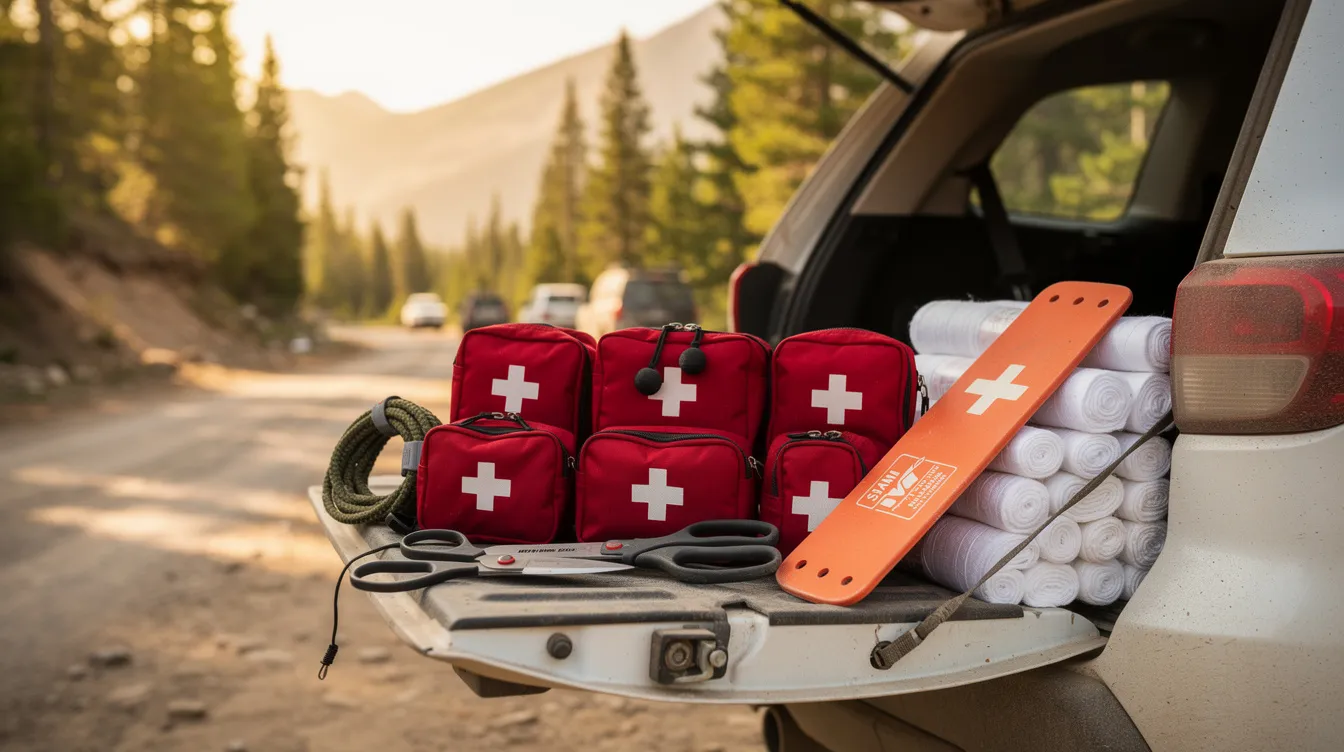
A well-organized medical kit is as vital as a spare tire on any overland trip. Layout your gear before departure to confirm nothing is missing.
Why Overlanders Need a Purpose-Built First Aid Kit
Overlanding is self-supported vehicle travel - often off paved roads, over multiple days, through terrain where definitive medical care may be hours or days away. A generic home aid kit with a handful of band aids and some aspirin won't cut it when you're on a remote desert track in Utah or a winding forest service road in Vermont.
The risks are specific: vehicle rollovers, campfire burns, heavy lacerations from recovery gear, dehydration in triple-digit heat, and allergic reactions far from any pharmacy. A comprehensive overland first aid kit should address trauma and environmental exposures alike. That's the territory of adventure medical kits - purpose-built for delayed evacuation, variable weather, and limited room.
Small Space Emergency exists for exactly this overlap: helping people in small vehicles and compact apartments build medical readiness without surrendering every cubic inch of cargo space. You don't need an expedition truck. You need smart gear and smarter organization.
Photo 2: Compact First Aid Kit Stored in a Small Vehicle
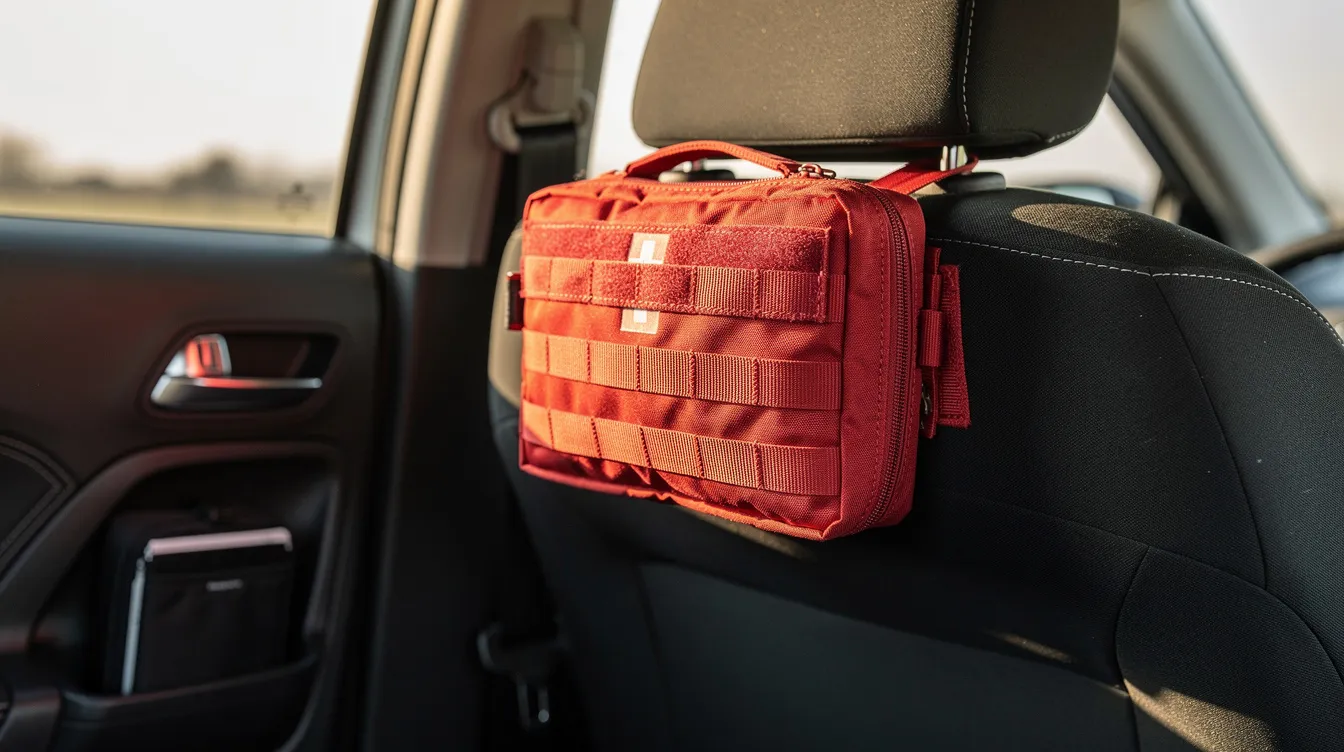
Thoughtful placement makes your first aid kit accessible within seconds - even in a cramped vehicle where every inch of room counts.
Core Categories: How to Structure an Overland Medical Kit
Under stress, you won't remember where you tossed that gauze roll. Modular organization of first aid gear allows for quick access during emergencies. Divide your supplies into these core groups:
| Category | Example Items |
| Minor Wounds | Adhesive bandages, antiseptic wipes, wound closures |
| Burns & Blisters | Burn gel, moleskin, hydrogel dressings |
| Medications | Ibuprofen, antihistamines, anti-diarrheal |
| Musculoskeletal | SAM splint, elastic wraps, triangle bandages |
| Heavy Trauma | Tourniquet, hemostatic gauze, chest seal |
| Environmental | Emergency blanket, electrolyte tablets, tick remover |
| Tools & Documentation | Trauma shears, thermometer, reference guide |
Organize supplies by injury type for quick retrieval. Use zippered pouches and label compartments for easy access during emergencies. This approach mimics the injury-specific systems used in professional adventure medical kits and first aid bags.
Keep a printed content map - essentially a first aid manual for guidance in emergencies - inside the lid so any person in the vehicle can locate what they need, even if the primary kit owner is the one who's injured.
Photo 3: Top-Down Layout of Organized Medical Categories
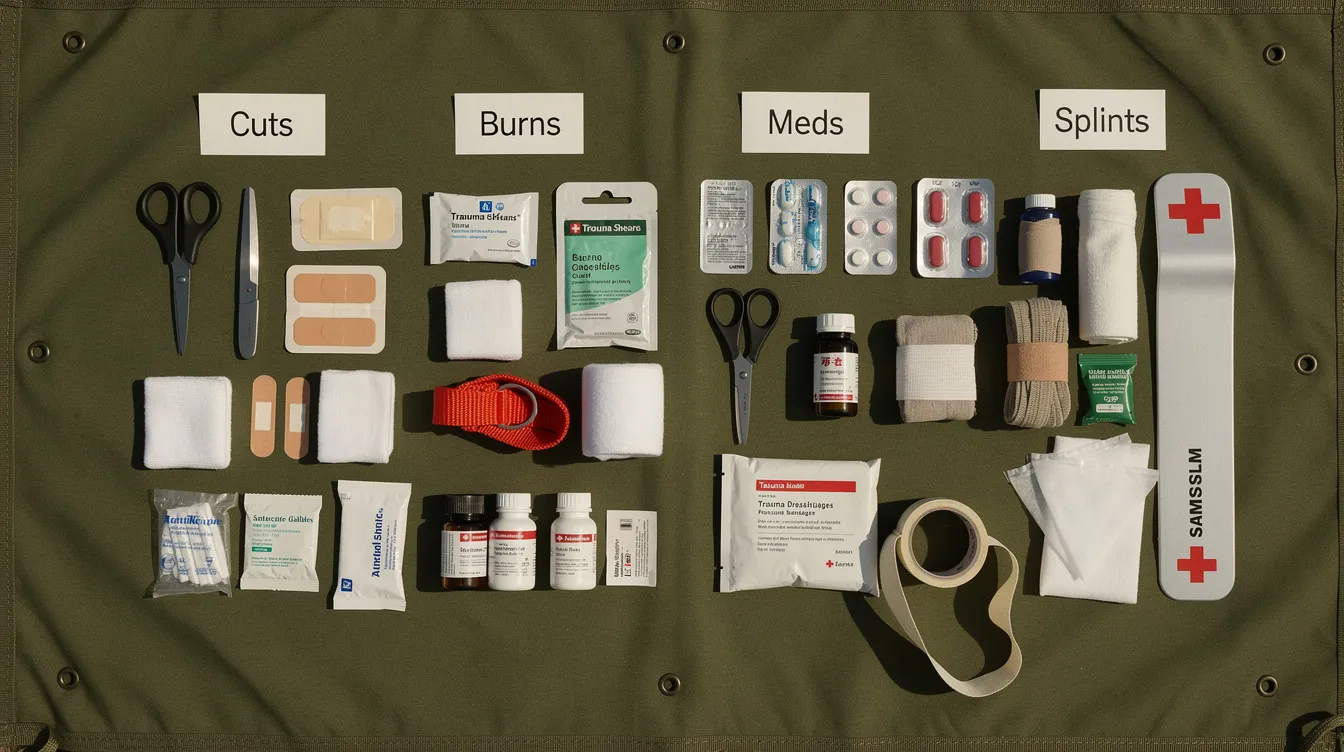
Grouping supplies by injury type speeds up response time and reduces errors when adrenaline is high.
Minor Wounds, Scrapes, and Everyday First Aid
Daily camp injuries are far more common than dramatic emergencies. A sliced finger while prepping dinner, a scraped knee during a trail walk, a small cut from a zip tie - these are the bread and butter of any first aid situation.
Your kit should include:
- Assorted adhesive bandages (knuckle, fingertip, standard - 15–20 total)
- Sterile gauze pads (2×2" and 4×4")
- Non-stick wound pads
- Medical tape
- Antiseptic wipes
- Small bottle of povidone-iodine
- Antibiotic ointment
- Wound wash saline
- Closure strips for deeper cuts
Adhesive bandages and sterile gauze pads are essential for minor wound care, and compact, single-use packets save space in small kits. Proper first aid means clean the wound, control bleeding with pressure, cover it, and monitor for infection - even when a hospital is hours away. Keep a smaller day-use pouch inside the main aid kit for hikes away from the rig so you don't haul the entire pack on a short walk.
Burns, Blisters, and Camp Kitchen Injuries
Camp stoves, fire pits, exhaust pipes, and long driving days create a steady stream of burns and foot blisters. An overland first aid kit may include burn treatment supplies for campfire injuries - and it absolutely should.
Stock these items in a dedicated burns and blisters pocket:
- Burn gel packets (2–3)
- Hydrogel burn dressings
- Moleskin or blister pads
- Second-skin style dressings
- Aloe-based gel
- Small non-adherent dressings
For a hot-pan burn, cool the area with clean water for at least ten minutes, apply burn gel, cover with a non-adherent dressing, and monitor for signs of infection. For blisters, prevention is the front line: liner socks, early taping of hot spots, and applying blister pads before the skin breaks. Even in small rigs, a dedicated pocket for this gear keeps it easy to find when it matters.
Photo 4: Treating a Campfire Burn or Blister
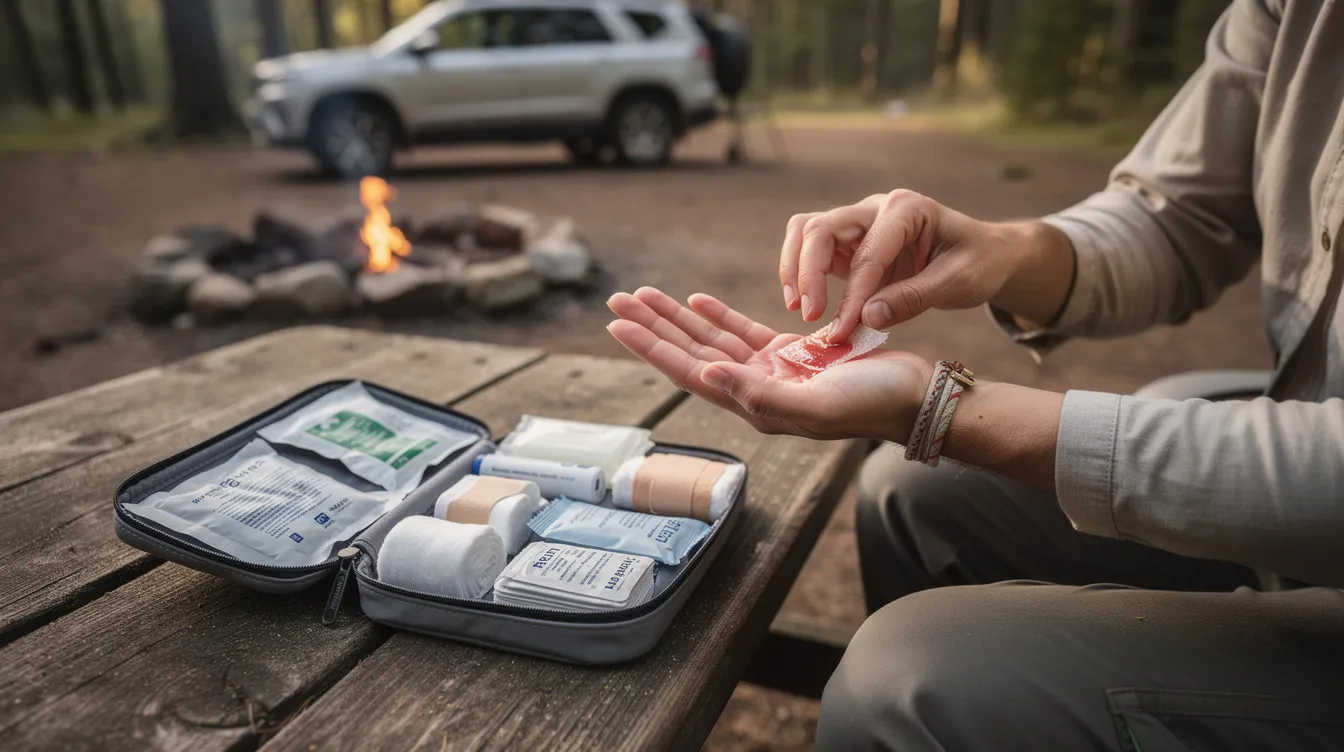
Quick treatment of minor burns can prevent lost travel days and serious infection on long trips.
Medications: Building a Tiny Overland Pharmacy
When you're hours from the nearest pharmacy, a curated set of over-the-counter medications becomes essential. Compact kits often lack over-the-counter medications like ibuprofen, so you'll need to add these yourself to meet your medical needs.
Build your tiny pharmacy with:
- Ibuprofen and acetaminophen (pain/fever, 10–20 doses each)
- Baby aspirin (cardiac concerns)
- Antihistamines - cetirizine (non-drowsy) or diphenhydramine
- Antacids
- Anti-diarrheals (loperamide)
- Electrolyte tablets or packets
- Motion-sickness tablets
Check expiration dates of medications regularly - at minimum once per year. Heat and moisture accelerate degradation, so use a compact, waterproof pill organizer with printed medication names and doses. For some overlanders, prescription adventure medical kits (emergency antibiotics, for example) may be appropriate after a physician consultation. Personal medications and emergency contacts should be included in every overland first aid kit, stored where any travel partner can find them.
Photo 5: Compact Medication Organizer for Overland Travel
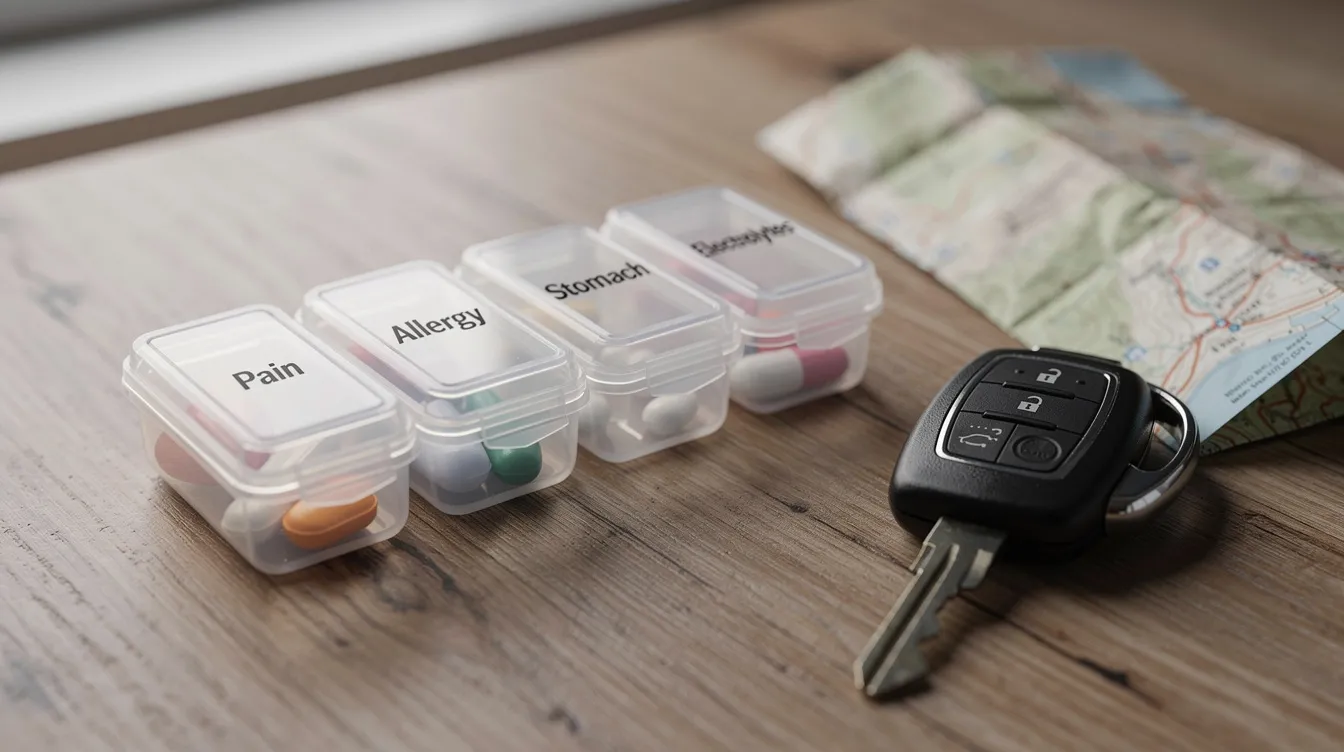
A tiny, well-labeled medication module turns any basic first aid kit into a more capable medical kit.
Musculoskeletal Injuries: Sprains, Strains, and Splints
Twisted ankles on rocky trails and falls during vehicle recovery are common overland injuries. Tools for splinting and immobilizing injuries are crucial for orthopedic emergencies when evacuation could take hours.
Pack these items:
- SAM splint (packs flat, weighs under a pound)
- Finger splint
- Elastic ACE bandages
- Triangle bandages (at least 2)
- Athletic tape or cohesive wrap
- Instant cold packs (1–2)
A SAM splint is essential for stabilizing broken bones in compact kits - its malleable aluminum core shapes around any limb, and it slides behind panels or under cargo floors without eating up space. Practice at home on a friend or family member before relying on splinting skills in the wilderness. If a fracture is suspected, immobilize the joint above and below the break, manage pain, and decide whether self-evacuation or waiting for rescue is the safer course.
Photo 6: Using a SAM Splint on the Trail
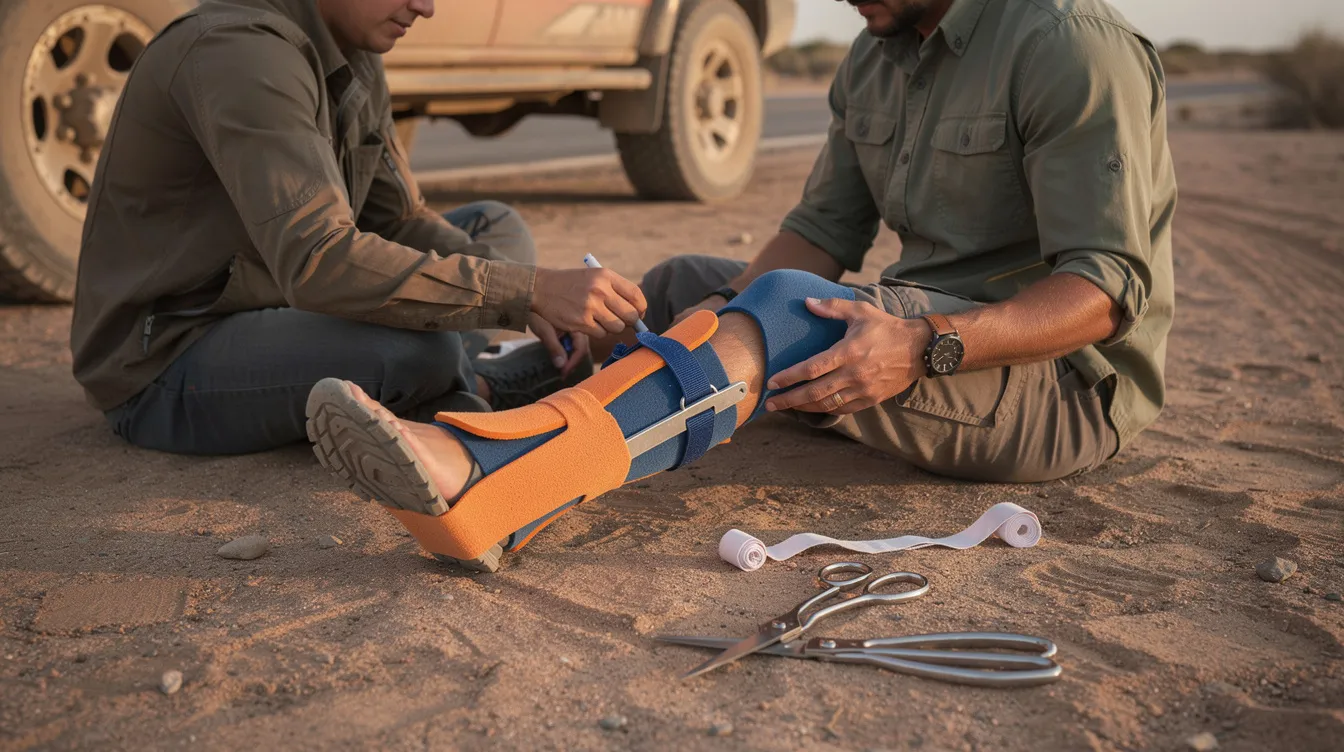
Learning basic splinting is a core wilderness first aid skill - practice it before you need it on the trail.
Heavy Trauma: Building a Capable, Compact Trauma Module
Rare but real: a winch cable snaps, a chainsaw kicks back, or a vehicle rolls. These are major trauma events where minutes matter. Trauma supplies in a first aid kit should include tourniquets and hemostatic gauze - the two items most likely to save a life from severe hemorrhage.
Your heavy trauma pouch should contain:
- CAT-style tourniquet (1–2)
- Hemostatic gauze (kaolin or chitosan-based)
- Pressure bandage
- Large trauma dressings
- Chest seal (vented)
- Nitrile gloves (2 pairs)
- Eye protection
- Trauma shears
Hemostatic dressings like QuikClot Combat Gauze have shown approximately 88.6% effectiveness in controlling junctional hemorrhage when conventional pressure failed. These tools require training - Stop the Bleed courses can be completed in about an hour. Store this trauma pouch in a clearly marked, easy-to-grab location: mounted to the back of a seat or inside a rear-door pocket for rapid access in any vehicle.
Photo 7: Dedicated Heavy Trauma Pouch
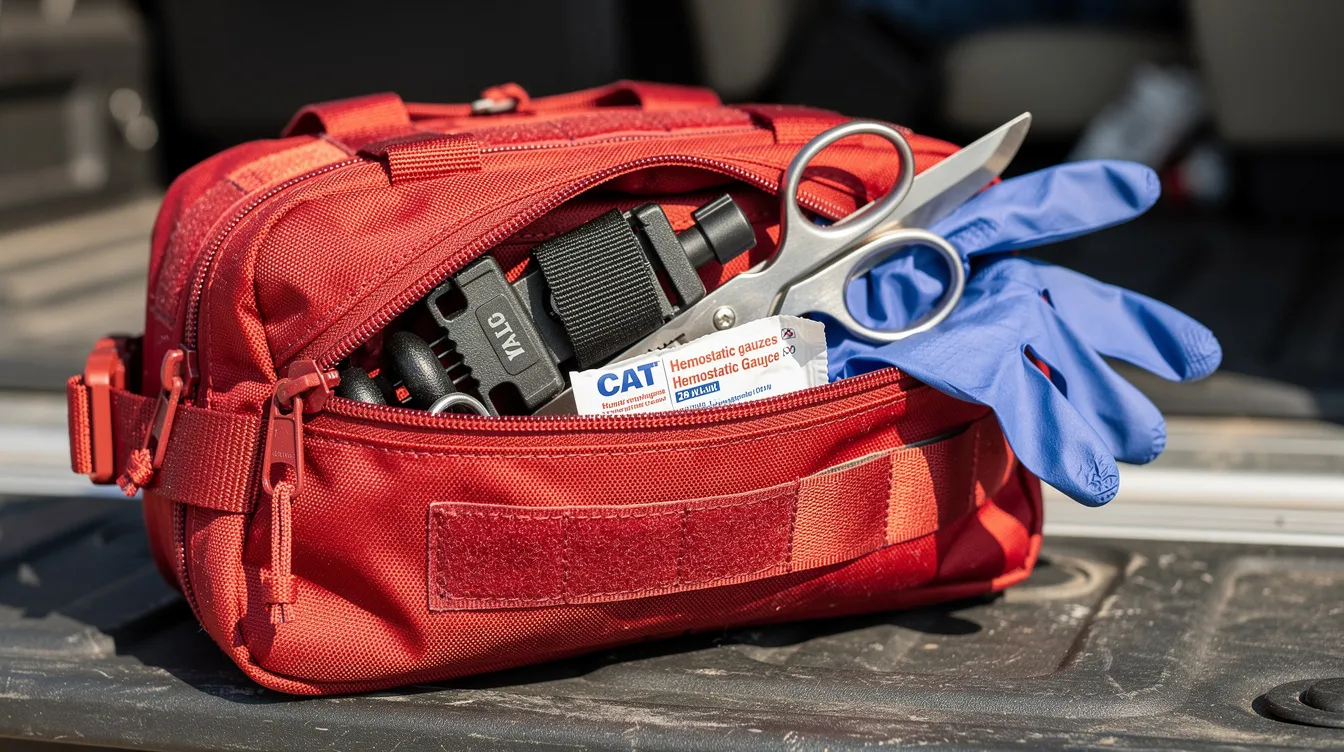
A dedicated heavy trauma module lets overlanders respond quickly to severe bleeding while other supplies stay organized.
Environmental & Wilderness First Aid: Heat, Cold, and Bites
Environmental threats are more common than dramatic trauma on most overland trips. Hypothermia at altitude, heat exhaustion in the desert, tick-borne diseases in wooded regions - all demand specific gear and awareness.
Your environmental module should include:
- Emergency mylar blankets (reflects up to ~90% of radiant body heat)
- Hand and body warmers
- Instant cold packs
- Oral thermometer
- Oral rehydration salts and electrolyte packets (important for rehydration in case of heat exhaustion)
- Sunblock and lip balm with SPF
- Insect repellent
- Poison ivy/oak cleanser
- Tick remover tool
- Sting-relief wipes
Emergency mylar blankets are used for preventing hypothermia in outdoor environments - they're waterproof, windproof, and compress to palm-sized pouches. However, they don't insulate against conductive heat loss from cold ground, so pair them with insulating layers. Hydration and food security during emergencies are vital considerations for overland trips, making electrolyte tablets a non-negotiable addition. These environmental tools turn a basic first aid kit into a complete wilderness first aid resource.
Photo 8: Environmental Gear in Use
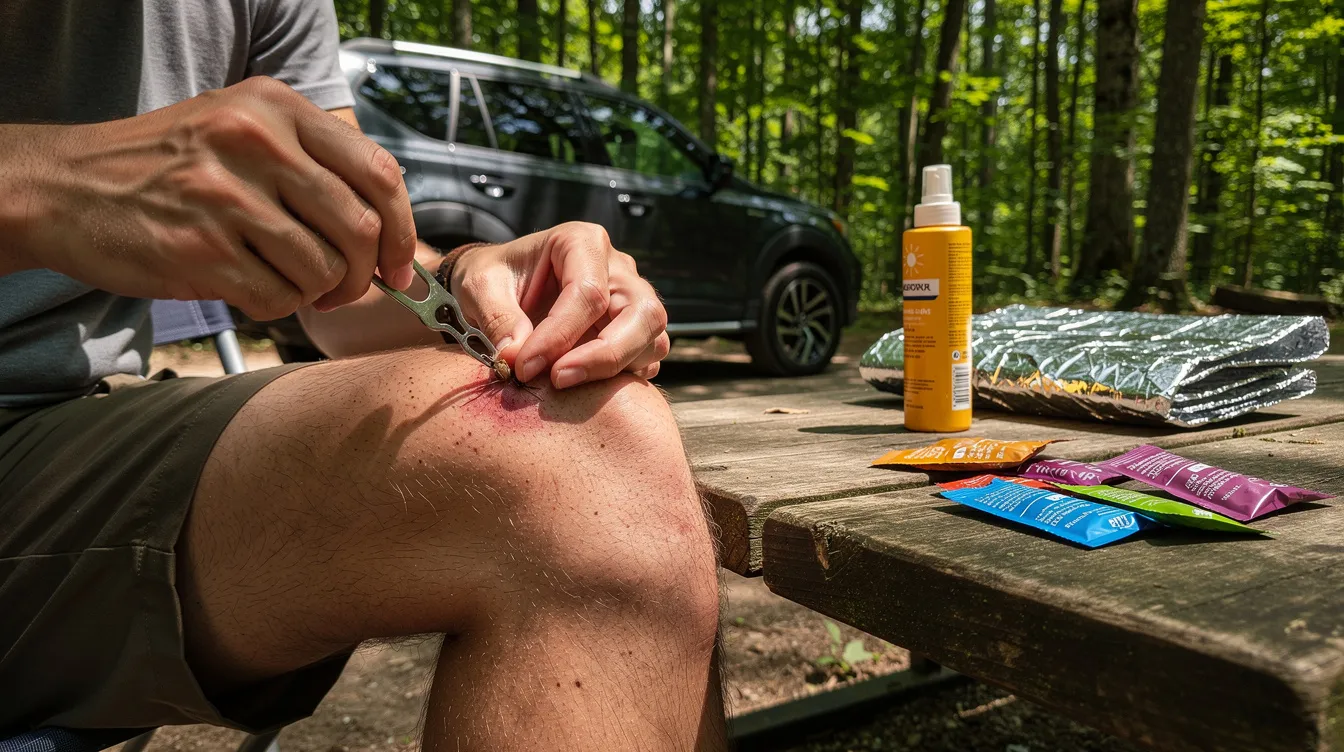
Environmental threats deserve equal attention in your overland aid kit - ticks, sun, and cold cause more lost trip days than any other category.
Tools, Documentation, and Smart Organization
The right tools and layout often matter more than sheer volume of supplies. A few well-chosen instruments and a clear organizational system will outperform a bloated, disorganized bag every time.
Essential tools:
- Trauma shears
- Fine-tip tweezers
- Digital thermometer
- Penlight
- Small signal mirror
- Safety pins (4–6)
- Waterproof notepad with pen
Essential documentation:
- Printed first aid quick-reference guide with instructions
- Personal medical info sheets for each traveler
- Emergency contact numbers (local SAR, poison control, insurance)
Use labeled pouches, color coding, and see-through mesh compartments to keep aid bags intuitive for everyone in the vehicle. At Small Space Emergency, we recommend periodic mock drills at home - practice finding and using items quickly in tight vehicle spaces. This is the kind of fun, low-pressure exercise that pays off enormously under real stress.
Photo 9: Open Kit Showing Labels and Reference Guides
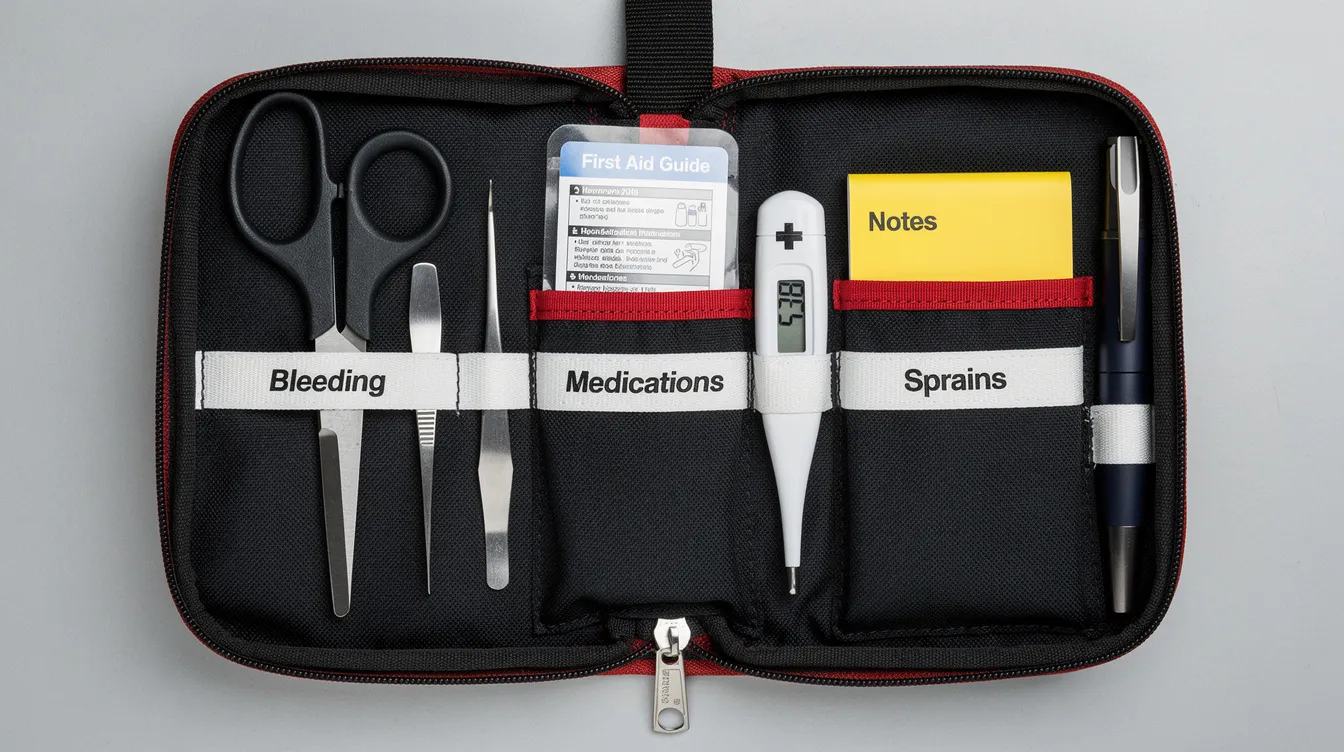
Clear labeling and a simple reference card help even untrained passengers perform effective first aid - don't forget to include one.
Space-Saving Strategies for Small Rigs and Tiny Homes
Not everyone travels in a large overland truck. Many of our readers use compact SUVs, wagons, or sedans - and a first aid kit for small spaces should focus on compact storage and multi-use items.
Practical space-saving tips:
- Vacuum-seal soft items like gauze and emergency blankets to cut volume by half
- Use slimline MOLLE-backed pouches behind seats (the Homestock+ Professional kit is designed to attach to car headrests - a great option for this setup)
- Stack shallow bins under a false cargo floor
- Keep a primary kit in the vehicle plus a smaller grab-and-go pouch for hikes
- Build overlap between your vehicle overland kit and an apartment-based emergency medical kit
Audit your kit seasonally. Remove bulky duplicates, toss expired stock, and replace with travel-sized, single-use packets. A modular system works best: the main kit stays in the rig while a smaller adventure medical pouch clips off for quick side trips. This way, you carry comprehensive equipment without losing cargo room for camp gear and water.
Photo 10: Small-Space Storage Solutions in a Tiny Overland Setup
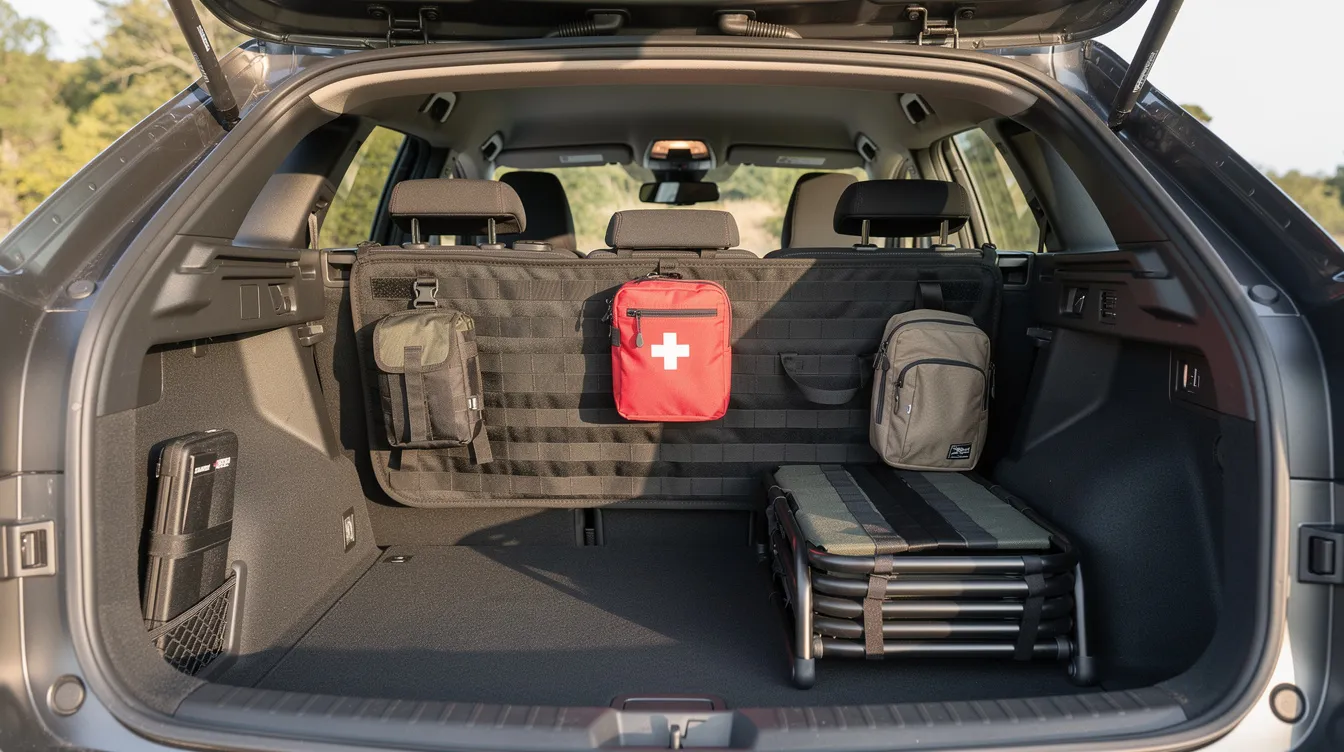
Smart organization lets you carry a serious medical kit even in the smallest rigs or studio apartments.
Training: Turning Gear into Real-World Capability
Heavy trauma tools and advanced wilderness first aid items are only as good as the user's skills. Situational training in first aid is essential for effective emergency response - without it, a tourniquet is just a strap.
Recommended training paths:
| Course | Duration | Focus |
| Basic First Aid / CPR | 4–8 hours | Foundational skills, CPR mask use |
| Stop the Bleed | ~1 hour | Hemorrhage control (pressure, packing, tourniquet) |
| Wilderness First Aid (WFA) | 16–25 hours | Remote assessment, wound care, environmental emergencies |
| Wilderness First Responder (WFR) | 72–80 hours | Prolonged patient care, complex decision-making |
Many urban overlanders can take weekend-based courses before big trips, making small-space city life compatible with strong field medical training. Practice regularly: applying a tourniquet, using a SAM splint, and running mock scenarios with travel partners. Small Space Emergency content is designed to support this skill-building mindset, not replace proper training.
Photo 11: Hands-On Training with Overland Medical Gear
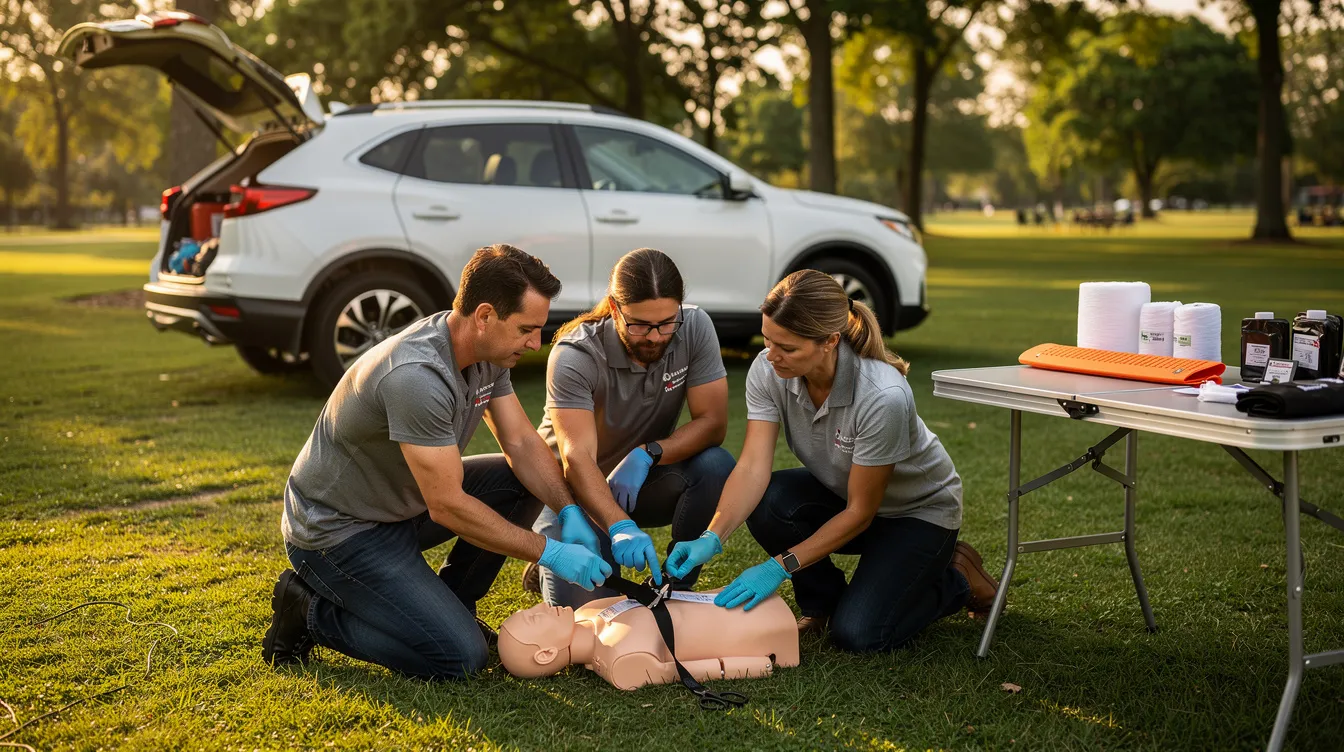
Even a half-day class can dramatically improve how well your overland first aid kit performs when it matters most.
Customizing Your Overland First Aid Kit for Your Trip
No pre-made aid kit fits every trip, vehicle, or medical history. Consider personal needs when customizing first aid kits - what works for a solo weekend in the desert won't cover a family expedition through the mountains.
Key customization factors:
- Region and climate: Customize kits based on the environment you will be in. Add a snake bite kit if traveling in snake-populated areas. Desert trips demand extra electrolytes and sun protection; alpine routes need altitude meds.
- Group size: The Adventure Medical Kits Mountain Series serves up to 14 people - if you're traveling with a large group, scale up. The Adventure Medical Kits Mountaineer serves up to 14 individuals for 28 days on extended expeditions.
- Personal medical conditions: Include specific medications for allergies in your first aid kit. Epi pens (with prescription), inhalers, glucose tablets, and diabetes supplies are non-negotiable for those who need them.
- Kids or pets: Add pediatric meds, dog-safe antiseptic, and paw balm.
- Trip length: Long trips demand deeper stock of consumables.
For lightweight setups, the Adventure Medical Kits Mountain Series Hiker weighs only 10 ounces - a great option for minimalists. The Adventure Medical Kits Ultralight/Watertight .7 is very lightweight for fast-and-light missions, while the Mini Medical Kit is designed for quick hikes and minor injuries. If you want advanced tools in a single pack, the MyMedic MyFAK weighs 31 ounces and includes advanced tools, though it's bulky for truly small rigs. For home use, the Johnson & Johnson All-Purpose kit is ideal for at-home use but won't cut it on the trail. Start with a solid base first aid kit, then layer in modules for heavy trauma, wilderness first aid, or pet care. Review and update before each new season or major route change - don't wait until departure day to discover you're missing something essential.
Photo 12: Personalized Overland First Aid Kit Loadout
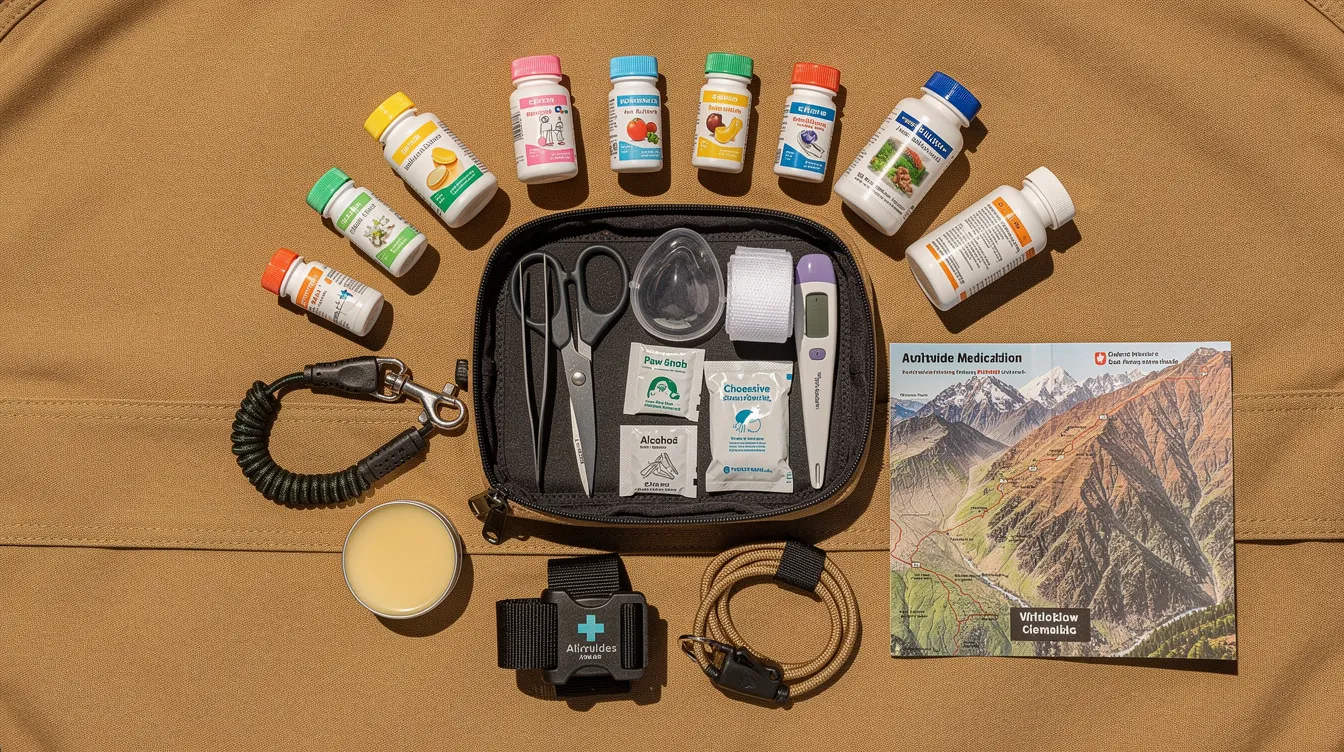
Tailoring your first aid kit to your travelers, vehicle, and destination is the final step in serious overland preparedness.
Conclusion: A Compact, Capable Overland First Aid Kit for Every Journey
An overland first aid kit is a critical piece of safety equipment, equal in importance to recovery tools, navigation gear, and water storage. Overland first aid kits should have items tailored for injuries likely to occur in remote settings - from minor scrapes to life-threatening hemorrhage to environmental illness.
Even in small vehicles and tiny homes, smart organization and modular design enable a robust medical kit without sacrificing the space you need for food, water, and gear. Use the quick-answer checklist at the top of this post to audit your current kit, then work through each section to upgrade your supplies, skills, and storage.
Small Space Emergency specializes in helping small-home and small-vehicle travelers build compact medical kits and broader emergency systems - because being prepared shouldn't require a warehouse.
Treat your overland first aid kit as a living system you refine after each trip. Check expiry dates, replace what you used, add what you wished you had, and stay safe out there. Hope for the best, but pack like a person who knows better. Your next line of defense is the gear in that pouch and the training in your head - make both count.
Editorial note: this guide provides general preparedness information, not emergency, medical, legal, or engineering advice. Recommendations are cross-checked against public emergency-management guidance and adapted for small-space living. During an active emergency, follow your local authorities and emergency services. See our editorial standards and affiliate disclosure.