Wildfire Packing List: What to Put in Your Go Bag (Especially for Small Spaces)
Wildfire season doesn't wait for you to get organized. If you live in an apartment, condo, or tiny home, the idea of storing emergency supplies can feel impossible-but it doesn't have to be. This wildfire packing list from Small Space Emergency gives you a compact, apartment-friendly game plan for assembling a go bag that actually fits your life.
Key Takeaways
- A go bag should be prepared before wildfire threats arise-not when smoke is already visible. Go bags help reduce hesitation during evacuation and keep you focused when seconds count.
- This wildfire evacuation checklist is designed by Small Space Emergency specifically for apartments, condos, and small homes where storage is tight.
- Each adult should ideally have their own go bag. Every pet and child needs a dedicated kit or pouch, packed and ready before wildfire season begins (May–October in most U.S. regions).
- The most critical categories: important documents, medications, water, a first aid kit, respiratory protection, and communications gear.
- Store go bags near primary exits for quick access. Even a small, well-organized bag dramatically improves safety, speed, and calm during a sudden evacuation.
What Is a Wildfire Go Bag and Why It Matters
A wildfire go bag is a pre-packed, grab-and-go kit built for sudden wildfire evacuation. It's different from a larger emergency supply kit you might store in a closet for long-term sheltering. The go bag is lightweight, portable, and covers 24–72 hours away from home.
Preparing for a wildfire evacuation requires quick organization and essential supplies. Wildfires can change conditions rapidly, requiring immediate evacuation-sometimes in under 30 minutes. During the 2018 Camp Fire, fire reached populated communities within one hour of ignition, blocking roads and trapping residents. Between 2000 and 2020, nearly 1,000 wildfires in California alone triggered evacuation orders, many with minimal warning.
A well-organized evacuation plan is essential for individuals living in small spaces or urban areas. Creating a dedicated evacuation communication plan is a proactive safety measure-know who to call, where to meet, and which evacuation routes to take before the alert hits your cell phone. Evacuation orders should always be taken seriously, every single time.
At Small Space Emergency, every recommendation is optimized for compact gear and limited storage. No garage? No problem.

Photo Guide: 10 Visual Ideas for a Wildfire-Ready Go Bag
This section is a visual listicle showing exactly what a packed go bag and wildfire evacuation checklist look like in real life. Each photo concept maintains a consistent style: sharp focus, HDR, photorealistic, slightly desaturated, and natural lighting.
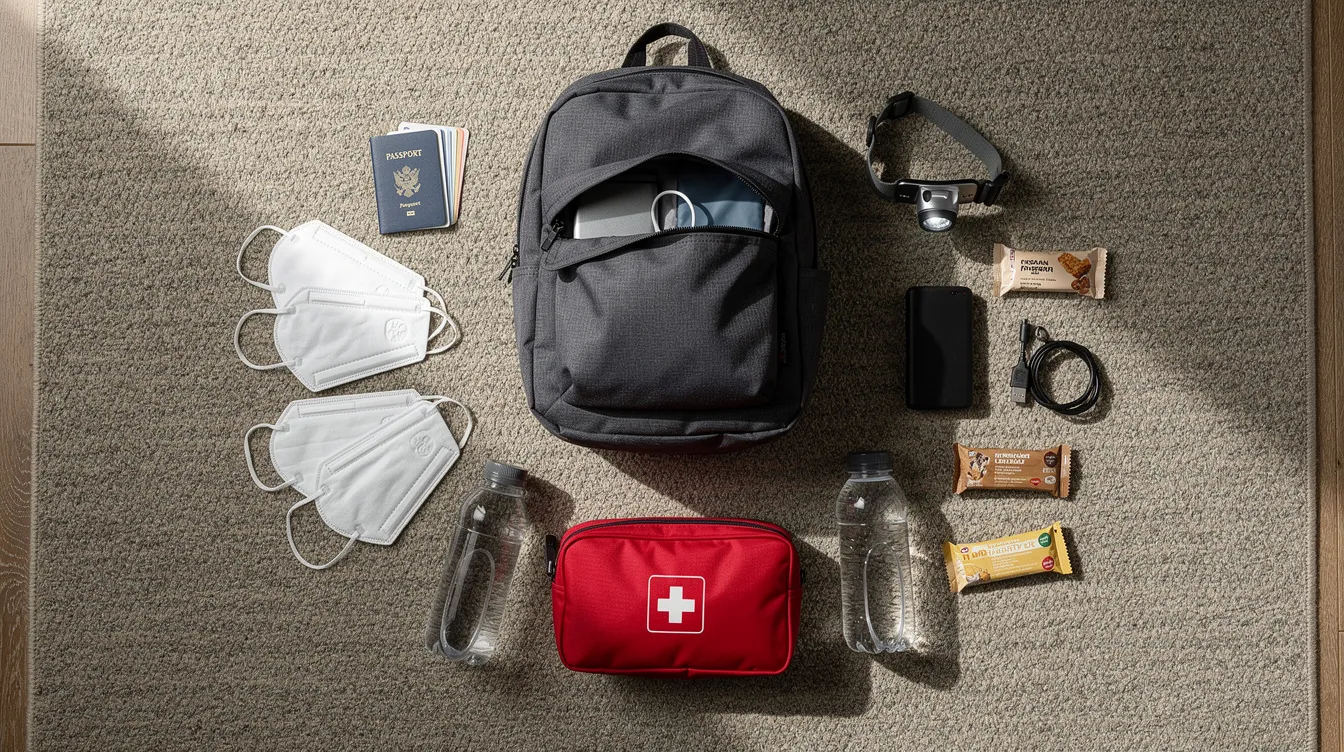
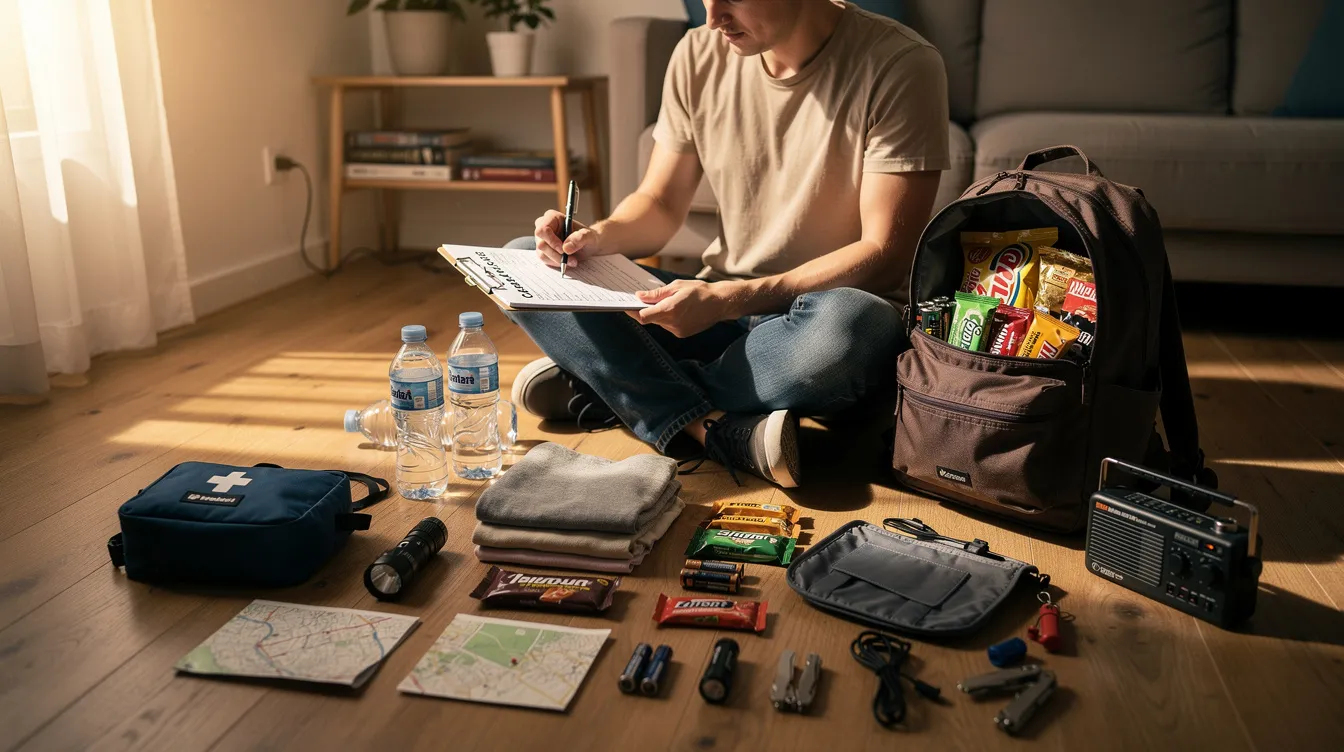
1. The Complete Flat-Lay Overhead shot of every essential item laid out around an open backpack on a small apartment rug-passports, masks, headlamp, power bank, first aid kit, and snacks all labeled and visible.
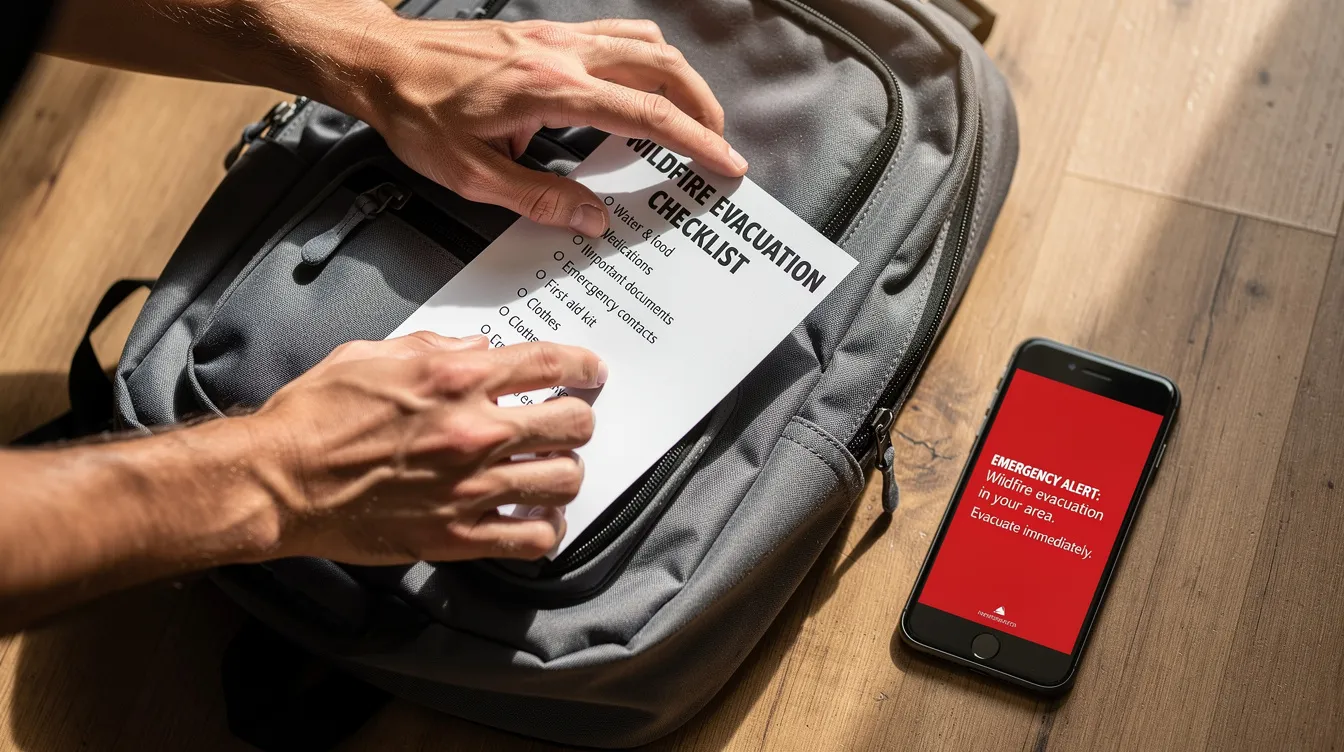
2. Checklist in Hand Close-up of hands placing a printed bag checklist on top of a half-zipped backpack, with a smartphone showing evacuation alerts on screen.
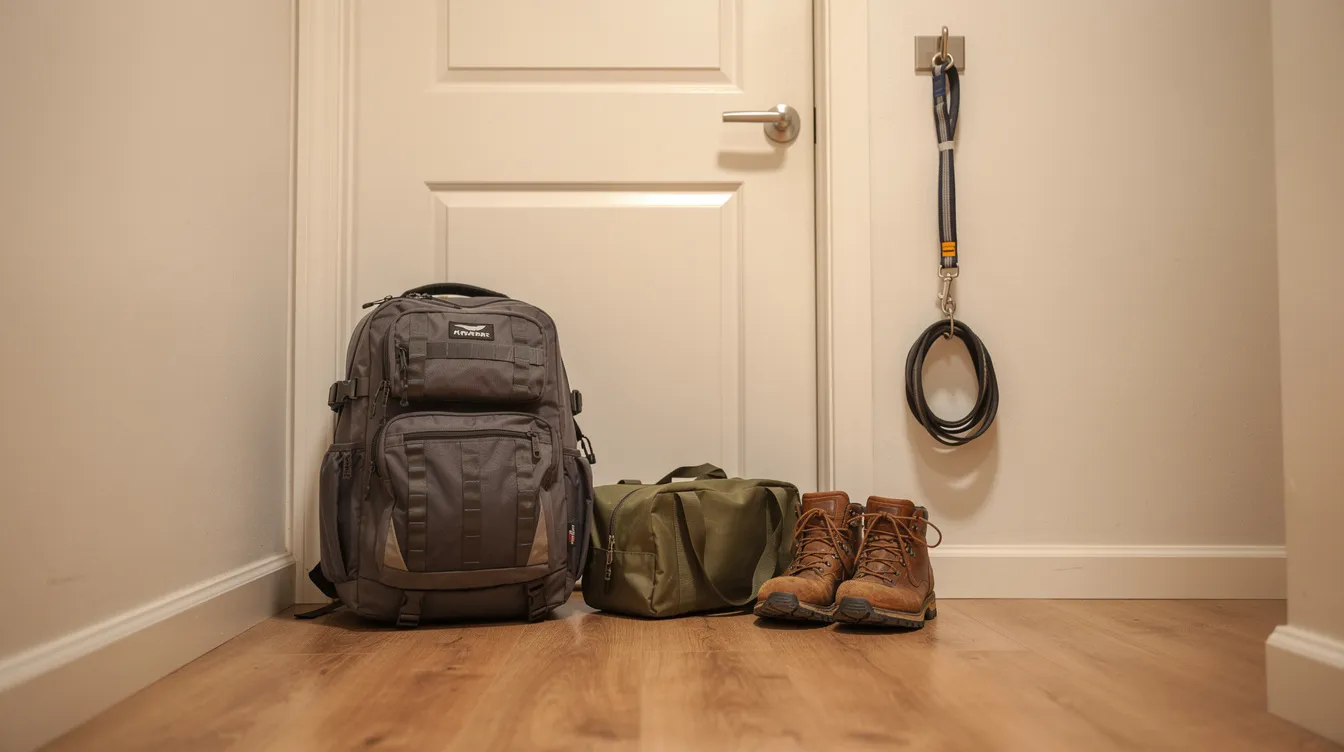
3. Hallway Ready A narrow apartment hallway with two go bags-adult and child size-by the front door, next to sturdy shoes and a leash.
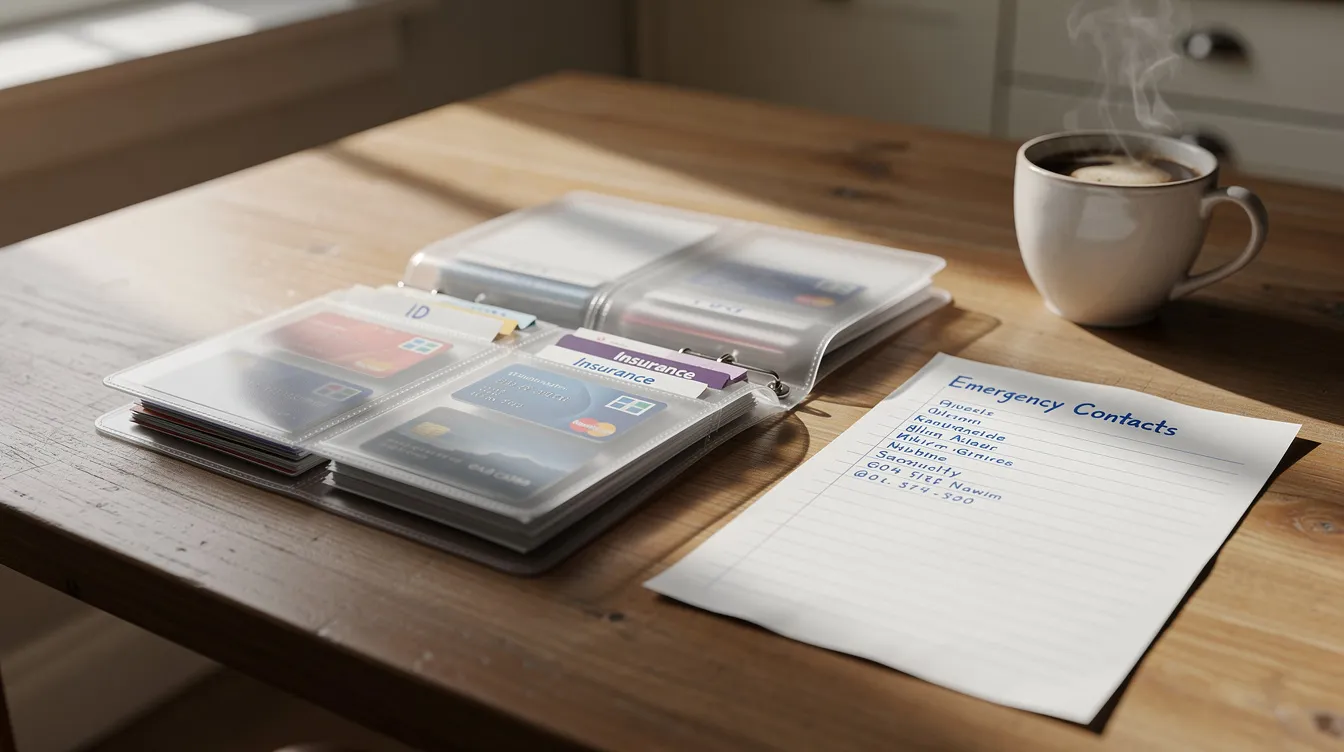
4. The Grab-and-Go Folder Kitchen table with a compact document folder open, showing IDs, insurance policies, and an emergency contact list beside a cup of coffee.
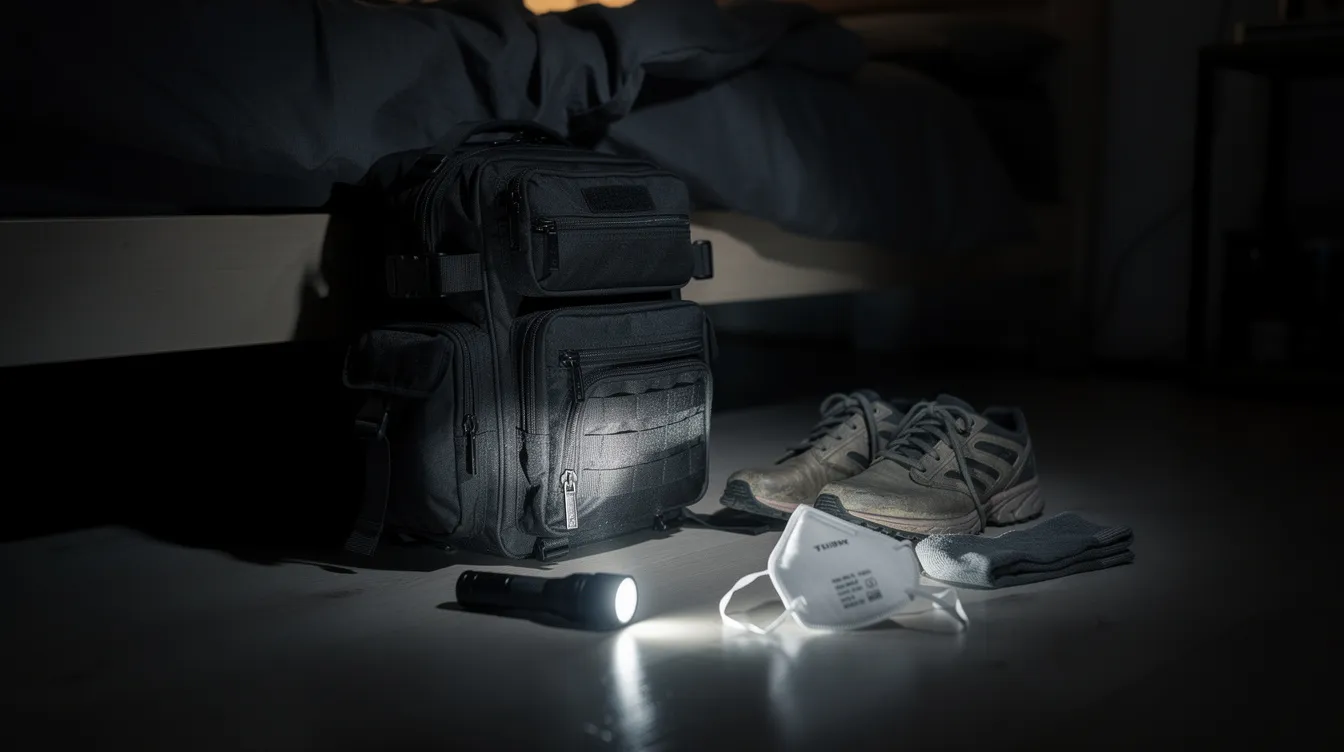
5. The 2 AM Scenario Nighttime bedroom shot: go bag on the floor beside the bed, illuminated by a flashlight, with shoes, socks, and a mask ready for immediate evacuation.
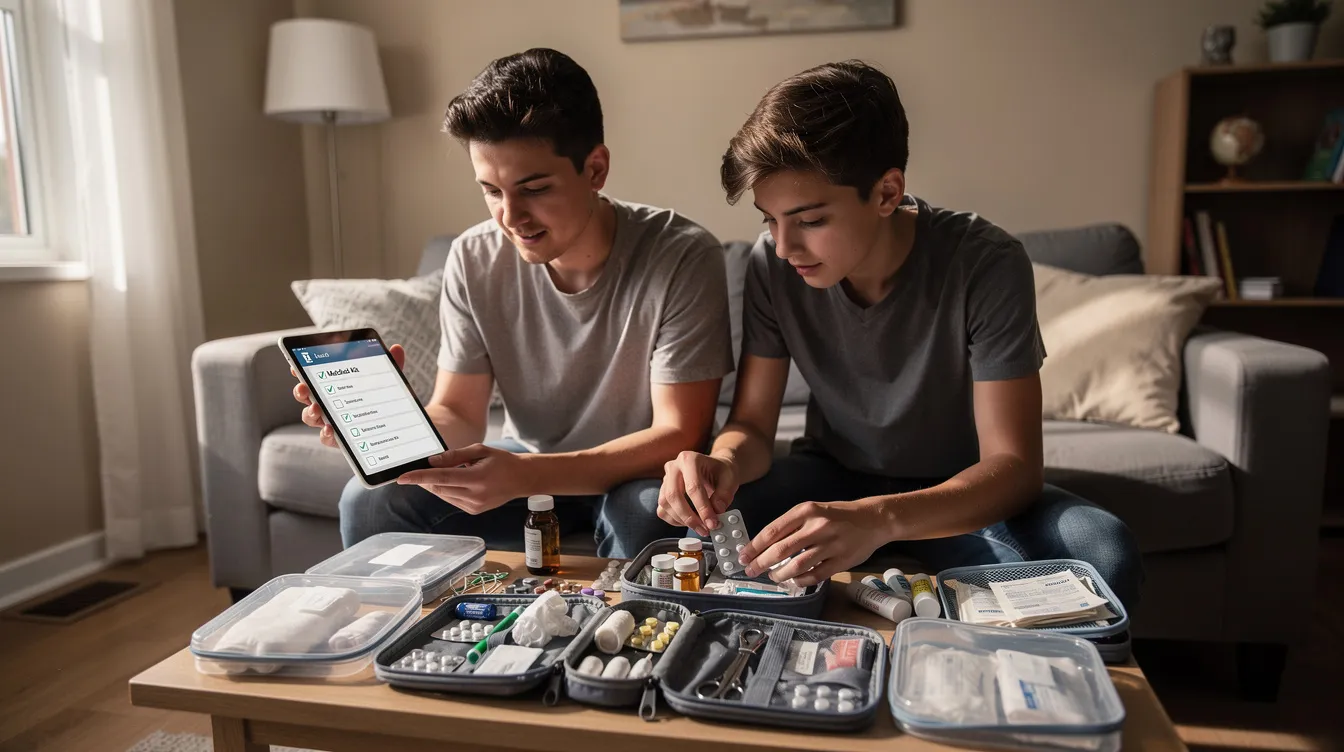
6. Family Prep Session Parent and teenager checking off a checklist on a tablet while packing medications and a first aid kit into separate pouches.
7. Pet Station Cat carrier and dog go bag with collapsible bowls, pet food in zip bags, copies of vet records-all staged by a balcony door with hazy skies outside.
8. Minimalist Closet Storage Two backpacks and a labeled plastic bin ("Water & Food 72 Hrs") stacked efficiently on an upper closet shelf.
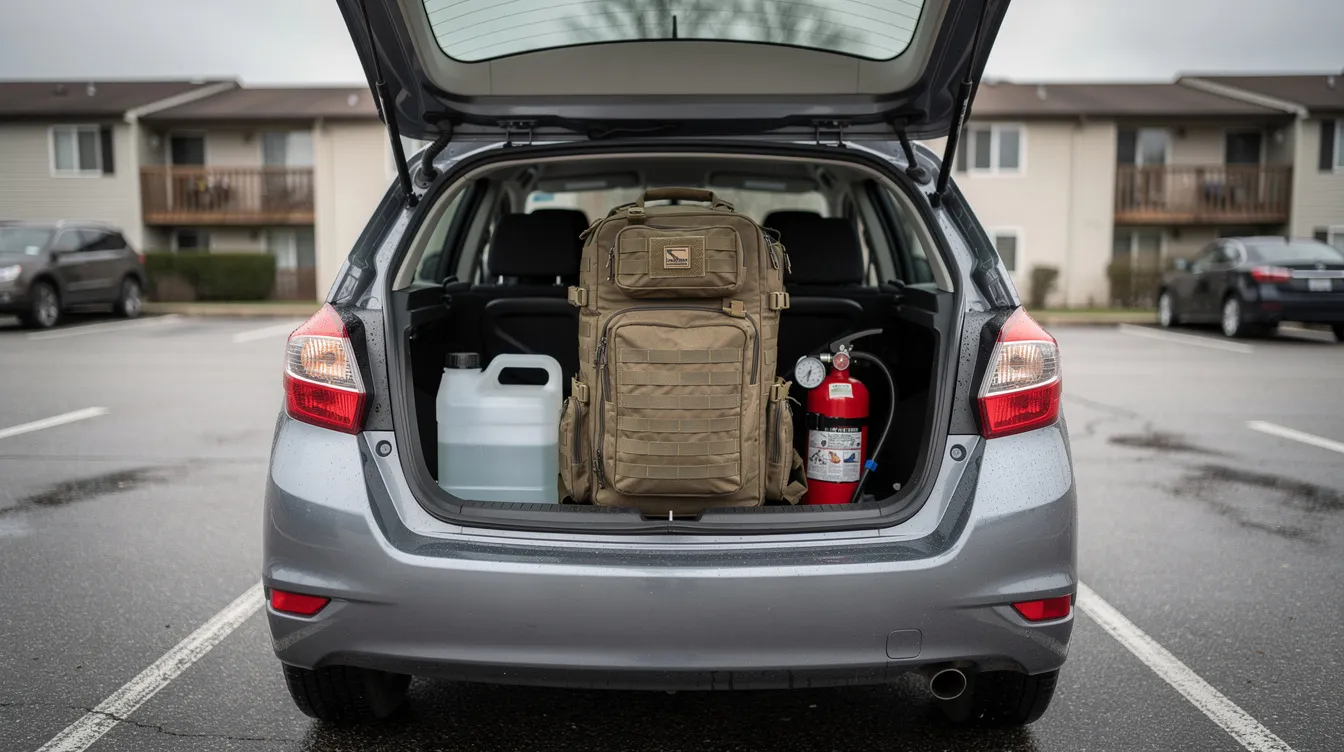
9. Car Kit Backup Go bag standing upright next to a compact car trunk with an extra water container inside.
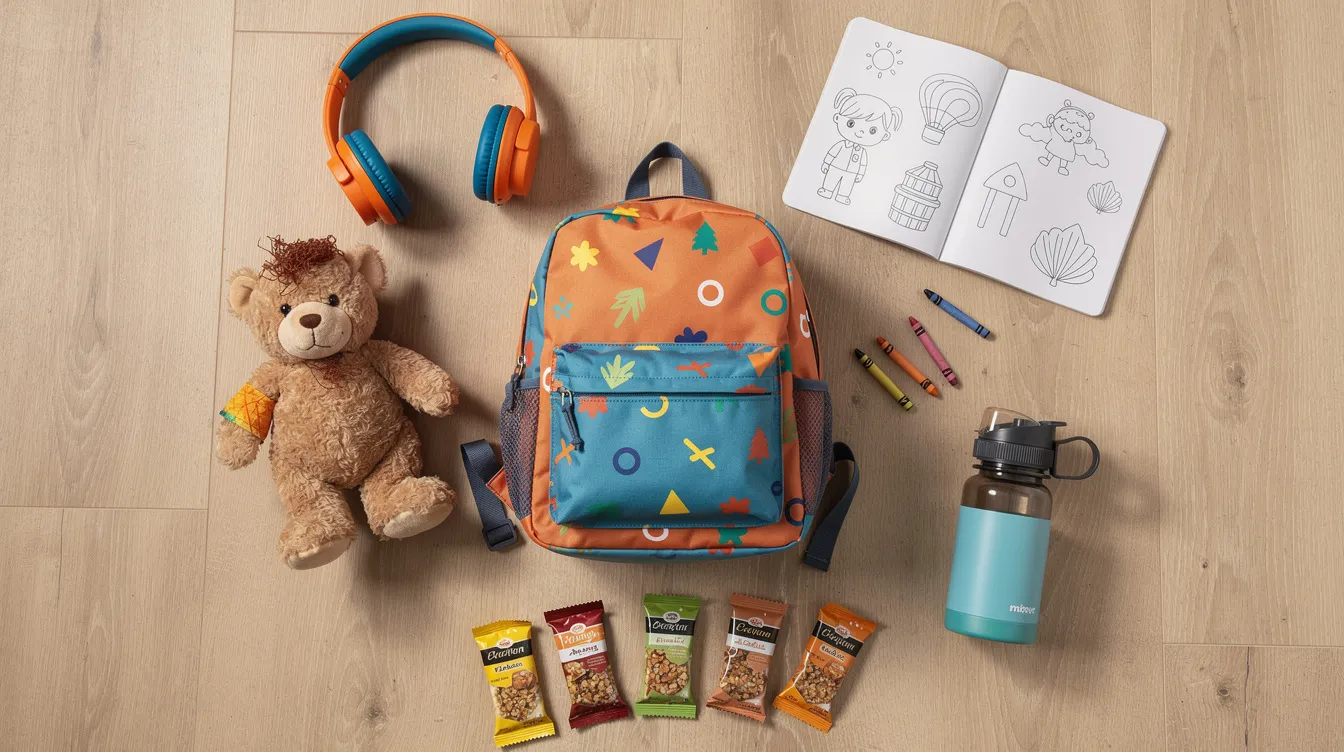
10. Kid-Ready Kit Flat-lay of child-specific items: small backpack, comfort toy, headphones, coloring book, and snacks on a wooden floor.
Core Wildfire Packing List: Essentials for Every Go Bag
This is the primary wildfire evacuation bag checklist, covering 24–72 hours away from home. A well-stocked wildfire preparedness kit should allow survival for at least 72 hours without access to normal services. Emergency kits should be lightweight to facilitate quick evacuation-aim for under 15–20 lbs per adult.
The "Six P's" framework outlines key items to grab in an evacuation. The Six P's of wildfire evacuation include People, Papers, Prescriptions, Pictures, Personal Computer, and Plastics (credit/debit cards and cash). Use these as your mental shortcut when you need to act quickly.
Water & Food
- At least 1 gallon of water per person per day is recommended for evacuation kits-carry three 16.9 oz bottles minimum and plan for refill access
- Non perishable food: energy bars, nuts, jerky, electrolyte packets
- Baby food and baby supplies if applicable
First Aid & Medications
- A comprehensive first aid kit: bandages, antiseptic wipes, gauze, tape, blister pads, tweezers, burn cream
- 7-day supply of personal medications in labeled pill organizers with a printed medication list
- Essential daily medications and medical devices must be included-hearing aids, contact lenses with solution, spare glasses
- Wildfire go bags should include water, food, and medications without exception
Respiratory & Eye Protection
- N95 or higher filtration masks protect against smoke and airborne particulates-pack one per person
- Wraparound safety glasses or sunglasses to block ash and embers
- Small bottle of saline eye drops
Light & Power
- LED headlamp plus backup flashlight with extra batteries
- Preparedness kits should include portable power banks and chargers for devices-include disks chargers and cables for your phone
- Battery powered radio (AM/FM/NOAA) for updates; emergency communication devices such as battery-powered radios are critical for updates during evacuations; two way radios if your family splits across vehicles
Communications
- Fully charged cell phone
- Written emergency contact information card: at least 2 out-of-area contacts, local non-emergency numbers, meeting points
- Paper maps of local evacuation routes should be part of emergency kits, as GPS may fail during an emergency
Clothing
- Long-sleeve cotton or wool top and long pants (avoid synthetics that melt in radiant heat)
- Sturdy closed-toe shoes, wool or cotton socks, hat, lightweight work gloves
- An extra set of clothing in a compression bag
Hygiene
- Travel toothbrush, paste, wet wipes, hand sanitizer, tissues
- Menstrual products, small unscented soap, compact quick-dry towel
Valuables & Irreplaceable Items
- Valuables family photos, photo albums, or digital copies on hard drives
- Car keys, cash in small bills, personal documents
Documents, Cash, and Emergency Contacts: Your Grab-and-Go Folder
Paperwork often becomes the single most valuable category after a wildfire. Insurance claims, identity verification, and accessing banking all depend on having the right tools at hand.
Keep important documents in a waterproof folder-a slim, fire-resistant pouch that's easy to carry. Store it right beside or inside the go bag so it can be grabbed in seconds.
What to include:
- Copies of government IDs: driver's licenses, passports, birth certificates, green cards for all family members
- Insurance policies: home contents, renters, auto, health; recent photos of rooms and valuables for claims-stored physically and on an encrypted cloud account
- Property records, lease agreement, vehicle title
- Medical summaries: allergies, chronic conditions, current medication list with dosages, copies of prescriptions
- Emergency contact sheet with at least one out-of-state emergency contact, local friends, pediatrician, vet, workplace/school numbers, and preferred shelter or lodging contacts
- Cash: enough for 2–3 days of expenses (gas, food, lodging) in small bills
Essential documents include driver's licenses, passports, and insurance policies. Irreplaceable family photos and sentimental items should be kept for evacuation-even if just as digital copies on a USB drive.
Packing for Small Spaces: Apartment-Friendly Go Bag Strategy
At Small Space Emergency, we know the constraints: no garage, limited closets, shared hallways, and sometimes no private parking. Being prepared means working smarter with the space you have.
- Container choice: A medium backpack per person is the foundation. For shared items like water and food, use a soft-sided duffel or rolling carry-on that tucks behind furniture.
- Vertical storage: Store bags on a strong upper closet shelf or a dedicated hallway hook. Keep heavier items lower in a rolling bin by the door. A wildfire evacuation kit should be kept in a location that is quickly accessible-never buried in a back bedroom.
- Car vs. home: If you have a car, keep a second mini kit (water, snacks, blanket, spare masks, charger) in the trunk to lift weight off your home bag. If you don't own a vehicle, prioritize ultra-light packing and transit-friendly bags.
- Avoid duplication: Don't duplicate heavy tools in every bag. Give each person personal essentials (meds, documents, first aid basics) but share bulkier supplies between 1–2 adult bags.
- Label everything: Attach a durable tag with name, cell phone number, and primary emergency contact to the outside of each bag.
Special Considerations: Kids, Elders, and Pets
Some family members can't carry their own full go bag or communicate their needs during a high-stress event, so pre-planning is essential. People and Pets refers to family members and necessary supplies for pets during evacuation.
- Children: Pack child-sized N95 masks, a favorite comfort item, simple snacks they'll actually eat, a quiet activity (coloring book, small game), and a list of allergies and emergency contact info in their bag. Parents still carry children's medications. Include baby supplies and baby food for infants.
- Elders: Account for mobility aids (cane, walker), extra incontinence supplies, hearing aids and backup batteries, spare glasses. Pre-pack a medication pouch with at least 7 days of medical supplies and a clear medication list. Arrange a buddy system with neighbors for assistance.
- Pets: Build a pet-specific mini kit: 3-day supply of pet food in sealed bags, collapsible water bowls, extra leash and carrier, waste bags, copies of vet records and rabies certificate, recent photo in case of separation. Pet supplies should include food, water, and medication for evacuation scenarios. Label the crate or carrier with pet's name and your contact details.
- Transportation: If you don't own a car, talk in advance with neighbors or local community groups about rides during wildfire evacuation. Check county plans for paratransit or elder-transport options. Research shows that households without vehicles often evacuate later because transport planning was missing.
Step-by-Step Wildfire Evacuation Checklist (Grab, Go, and Check-In)
This is a simple, time-ordered wildfire evacuation checklist you can follow under stress. It assumes your bags are already packed. Prepare evacuation kits before wildfire season starts.
Before fire season (by May):
- Sign up for county text alerts and emergency apps
- Print or save this checklist
- Choose at least two evacuation routes and two meeting spots (one nearby, one out of area)
- Identify your shelter options and have addresses ready
When air gets smoky or a Red Flag Warning is issued:
- Planning for evacuation includes maintaining a vehicle with a full gas tank during high-risk fire weather-top off to at least half a tank
- Keep go bags by the door; charge phones and power banks fully
- Move car to an accessible spot; have car keys in a consistent, reachable location
Under Evacuation Warning:
- Load go bags and document folder into the car
- Leash pets or keep carriers open and ready
- Dress all family members in long sleeves, long pants, and sturdy shoes
- Back into the driveway for faster exit
Under Evacuation Order:
- Leave immediately. Don't water the roof or hunt for extra belongings-evacuate now
- Grab go bags, pets, keys, and folder
- Lock the door if time allows; follow official routes
- Avoid shortcuts through canyons or unpaved roads unless authorities recommend them
After reaching safety:
- Text or call your designated out-of-area emergency contact to confirm status and location
- Update family members and neighbors in your pre-arranged contact group
- Note what was missing or too heavy-use those lessons to adjust your bag checklist
Maintaining and Updating Your Go Bag
A wildfire packing list is not a one-time project. Items expire, children grow, medications change. Review go bags at least once a year for effectiveness-twice a year is better.
- Set a recurring reminder (April 1 and October 1) to review each bag before and after peak wildfire season
- Check food and water expiration dates; replace items within 6 months of expiration and rotate them into regular home use
- Review medications, update prescriptions, remove anything expired; verify emergency contact numbers and addresses are current
- Swap out clothing sizes and age-appropriate comfort items for children as they grow; reassess what they can reasonably carry
- After any evacuation, drill, or near-miss, debrief as a family: what worked, what was missing, what was too heavy-then adjust accordingly
- Regularly review go bags at least once a year; use a simple printed or digital wildfire evacuation checklist to keep the process consistent
FAQ: Wildfire Packing List and Go Bags
These FAQs cover common questions you may still have after reading the main guide.
How many go bags should my family have?
Each adult should ideally have their own go bag. Kids may have smaller personal bags for comfort items and essentials, but critical supplies-medications, documents, extra water-should be duplicated across at least two adult bags in case one is lost. Each pet should have a dedicated container or pouch with food and essentials, even if it rides inside an adult's main bag.
Where is the best place to store my wildfire go bag in a small apartment?
Store go bags near your primary exit-behind the front door, in a hall closet, or on a low shelf in the entry. Never bury them deep in a bedroom closet. For buildings with interior hallways, consider keeping a second lightweight kit in the car or at a trusted neighbor's house nearby, in case hallways are blocked.
What if I don't have a car during a wildfire evacuation?
Car-free households should prioritize an ultra-portable go bag they can carry on foot or on public transit-a backpack, not a heavy bin. Pre-arrange ride options now: talk to neighbors, coworkers, or local community groups. Some counties offer emergency transport for residents without vehicles. The Nevada Cooperative Extension and local fire program offices often publish these resources.
How often should I replace items in my first aid kit and medications?
Check medication and first aid kit expiration dates twice a year. Replace expired items immediately and rotate older stock into home use. Liquid medications and ointments degrade faster in hot apartments or car trunks-store sensitive meds in climate-controlled spaces and pack them last-minute in a labeled pouch if necessary.
Is this wildfire packing list enough for sheltering in place during a major disaster?
This is primarily a wildfire evacuation go bag designed for 24–72 hours away from home, not a full home disaster kit. For sheltering in place during extended power outages or other hazards, build a larger emergency supply kit with additional water, food, and supplies stored separately. Use this go bag as your compact foundation, then expand based on your space and risk profile. Having the right tools packed before the fire starts is what separates a stressful scramble from a calm, decisive exit.
Editorial note: this guide provides general preparedness information, not emergency, medical, legal, or engineering advice. Recommendations are cross-checked against public emergency-management guidance and adapted for small-space living. During an active emergency, follow your local authorities and emergency services. See our editorial standards and affiliate disclosure.